"Mr. President" Soundtrack Lyrics
Musical • 1997
Track Listing
"Mr. President (Original Broadway Cast Recording)" – Album Guide to Tracks and Key Scenes
Overview
What does a gently old-fashioned Broadway score sound like when it tries to keep pace with the Cold War, the twist, and a restless First Family? Irving Berlin’s Mr. President cast album answers that in four phases — arrival, adaptation, rebellion, collapse — all without ever leaving the world of tuneful, tightly crafted show songs.
The musical follows fictional U.S. President Stephen Decatur Henderson, his wife Nell, and their children as they juggle diplomacy, campaigning, and romantic chaos. On record, you hear the White House at full glitter for a ball, a frazzled commander-in-chief pacing in the dark, and a First Lady who swings between public charm and private exasperation. The album preserves that arc: Act I builds from stately ceremony into international travel and romantic entanglements; Act II drops the family back into small-town Ohio and lets disillusion and nostalgia collide.
As a listening experience, the score leans heavily on waltzes, patter songs, and gently comic numbers rather than big showstoppers. The president’s insomnia ballad, the First Lady’s sly self-portraits, and the daughter’s complaint about “The Secret Service” give different angles on power and privilege. The record also smuggles in a few then-contemporary touches like “The Washington Twist,” where Berlin briefly flirts with early-60s dance crazes before retreating to his comfort zone.
Stylistically, you can slice the album into phases that mirror the story: old-world waltz and Broadway polish for the arrival in the White House; warmer, domestic duets and mid-tempo ballads as the family adapts to strain; spikier character songs and rhythm tunes as the kids rebel and politics backfire; finally, a mix of homespun tunes and patriotic rhetoric as the presidency collapses and reshapes itself into a more modest kind of public service. Dance band twists, lyrical waltzes, and flag-waving marches are all doing character work, not just filling grooves.
How It Was Made
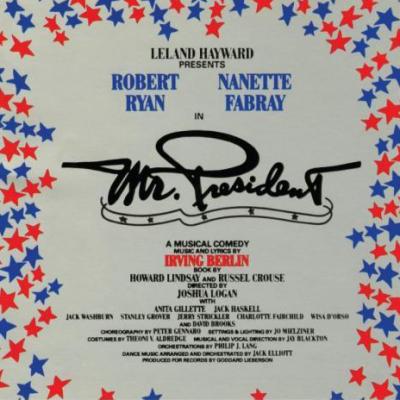
Mr. President was Irving Berlin’s last full Broadway score. He wrote both music and lyrics, with a book by the seasoned team of Howard Lindsay and Russel Crouse. The show opened at the St. James Theatre on Broadway in October 1962 after tryouts in Boston and Washington, D.C., and ran for 265 performances — a respectable run that still counted as a disappointment for a writer of Berlin’s stature.
The cast album was produced from the original Broadway company, led by Robert Ryan as President Henderson and Nanette Fabray as First Lady Nell. Anita Gillette, Jack Haskell, Jack Washburn and others round out the principal cast. Columbia Records issued the original LP in 1962, preserving the bulk of the score in fairly compact tracks that mirror theater pacing more than pop-radio logic.
The recording catches Berlin in conservative but expert form: brief “opening” material sets up scenes, then slides straight into character songs. Conductor Jay Blackton keeps tempos brisk; many numbers land under three minutes, which makes the album feel like a dense sequence of snapshots. Later, Sony Broadway reissued the recording on CD, and DRG followed with another CD edition, so most modern listeners encounter the show via these 1990s–and–2000s transfers rather than original vinyl.
Behind the scenes, the musical’s big experiment wasn’t orchestration but subject matter. According to one historian of 1960s Broadway, the producers actively leaned on the novelty of a Berlin score about a sitting President’s private life, even courting the real Kennedy White House during the Washington tryouts. That mix of topical politics and old-school musical-comedy craft is exactly what the album freezes in amber.
Tracks & Scenes
This section follows the Broadway running order rather than a strict tracklist, and focuses on key songs and moments rather than every cue.
“Opening” — Company
Where it plays: The album begins at a glittering White House ball, the orchestra sketching in dignitaries, diplomats and socialites as they twist under chandeliers. Onstage, a theater manager-figure sets the audience up to see the President as “a simple, everyday family man” while the music toggles between ceremonial pomp and party energy. On record, it’s a compact prologue that drops you straight into the ballroom before the principal characters even sing.
Why it matters: It frames the presidency as both spectacle and workplace, a contrast the rest of the score keeps poking at.
“Let’s Go Back to the Waltz” — Nanette Fabray (Nell) & Ensemble
Where it plays: Early in Act I at the same ball. As the twist dies down and the First Couple takes the floor, Nell dreams aloud of an era when a good waltz, not the latest fad, ruled social life. Onstage she glides through the room, steering the mood back toward elegance; on the album, you hear the orchestra change gears from backbeat to swirling triple meter in under a minute and a half.
Why it matters: It plants the core tension between modern politics and nostalgic taste — Nell’s distaste for contemporary rhythms mirrors Berlin’s own preference for older forms.
“In Our Hide-Away” — Nanette Fabray (Nell) & Robert Ryan (President Henderson)
Where it plays: Later that night, the presidential couple has retreated to a private sitting room. Shoes are off, shoulders drop, and the fantasy of escaping to a quiet fishing cabin becomes a relaxed soft-shoe in stocking feet. The number sits fairly early on the album’s Act I side, just after the ball sequences.
Why it matters: It’s the first real sign that the record isn’t just pomp and patriotism; Berlin writes them as a weary marriage trying to breathe in between crises.
“The First Lady” — Nanette Fabray (Nell)
Where it plays: Alone after schedules and social obligations pile up, Nell gives the audience her version of the job description. On stage she moves through imagined receiving lines and photo ops; on record, the song plays as a brisk character sketch with sly asides about counting the silver after receptions.
Why it matters: It turns the “decorative” spouse into the score’s sharpest commentator, something modern listeners tend to appreciate more than critics did in 1962.
“Meat and Potatoes” — Jack Haskell (Pat) & Stanley Grover (Charley)
Where it plays: At a late-night party where the presidential children are socializing. Two Secret Service agents compare their “meat and potatoes” tastes with the soufflé world of Washington elites. On the album, this is a compact comedy patter near the middle of Act I.
Why it matters: It places the agents firmly in the story as working-class foils to the First Family, setting up Pat’s romantic arc with Leslie.
“I’ve Got to Be Around” — Jack Haskell (Pat)
Where it plays: Immediately after Pat cuts short Leslie’s date, he confesses in song that his job — and his feelings — require him to stay close whether she likes it or not. On record, it’s one of the more conventional mid-tempo Broadway ballads, but the lyric is all about boundaries and duty.
Why it matters: It quietly reframes security work from surveillance to care, which pays off later when Leslie finally sees him as more than a uniform.
“The Secret Service” — Anita Gillette (Leslie)
Where it plays: Still in Act I, Leslie vents about being trailed by agents who are “everywhere.” In the show she stalks the stage, dodging imaginary eavesdroppers; the song on the album plays like a light, almost novelty tune with a catchy refrain about the Secret Service “making her nervous.”
Why it matters: The number has outlived the show as a standalone cabaret piece; it gives the cast album one of its few truly memorable hooks.
“It Gets Lonely in the White House” — Robert Ryan (President Henderson)
Where it plays: Late at night, after staff and family have withdrawn. The President paces, worries about inflation, foreign policy, and the danger of a single bad decision. The track sits toward the back half of Act I on most editions, around two and a half minutes long.
Why it matters: It’s Berlin’s attempt to crack open a public figure’s private anxiety; the song anchors the album emotionally even if the melody itself is gentle rather than showy.
“Is He the Only Man in the World?” — Nanette Fabray (Nell) & Anita Gillette (Leslie)
Where it plays: Before the family’s goodwill tour, mother and daughter talk through Leslie’s fascination with Youssein, the charming son of a Middle Eastern ruler. Onstage the scene shifts from personal advice to a more worldly perspective; on record you mainly hear the conversational back-and-forth and a floating melody line.
Why it matters: It doubles as both romantic consultation and subtle diplomatic caution, using a family conversation to comment on Cold War entanglements.
“They Love Me” — Nanette Fabray (Nell) & Company
Where it plays: During the whirlwind tour abroad, Nell is showered with gifts and adulation from foreign crowds. The staging is a collage of stylized stops — Tahitians, Japanese beatniks, an East Indian marching team — and the song ties them together. On the album it’s one of the brighter, more extroverted ensemble pieces.
Why it matters: It underlines how much of diplomacy is theater, and how the First Lady becomes a kind of unofficial cultural ambassador.
“Pigtails and Freckles” — Jack Haskell (Pat) & Anita Gillette (Leslie)
Where it plays: On the plane between stops, Pat and Leslie reminisce about her childhood “pigtails and freckles” days. The scene is quiet, almost domestic, with engines humming under the dialogue in the stage version; the audio track gives you just the gentle back-and-forth waltz feel and vocal blend.
Why it matters: It marks the turn from bodyguard/subject to genuine equals, musically softening Leslie’s image from glamorous First Daughter back to someone Pat has known for years.
“Don’t Be Afraid of Romance” — Jack Washburn (Youssein)
Where it plays: In Youssein’s palace-style apartment when Leslie visits his homeland. He tries to charm her in an intimate setting while, unbeknownst to them, the CIA has bugged the room and Pat listens in. On record, it’s a surprisingly tender charm song that you know is being overheard inside the story.
Why it matters: It is one of the few songs that genuinely flirt with exoticism and ambiguity; politically and romantically, nothing here is fully trustworthy.
“Glad to Be Home” — Nanette Fabray (Nell) & Ensemble
Where it plays: Act II, back in the Hendersons’ Ohio hometown. The townspeople welcome them, Nell dabbles in ordinary chores and even a cake contest. The album presents it as a brisk ensemble that suddenly shrinks the scale after the international travel earlier.
Why it matters: It resets the tone from global stakes to local comfort, which makes the President’s later frustration with retirement more pointed.
“You Need a Hobby” — Nanette Fabray (Nell) & Robert Ryan (President Henderson)
Where it plays: When Henderson can’t stop second-guessing his successor from the sidelines, Nell urges him to find something else to do — even jokey options like rowing or glass-blowing. Staged at home in Ohio, the song is half teasing, half exasperated intervention.
Why it matters: It undercuts the myth of the statesman who gracefully fades away; the album captures that uneasy comic beat where a former leader simply can’t let go.
“The Washington Twist” — Anita Gillette (Leslie) & Dancers
Where it plays: At a party hosted by the new President’s daughter, Betty Chandler. Youssein flirts too openly, and Leslie throws herself into the twist with the other guests. On the recording, the tune is short and punchy, leaning harder into dance-band rhythm than most of the score.
Why it matters: It’s Berlin’s most obvious bid to sound “current,” and later jazz and pop artists have singled it out for covers, partly because it’s such an odd collision of presidential politics and teen dance music.
“The Only Dance I Know” — Wisa D’Orso (Princess Kyra)
Where it plays: At a county fair back in Ohio, local matrons complain about an indecent belly dancer; she turns out to be Princess Kyra from earlier. On stage it’s a show-off comic specialty; on the album you hear a languid, slightly absurd routine where she insists she does no “steps” at all.
Why it matters: It functions as a bridge between Washington glamour and small-town moral panic, and gives the record one of its more overtly comic standalone turns.
“I’m Gonna Get Him” — Nanette Fabray (Nell) & Anita Gillette (Leslie)
Where it plays: Still at the fair, with Leslie finally deciding that Pat, not Youssein, is the partner she wants. Mother and daughter align musically and dramatically for once, plotting a future around a quieter kind of guy. The track sits near the end of the album’s Act II sequence.
Why it matters: It resolves the romantic triangle and quietly endorses modest, domestic loyalty over glamorous diplomacy.
“This Is a Great Country / Finale” — Robert Ryan & Company
Where it plays: In the Henderson home when the Governor offers a Senate seat and the former President refuses, citing eroded political ethics but reaffirming his faith in the country. That speech swells into the patriotic anthem “This Is a Great Country,” then into a full-company finale as the new President arrives to enlist Henderson for an international conference.
Why it matters: The number encapsulates the show’s thesis: citizens and leaders may fall short, but the national ideal remains worth singing about. On the album, it’s the clearest piece of Berlinian flag-waving and a tidy capstone to the narrative arc.
Notes & Trivia
- The real John F. Kennedy and Jacqueline Kennedy attended a Washington tryout performance, briefly turning the fictional White House musical into an actual presidential event.
- Despite its patriotic angle, the show lost the 1962–63 Tony Award battle to far sharper contemporaries like A Funny Thing Happened on the Way to the Forum and Oliver!.
- Berlin cut several songs before Broadway, including an earlier title tune “Mr. President,” which survives only in demo and archival materials.
- Perry Como recorded his own studio album of songs from Mr. President the same year, essentially offering a smoother, radio-friendly parallel to the cast disc.
- Instrumental “dance” albums based on the score were issued by André Kostelanetz and Lester Lanin, proof that labels thought the melodies could work as cocktail music as well as theatre.
- Jazz drummer Shelly Manne and pianist Bill Evans later opened their album Empathy with a version of “The Washington Twist,” yanking the song out of its Broadway context.
- The show’s book is often blamed more than the songs; even sympathetic later essays admit the story feels “corny” next to its era’s more daring titles.
Music–Story Links
Berlin doesn’t radically reinvent musical theatre form here, but he does wire songs tightly to character beats.
When Nell sings “Let’s Go Back to the Waltz” minutes into the show, she isn’t just longing for an older dance; she’s rejecting the media glare and spin that define her husband’s presidency. The music’s old-world sweep lets the listener feel how out-of-time she already is compared with twist-happy guests and campaign strategists.
“The Secret Service” and “Pigtails and Freckles” bookend Leslie’s growth. The first is a complaint about surveillance and lost privacy; the second replays her childhood through Pat’s eyes, reminding her (and us) that he knew her long before the international headlines. Melodically, both are light, but the shift in tone — from comic frustration to affectionate nostalgia — charts the maturing relationship.
Henderson’s arc lives mostly in “It Gets Lonely in the White House,” “You Need a Hobby,” and “This Is a Great Country.” The insomnia ballad shows him drowning in responsibility; the hobby song depicts him resisting the idea of ordinary life; the finale accepts a more limited but still meaningful public role. You can hear the orchestration gradually move from dark, quiet textures to full-band affirmation.
Even secondary characters get musical fingerprints. Youssein’s “Don’t Be Afraid of Romance” sweet-talks Leslie, but the fact that the CIA is literally listening in turns the lush romantic arrangement into a kind of double agent: what seems like seduction is also intelligence-gathering. Princess Kyra’s “The Only Dance I Know” brings back the glamorous, slightly tacky nightlife of Act I in a shabby Midwestern sideshow, echoing how the supposedly grand international world keeps leaking into small-town America.
Reception & Quotes
On stage, Mr. President opened to politely cool reviews. Critics tended to agree that Berlin’s tunes were pleasant but that the book felt dated, especially in a Broadway season that also contained bolder pieces and sharper satire. Some later writing on Irving Berlin’s career even frames the show as the project that effectively ended his Broadway run.
The cast album fared better. Over time it became the main way the musical survived, especially once Columbia’s LP and Sony’s CD reissue circulated in collector circles. According to a 1960s Broadway survey, the record was widely available even when the show itself was rarely, if ever, revived, and a number of listeners now file it under “flop scores I still enjoy.”
“Although Berlin’s score was praised, the show was just too old-fashioned and out of date.”
— summary of contemporary reviews
“Today, Mr. President is mostly remembered by its original cast album, although a rare production pops up here and there.”
— later musical-theatre commentary
“The rest of his review and the others were highly critical, mostly because of a terrible book.”
— retrospective essay on the show’s reception
“Irving Berlin’s final Broadway score was also one of his rare flops. But there’s no doubting the musical’s patriotic setting.”
— overview of presidential-themed musicals
Availability-wise, the album has cycled through LP, cassette and CD; digital versions now stream on major platforms. Different issues may flip some cues or combine finale material, but the core sequence remains stable.
Interesting Facts
- Opening-night buzz: one detailed 1960s Broadway reference notes that Mr. President opened with one of the largest advance sales of its decade.
- Real politics vs. stage politics: Washington critics reportedly used the word “corny” so often that it stuck to the show’s reputation for decades.
- Parallel albums: in 1962 you could buy at least four different records tied to the score — the cast recording, a Perry Como song set, and two instrumental dance LPs.
- Radio afterlife: individual tracks like “The Secret Service Makes Me Nervous” still show up in themed radio and streaming programs about U.S. politics.
- CD renaissance: the Sony Broadway CD in the early ’90s brought the album back into print, which is why many modern listeners treat 1990s catalog numbers as their “original” version.
- Label shuffle: Columbia handled the original LP; Sony Broadway later issued the CD; DRG picked it up again in the 2000s, so collectors chase different logos for different masterings.
- Confusing cousins: the phrase “Mr. President 1997” online often refers not to the musical at all but to a Eurodance pop album by the German group Mr. President — completely unrelated to Berlin’s work.
- Cabaret favorite: because it’s self-contained and funny, “The Secret Service” is still performed in cabaret and revue contexts far more than the rest of the score.
- Campus and regional revivals: while rare, the show resurfaces now and then in regional theatres or small companies, often marketed as a curiosity in election years.
- Scholarship note: academic work on Irving Berlin’s late career often reads the show as both a summation of his patriotism and a sign that Broadway style had moved on.
Technical Info
- Title: Mr. President (Original Broadway Cast Recording)
- Musical: Mr. President — book by Howard Lindsay & Russel Crouse, music and lyrics by Irving Berlin
- Stage premiere: 1962, St. James Theatre, Broadway (New York); 265 performances
- Album type: Original Broadway cast recording
- Principal vocalists: Robert Ryan, Nanette Fabray, Anita Gillette, Jack Haskell, Jack Washburn, Jerry Strickler, Wisa D’Orso
- Conductor / musical director: Jay Blackton
- Original label & formats: Columbia Records LP (mono and stereo editions released 1962)
- Key CD reissue: Sony Broadway SK 48212 (CD, remastered, early 1990s; widely cited release date in 1992)
- Later CD edition: DRG Theater CD (catalog DRG-CD-19124; U.S. release in the 2000s, part of a series of restored cast albums)
- First LP release date: 12 November 1962 (as specified by the Masterworks Broadway album notes)
- Genres: Broadway / show tunes, light political satire, romantic musical comedy
- Running time: roughly 45 minutes across 20 tracks (including finale material)
- Notable numbers on album: “Let’s Go Back to the Waltz,” “The Secret Service,” “It Gets Lonely in the White House,” “The Washington Twist,” “This Is a Great Country.”
- Related studio albums: The Best of Irving Berlin’s Songs from ‘Mr. President’ (Perry Como & others); Music From Irving Berlin’s ‘Mr. President’ (André Kostelanetz and His Orchestra); Dance to Irving Berlin’s ‘Mr. President’ (Lester Lanin and His Orchestra).
- Current availability: Widely accessible via streaming services and download platforms; physical CDs circulate mainly through specialty and second-hand retailers.
Questions & Answers
- Is the Mr. President cast album the complete score?
- It preserves the core 1962 score with most principal numbers and some reprises. A few cut songs and demo materials exist separately in archives and studio compilations.
- How does the album compare to Irving Berlin’s better-known shows?
- It’s smaller in impact than Annie Get Your Gun or Call Me Madam, but the best tracks show the same craft — especially the First Lady’s songs, the presidential soliloquy, and the satirical numbers.
- Why do some sources associate Mr. President with the 1990s?
- Because a major CD remaster arrived in the early ’90s, and because an unrelated Eurodance band called Mr. President released a self-titled 1997 pop album. That overlap in names and dates causes confusion.
- Is the album worth hearing if I’m mainly into modern, edgier musicals?
- If you expect Hamilton-level bite, no. But as a document of late Golden Age style trying to grapple with Cold War politics, it’s a useful listen — and a few songs still land sharply.
- Which single song should I start with?
- Try “The Secret Service” for wit, “It Gets Lonely in the White House” for character, and “This Is a Great Country” if you want to hear Berlin’s patriotic voice near the end of his Broadway career.
Canonical Entities & Relations
| Subject | Relation | Object |
|---|---|---|
| Irving Berlin | wrote music and lyrics for | Mr. President (musical) |
| Howard Lindsay | co-wrote book for | Mr. President (musical) |
| Russel Crouse | co-wrote book for | Mr. President (musical) |
| Mr. President (musical) | was first produced at | St. James Theatre, Broadway |
| Robert Ryan | originated role of | President Stephen Decatur Henderson |
| Nanette Fabray | originated role of | Nell Henderson (First Lady) |
| Anita Gillette | originated role of | Leslie Henderson (First Daughter) |
| Jack Haskell | originated role of | Pat Gregory (Secret Service agent) |
| Jack Washburn | originated role of | Youssein Davair (diplomat’s son) |
| Wisa D’Orso | originated role of | Princess Kyra (belly dancer) |
| Jay Blackton | served as | conductor and musical director for the original Broadway production |
| Columbia Records | released | Mr. President original cast LP in 1962 |
| Sony Broadway | reissued as CD | Mr. President (1962 Original Broadway Cast) in the early 1990s |
| DRG Theater | issued later CD edition of | Mr. President cast recording |
| Perry Como | recorded studio album of songs from | Mr. President (titled The Best of Irving Berlin’s Songs from “Mr. President”) |
| André Kostelanetz and His Orchestra | recorded instrumental album based on | Music From Irving Berlin’s “Mr. President” |
| Lester Lanin and His Orchestra | recorded dance album titled | Dance to Irving Berlin’s “Mr. President” |
| Mr. President (Original Broadway Cast Recording) | documents performances from | 1962 Broadway production of Mr. President |
| St. James Theatre | hosted premiere of | Mr. President on Broadway in 1962 |
Sources: Wikipedia (Mr. President musical); Masterworks Broadway album notes; Apple Music / streaming metadata; The Complete Book of 1960s Broadway Musicals; AllMusic; Musical Cyberspace articles; castalbums.org; MusicBrainz; label and retailer catalog listings.
November, 16th 2025
A-Z Lyrics Universe
Cynthia Erivo Popular
Ariana Grande Horsepower
Post Malone Ain't No Love in Oklahoma
Luke Combs Good Riddance (Time of Your Life)
Green Day Bye Bye Bye
*NSYNC You're the One That I Wan
John Travolta & Olivia Newton-John I Always Wanted a Brother
Braelyn Rankins, Theo Somolu, Kelvin Harrison Jr. and Aaron Pierre The Power of Love
Frankie Goes to Hollywood Beyond
Auli’i Cravalho feat. Rachel House MORE ›