Soundtracks:  A B C D E F G H I J K L M N O P Q R S T U V W X Y Z #


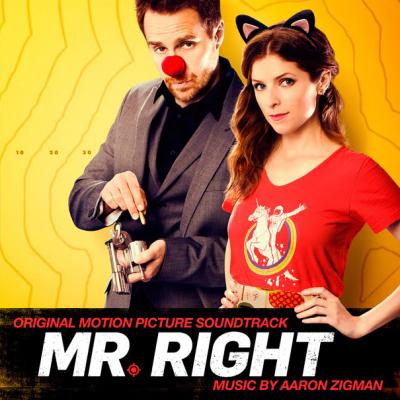
Mr. Right Album Cover

"Mr. Right" Soundtrack Lyrics

Movie • 2016

Track Listing


"Mr. Right (Original Motion Picture Soundtrack)" – Album Guide to Tracks and Key Scenes

Mr. Right 2016 official trailer still with Anna Kendrick and Sam Rockwell
Mr. Right – theatrical trailer artwork, 2016

Overview

What happens when a rom-com soundtrack has to keep pace with a cheerful sociopath and a heroine finally leaning into her own chaos? In Mr. Right, the music has to survive arrival, adaptation, rebellion and collapse — and somehow still feel like a date-night playlist.

The film follows Martha (Anna Kendrick), a woman whose love life is a running gag until she meets Francis (Sam Rockwell), a hitman who now kills the people who hire him. The soundtrack’s job is tricky: it must make that premise feel playful instead of grim. Pop needle-drops sketch Martha’s emotional state — needy, reckless, then oddly liberated — while Aaron Zigman’s score stitches the jump-cuts of tone into a single through-line.

From the opening cleaning-frenzy set to “Dear Future Husband” through the knife-throwing flirtation underscored by “Jesu, Joy” and on to the bridge shooting backed by “Sunshine Goodtime” plus score, the album maps Martha’s arc. Early tracks underline her arrival in a new, dangerous world; mid-film cues cover adaptation as she starts to enjoy it; late-film action motifs mark rebellion against mobsters and handlers; the closing pop coda “Love You With a Bang” wraps up the collapse of her old self and the birth of a new, deeply unconventional couple.

Stylistically, the soundtrack moves in clear phases. Bright contemporary pop (Meghan Trainor, Saint Motel, Maty Noyes) signals vulnerability and wish-fulfillment. Retro and novelty-tinted tracks (“Spirit in the Sky”, “Boom Boom Room”, “Jazzy Interlude”) add attitude and irony. Zigman’s orchestral-electronic hybrid score brings surface polish — plucked strings, pulses, “T-Rex” stingers — while exposing the inner mess: panic, adrenaline, and a surprisingly sincere love story under all the gunfire.

How It Was Made

The score for Mr. Right was composed by Aaron Zigman, working on a modestly budgeted independent production that nevertheless needed a big, shapeshifting musical identity. The film was shot in 2014–2015 and released in 2016, and the soundtrack album arrived alongside it via Lakeshore Records as a digital release, followed by a physical CD edition.

Music supervision came from David A. Helfant (Arpeggio Entertainment) and Maureen Crowe, both veterans of major studio projects. Their brief: glue together an action movie, a romance and a screwball comedy with music that can pivot in seconds without feeling random. In interviews they describe the job as marrying two different genres in one tight package, with Zigman’s cues acting as the connective tissue between licensed songs.

Zigman built an action vocabulary out of electronic pulses and percussion layered with orchestra, then contrasted that with warmer, “organic” timbres — ukulele, guitars carrying the melody, and rhythm-section writing that feels closer to a pop record than to a traditional orchestral score. The score cues on the album (from “I’m a T-Rex” to “The T-Rex Roars”) are short, modular pieces designed to snap around dialogue and comedy beats without stepping on the punchlines.

The key commercial hook for the album is Maty Noyes’ song “Love You With a Bang”, written after she saw the film. It serves as both end-title coda and marketing track, used in promotional materials and emphasized by the label as a calling card for the release. Alongside that, Apollo’s “Jesu Joy” functions as a hybrid piece — part diegetic training montage banger, part thematic anchor for Martha’s empowerment storyline.

Mr. Right 2016 trailer frame with hitman and romantic comedy tone
Mr. Right – mixed-genre tone set visually and musically in the trailer

Tracks & Scenes

Below are the key placements from Mr. Right, mixing licensed songs and Zigman’s score cues. Timestamps are approximate within the 95-minute runtime.

“Dear Future Husband” — Meghan Trainor
Where it plays: Over the opening sequence (around 0:00–2:30). Martha frantically cleans her apartment, cooks, rehearses poses and takes awkward selfies while waiting for her boyfriend. The camera cuts between her desperate attempts to stage the perfect night and the creeping realization that he is not going to show. The song is non-diegetic but plays as if it were blasting from the rom-com in her head.
Why it matters: It nails the “arrival” phase: she’s still living inside a fantasy of conventional romance. The cheery doo-wop pop makes the breakup that follows feel even crueller and sets up the film’s habit of using upbeat tracks against emotional failure.

“Happy Call” — Thrust
Where it plays: Around the 9-minute mark at a bar. Martha drags her friends out after the breakup, orders sugary cocktails and tries to insist she’s “fine”. The song is diegetic, filling the room with a club-leaning groove as the camera tracks the group from the bar to the dance floor.
Why it matters: This is Martha’s first attempt at adaptation — using noise, drinks and movement to paper over humiliation. The slightly slick production underlines how forced the fun is.

“Kill Shot” — Amaany
Where it plays: Same bar sequence (about 9–10 minutes). Martha explodes into wild dancing in the middle of the floor while her friends stand back, half-amused, half-worried. The camera swings around her as she flails with zero inhibition, bodies and lights blurring around her. The track is fully diegetic, pounding through the club speakers.
Why it matters: This is the first real glimpse of her “chaos core”. The on-the-nose title hints at where the story is heading, and the aggressive beat foreshadows the violence she’ll later treat almost as another dance.

“Crazy” — Kat Dahlia
Where it plays: Around 13 minutes, in a convenience store. Martha browses near the condom display when Francis appears, charmingly awkward. They trade oddball flirtation as the track hums under fluorescent lights and jangling door bells. It is non-diegetic but mixed low, letting dialogue breathe.
Why it matters: The lyric hook mirrors how everyone sees Martha — a little unhinged — and previews how Francis’s brand of “crazy” might actually fit her. Tonally, the song bridges breakup hangover and budding fascination.

“Boom Boom Room” — Totsy
Where it plays: Roughly 19 minutes in, during a playful montage. Martha and Francis dance in living rooms and hotel spaces, tumbling through steps that are half swing, half sparring match. The song feels like a burlesque-tinted show tune, and it’s mixed as non-diegetic over quick cuts and slow-motion spins.
Why it matters: This is the purest rom-com stretch of the movie — the adaptation phase in full swing. The vintage show-club sound says, “Welcome to the weird little world only these two understand.”

“Jazzy Interlude” — Billy Munn
Where it plays: About 28 minutes. Martha meets Francis for dinner in a restaurant, teasing him about calling her “Monster”. The track plays diegetically as a piece of old-fashioned lounge jazz piped through the venue, brushing against clinking cutlery and murmured conversation.
Why it matters: The genteel jazz contrasts sharply with the killers and gangsters circling off-screen. It frames the scene as a real date in Martha’s mind, even as the audience knows something darker is baked in.

“Jesu, Joy” — Apollo
Where it plays: Around 38 minutes in a knife-throwing training sequence. Martha and Francis stand in an open space, hurling knives at targets in a sequence cut like a music video. The track booms in a quasi-EDM re-imagining of a classical theme, treated as non-diegetic though it feels synced to their movements.
Why it matters: The scene marks Martha’s active choice to join Francis’s world. The track merges sacred melody and club energy, underlining how her self-empowerment looks borderline sacrilegious to everyone else.

“Sunshine Goodtime” — Minnutes
Where it plays: Mid-film bridge sequence (~42 minutes). Martha waits in a parked car on a bridge, listening to the radio. Francis steps out, confronts a target and calmly shoots him while the song keeps playing. Zigman’s ominous action motif slides in and out around the perky indie-pop track.
Why it matters: This is textbook tonal collision. The sunny guitar riff keeps insisting everything is fine while Martha finally sees what Francis really does. It’s the border between adaptation and rebellion — now she has to either run or lean in.

“Spirit in the Sky” — Norman Greenbaum
Where it plays: Late in the film, during the wedding-hall shootout. Hopper and hired guns study a floor plan and stride into a reception room before a full-on gunfight erupts between them, Francis and a SWAT team. The song plays non-diegetically, its gospel-rock swagger accompanying slow-motion shots of tumbling chairs and shattering glass.
Why it matters: The choice is playful and morbid at once, underscoring the “carnival of blood and romance” vibe. It undercuts the violence while suggesting that everyone here has already accepted their odds.

“My Type” — Saint Motel
Where it plays: Early and late, including an elevator gag (around the 3-minute mark and again over the credits). Francis steps into a lift with Sharon, talks too much, and the song kicks in as a swaggering, brassy theme for his weird charm. During the credits the moment is replayed, now recontextualized by everything we’ve seen.
Why it matters: It becomes Francis’s unofficial character theme — cocky, retro, and just a bit ridiculous. Using it again in the credits turns the whole film into a closed loop of bad decisions.

“Love You With a Bang” — Maty Noyes
Where it plays: Over the final moments and end credits (around 1:30:00). After the last gunshots and reconciliations, the film crashes into neon-bright pop: a modern, mid-tempo track that leans on Noyes’s voice and a hooky chorus. It plays non-diegetically while we see the aftermath of the final fights and the couple’s strange version of happily-ever-after.
Why it matters: It’s the romantic payoff and the collapse of any pretense of “normal”. The title is literal (there have been a lot of bangs) and emotional. It also functions as the album’s brand track and was featured heavily in marketing.

Key score cues — Aaron Zigman
Where they play: Cues like “I’m a T-Rex”, “Poolside Shootout”, “Mr. Right Makes an Entrance”, “Bruce Battle”, “The Final Fights” and “The T-Rex Roars” are scattered through the mid-to-late film. They cover ambushes at pools, late-act rescues, confrontations between brothers and the climactic warehouse fights, often blending orchestra with synth pulses and distorted percussion.
Why they matter: These pieces do the real narrative heavy lifting. They keep action scenes legible, give villains their own motifs, and bind together the tonal lurches between heartfelt confession and slapstick gunplay.

Mr. Right action sequence frame used in soundtrack coverage
Action beats in Mr. Right rely heavily on Zigman’s modular score cues.

Notes & Trivia

  • The official album, Mr. Right (Original Motion Picture Soundtrack), is primarily a score release with only two full songs alongside Zigman’s cues.
  • Several fan playlists circulate online that combine the score with all the needle-drops (“Dear Future Husband”, “My Type”, “Spirit in the Sky” and more).
  • Movement coordinator Kelly Connolly helped shape the film’s dance-adjacent physicality, which makes the music-driven scenes feel choreographed even when they are “casual”.
  • The film spent time near the top of the iTunes indie chart, which in turn pushed curious viewers toward the Lakeshore soundtrack release.
  • Despite the movie’s modest box office, the soundtrack has quietly become a favorite among fans of oddball action-romances.
  • The 27-track score album clocks in at just under 42 minutes — many cues are under a minute, reflecting how quickly scenes cut.
  • A later nine-track digital compilation, Mr. Right (Music from the Motion Picture), focuses more on songs than on Zigman’s full score.

Music–Story Links

The soundtrack constantly comments on Martha’s relationship to violence. “Dear Future Husband” is pure fantasy; “Kill Shot” and “Crazy” drag that fantasy into rooms where people drink too much and flirt too fast. By the time “Sunshine Goodtime” plays over a public execution, the music is openly mocking the idea that her life will ever be “normal” again.

Francis’s world gets its own palette. “My Type” treats him as a walking advertisement for bad decisions, while Zigman’s jagged motifs follow him like a nervous system. When he walks into that wedding-hall gunfight backed by “Spirit in the Sky”, the joke lands because his moral code is already established — he kills the people who asked for killing — and the track’s religious swagger underlines his self-image as a twisted angel of mercy.

Crucially, Martha’s empowerment is scored, not just tracked. “Jesu, Joy” turns a training montage into a mini-anthem, and the later action cues that feature her (especially around the final fights) reuse rhythmic ideas from earlier romantic moments, suggesting that for her, love and danger are now the same sensation. “Love You With a Bang” then seals that logic: the sound of her happy ending is indistinguishable from the sound of a trailer banger.

Reception & Quotes

The film itself received mixed but often intrigued reviews, with many critics singling out the chemistry between Kendrick and Rockwell and the gleefully off-kilter tone. The soundtrack was praised in trade coverage for threading together action and romance on a relatively small budget, and for giving an indie-scale movie a bigger sonic footprint.

Lakeshore’s release was framed as a kind of case study in modern score albums: short, punchy cues, one breakout pop song, and a handful of cross-genre moments that feel like they belong in a larger franchise. Some fans initially complained that the CD focused on score rather than a “songs from the movie” compilation, but over time those same cues became the main reason to revisit the album.

“Sam Rockwell and Anna Kendrick work well together, but Mr. Right is…a tonal jumble.”
– summary of critical consensus
“The chemistry between Rockwell and Kendrick drives the movie…fast and wonderful together.”
– Chicago Sun-Times
“The score ranges from very short cues to extended compositions that link various storylines seamlessly.”
– producer commentary
“It’s magical when a song captures the feel of a film…‘Love You With a Bang’ fits like a glove.”
– label executive on Maty Noyes’ track

According to a trade press release, the soundtrack helped the movie punch above its box-office weight in digital rankings, with the album positioned alongside other high-energy action-comedy scores in Lakeshore’s catalog.

Mr. Right closing moments used for end credits song
End-title placement: “Love You With a Bang” closes both film and album.

Interesting Facts

  • The soundtrack album was released digitally on 8 April 2016, with the CD following that summer; both use the same 27-cue program.
  • Zigman’s previous work on The Notebook and Sex and the City made him an easy choice for a story that mixes sap, satire and shootouts.
  • “Love You With a Bang” also served as a calling card for Maty Noyes, who was just breaking through off the back of a major collaboration in pop.
  • Licensed songs like “Dear Future Husband” and “My Type” are not on the main score album, which is why many viewers think there are “two” soundtracks.
  • A later streaming compilation titled Mr. Right (Music from the Motion Picture) collects a smaller set of song-centric tracks for casual listeners.
  • Several score cue titles (“I’m a T-Rex”, “You Got Boring, Hopper”) quote or twist character dialogue, giving the album an extra layer of narrative even without the film.
  • Choreography and movement coaching were handled by people with Broadway and TV credentials, which is why the bar and dance scenes feel more precise than most indie action-rom-coms.
  • The film’s Toronto premiere meant that early audience chatter about the soundtrack came from festivalgoers, not mainstream marketing — the album essentially built its reputation backwards.

Technical Info

  • Title: Mr. Right (Original Motion Picture Soundtrack)
  • Film: Mr. Right (2015 US film, released 2016)
  • Year of album release: 2016 (digital), 2016 (CD)
  • Type: Film soundtrack – predominantly original score with select songs
  • Primary composer: Aaron Zigman
  • Key featured artists: Maty Noyes (“Love You With a Bang”), Apollo (“Jesu, Joy”)
  • Music supervisors: David A. Helfant, Maureen Crowe
  • Label: Lakeshore Records (score album); later song compilation listed under Various Artists on streaming platforms
  • Track count (score album): 27 tracks, ~42 minutes (numerous short cues)
  • Notable placements: “Dear Future Husband”, “My Type”, “Spirit in the Sky”, “Crazy”, “Boom Boom Room”, “Jazzy Interlude”, “Sunshine Goodtime”, “Love You With a Bang”
  • Release context: Film premiered at Toronto International Film Festival 2015; US release April 2016; soundtrack timed to digital/VOD roll-out.
  • Availability: Widely available on major digital services; physical CD still obtainable via specialty retailers and second-hand markets; no widely documented vinyl pressing of the Zigman album.
  • Chart / platform notes: The film briefly hit strong positions on iTunes genre charts; the soundtrack rode that wave on digital storefronts and streaming platforms.

Questions & Answers

Is there more than one Mr. Right soundtrack?
Effectively, yes. The main album is Aaron Zigman’s score plus two songs, while a separate nine-track digital compilation focuses on the movie’s song material.
Why are “Dear Future Husband” and “My Type” missing from the main album?
Licensing and album concept. Lakeshore’s release is built as a score album, so some high-profile licensed tracks stayed with their own labels and appear only in the film and on playlists.
Which song plays when Martha dances like a maniac at the bar?
That’s “Kill Shot” by Amaany, following “Happy Call” by Thrust. Both are diegetic club tracks that score her first full-blown post-breakup meltdown.
What’s the song over the final scene and credits?
“Love You With a Bang” by Maty Noyes. It functions as both coda and marketing hook, summing up the film’s mix of romance and violence in one pop package.
How would you describe the score style in one sentence?
It’s a hybrid of groove-driven action writing and quirky romantic motifs, built from short, punchy cues that can pivot between sincere and absurd in a bar or two.

Canonical Entities & Relations

Subject Relation Object
Mr. Right (2015 film) directed by Paco Cabezas
Mr. Right (2015 film) written by Max Landis
Mr. Right (2015 film) starring Sam Rockwell, Anna Kendrick, Tim Roth, James Ransone, Anson Mount, Michael Eklund, RZA
Mr. Right (2015 film) music by Aaron Zigman
Mr. Right (2015 film) produced by Amasia Entertainment; Circle of Confusion
Mr. Right (2015 film) distributed by Focus World
Mr. Right (Original Motion Picture Soundtrack) released by Lakeshore Records
Mr. Right (Original Motion Picture Soundtrack) composed by Aaron Zigman
“Love You With a Bang” performed by Maty Noyes
“Jesu, Joy” performed by Apollo
“Dear Future Husband” performed by Meghan Trainor
“My Type” performed by Saint Motel
“Spirit in the Sky” performed by Norman Greenbaum
“Crazy” performed by Kat Dahlia
“Kill Shot” performed by Amaany
“Sunshine Goodtime” performed by Minnutes
“Boom Boom Room” performed by Totsy
David A. Helfant role Co–Music Supervisor for Mr. Right
Maureen Crowe role Co–Music Supervisor for Mr. Right
Brian McNelis role President/CEO of Lakeshore Records; oversaw album release
Kelly Connolly role Movement Coordinator on Mr. Right

Sources: studio press material; soundtrack label notes; soundtrack databases (scene-by-scene listings); film reviews and trade coverage; streaming service album pages.

Many actors, who at some point are in the trend, have periods of time when, with their participation, go into rentals a lot of movies at once. Anna Kendrick (blonde without chest, 1.5 meters tall with an aquiline hooked nose, with a large and elongated head & having starting dystrophy) is now experiencing such a period. In 2014, came out 6 films with her, and in 2016, 7 more totally stupid movies that will have little box office, for example, as one of the latest – Get A Job. It wasn’t released on big screens, but in a limited edition & “on demand”. Who might demand it? Although maybe her ingenious partner Sam Rockwell will save the situation & this film will not sink into oblivion? As the 2nd and the last person in this film, who has acting talent, Tim Roth. While in the 1st week of hire, it collected a measly USD 25 thousand. Smells with a huge box-office failure, knowing at least the fees of Tim Roth. Among the musical accompaniment is nothing particularly memorable (such as passing-by melodies My Type or Dear Future Husband, which listeners with normal development of brain development must forget in 1.5 minutes after their completion). The only tune that should not be here, because its lyrics have meaning, was made by Norman Greenbaum. Antagonist to this rocker in everything – the level of the singer's skills, appearance, gender – is Kat Dahlia. Love You With A Bang, despite the fact that it was set as the main musical theme in the trailer, is designed for an audience made of very young children. Their level of intelligence is equal to the main character and the main actress of this film. Or for people who have stopped in their development at the above-mentioned height and respond only to the simplest stimuli, such as food and sleep. The lyrics of all the other tunes are frankly disappointing.

November, 16th 2025

More info about "Mr. Right" movie on IMDb and Wikipedia
A-Z Lyrics Universe

Lyrics / song texts are property and copyright of their owners and provided for educational purposes only.