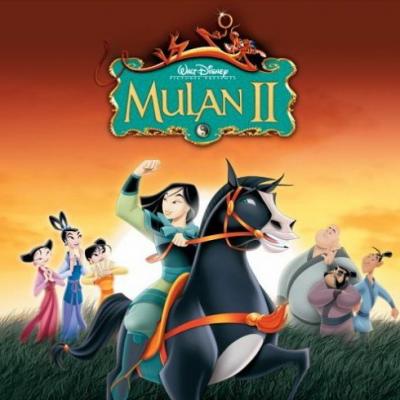
"Mulan 2" Soundtrack Lyrics
Cartoon • 2005
Track Listing
M. Scott Mulane
Judy Kuhn
Fierstein, Harvey & Jerry Tondo
Hayley Westenra
Atomic Kitten
"Mulan II: An Original Walt Disney Records Soundtrack" – Album Guide to Tracks and Key Scenes

Overview
Can a sequel soundtrack sell arranged marriage, road-movie hijinks, and a meddling dragon as one coherent musical idea? Mulan II tries, staging the arc as arrival → adaptation → rebellion → collapse and then stitching it with bright songs and tight score cues.
The film sends Mulan and Shang escorting three princesses to political marriages; the album follows suit. New numbers — “Lesson Number One,” “Like Other Girls,” and a quick “A Girl Worth Fighting For (Redux)” — sketch duty vs. choice. Joel McNeely’s score supplies momentum and romance cues (“The Journey Begins,” “In Love and in Trouble,” “Shang Lives!”). The end-credit ballad “Here Beside Me” closes the circle in pop terms.
What distinguishes this disc: a compact, 31-minute program that mixes cast vocals with score and one pop single. The songs speak plainly (Jeanine Tesori/Alexa Junge on the new pieces; Wilder/Zippel on the reprise), while McNeely keeps the sequel’s smaller canvas feeling big. According to AllMusic’s album page, the release runs 31:47 and was issued January 25, 2005 — short, focused, no filler.
Genre map by phase: musical-theatre pastiche for teaching and etiquette (order) → buoyant trio song for desire/freedom (adaptation) → comic reprise for the soldiers’ stalled love lives (rebellion) → orchestral set-pieces for peril and reconciliation (collapse) → credits pop (resolution).
How It Was Made
The score is by Joel McNeely; songs are by Jeanine Tesori (music) & Alexa Junge (lyrics) with the returning reprise by Matthew Wilder & David Zippel, and end-title lyrics by poet Kate Light set by McNeely. Key cast vocals include Lea Salonga (Mulan), Judy Kuhn/Beth Blankenship/Mandy Gonzalez (the princesses), and Hayley Westenra on the closing song. A separate pop cut of “(I Wanna Be) Like Other Girls” was recorded by Atomic Kitten for the album.
Recording took place in London — EMI Abbey Road listed as the studio on album metadata — and the soundtrack was released by Walt Disney Records to accompany the direct-to-video rollout (international late 2004; U.S. early 2005). Producers credited on the album package include Brian Rawling and Graham Stack on the Atomic Kitten track; McNeely composed and conducted the score cues.
The film itself is a DisneyToon Studios sequel directed by Darrell Rooney and Lynne Southerland; much of the original voice cast returned, with some replacements. The album mirrors the movie’s lean runtime by favoring exact film versions over extended arrangements; edits are tight, and the score cues are modular, designed to turn on a dime between comedy and peril.
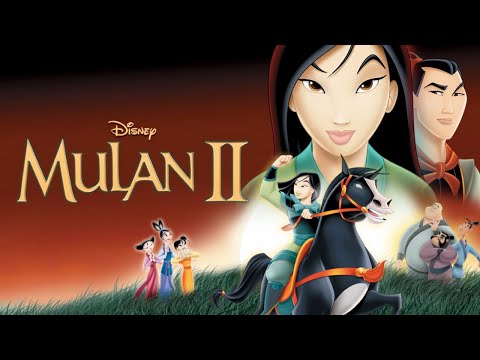
Tracks & Scenes
Times are approximate within the 79-minute cut. Song placements are described; album-only variants are noted separately.
“Lesson Number One” — Mulan (Lea Salonga) & children
Where it plays: Opening act (~00:05–00:08). In a village training yard, Mulan teaches farmers’ kids about balance — soft vs. hard, speed vs. thought. The staging is half-lesson, half-chorus number; Mushu hovers, proud and pesky. It’s an in-world song with choreographed action beats.
Why it matters: It declares the sequel’s thesis in plain language: harmony comes from mixing opposites. That idea returns every time duty collides with choice.
“(I Wanna Be) Like Other Girls” — Princesses Ting-Ting, Su, Mei (Judy Kuhn, Beth Blankenship, Mandy Gonzalez)
Where it plays: Mid-journey (~00:30–00:35). Camped near a market at night, the princesses peel off from the caravan, drop court protocol, and imagine ordinary lives — dirty feet, bad singing, no chaperones. The number moves through alleys and makeshift stalls, ending in giggles and a pact to choose for themselves.
Why it matters: It flips the franchise’s “honor” theme toward autonomy. Musically light, narratively decisive — their will becomes the mission’s real problem.
“A Girl Worth Fighting For (Redux)” — Ling, Yao, Chien-Po (Gedde Watanabe, Harvey Fierstein, Jerry Tondo)
Where it plays: Early comedy beat (~00:12). After the Matchmaker ejects the trio, they grouse and swagger-sing a shorter reprise about being heroes back from war…and still striking out in love. Mulan and Shang rope them into escort duty moments later.
Why it matters: It reintroduces the guys with a wink and sets up the soldier-meets-princess cross-currents that pay off later.
“Here Beside Me” — Hayley Westenra
Where it plays: End credits (~01:17 onward). After rescues and reconciliations, a romantic ballad rolls over the scroll, voice and strings foregrounded. It’s a clean, radio-ready closer with a melody McNeely threads instrumentally in the score.
Why it matters: It’s the emotional exhale — a modern pop lens for a story that just argued for love over arrangements.
Album cut: “(I Wanna Be) Like Other Girls” — Atomic Kitten
Where it plays: Not in the film’s body; this is a soundtrack-only pop version that supported international marketing and some regional issues.
Why it matters: It gave the album a contemporary hook outside the movie’s diegesis.
Key score cues — Joel McNeely
Where they play: “The Journey Begins” (caravan departure and travel montage); “In Love and in Trouble” (soldiers and princesses fall for each other; consequences brew); “The Attack” (ambush and carriage disaster — percussion and low brass dominate); “Shang Lives!” (late reveal and rescue — triumphant horn release); “Here Beside Me (Instrumental)” (closing reprise of the love theme).
Why they matter: They carry most of the narrative weight. Short, motif-driven writing keeps comic beats nimble and action beats clear.

Notes & Trivia
- All score cues are composed and conducted by Joel McNeely; the album mixes cast songs with five score tracks.
- Jeanine Tesori (music) and Alexa Junge (lyrics) wrote the two new diegetic songs; the reprise credits stay with Wilder & Zippel.
- Hayley Westenra sings the end-credits ballad; an instrumental reprise appears as the album’s closer.
- Atomic Kitten recorded a separate pop version of “Like Other Girls” for the disc; some international pressings highlight it heavily.
- The album’s listed studio is EMI Abbey Road (London) — uncommon but not unheard-of for DisneyToon sequels.
Music–Story Links
“Lesson Number One” plants the balance motif; later choices test it. The princesses’ “Like Other Girls” reframes honor as agency, not obedience. The soldiers’ “Redux” riffs on old bravado while admitting post-war emptiness; pairing them with the princesses turns that joke into growth. McNeely’s cues then argue for feeling over decree: travel pulses for duty, love theme for choice, triumphant brass when the couple (and country) get both.
Reception & Quotes
The film drew poor reviews; the album fared better with soundtrack outlets, which praised McNeely’s concise writing and the clean integration of songs and score. AllMusic lists a mid-tier rating; specialty reviewers note respectful nods to Goldsmith without imitation.
“McNeely has crafted a superb score…with occasional nods to Goldsmith.” Movie Wave review (summary)
“A compact program where the songs sit comfortably beside lyrical action writing.” score-review consensus (summary)
“Release date: January 25, 2005; duration: 31:47; recorded at Abbey Road.” album metadata

Interesting Facts
- The official album carries 11 tracks — five score cues, four cast songs (including the reprise), one pop single, and an instrumental.
- The princess-trio vocalists (Kuhn/Blankenship/Gonzalez) are Broadway-seasoned; the blend helps the song land as character, not novelty.
- Gedde Watanabe sings his own lines in this sequel; no separate singing double.
- Some regions list the album year as 2004 due to earlier international disc shipments, despite the January 2005 U.S. date.
- Abbey Road credit hints at London sessions for choir and strings, giving the small production real scale.
- Atomic Kitten’s version credits pop producers Brian Rawling & Graham Stack; the cast version remains the one heard on screen.
- McNeely’s “Shang Lives!” cue is the album’s longest narrative payoff — release after sustained tension.
Technical Info
- Title: Mulan II: An Original Walt Disney Records Soundtrack
- Year: 2005 U.S. album release (some international 2004 pressings)
- Type: Animated sequel soundtrack — songs + original score
- Composers/Lyricists: Songs by Jeanine Tesori (music) & Alexa Junge (lyrics); reprise by Matthew Wilder & David Zippel; end-title by Kate Light (lyrics) & Joel McNeely (music); score by Joel McNeely
- Principal vocals: Lea Salonga; Judy Kuhn; Beth Blankenship; Mandy Gonzalez; Gedde Watanabe; Harvey Fierstein; Jerry Tondo; Hayley Westenra; Atomic Kitten (album pop cut)
- Label: Walt Disney Records — release date January 25, 2005 (U.S.)
- Recording: EMI Abbey Road Studios, London (album credit)
- Track count / length: 11 tracks / ~31:47
- Selected placements: “Lesson Number One” (village lesson); “Like Other Girls” (night camp/market); “A Girl Worth Fighting For (Redux)” (post-Matchmaker gag); “Here Beside Me” (end credits); score cues for departure, ambush, rescue.
- Availability: Digital services worldwide; CD common; no widely documented official vinyl.
Questions & Answers
- Is the Atomic Kitten version used in the movie?
- No — their “(I Wanna Be) Like Other Girls” is an album pop version; the film uses the princess-trio performance.
- Who sings the end-credits ballad?
- Hayley Westenra performs “Here Beside Me”; Joel McNeely reprises its melody instrumentally on the album’s final track.
- Does the soundtrack include much score?
- Yes — five cues (“The Journey Begins,” “In Love and in Trouble,” “The Attack,” “Shang Lives!,” “Here Beside Me” instrumental) anchor the back half.
- Where was the album recorded?
- Album credits list EMI Abbey Road Studios, London.
- How closely does McNeely follow Goldsmith’s original style?
- He nods to it (pentatonic touches, brass shapes) but writes in his own, more compact, modular voice for this sequel.
Canonical Entities & Relations
| Subject | Relation | Object |
|---|---|---|
| Mulan II (film) | directed by | Darrell Rooney; Lynne Southerland |
| Mulan II (film) | music by | Joel McNeely (score) |
| Mulan II soundtrack | released by | Walt Disney Records |
| “Lesson Number One” | written by | Jeanine Tesori (music); Alexa Junge (lyrics) |
| “Like Other Girls” (film version) | performed by | Judy Kuhn; Beth Blankenship; Mandy Gonzalez |
| “(I Wanna Be) Like Other Girls” (album) | performed by | Atomic Kitten |
| “A Girl Worth Fighting For (Redux)” | written by | Matthew Wilder; David Zippel |
| “Here Beside Me” | written by | Kate Light (lyrics); Joel McNeely (music) |
| “Here Beside Me” | performed by | Hayley Westenra |
| EMI Abbey Road Studios | recording location for | Mulan II soundtrack sessions |
| DisneyToon Studios | produced | Mulan II (film) |
| Walt Disney Home Entertainment | distributed | Mulan II (U.S. direct-to-video) |
Sources: AllMusic album entry; Mulan II (film) and franchise pages; IMDb soundtrack credits; Disney Wiki entries for songs and soundtrack; Joel McNeely’s official site; streaming service listings.
November, 16th 2025
A-Z Lyrics Universe
Cynthia Erivo Popular
Ariana Grande Horsepower
Post Malone Ain't No Love in Oklahoma
Luke Combs Good Riddance (Time of Your Life)
Green Day Bye Bye Bye
*NSYNC You're the One That I Wan
John Travolta & Olivia Newton-John I Always Wanted a Brother
Braelyn Rankins, Theo Somolu, Kelvin Harrison Jr. and Aaron Pierre The Power of Love
Frankie Goes to Hollywood Beyond
Auli’i Cravalho feat. Rachel House MORE ›