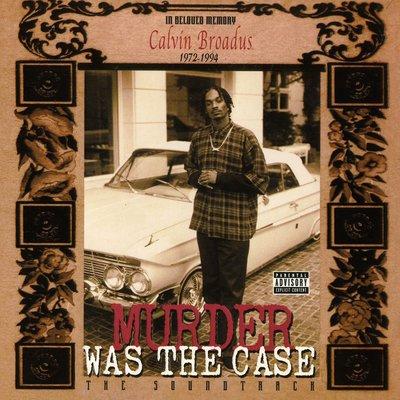
"Murder Was the Case" Soundtrack Lyrics
Movie • 2001
Track Listing
Snoop Doggy Dogg
Dr. Dre and Ice Cube
Tha Dogg Pound f/ Snoop Dogg, Jewell, Big Pimpin' Delemond
Snoop Dogg and Tray Deee
Nate Dogg
Jewell
Snoop Dogg f/ Tha Dogg Pound, Lil' Style, Young Swoop
Danny Boy
Sam Sneed f/ Dr. Dre
Jodeci f/ Tha Dogg Pound
Jewell
DJ Quik
Slip Capone & CPO
B Rezell
Young Soldierz
"Murder Was the Case (The Soundtrack)" – Album Guide to Tracks and Key Scenes
Overview
What happens when a courtroom headline, a street myth, and a label flex all get pressed onto the same disc? Murder Was the Case (The Soundtrack) answers that with an 18-minute short film and a wall-to-wall Death Row compilation that plays like a fever dream of mid-90s West Coast rap.
The film – Murder Was the Case: The Movie – stages a fictional version of Snoop Doggy Dogg being gunned down, bargaining with the devil, and staggering back to life. The soundtrack is the oxygen in that world: G-funk synths, horror-movie chords, churchy backing vocals and bass that never stops growling. The movie is short, but the album deliberately isn’t; it widens Snoop’s story into a full Death Row showcase.
Across the package, the music traces a loose arc: arrival (Snoop at his most untouchable), adaptation (the label building a full roster around him), rebellion (diss tracks, street politics), and collapse (eulogies, paranoia, spiritual dread). The film’s plot is simple; the soundtrack fills in the emotional and political detail that the script never says out loud.
Stylistically, the record stacks West Coast hip hop and straight gangsta rap with G-funk’s rubbery synths and horrorcore flourishes, then cuts it with smoother R&B. G-funk here means menace with a party surface; horrorcore touches push the devil-deal narrative; the R&B cuts and soul covers bring in regret, memory and a hint of gospel. Phase to phase, the genres mirror Snoop’s character: untouchable player, hunted defendant, miracle survivor who’s still not safe.
How It Was Made
The core of the project lands in 1994, when Death Row Records is at full power. Suge Knight executive-produces, Dr. Dre acts as both executive producer and “soundtrack director”, with Dat Nigga Daz in an overseer role and a bench of producers like DJ Quik, DeVante Swing and Sam Sneed filling in the corners. The sessions run through Can-Am Studios in Tarzana, with mixing at Dre’s home setup – the same pipeline that forged The Chronic and Doggystyle.
The film side is just as label-driven. Dr. Dre and Fab Five Freddy are credited directors on the short, with F. Gary Gray and Ricky Harris handling individual video segments, essentially stitching together a mini-movie from interconnected music videos and narrative scenes. It’s closer to an extended concept video than to a traditional feature, which is why later DVD editions surround the short with interviews, live clips and full music videos.
In the background sits Snoop’s real-life murder case, which was still active when the project was conceived. Public coverage around that trial feeds directly into the project’s marketing and imagery. The film fictionalises the shooting and devil-deal, while the album turns the whole Death Row roster into a kind of Greek chorus around Snoop’s public persona.
By 2001, the package exists in two parallel forms: the original 1994 CD / cassette / vinyl soundtrack and a remastered, expanded edition tied to a DVD release of Murder Was the Case (The Movie). The audio stays mostly faithful to the original track lineup, but you now get the short film, a director’s cut of “Natural Born Killaz” and other videos collected into one disc, cementing it as a hybrid of soundtrack, label showcase and archive piece.
Tracks & Scenes
This section focuses on how key songs from the album interact with the short film and its surrounding video material. The short is relatively brief, so some cuts live mainly on the album and in standalone videos, while others carry the narrative on screen.
“Murder Was the Case (Remix)” — Snoop Doggy Dogg
Where it plays: The title track frames the short’s core transformation: the shooting, the hospital gurney, the out-of-body dread and the uneasy “miracle” of survival. The remix version leans heavily on church-like backing vocals and tolling keys, turning Snoop’s verses into a dialogue with something unseen while the camera lingers on his body and the chaos around it. It functions both as performance (diegetic in the staged performance sections) and non-diegetic commentary when the vocals bleed over into montage.
Why it matters: This is the spine of the project. Lyrically it narrates the bargain with death; musically it fuses G-funk and gospel into a kind of gangsta spiritual. The rest of the soundtrack feels like satellites orbiting this one track.
“Natural Born Killaz” — Dr. Dre & Ice Cube
Where it plays: In the extended cut used within and around the film, the track detonates during the most violent and chaotic sequences – the street confrontation that escalates into Snoop’s shooting, and inserts where the camera cuts to riot-like imagery and near-apocalyptic mayhem. Visually it often plays like a horror short spliced into the main story; the music video version is also folded into the DVD presentation, effectively turning this into a parallel “episode” in the overall package.
Why it matters: As several retrospectives have noted, this is the blistering centrepiece – the long-awaited Dre/Ice Cube reunion and a pure horrorcore statement. The track’s references to mass murder, media spectacle and American violence widen Snoop’s personal crisis into something bigger and more political.
“What Would U Do?” — Tha Dogg Pound (feat. Snoop Doggy Dogg)
Where it plays: The song features prominently in the promo cycle and in video segments attached to the project (and had already appeared on the Natural Born Killers soundtrack). Within the Murder Was the Case context, it tends to run over footage of the Death Row crew in motion: cars, crews, crowded rooms, a sense that this is the label’s mob-movie anthem.
Why it matters: Lyrically it swings between flexing, paranoia and vendetta. Placed next to Snoop’s more introspective title track, it shows the other side of the coin: a world where retaliation is automatic and morality is almost an afterthought. It’s also one of Tha Dogg Pound’s defining cuts.
“21 Jumpstreet” — Snoop Doggy Dogg & Tray Deee
Where it plays: This track doesn’t anchor a single narrative scene in the short the way the title song does, but it colours the broader Murder Was the Case “universe” on the DVD and in associated videos. The lyrics flip a late-80s cop show title into a Long Beach street fable; performance clips and behind-the-scenes footage of Snoop and Tray Deee in the studio and on set often circulate with the movie materials.
Why it matters: It’s one of the clearest links between the soundtrack and the wider Long Beach / Dogg Pound ecosystem. The song extends the world beyond Snoop’s trial narrative into everyday neighbourhood power plays, making the project feel less like a one-man story and more like a city-level portrait.
“One More Day” — Nate Dogg
Where it plays: On record, this sits in the more reflective stretch of the album, with Nate Dogg leaning fully into his melancholy melodic style. In the visual package, it works as emotional ballast for the aftermath of violence – material used around funeral imagery, quiet streets, and slower, more contemplative shots.
Why it matters: Thematically, it’s the heart of the “second chance” idea. Where the title song shows panic at the edge of death, “One More Day” feels like the next morning, when survival has sunk in and the cost of that survival starts to register.
“Harvest for the World” — Jewell
Where it plays: Jewell’s cover of The Isley Brothers brings clear soul and social-conscience energy into the sequence of tracks. In the visual context, it’s less tied to a single dramatic scene and more to montage and credits-adjacent usage – the moments where the project briefly steps outside Snoop’s head and looks at the wider Black community.
Why it matters: It anchors the soundtrack’s R&B/soul flank and hints at a moral dimension beyond gang beef and legal peril. The placement underscores how Death Row tried to balance hardcore material with more traditional soul roots.
“U Better Recognize” — Sam Sneed (feat. Dr. Dre)
Where it plays: The track appears more as a bonus piece within the broader video and DVD package than as a core story beat. Performance footage and promo clips sit close to the Murder Was the Case branding, so the song effectively becomes part of the same “universe”, even if you don’t see it over a specific plot twist.
Why it matters: This is a key example of the “music from and inspired by” logic. It doesn’t push the devil-deal plot, but it sells the Death Row aesthetic – creeping keys, Dre’s presence, and an aggressive assertion of label identity.
“Come Up to My Room” — Jodeci (feat. Tha Dogg Pound)
Where it plays: This collaboration leans towards a club / afterparty vibe. On screen and in surrounding videos, it’s used to paint the hedonistic side of the Death Row world – hotel corridors, crowded rooms, flirtation and the sense of consequence-free indulgence that sits uneasily next to the film’s religious undertones.
Why it matters: It reminds you that this is still a mid-90s R&B/rap era project; sensuality and bravado are always present, even when the overarching narrative is about mortality and judgement.
“Dollaz & Sense” — DJ Quik
Where it plays: As a straight diss track built around a razor-sharp Quik beat, it isn’t central to the film’s story. Instead, it functions as a standout album moment that shows Death Row’s willingness to include active rap beef inside a soundtrack ostensibly tied to a single narrative film.
Why it matters: It’s one of the songs that make the album feel bigger than the short film. This isn’t just a score; it’s a snapshot of West Coast rap politics at a very specific moment.
“Woman to Woman” — Jewell
Where it plays: Jewell reworks Shirley Brown’s soul classic into a slow-burn R&B piece that plays best in audio form. On the video side, it tends to function as a mood piece for quieter, interior material – the kind of track you’d hear in the background of domestic scenes that never fully play out in the short itself.
Why it matters: It gives the project a female perspective and links Death Row’s sound to older soul traditions, counterbalancing the very male, street-focused energy of most of the rap cuts.
Notes & Trivia
- The soundtrack and short film share a title but run on different clocks: roughly 18–50 minutes of film, over an hour of music.
- The project fuses narrative scenes with full music videos, so some album tracks appear only as standalone clips on the DVD.
- “Natural Born Killaz” started life as part of a planned Dre / Ice Cube album before ending up here as the project’s most infamous single.
- A remastered edition in 2001 quietly turned the album into a “classic soundtrack” product, marketed as much to collectors as to new fans.
- Tupac Shakur recorded a track for the album that was ultimately shelved and later surfaced on another film soundtrack.
- The Source Awards in 1995 heavily featured material from this soundtrack, reinforcing Death Row’s dominance at that moment.
Music–Story Links
The basic narrative is simple: Snoop’s character is riding high, gets shot, hovers between life and death, makes a deal, and walks again. The music fills in the psychology between those beats. When the shooting erupts, “Natural Born Killaz” doesn’t just soundtrack violence; it reframes the scene as something mythic and almost apocalyptic, far bigger than a single drive-by.
On the gurney and in hospital sequences, “Murder Was the Case (Remix)” folds the courtroom and the church into the same sonic space. The choir-like backing and Snoop’s panicked storytelling make the hospital room feel like a courtroom, with God and the devil as opposing counsel. It’s one of the cleanest examples in 90s rap of a song driving both the literal plot and the metaphysical stakes.
Tracks like “What Would U Do?” and “Who Got Some Gangsta Shit?” extend that story sideways. They don’t move the plot forward scene by scene, but they sketch the world that produced Snoop’s character: a crew that treats retaliation as common sense, where the boundary between self-defence and overkill blurs. Every time those songs surface in the package, they remind you that the deal with the devil isn’t just personal – it’s structural.
The R&B and soul pieces – “One More Day”, “Harvest for the World”, “Woman to Woman” – act as emotional counterpoints. They suggest lives continuing offscreen: partners waiting at home, communities wrestling with loss, and a moral universe that still exists even if the characters choose to ignore it. Without them, the package would be pure bravado and horror; with them, it becomes closer to a morality play.
Reception & Quotes
On the audio side, the verdict was clear: the soundtrack debuted at number one on the Billboard 200 and quickly went multi-platinum, becoming one of the defining rap soundtracks of the 90s. Critics routinely place it near the top of “greatest hip-hop soundtracks” lists, often alongside Above the Rim as evidence of how strong Death Row’s compilation game was.
The film itself drew more mixed reactions. Some reviewers praised its raw energy and the way Dre’s G-funk score powered the images; others saw it as a murky, extended music video that never fully matched the music’s impact. Fans, meanwhile, leaned into the cult-object side: a VHS and later DVD that captured the peak of Death Row’s visual and musical branding in one package.
“The soundtrack slams almost as hard as The Chronic, even when the film can’t keep up visually.” — paraphrasing contemporary hip-hop press
“Dre’s rich, melodic G-funk tracks dominate; the movie around them sometimes feels like an overlong video reel.” — summarising mainstream film reviews
“As a label showcase it’s flawless; as a film, it’s a curiosity that comes bundled with a classic record.” — later retrospective commentary
Interesting Facts
- The 2001 remastered CD is often catalogued simply as Murder Was the Case: The Soundtrack, with a “Film, theater & television / Hiphop” genre tag in library databases.
- Some discographies treat the album as a Snoop Dogg release; others file it strictly under “Various Artists”, which affects how it appears on streaming platforms.
- “Natural Born Killaz” uses a dense web of pop-culture and true-crime references, including O.J. Simpson and Charles Manson, making it one of the most topical tracks on the disc.
- The short film’s director credits are unusually crowded for an 18-minute piece, reflecting how several existing music videos were woven into the narrative.
- The soundtrack’s success helped normalise the 90s trend of rap labels using film tie-ins as de facto compilation albums for their rosters.
- Later reissues pair the album with a bonus DVD compiling videos for “Murder Was the Case (Remix)”, “Natural Born Killaz” and “What Would U Do?”, turning the package into a mini-box-set.
- A shelved Tupac/Snoop collaboration reportedly recorded for this soundtrack ended up anchored to a different crime film years later, adding to the project’s “alternate history” appeal.
- Collectors track different regional pressings – US, Canada, Japan, Russia – partly because artwork and mastering can vary subtly between them.
Technical Info
- Title: Murder Was the Case (The Soundtrack)
- Core Year: 1994 original soundtrack release; 1995 home-video release of the short film; 2001 remastered CD edition tied to later DVD issues.
- Type: Soundtrack / compilation album for short film Murder Was the Case: The Movie (music from and inspired by the film).
- Primary Artists: Various Artists – including Snoop Doggy Dogg, Dr. Dre, Ice Cube, Tha Dogg Pound, Nate Dogg, DJ Quik, Jewell, Jodeci, Sam Sneed.
- Key Composers / Producers: Dr. Dre (executive producer, primary producer), Suge Knight (executive producer), Dat Nigga Daz, DJ Quik, DeVante Swing, Sam Sneed and others.
- Music Supervision / Direction: Dr. Dre credited as soundtrack director and main architect of the G-funk sound palette.
- Recording & Mixing: Recorded at Can-Am Studios (Tarzana, Los Angeles); mixed at “Dre’s Crib” in Los Angeles.
- Labels: Death Row Records in partnership with Interscope Records; later reissues via WIDEawake Death Row and other distributors.
- Release Context: Issued while Snoop faced a highly publicised murder trial; the short film premiered mid-90s on home video, with trailers advertising a 1995 street date.
- Chart & Certification Notes: Debuted at #1 on the Billboard 200 and Top R&B/Hip-Hop Albums; later certified multi-platinum in the US.
- Availability: Streaming on major platforms (often under “Various Artists – Murder Was the Case (The Soundtrack)”); film available on DVD and occasional digital rentals, with regional variation.
Questions & Answers
- Is Murder Was the Case based on Snoop Dogg’s real murder trial?
- It’s strongly inspired by the public narrative around his real case, but the film is a fictionalised, stylised story rather than a direct docudrama. Names, specific events and the supernatural angle are created for effect, not courtroom accuracy.
- What’s the main difference between the 1994 soundtrack and the 2001 remastered edition?
- The 1994 release is the original Death Row / Interscope soundtrack. The 2001 remaster mainly updates the audio and packaging and is often bundled or cross-marketed with a DVD of Murder Was the Case (The Movie), which adds videos and documentary material but keeps the core tracklist intact.
- Do all the album tracks actually appear in the short film?
- No. The short is too brief to use every song in full. The title track and “Natural Born Killaz” clearly anchor the on-screen story, while others function as promo pieces, bonus videos or “inspired by” cuts that live primarily on the album and in separate videos.
- Where can I legally hear the soundtrack and see the film today?
- The album is widely available on major streaming services under titles like Murder Was the Case (The Soundtrack) or similar. The film circulates mainly on DVD (including reissues) and via occasional digital rentals or catalogue platforms; availability depends on region and rights for Death Row catalogue material.
- Why do some people treat this as a classic “compilation” instead of just a Snoop Dogg project?
- Because the record functions as a Death Row sampler: there are multiple lead artists, several singles not centred on Snoop, and it was marketed as music “from and inspired by” the short film. Many critics frame it as a label statement where Snoop is first among equals rather than the sole star.
Canonical Entities & Relations
| Subject | Verb | Object |
|---|---|---|
| Snoop Doggy Dogg (Calvin Broadus) | stars in | Murder Was the Case: The Movie |
| Snoop Doggy Dogg | performs | “Murder Was the Case (Remix)” and several other tracks on the soundtrack |
| Dr. Dre (Andre Young) | directs and produces music for | Murder Was the Case: The Movie and Murder Was the Case (The Soundtrack) |
| Suge Knight (Marion Knight) | executive-produces | Murder Was the Case (The Soundtrack) via Death Row Records |
| Death Row Records | releases | Murder Was the Case (The Soundtrack) in partnership with Interscope Records |
| Interscope Records | distributes | the original 1994 soundtrack and associated formats |
| Dr. Dre & Ice Cube | perform | “Natural Born Killaz” for the Murder Was the Case soundtrack |
| Tha Dogg Pound | contribute | “What Would U Do?” and feature on other tracks tied to the soundtrack |
| Nate Dogg (Nathaniel Hale) | performs | “One More Day” on the soundtrack |
| DJ Quik (David Blake) | produces | “Dollaz & Sense” and other material on the album |
| Murder Was the Case: The Movie | is scored by | tracks from Murder Was the Case (The Soundtrack) |
Sources: Wikipedia & non-English language entries on the film/album; MusicBrainz and Discogs discographies; label notes and library catalogues; contemporary reviews from mainstream film and music press; later retrospectives and anniversary features; LA-area reporting on Death Row releases.
November, 16th 2025
A-Z Lyrics Universe
Cynthia Erivo Popular
Ariana Grande Horsepower
Post Malone Ain't No Love in Oklahoma
Luke Combs Good Riddance (Time of Your Life)
Green Day Bye Bye Bye
*NSYNC You're the One That I Wan
John Travolta & Olivia Newton-John I Always Wanted a Brother
Braelyn Rankins, Theo Somolu, Kelvin Harrison Jr. and Aaron Pierre The Power of Love
Frankie Goes to Hollywood Beyond
Auli’i Cravalho feat. Rachel House MORE ›