"Musical Tribute to the Olympics" Soundtrack Lyrics
Musical • 2008
Track Listing
Elizabeth Tyron
Pomeroy
Sparechange
Bob Pressner Band
The Rescues
Asia, John Payne
Bob Pressner Band
Lucy Woodward
Burgandy Brown
Bob Pressner Band
"A Musical Tribute to the Olympics" – Album Guide to Tracks and Key Scenes
Overview
What does the sound of the Olympic Games feel like when you compress it into one disc instead of one stadium? That is the quiet challenge behind "A Musical Tribute to the Olympics", a 2008 compilation that wraps rock, pop and adult contemporary songs around the ideas of ambition, distance and homecoming. There is no single film or TV series attached here. Instead, the album plays like a parallel broadcast, an unofficial soundtrack for Beijing’s Summer Games and for anyone watching from their couch, bar or laptop.
The record gathers various artists under the Morada Music banner and frames them as a kind of relay team: each track hands emotional momentum to the next. One song leans into longing and sacrifice, another leans into grit and uplift, and together they mirror the classic Olympic arc — arrival, adaptation, rebellion, collapse and, if things go well, redemption. It is less about official anthems and more about the inner monologue of athletes and fans who live through four-year cycles in four-minute bursts.
Because this is a studio compilation rather than a film score, there are no fixed “canon” scenes. Instead, the album behaves like a toolkit for images: you can hear training montages, opening ceremony fireworks, quiet village nights and the dead air after defeat. Broadcasters and fans have used individual tracks in highlight reels and online tributes, which means the same song might underscore triumph in one edit and heartbreak in another. That fluidity makes the record oddly modern; it anticipates the playlist era, where context is always in motion.
Stylistically, the album leans on pop/rock and alternative rock. Early cuts tend to sit in polished AOR and adult contemporary territory that suggests determination and optimism. Mid-album tracks push a little more into alternative/indie textures — guitars with more edge, drums with more punch — which fit risk and rebellion. Later pieces feel slower and more reflective, carrying the weight of loss and the sweetness of closure. In short: smooth rock points to discipline, indie color points to vulnerability, and ballad-leaning tracks carry the cost of the dream.
How It Was Made
On paper, "A Musical Tribute to the Olympics" is simple: a studio compilation released in 2008 by Morada Music, produced by Marshall Blonstein and credited to “Various Artists”. In practice, it required coordinating labels, managers and writers across several rosters. Licensing contemporary tracks for a themed album tied, even loosely, to the Beijing Summer Games meant clearing rights with multiple stakeholders and timing the release for peak Olympic attention.
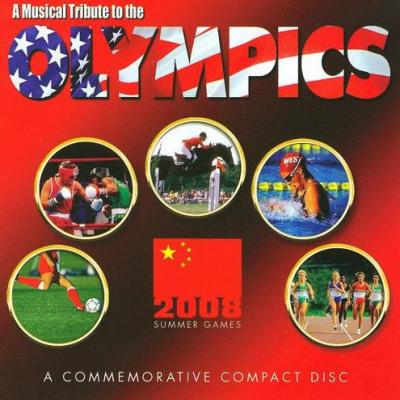
AllMusic lists the record as a pop/rock compilation and notes its 2008 release as a studio album, which tracks with the way it has circulated in physical CD form through retailers such as Wal-Mart and online shops. The CD itself has been marketed as a commemorative item for the 2008 Summer Games, with packaging that foregrounds the Olympic rings, red-and-gold color schemes and references to both the Olympics and the Special Olympics. That positioning makes it part souvenir, part gateway into lesser-known artists who share the “keep going” ethos.
Individual performers bring their own micro-stories into the mix. Asia featuring John Payne contribute “Long Way Home”, a six-minute piece that fuses classic AOR drama with forward-leaning guitar tones; antiMUSIC reported on its inclusion as a centerpiece track for the compilation. Singer Lucy Woodward appears with “Use What I Got”, leading with a soul-inflected vocal that leans into resilience. Songwriters such as Bob Pressner later cited their presence on the album as an important calling card, especially because the disc was associated with commemorating the Beijing Games.
From a production standpoint, the album stitches together recordings made in different studios and sessions, so the unifying glue comes from sequencing and mastering rather than from a single composer. The running order walks a line between radio-friendly hooks and slower, cinematic moods. You can hear choices aimed at variety — alternating male and female leads, changing tempo, balancing guitar-heavy cuts with piano-driven pieces — but the through-line stays clear: songs need to sound big enough for a stadium shot yet personal enough for headphones.
Tracks & Scenes
Because this is a compilation rather than a dedicated film soundtrack, most songs do not have one locked-in screen moment or official timestamped cue. Instead, they have “typical uses”: sports highlight reels, fan-made Olympic videos, broadcast bumpers, or simply the imagined scenes listeners build in their heads. I will frame the following highlights with that in mind — less “at 01:23:45 of the movie” and more “here is the kind of moment this track powers”.
“Long Way Home” — Asia featuring John Payne
Where it plays: On the album this track usually feels like an early, statement piece: a six-minute, mid-tempo AOR journey with soaring vocals and long guitar lines. Picture a dusk training montage: athletes running up empty stadium steps, a swimmer walking alone through a quiet natatorium, a pole vaulter checking the runway tape. The song works non-diegetically, as if blasting over speakers in the mind rather than from a visible source on screen, stretching across a three-to-four-minute highlight package before fading into crowd noise.
Why it matters: This is the “we are not there yet, but we will get there” song. It nails the emotional space between departure and arrival — perfect for qualifiers, opening days and the long road between minor meets and the Games.
“Use What I Got” — Lucy Woodward
Where it plays: Imagine a cut from crowded locker room to a smaller, quieter warm-up area. A gymnast tapes her wrists, a sprinter checks her spikes, a Paralympian adjusts a racing chair. “Use What I Got” comes in with a groove that feels more intimate than bombastic; it fits a two-minute profile piece on an underdog, air-playing in the background of interviews and slow-motion practice shots rather than over stadium P.A. It sits non-diegetically in the sound mix but feels like a secret pep-talk.
Why it matters: The lyric stance — working with limitations instead of wishing them away — dovetails with Special Olympics messaging and with countless personal-journey stories. It connects the Olympic narrative to everyday resilience.
“Break Me Out” — The Rescues
Where it plays: This track has the energy of a pivot point. Think of a night-time cityscape between events: neon reflections on wet asphalt, slow dolly shots of buses leaving the venue, fans still wrapped in flags. In a broadcast context it would sit well under a recap of upsets and breakthroughs, its chorus kicking in as editors cut to tears on the podium and close-ups of empty lanes or mats. The song functions non-diegetically, giving coherence to quick cuts without drawing too much attention to itself.
Why it matters: It is about breaking patterns — the shock of a world record, the first medal for a small delegation, the teenager who disrupts an established champion’s script. The arrangement holds tension and release the way good competition does.
“Long Way From Home” — Asia
Where it plays: Digital releases related to the Tribute to the Olympics concept keep returning to Asia’s work, so it is easy to picture “Long Way From Home” over long-form features about athletes who train abroad. Visuals: snow-dusted training tracks, foreign language billboards, phone calls back home. The track’s six-minute span allows editors to ride its verses for narrative and reserve the solo sections for B-roll of travel and transition.
Why it matters: The title alone tells you the story: you leave home to chase something almost no one gets. That makes it ideal for migration, sacrifice and cross-border coaching arcs.
Untitled ballads & mid-tempo rock cuts — various artists
Where they play: Several lesser-known contributors bring radio-ready songs that never became global hits but fit perfectly into filler spaces: medal-table graphics, venue establishing shots, late-night recap shows. They often accompany slow-motion replays, focusing more on harmony and steady rhythm than on flashy hooks.
Why they matter: These are the connective tissues of the album — the tracks that make the playlist listenable front-to-back and that give smaller artists a rare shot at global Olympic-adjacent exposure.
Notes & Trivia
- The CD has been marketed as a commemorative disc for the 2008 Beijing Summer Games, blurring the line between souvenir and compilation album.
- Promotional copy explicitly mentions the Special Olympics alongside the Olympic Games, widening the emotional and symbolic frame.
- Rock and alternative acts share space with more adult-contemporary voices, so the album can move from stadium bombast to late-night introspection in minutes.
- Some artists later highlighted their presence on the album in bios and press kits, treating it as proof of “global” reach.
- The title concept proved strong enough to spawn at least one follow-up release connected to the 2012 Games.
Music–Story Links
Even without a single narrative film, the album still traces familiar Olympic storylines through its sequencing. Early tracks leaning on steady mid-tempo rock naturally map onto qualification rounds and training. You can hear long chords and extended intros as stand-ins for early morning practices, half-empty stands and travel days when nothing goes to plan.
By the mid-section, songs with more pronounced drum patterns and denser guitar layers feel like heat-of-competition cues. They fit sprints, swimming finals, judo bouts and any other event where risk spikes quickly. In listening terms, this is where I feel tension: verses as pre-start silence, choruses as the gun.
Ballads and slower pieces tend to occupy the back half of the album, which makes them ideal companions for medal ceremonies, national anthems and the “what now?” interviews that arrive after victory or loss. Tracks like “Use What I Got” connect especially strongly to individual profiles of athletes overcoming structural disadvantage: lack of funding, late starts, injuries, discrimination.
When you line these songs up alongside actual Olympic coverage, an informal pattern emerges. The anthemic rock songs attach themselves to collective moments (parades of nations, stadium crowd shots). The more intimate cuts attach to individual journeys (a single runner, a single family watching at home). The compilation quietly encodes both levels, making it useful background music for broadcasters and fans who want a ready-made emotional arc.
Reception & Quotes
The album never became a blockbuster chart phenomenon, but it carved out a niche as a themed compilation for the 2008 Summer Games. According to AllMusic, it sits squarely in the pop/rock and alternative/indie rock space, and it has remained a catalog title rather than a constantly promoted product. Physical copies now circulate mainly through second-hand platforms and specialty online sellers rather than big box front racks.
For participating artists, however, the disc carried symbolic weight. AntiMUSIC framed Asia featuring John Payne’s contribution as a significant placement, highlighting that “Long Way Home” anchored the commemorative CD for Beijing. Blogs covering musicians like Bob Pressner later pointed out that being featured on A Musical Tribute to the Olympics was part of a broader portfolio of high-visibility moments, alongside festival appearances and cable specials.
Listener response shows up less in formal reviews and more in scattered comments on retailer pages and forums: people mention buying the disc as a memento of the Beijing Games, or as background music for viewing parties and youth sports banquets. In that sense the album succeeds as designed — not as something listeners obsessively analyze track by track, but as a companion piece for a specific global event that still works as a workout or driving playlist years later.
“Classic rock fans will appreciate ASIA’s ‘Long Way Home’ on the commemorative Olympic CD.”
Music news blurb, antiMUSIC
“A commemorative compilation featured at the 2008 Beijing Olympics.”
Artist profile note on Bob Pressner
“Here’s a few more albums that I found exist: Go For Gold 2008… A Musical Tribute to the Olympics – 2008.”
Film score discussion forum post
Interesting Facts
- The CD’s producer, Marshall Blonstein, has a long history with audiophile-leaning labels, which helps explain the emphasis on studio polish and stereo imaging.
- Morada Music positioned the disc as both a tribute to Olympians and to Special Olympics athletes, which broadens the album’s emotional and charitable framing.
- Retail blurbs mention availability at mainstream chains like Wal-Mart in 2008, showing that the project aimed for mass, not niche, reach.
- Streaming platforms now list related albums under the same “A Musical Tribute to the Olympics” branding for later Games, but with partially different tracklists and years.
- Some tracks on the digital “Tribute to the Olympics” releases later found second lives in TV dramas and promos, outliving their explicit Olympic framing.
- The compilation sits in a small sub-genre of “Games music” that also includes official opening ceremony releases and fan-curated playlists.
- Because the album relies on songs rather than orchestral fanfares, it offers an alternative to the John Williams-style symphonic Olympic sound universe.
Technical Info
- Title: A Musical Tribute to the Olympics
- Year: 2008 (CD release; later digital variants appear with nearby dates)
- Type: Studio compilation album, Olympics-themed
- Artists: Various Artists (including Asia featuring John Payne, Lucy Woodward, and others)
- Producer: Marshall Blonstein
- Label: Morada Music (CD catalog #2106 for the main release)
- Genres: Pop/Rock, Alternative Rock, Adult Contemporary tones
- Recording Mode: Stereo studio recordings, mastered for compilation coherence
- Release Context: Marketed as a commemorative disc for the 2008 Summer Olympic Games in Beijing, with additional nods to the Special Olympics
- Availability: Originally sold via major retailers and online shops; currently easiest to find through second-hand CD marketplaces and select digital services
- Notable Placements: Artist bios and music news sites highlight Asia featuring John Payne’s “Long Way Home” as a flagship track for the compilation
- Series Links: Connected thematically to later releases such as “A Musical Tribute to the Olympics – 2012 Summer Games”, which feature different track combinations
Questions & Answers
- Is “A Musical Tribute to the Olympics” an official soundtrack for the Beijing 2008 opening ceremony?
- No. It is a studio compilation themed around the Olympics, released in 2008, but it does not function as the official ceremony soundtrack.
- Which artists stand out on the album?
- Asia featuring John Payne, with “Long Way Home”, and Lucy Woodward, with “Use What I Got”, are frequently highlighted because their songs fit the Olympic themes very directly.
- How is this compilation different from typical sports highlight CDs?
- It leans more on full-length pop and rock songs than on short TV cues, so it works as a play-through album as well as a source of montage-friendly tracks.
- Are the tracklists the same across all “Tribute to the Olympics” releases?
- No. The 2008 CD and later digital releases linked to the 2012 Games share the brand concept but differ in exact song selections and running orders.
- Can I stream “A Musical Tribute to the Olympics” today?
- Some tracks and related albums under the same branding appear on major streaming platforms, but availability varies by region and by specific edition.
Canonical Entities & Relations
| Entity | Type | Statement (S–V–O) |
|---|---|---|
| A Musical Tribute to the Olympics | MusicAlbum | The album commemorates the 2008 Summer Olympic Games through a themed rock and pop compilation. |
| Various Artists | MusicGroup | Various Artists perform the songs collected on “A Musical Tribute to the Olympics”. |
| Marshall Blonstein | Person | Marshall Blonstein produces the album for Morada Music. |
| Morada Music | Organization | Morada Music releases the CD edition of “A Musical Tribute to the Olympics”. |
| Asia featuring John Payne | MusicGroup | Asia featuring John Payne contribute the track “Long Way Home” to the compilation. |
| Lucy Woodward | Person | Lucy Woodward performs “Use What I Got” on a release associated with the Tribute to the Olympics series. |
| Bob Pressner | Person | Bob Pressner appears as a featured artist on a commemorative Olympic compilation bearing the album’s title. |
| Beijing 2008 Summer Olympic Games | Event | The Beijing 2008 Summer Olympic Games provide the thematic focus for the album’s marketing and packaging. |
Sources: AllMusic album entry; Morada Music CD release data; retailer and auction listings for the 2008 CD edition; artist and label biographies; music news items on Asia featuring John Payne; blog and press materials mentioning the compilation as a commemorative release for the 2008 Beijing Olympics; streaming platform track pages for songs associated with the Tribute to the Olympics series.
November, 16th 2025
A-Z Lyrics Universe
Cynthia Erivo Popular
Ariana Grande Horsepower
Post Malone Ain't No Love in Oklahoma
Luke Combs Good Riddance (Time of Your Life)
Green Day Bye Bye Bye
*NSYNC You're the One That I Wan
John Travolta & Olivia Newton-John I Always Wanted a Brother
Braelyn Rankins, Theo Somolu, Kelvin Harrison Jr. and Aaron Pierre The Power of Love
Frankie Goes to Hollywood Beyond
Auli’i Cravalho feat. Rachel House MORE ›