Soundtracks:  A B C D E F G H I J K L M N O P Q R S T U V W X Y Z #


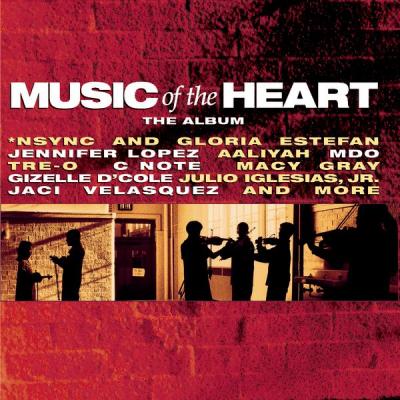
Music of the Heart Album Cover

"Music of the Heart" Soundtrack Lyrics

Movie • 1999

Track Listing


"Music of the Heart – The Album (Soundtrack from the Motion Picture)" – Album Guide to Tracks and Key Scenes

Music of the Heart 1999 trailer still with Meryl Streep and students in class rehearsal
Music of the Heart movie soundtrack lyrics, 1999

Overview

What happens when a modest classroom violin program gets scored like a late-1990s pop compilation and a Carnegie Hall gala all at once? Music of the Heart – The Album answers with a strange, satisfying blend: teen-pop ballads, Latin dance cuts and baroque concertos all orbiting one real-life teacher and her Harlem students.

The 1999 film Music of the Heart follows violinist Roberta Guaspari as she claws her way from personal collapse to hard-won respect, then faces the collapse of her school program when funding disappears. The soundtrack mirrors that arc: intimate strings and school-hall rehearsals give way to glossy pop singles and, finally, the overwhelming roar of a packed Carnegie Hall. Arrival, adaptation, rebellion, near-collapse — you can hear each phase in the way the album moves from chart-friendly radio songs to Bach’s severe counterpoint.

On screen, Mason Daring’s score and the Bach concerto keep us anchored in the world of disciplined practice: the bow noise, the intonation struggles, the fragile pride of kids playing in tune for the first time. Around that spine, the album layers marquee names — Gloria Estefan, *NSYNC, Jennifer Lopez, Aaliyah, Macy Gray and others — so the story of one underfunded Harlem program suddenly sounds as big as mainstream late-’90s pop itself. The film rarely gives these songs full music-video treatment, but the album invites you to imagine a parallel version of the movie where every hallway and subway ride has its own radio anthem.

What keeps the soundtrack distinct is that it never abandons its school-music DNA. By the time we reach the climactic Carnegie Hall performance of Bach’s Concerto in D minor for Two Violins, the polished studio singles feel like satellites circling that one central idea: kids and professionals sharing the same stage, the same piece, the same bow strokes. The album becomes a collage of aspiration — some tracks literally heard in the film, others expanding its emotional universe for listeners who never pick up a violin.

Across its phases, the genre mix also encodes the film’s themes. Latin pop and dance-floor production underline Harlem’s street life and family culture; R&B and teen-pop ballads carry vulnerability and reassurance; neo-soul grit (Macy Gray) hints at frustration and fight; Bach’s baroque rigor stands for structure, discipline and the frightening possibility of failure in public. In practice, the album feels like a playlist Roberta’s students might secretly build for themselves — half fantasy, half documentary of the work they actually do.

How It Was Made

The film grew out of the 1995 documentary Small Wonders, which chronicles the real East Harlem violin program founded by Roberta Guaspari. Director Wes Craven, best known for horror, took on this biographical drama as a deliberate departure. According to a Chicago Tribune piece, Meryl Streep had only a few weeks to learn enough violin to fake Bach convincingly, and she begged for extra time so the bowing would look honest rather than mimed.

Mason Daring composed the original score, weaving small, practical cues — tuning, warm-ups, simple scales — into more lyrical orchestral passages that could sit alongside licensed songs without clashing. The big pop centerpiece, “Music of My Heart,” came from songwriter Diane Warren, with David Foster producing and Gloria Estefan and *NSYNC recording the duet specifically for the film’s campaign. The track was cut both as a single and as emotional anchor for the album, then pushed heavily on radio and music television.

Music supervision and licensing had to balance three competing priorities. First, the film needed authentic classical moments, especially to recreate the 1993 Fiddlefest benefit at Carnegie Hall, where Guaspari’s students performed alongside major soloists like Itzhak Perlman, Isaac Stern and Joshua Bell. Second, the producers wanted then-current pop and R&B artists to give the album commercial life: hence Aaliyah’s “Turn the Page,” Jennifer Lopez’s “Baila,” Julio Iglesias Jr.’s “Nothing Else,” Jaci Velasquez’s Christian-pop ballad “Love Will Find You,” and more. Third, several Afro-Cuban and hip-hop cuts (from ¡Cubanismo!, Biz Markie and others) had to evoke Harlem’s wider soundscape without turning the movie into a pure jukebox.

Behind the scenes, the classical climax took the most care. Streep trained with professional violinist Sandra Park; the production also brought in real-life stars who had appeared at the actual Fiddlefest. They restaged the Bach concerto with students and virtuosi alternating across the stage, a pattern that the recording on the album partially preserves. For the album release itself, Epic and Sony Music Soundtrax packaged the pop cuts and the Bach finale as Music of the Heart – The Album, with multiple regional issues on CD, cassette and later digital platforms.

Music of the Heart trailer frame highlighting Carnegie Hall benefit concert sequence
Music of the Heart movie soundtrack lyrics, Carnegie Hall benefit sequence, 1999

Tracks & Scenes

The film does not use every album track in a big, spotlighted way, and public documentation of exact timestamps is patchy. Where scene-by-scene information is clear, it appears here; for some album-only cuts, their role is more conceptual than on-screen.

“Music of My Heart” — Gloria Estefan & *NSYNC
Where it plays: The duet functions as the film’s emotional coda. After the Carnegie Hall benefit concert reaches its peak, the movie moves into its closing montage and end credits. “Music of My Heart” plays non-diegetically over images of the students’ triumph, archival photos, and titles that situate the real Guaspari story beyond the film. The single also dominates trailers and TV spots, as well as home-video promos that invite viewers to stay after the feature to watch the full music video.
Why it matters: The song translates the teacher–student bond into mainstream pop language. Its key change and belt-heavy chorus echo the kids’ leap from tiny classrooms to a legendary stage, and the lyrics frame Roberta not as a savior but as someone who gave students a voice they did not know they had.

“Concerto in D Minor for Two Violins” — J.S. Bach, performed by Itzhak Perlman, Joshua Bell and ensemble
Where it plays: This is the climax at Carnegie Hall. The camera tracks across rows of conservatory-trained stars and teen musicians from Harlem, all sharing the same bow strokes and contrapuntal lines. The performance is diegetic — we see the orchestra on stage, the audience leaning forward, the kids reading the hall’s enormous space for the first time. In the film’s final minutes the concerto bleeds into more reflective shots, then yields to the pop single over the credits.
Why it matters: Structurally, this piece is the payoff for every squeaky rehearsal we have watched. The double-violin texture mirrors the film’s core relationship: seasoned professionals and young learners in dialogue, neither fully dominating the other. It also plants Guaspari’s story firmly inside the classical canon rather than on the fringes of community arts.

“Orange Blossom Special” — Mark O’Connor & Young Musicians
Where it plays: Earlier in the third act, the students rehearse this notoriously tricky fiddle showpiece in a crowded school space. The scene is diegetic and a bit chaotic: too many kids, not quite enough air, late entrances, wrong notes. Roberta stops them, pushes for memorization, and reminds them that every piece (except the Bach) must be off-book before the concert. “Orange Blossom Special” later reappears as part of the Fiddlefest energy at Carnegie, with O’Connor’s presence tying the film back to the real event that inspired it.
Why it matters: The tune sounds like a train hurtling forward, and that is exactly how the coming concert feels to the kids. The piece forces them to move from hesitant reading to embodied playing, sharpening the contrast with the refined baroque style of the Bach concerto that follows.

“Baila” — Jennifer Lopez
Where it plays: The track is closely associated with the film — it appears on the official album and even became the basis for one of Jennifer Lopez’s early music videos. On screen, it surfaces in the background of lighter, more social passages rather than in a single, easily quotable set-piece, likely tied to street life and transitional montage material. Exact timestamps differ across releases and are not consistently documented in public scene guides.
Why it matters: “Baila” injects late-’90s Latin-pop swagger into a story that otherwise could feel purely classical. Its rhythm and bilingual flavor echo the neighborhood’s diversity and underline that the kids’ musical world stretches far beyond orchestra repertoire.

“Turn the Page” — Aaliyah
Where it plays: Aaliyah’s contribution is primarily felt on the album rather than remembered as a single famous scene. Contemporary soundtrack databases place the song in the film’s later stretch, where Roberta confronts exhaustion, political pushback and doubts about the future of her program, but publicly available summaries do not agree on a precise moment or shot sequence.
Why it matters: Even when you only encounter it on the album, “Turn the Page” feels like a companion track to Roberta’s midlife reinvention — a reminder that the story is about an adult starting over, not just kids beginning.

Afro-Cuban and hip-hop cues (¡Cubanismo!, Biz Markie, others)
Where they play: The film uses several cues that do not appear on the main album — Cuban dance tracks, underground hip-hop, and neighborhood grooves — to color scenes outside the classroom: street corners, home interiors, school corridors between lessons. These are mostly diegetic or semi-diegetic, heard from radios and sound systems rather than magically appearing on the score.
Why they matter: They stop the movie from sounding like a sealed conservatory. Every time a horn line or old-school beat cuts through, the viewer is reminded that the violin program competes with other claims on the kids’ attention, not just with silence.

Album-only cuts (“Love Will Find You,” “Seventeen,” “Do Something” remix)
Where they play: These tracks are part of the commercial album but are not heard in the finished film. Instead, they operate as an “imaginary” outer layer, extending the mood of courage, teenage doubt and persistence into a listening experience beyond the movie.
Why they matter: Their absence from the picture and presence on the disc highlight how late-’90s soundtracks often tried to be both narrative documents and pop samplers — a hybrid that suits a film about kids learning to hear themselves differently.

Music of the Heart trailer image focusing on violin students rehearsing in Harlem classroom
Music of the Heart movie soundtrack lyrics, classroom rehearsal scenes, 1999

Notes & Trivia

  • The project’s working title was 50 Violins, a nod to the number of instruments Guaspari initially scraped together for her East Harlem classes.
  • Madonna was once attached to play Roberta and trained on the violin before leaving over “creative differences”; Meryl Streep stepped in late in pre-production.
  • Many of the real-life Fiddlefest soloists — Itzhak Perlman, Isaac Stern, Joshua Bell and others — cameo as themselves in the recreated Carnegie Hall finale.
  • The album includes several songs not used in the film, while some Afro-Cuban cues heard on screen never made it onto the disc.
  • “Music of My Heart” earned Oscar and Grammy nominations and reached No. 2 on the Billboard Hot 100, outperforming the film at the box office.
  • Jennifer Lopez’s “Baila” from this soundtrack became a notable step on her path from actor to full-fledged pop star.
  • The Bach concerto recording on the album condenses a longer screen performance, trimming visual pauses and applause into a tighter audio experience.
  • CinemaScore audiences gave the film a rare “A+” grade, even though critics were more mixed about its sentimentality.

Music–Story Links

When Roberta first walks into her Harlem classroom, the score keeps things small: thin string textures, hesitant phrases, nothing that sounds like triumph. As her authority grows and the kids begin to sound like an ensemble, the film allows bigger musical gestures — Latin-pop glimpses, R&B drum loops, even crowd noise from block-level spaces. The soundtrack mirrors her shift from outsider to embedded presence in the neighborhood.

The pop tracks on the album often function as emotional “translations” of scenes the film plays more quietly. Aaliyah’s “Turn the Page,” for example, feels like a voice-over for Roberta’s private decision to risk her reputation for the benefit of her students: the lyrics about moving on echo her divorce and career reset, even if the song never takes over a scene the way a pure musical would. In a similar way, Jaci Velasquez’s “Love Will Find You” frames the kids’ trust in their teacher as a kind of faith, whether or not we actually hear the track under any single montage.

Bach’s concerto is woven directly into character beats. The students’ fear of playing “real classical music” in front of an elite New York audience becomes very literal when the two solo lines — originally conceived for virtuosi — are assigned across a patchwork of children and stars. Every cut from Roberta’s face to their bow arms is underscored by Bach’s tight fugal writing: if anyone falls apart, the whole texture collapses. The music embodies the risk the story has been promising.

Then there is “Music of My Heart,” which steps in where dialogue no longer helps. Once the concert succeeds and the kids have proven their point, no one needs more speeches about funding or pedagogy. The duet lets the film zoom out instead: the students’ story becomes one example among many of how a single teacher can alter a life trajectory. In pop terms, it is less about violins and more about the afterglow of being seen and believed in.

Reception & Quotes

The film’s overall reception landed in the “softly positive” camp. Review aggregators show a solid but not overwhelming approval rating, with most critics praising Streep’s commitment and the inspirational core while criticizing the script for leaning on familiar classroom-drama beats. In contrast, audience scores were notably higher, suggesting that viewers connected strongly with the music-education themes even when reviewers rolled their eyes at the sentimentality.

The soundtrack itself drew interest both as a collection of big-name late-’90s artists and as a rare mainstream release that still made room for a full Bach concerto movement. AllMusic and similar outlets treated it as a solid, if eclectic, companion piece: not quite a cohesive concept album, but stronger than a simple label sampler. According to Discogs and label credits, its multiple pressings across Epic and Sony Music Soundtrax also meant it quietly stuck around in bargain bins and catalogues for years after the film left theaters.

Critics frequently singled out the closing song and the Carnegie Hall sequence. As a CNN review put it, the movie “hits all the right notes” emotionally, even when it color-codes characters a bit too neatly. Later retrospectives on Wes Craven’s career often mark Music of the Heart as his “non-genre” outlier and point out how crucial Daring’s score and the carefully curated soundtrack were to making that experiment work.

“There are more challenging movies around. More original ones, too. But Music of the Heart gets the job done, efficiently and entertainingly.” Atlanta Journal-Constitution
“Streep’s depiction of an ordinary person doing extraordinary things transcends, inspires and entertains.” Critical consensus summary
“A throwback to old Hollywood, unafraid of classical music and those who play it.” IMDb user review summary
“If you wanted to encapsulate a typical ’90s Oscar-bait movie, Music of the Heart does a nifty job.” Retrospective ranking
Music of the Heart trailer focus on emotional finale and audience applause at Carnegie Hall
Music of the Heart movie soundtrack lyrics, finale and audience response, 1999

Interesting Facts

  • The soundtrack album was released in September 1999, ahead of the film, positioning “Music of My Heart” as a lead single for the movie’s campaign.
  • Only the Bach concerto from the film’s classical selections appears on the album; other baroque cues and practice pieces remain exclusive to the movie itself.
  • Several Cuban and hip-hop tracks heard in Harlem scenes were omitted from the album, while pop songs by Macy Gray and Tre O appear only on the disc.
  • The home-video edition promoted the Gloria Estefan/*NSYNC duet as a bonus feature, effectively turning the soundtrack’s flagship song into an after-credits extra.
  • Audio reviewers later described the Blu-ray’s 2.0 mix as modest but clear, noting that the orchestral climaxes still carry impressive dynamic punch.
  • The soundtrack’s mix of Latin, R&B, pop and classical anticipated the “playlist” model many later music-education films would adopt.
  • For collectors, different international issues carry slightly different catalog numbers, but all credit Epic and Sony Music Soundtrax as labels.
  • Because some album tracks were not in the movie, fans have spent years debating “head-canon” scenes that these songs might score if the film were re-cut.

Technical Info

  • Title: Music of the Heart – The Album (Soundtrack from the Motion Picture)
  • Film: Music of the Heart (1999), biographical musical drama about violin teacher Roberta Guaspari in East Harlem.
  • Type: Various-artists soundtrack album plus one major classical performance.
  • Composers (score): Mason Daring; Johann Sebastian Bach for the featured double-violin concerto.
  • Key pop writers/producers: Diane Warren and David Foster (“Music of My Heart”); additional production by Emilio Estefan Jr., Organized Noize and others on album cuts.
  • Music supervision: Coordinated through Miramax and Sony Music Soundtrax, combining licensed pop tracks, Afro-Cuban songs and newly recorded score.
  • Notable placements: Bach’s Concerto in D minor for Two Violins at the Carnegie Hall climax; “Music of My Heart” over the closing montage and credits; “Orange Blossom Special” in rehearsal and concert contexts; Latin and hip-hop cues coloring Harlem street and home scenes.
  • Label: Epic Records and Sony Music Soundtrax (multiple regional CD, cassette and later digital issues).
  • Original album release: mid-September 1999, roughly a month before the film’s wider theatrical run.
  • Format & duration: Approx. 51 minutes; issued on CD, cassette and digital download/streaming, with minor packaging differences between territories.
  • Chart & awards notes: Lead single “Music of My Heart” reached No. 2 on the Billboard Hot 100 and earned Oscar and Grammy nominations.
  • Home-media audio: Later Blu-ray releases carry a DTS-HD Master Audio 2.0 mix; theatrical prints used standard stereo and selected surround formats.

Questions & Answers

How does the soundtrack balance pop songs with the classical storyline?
It treats Bach’s double-violin concerto and student rehearsals as the narrative spine, then wraps them in late-’90s Latin, R&B and pop cuts that expand the emotional frame.
Is every song on the album actually used in the film?
No. Some pop tracks appear only on the album, while several Afro-Cuban and hip-hop cues heard on screen were left off the commercial release.
Why is “Music of My Heart” so central to the album?
It was written specifically for the film, promoted heavily in trailers and home-video extras, and became the awards-campaign flagship thanks to its chart and Oscar run.
What makes the Carnegie Hall sequence musically distinctive?
Professionals and students share Bach’s double concerto line by line, turning a canonical piece into a visual demonstration of access and shared authority on stage.
Can you enjoy the soundtrack without having seen the movie?
Yes. The album works as a snapshot of late-’90s pop and crossover classical; knowing the story simply sharpens how you hear the contrasts and sequencing.

Canonical Entities & Relations

Subject Relation Object
Wes Craven directs Music of the Heart (1999 film)
Meryl Streep portrays Roberta Guaspari
Roberta Guaspari co-founds Opus 118 Harlem School of Music
Mason Daring composes score for Music of the Heart (1999 film)
Diane Warren writes song “Music of My Heart”
David Foster produces recording “Music of My Heart”
Gloria Estefan performs duet on “Music of My Heart”
*NSYNC performs duet on “Music of My Heart”
Epic Records issues Music of the Heart – The Album
Sony Music Soundtrax co-issues Music of the Heart – The Album
Johann Sebastian Bach composes Concerto in D minor for Two Violins, BWV 1043
Itzhak Perlman performs in Carnegie Hall finale sequence
Joshua Bell performs in Carnegie Hall finale sequence
Carnegie Hall hosts Fiddlefest benefit concert depicted in the film
Opus 118 Harlem School of Music operates in East Harlem, New York City

Sources: CNN review “Music of the Heart Hits All the Right Notes”; AllMusic album entry; Discogs release notes; Italian and French Wikipedia soundtrack sections; IMDb soundtrack and external reviews; Chicago Tribune and other press on Streep’s violin preparation; essays on Opus 118 and Fiddlefest; Blu-ray audio notes; label and retailer descriptions for Music of the Heart – The Album.

November, 16th 2025


A-Z Lyrics Universe

Lyrics / song texts are property and copyright of their owners and provided for educational purposes only.