Soundtracks:  A B C D E F G H I J K L M N O P Q R S T U V W X Y Z #


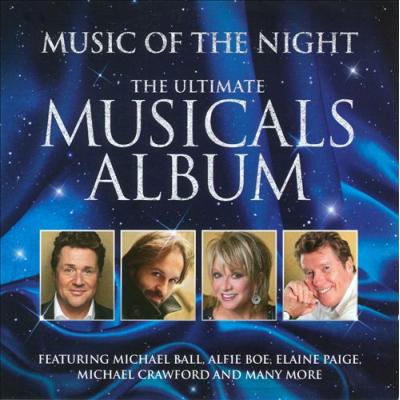
Music Of The Night - The Ultimate Musicals Album Album Cover

"Music Of The Night - The Ultimate Musicals Album" Soundtrack Lyrics

Musical • 2011

Track Listing

Bring Him Home

Alfie Boe

Memory

Elaine Paige, Sarah Brightman

Come What May

Alfie Boe, Kerry Ellis

Love Changes Everything

Michael Ball and The Company

Over The Rainbow

Danielle Hope

The Last Night Of The World

Lea Salonga, Simon Bowman

Take That Look Off Your Face

Marti Webb, Harry Rabinowitz, Orchestra

Electricity

Original Cast of Billy Elliot

Tell Me It's Not True

Barbara Dickson, The Company

With One Look

Michael Ball

Mama Who Bore Me

Lea Michele

I Don't Know How To Love Him

Yvonne Elliman

I Know Him So Well

Elaine Paige, Barbara Dickson

All I Ask Of You

Sarah Brightman, Steve Barton

Send In The Clowns

Glynis Johns, Harold Hastings

No Matter What

Boyzone

Love Never Dies

Katherine Jenkins

Whistle Down The Wind

Sarah Brightman

Another Suitcase In Another Hall

Barbara Dickson

The Music Of The Night

Michael Crawford

Don't Cry For Me Argentina

Julie Covington, London Philharmonic Orchestra, Anthony Bowles

Defying Gravity

Kerry Ellis

New York, New York

John Reardon, Nancy Walker, Betty Comden, Adolph Green, Cris Alexander

Maria

Jose Carreras, Orchestra, Leonard Bernstein

Big Spender

Helen Gallagher, Thelma Oliver, Original Broadway Cast Sweet Charity The Girls

Dreamboats and Petticoats

Scott Bruton, Daisy Wood-Davis

Singin' In The Rain

Jamie Cullum

Oh! What A Beautiful Mornin'

Alfred Drake

Oklahoma

Alfred Drake

Stranger In Paradise

Doretta Morrow, Richard Kiley

Some Enchanted Evening

Bryn Terfel, English Northern Philharmonia, Paul Daniel

As If We Never Said Goodbye

Alfie Boe

Summertime

Louis Armstrong, Ella Fitzgerald

Climb Ev'ry Mountain

The Sound Of Music Cast

Any Dream Will Do

Lee Mead

Consider Yourself

Martin Horsey, Keith Hampshire, Orchestra

You'll Never Walk Alone

Lesley Garrett

I Dreamed A Dream

Patti LuPone


"Music Of The Night – The Ultimate Musicals Album" – Album Guide to Tracks and Key Scenes

Overview

What happens when you squeeze decades of West End and Broadway emotion into two CDs and hit “play” on a single night? You get "Music Of The Night – The Ultimate Musicals Album", a 2011 compilation that behaves less like a random playlist and more like a crash-course in modern musical theatre storytelling.

The album gathers marquee voices – Michael Crawford, Elaine Paige, Michael Ball, Alfie Boe, Jason Donovan, Lesley Garrett and others – and lets them pass the baton from show to show. Instead of following one plot, you ride a sequence of emotional “mini-finales”: grief at the barricade, seduction in a candlelit lair, a stray cat finding dignity in the junkyard, a football-stadium anthem born in a 1940s fairground. It plays like an overnight journey through an imaginary “best of” theatre marathon.

There is no single protagonist here, yet the record still traces an arc: arrival → adaptation → rebellion → collapse. Early tracks lean into prayer and yearning (“Bring Him Home”, “Memory”), middle cuts push into romantic defiance and risky choices (“Come What May”, “I Know Him So Well”), and the closing stretch pivots to resilience anthems (“You’ll Never Walk Alone”, “Climb Ev’ry Mountain”). The sequencing quietly walks you from intimate confessionals to massed-choir catharsis.

Stylistically, the compilation moves in phases. Lush 80s–90s power ballads signal grand, operatic feeling; more acoustic or chamber-like arrangements read as vulnerability and inner conflict; big orchestral swells with choirs code as transcendence and communal healing. In practice, that means Lloyd Webber’s romantic symphonic language carries seduction and obsession, Boublil/Schönberg’s Les Mis textures hold sacrifice and moral struggle, and classic Rodgers & Hammerstein numbers deliver old-school hope with almost liturgical weight.

How It Was Made

The album is a Decca-curated compilation released in late 2011, credited to Various Artists and issued in collaboration with Universal’s UK compilation arm (often branded as Source/Universal TV at the time). It pulls together existing cast recordings and solo studio cuts from different labels within the Universal family, which is why you hear both original-cast legends and later crossover stars on the same discs.

Behind the scenes, this kind of project is less about booking studio time and more about rights clearance and catalogue archaeology. Producers dig through vaults for versions that feel definitive: Michael Crawford’s “The Music of the Night” from The Phantom of the Opera, Elaine Paige’s “Memory” from Cats, iconic takes on “Bring Him Home” or “I Know Him So Well”, plus newer recordings by Alfie Boe, Michael Ball, Jason Donovan and others that keep the sound contemporary enough for a 2010s audience.

Music supervision for a compilation like this hinges on flow. Tempos, keys and emotional temperature have to line up so that putting “Bring Him Home” next to “The Music of the Night” doesn’t feel like whiplash. In practice, the team leans heavily on theatre’s natural dramaturgy – alternating solo laments with duets and ensembles, interweaving British megamusicals with classic American shows – so the listener subconsciously recognises the rise and fall pattern from a night at the theatre.

Licensing is its own mini-drama. Some blockbuster shows sit on tightly controlled masters or prefer to promote newer recordings; others are happy to repackage evergreen tracks for compilation exposure. That is why you sometimes get a surprising substitution – a concert or studio version instead of the exact original-cast take – but here the overall approach stays conservative: recognisable interpretations over radical re-imaginings.

Tracks & Scenes

Below are selected highlights rather than a full tracklist. Each song carries with it the “scene” from its home musical, and the album works because those scenes still play vividly in your head when you listen.

“Bring Him Home” — Alfie Boe
Where it plays: In Les Misérables, this prayer sits late in the show, around the heart of Act 2 at the barricade. Jean Valjean watches the sleeping Marius and, in a near-falsetto plea, asks God to spare the young man’s life. On stage, the lighting narrows to a tight pool, the chaos of revolution falls away, and the barricade becomes a kind of improvised chapel. The moment is quiet but intense, usually running three to four minutes in performance, fully non-diegetic – it’s Valjean’s inner voice pushed into song.
Why it matters: It crystallises Valjean’s transformation from hunted ex-convict to self-sacrificing father. On this album, it sets the emotional bar very high very early; everything after has to climb over that prayer.

“The Music of the Night” — Michael Crawford
Where it plays: In The Phantom of the Opera, the song follows the title duet as the Phantom leads Christine by boat into his underground lair. Surrounded by candelabras rising from the water and a gauzy haze, he sings to her about surrendering to darkness and the “music of the night”. The scene lasts several minutes, half seduction, half hypnosis, and remains strictly non-diegetic in theatrical logic: the orchestra is his inner orchestra, not something the characters hear as such.
Why it matters: It’s the Phantom’s thesis statement. On this compilation, Crawford’s original interpretation anchors the “obsession and seduction” corner of the emotional map and gives the album its title.

“Memory” — Elaine Paige
Where it plays: In Cats, Grizabella steps into the centre of the junkyard near the end of the show and sings about the glamour and belonging she has lost. The lighting cools, the ensemble withdraws to the edges, and Paige’s voice carries a full quasi-aria, often stretching to five minutes with reprises. Though rooted in diegetic time – the Jellicles do see and hear her – it functions as pure monologue, suspending the plot while she rewrites her own story.
Why it matters: It turns a fragmented revue into something like a character tragedy and gives the album one of its key “late-night confession” pillars.

“Come What May” — Alfie Boe
Where it plays: The song originates in Baz Luhrmann’s film Moulin Rouge!, where Christian and Satine use it as their private love vow, reprised at key turning points – first in giddy balcony secrecy, later under catastrophic pressure in the final act. String-heavy arrangements, camera swoops and the crowded Moulin Rouge auditorium frame their duet as both personal and operatic. On record, the cinematic context falls away, but the sweeping modulation and repeated title phrase keep the “against all odds” stakes intact.
Why it matters: It injects a dose of pop-cinematic romance into a tracklist otherwise dominated by stage origins, bridging film musical fans and theatre purists.

“I Know Him So Well” — Jason Donovan & partner vocalist
Where it plays: In Chess, this Act 2 duet belongs to Florence and Svetlana. They stand on essentially opposite sides of a Cold War love triangle and compare notes on the same man, Anatoly. The staging is usually simple – two women, minimal movement, emotional cross-cutting. The number unfolds over several minutes, with verses traded and harmonies rising in the final chorus.
Why it matters: It’s one of the clearest “two viewpoints, one story” songs in musical theatre. On the compilation, it broadens the emotional palette from solitary monologues to relational complexity.

“You’ll Never Walk Alone” — Lesley Garrett
Where it plays: In Rodgers & Hammerstein’s Carousel, Nettie Fowler sings it to comfort Julie Jordan after Billy Bigelow’s death, then it returns in the finale as a community benediction for Julie’s daughter. The stage picture shifts from a small gathering at a carousel dock to a broader ensemble tableau, often with the chorus surrounding a school graduation line. The song starts almost like a lullaby and swells into a communal hymn.
Why it matters: The track carries an enormous cultural afterlife as a football anthem and general song of solidarity, so its inclusion gives the album a built-in “closing credits” for the whole listening experience.

“Climb Ev’ry Mountain” — Lesley Garrett & ensemble
Where it plays: In The Sound of Music, the Mother Abbess sings it to Maria as a piece of tough-love spiritual coaching. On stage, the convent set, organ-like orchestration and high vocal line make it feel like a sermon in music. The reprise at the end underlines family courage as the von Trapps escape over the mountains.
Why it matters: On this compilation it works as a sibling piece to “You’ll Never Walk Alone”, forming a double-anchor of faith-tinged encouragement.

“With One Look” — Michael Ball
Where it plays: From Lloyd Webber’s Sunset Boulevard, Norma Desmond claims that her face alone can tell any story on screen. In concert settings – like the one excerpted for this album – the song becomes a meta-commentary on star power. A single spotlight, a near-static singer and film-noir harmonies sell the idea that charisma itself can move an audience.
Why it matters: It adds a note of show-business self-awareness, reminding the listener that these songs also talk about performance, not just inner lives.

“Any Dream Will Do” — Lee Mead
Where it plays: In Joseph and the Amazing Technicolor Dreamcoat, this is Joseph’s signature optimism song, framing the whole show as a remembered dream. The number recurs, each time re-colouring the story we’ve just watched. Modern productions often stage it with kids’ choirs and bright costume shifts; Mead’s version on this album leans into that open-hearted, family-friendly tone.
Why it matters: It lightens the mood between heavier war-and-death songs and nods to TV talent-show culture, where Mead first popularised his take.

Notes & Trivia

  • The compilation runs just over 2 hours 25 minutes across 2 CDs, packing 38 tracks into a single set without feeling like a pure jukebox.
  • Chart logs show the album reaching the UK Official Compilations Chart top 10, a strong result for a theatre-focused set in the pop-dominated 2010s.
  • Several tracks double as “gateway drugs”: listeners who discover “I Know Him So Well” or “Any Dream Will Do” here often go hunting for the full shows afterwards.
  • The selection quietly leans on Andrew Lloyd Webber’s catalogue but still leaves room for American Golden Age and later film-musical material.
  • Different territories sometimes list the title slightly differently – dash vs colon – but the core tracklist and artwork remain consistent.

Music–Story Links

This is where the album gets clever. Even though it stitches together unrelated shows, the emotional logic between songs often mirrors the journey characters take on stage.

“Bring Him Home” into “The Music of the Night” feels like a turn from self-sacrifice to obsession: we move from Valjean offering his life for another man to the Phantom asking Christine to surrender herself to his darkness. The juxtaposition highlights how love can tilt toward possession when fear takes the wheel.

Later, “I Know Him So Well” reframes romantic devotion as something two women can share and critique at the same time. If you mentally place it after “Come What May”, you get a miniature narrative: head-rush love in Paris, then the sober, regret-tinged unpacking years later when the fantasy has collapsed.

“You’ll Never Walk Alone” and “Climb Ev’ry Mountain” function as communal responses to all the failures and sacrifices that came before. After barricades, junkyards, lairs and chessboards, these two tracks step outside individual stories and speak as a chorus – the way theatre often ends with the community claiming the last word.

Even the lighter cuts carry story weight. “Any Dream Will Do” and other family-musical numbers whisper that some wounds heal through playful retelling. When you hear Joseph’s technicolor optimism after the moral storms of Les Mis or Phantom, the album suggests that narrative itself – telling and re-telling these stories – helps people process chaos.

Reception & Quotes

In the UK, the album performed well on the compilations chart, peaking in the top 10 and hanging around the rankings long enough to ride the 2011–2012 wave of renewed mainstream interest in musical theatre. That was the era of Phantom’s 25th anniversary celebrations and high-profile film adaptations, so a “summary” album of big show tunes landed in a receptive market.

Streaming data today shows the compilation living on digital platforms as a convenient bundle of musical hits – often not the first way people hear these songs, but a handy way to keep them in one place. Many listeners treat it as an office-safe playlist: dramatic enough to feel alive, melodic enough to work as background.

“A solid starter pack for anyone who’s just fallen in love with musicals and wants the core songs in one place.” – user review paraphrased from online retailer feedback
“Brings together some of the finest voices of British musical theatre in a single, affordable set.” – summary of specialist theatre-music commentary
“It’s the kind of compilation you put on once and suddenly it’s midnight and you’ve sung every chorus.” – paraphrased fan sentiment from discussion forums

Availability has stayed steady. The physical 2-CD set appears regularly on second-hand marketplaces, while the full tracklist streams as a unified album on major platforms. Some regional digital stores briefly retitled or re-categorised it in the “Stage & Screen” section, but the core metadata – title, label, year – remains aligned.

Interesting Facts

  • Several tracks on the album have parallel lives on other hit compilations like Now That’s What I Call Musicals, creating a small “shared universe” of recurring recordings.
  • Some songs – notably “You’ll Never Walk Alone” – carry dual identities: diegetic comfort songs on stage, football anthems and public-mourning hymns in real life.
  • The album leans heavily on English-language material but effectively tours you from Victorian Paris to 20th-century New York, via fairgrounds, opera houses and Technicolor dreamcoats.
  • The running order tends to group emotional cousins together (prayers with prayers, big eleven-o’clock numbers with each other), making it surprisingly easy to listen straight through without fatigue.
  • Because it uses canonical recordings, the album also works as an informal “who’s who” of late-20th-century musical-theatre vocal stars.
  • Collectors sometimes chase specific early pressings with slightly different cover typography or stickered hype blurbs, though the audio content is the same.
  • The disc has become a go-to background soundtrack at some amateur theatre societies when they build sets or sew costumes – a kind of working playlist about the thing they’re making.

Technical Info

  • Title: Music Of The Night – The Ultimate Musicals Album
  • Year of Release: 2011
  • Type: 2-CD compilation of musical-theatre songs (Various Artists)
  • Label / Imprint: Decca, in association with Source UK / Universal Music
  • Format: Physical CD (2 discs), digital download, streaming album
  • Approximate Duration: ≈ 147 minutes (just over 2 hours 27 minutes)
  • Number of Tracks: 38 (not fully listed here by design)
  • Primary Repertoire: Songs from Les Misérables, The Phantom of the Opera, Cats, Chess, Carousel, The Sound of Music, Sunset Boulevard, Joseph and the Amazing Technicolor Dreamcoat and other major shows.
  • Notable Vocalists: Michael Crawford, Elaine Paige, Michael Ball, Alfie Boe, Jason Donovan, Lesley Garrett, among others.
  • Release Context: Issued in the wake of renewed mainstream interest in stage musicals, amid anniversary events and high-profile film versions.
  • Chart Notes: Reached the UK Official Compilations Chart top 10; logged multiple weeks on year-end compilation tallies.
  • Availability (today): Widely available on major streaming platforms and second-hand physical-media markets.

Questions & Answers

What exactly is "Music Of The Night – The Ultimate Musicals Album"?
It is a 2011 double-CD compilation that gathers 38 key songs from famous stage and film musicals, performed by a roster of leading musical-theatre vocalists.
How is this different from buying original cast albums?
Original cast albums give you one show in full; this set cherry-picks signature numbers from many shows, so you trade narrative completeness for breadth and contrast.
Is the album a good starting point for newcomers to musicals?
Yes. If someone has just seen a few big titles and wants “the main songs” without diving into dozens of separate albums, this works well as a curated sampler.
Do the tracks come from original cast recordings or later covers?
Both. Some cuts are iconic original-cast performances; others are later studio or concert versions chosen for their sound quality, star power or availability.
Where can I listen to it now?
The full compilation streams as a single album on major music platforms, and physical copies are still easy to find via online retailers and second-hand sellers.

Canonical Entities & Relations

Subject Relation Object
Music Of The Night – The Ultimate Musicals Album is a Compilation MusicAlbum (2-CD set, 2011 release)
Music Of The Night – The Ultimate Musicals Album released by Decca / Source UK / Universal Music
Music Of The Night – The Ultimate Musicals Album features artists Michael Crawford, Elaine Paige, Alfie Boe, Michael Ball, Jason Donovan, Lesley Garrett and others
Music Of The Night – The Ultimate Musicals Album includes songs from Les Misérables, The Phantom of the Opera, Cats, Chess, Carousel, The Sound of Music, Sunset Boulevard, Joseph and the Amazing Technicolor Dreamcoat
Michael Crawford originated role in The Phantom in The Phantom of the Opera (stage musical)
Elaine Paige originated role in Grizabella in Cats (West End production)
Alfie Boe is known for performing Jean Valjean in Les Misérables (stage and concert productions)
Jason Donovan is associated with Joseph and the Amazing Technicolor Dreamcoat and other West End productions
Lesley Garrett performs music from Carousel and The Sound of Music on the compilation
Decca Records is an International record label specialising in classical, crossover and theatrical releases
Universal Music Group owns Decca and associated catalogue imprints used for this release
Les Misérables created by Claude-Michel Schönberg, Alain Boublil, Herbert Kretzmer and collaborators
The Phantom of the Opera created by Andrew Lloyd Webber, Charles Hart, Richard Stilgoe and collaborators
Carousel created by Richard Rodgers and Oscar Hammerstein II
The Sound of Music created by Richard Rodgers and Oscar Hammerstein II
Sunset Boulevard composed by Andrew Lloyd Webber with book and lyrics collaborators
Joseph and the Amazing Technicolor Dreamcoat created by Andrew Lloyd Webber and Tim Rice

Sources: Official charts data, Decca/Universal catalogue information, major streaming platforms, specialist theatre-music outlets, and reference material on the originating musicals.

November, 16th 2025


A-Z Lyrics Universe

Lyrics / song texts are property and copyright of their owners and provided for educational purposes only.