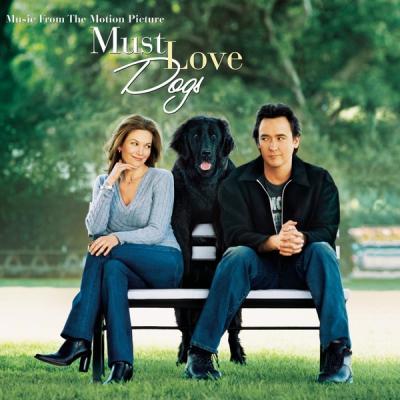
"Must Love Dogs" Soundtrack Lyrics
Movie • 2005
Track Listing
Christopher Plummer
Linda Ronstadt
Sheryl Crow
Eddie Holman
Stephanie Bentley
Rilo Kiley
Susan Haynes
Ryan Adams and the Cardinals
Susie Suh
Rodney Crowell
Natalie Cole
Diane Lane
"Must Love Dogs (Music from the Motion Picture)" – Album Guide to Tracks and Key Scenes
Overview
What makes a rom-com feel like real life: the meet-cute or the music that says what characters can’t? Must Love Dogs leans on both. A freshly divorced Sarah (Diane Lane) and earnest boat-builder Jake (John Cusack) sift through online dates, family meddling, and one Newfoundland to find language for risk and repair. The soundtrack is their shorthand—nostalgia, hope, a little bruised pride.
Craig Armstrong’s score wraps the film in warm strings and piano while vintage and 00s needle-drops carry the emotional beats. Opening with Linda Ronstadt signals bruised optimism; ending on a soft indie cut leaves space for a second chance. In between, diegetic jokes and sing-alongs keep the tone human.
Arrival → adaptation → rebellion → collapse: the cues trace that arc. Arrivals come with classic pop comfort; adaptation rides mid-tempo country-rock; rebellion lands in jangly indie; collapse gets a wistful orchestral swell before a buoyant closer.
Genres & themes by phase: 70s/90s pop-rock — resilience; alt-country — guarded hope; indie pop — vulnerability; orchestral romance — sincerity; standards/sing-along — family as chorus.
How It Was Made
Composer Craig Armstrong provides the connective tissue: lyrical motifs for Sarah’s tentative steps and Jake’s steadfastness, with restrained piano against small-ensemble strings. The recordings emphasize intimacy over sweep—close-miked, reverb kept tasteful—so the needle-drops can pop without whiplash.
Music supervision coordinated legacy licenses (Ronstadt, Natalie Cole), contemporary singer-songwriters (Rilo Kiley, Susie Suh, Ryan Adams & The Cardinals), and a key classical crossover (Lara’s Theme) to mirror the film’s dating-in-midlife premise—old feelings in a new medium.
Cast involvement matters: the ensemble’s in-story performance of “C’mon Get Happy!” turns a dinner table into a diegetic celebration, underlining the film’s thesis that community nudges people back to love.
Tracks & Scenes
“When Will I Be Loved” — Linda Ronstadt
Where it plays: Early main-title/establishing stretch (opening minutes). The lyric’s plaint sets the film’s premise as Sarah re-enters the dating pool; we cut between hopeful clicks and awkward first glances. Non-diegetic; ~1–2 minutes used.
Why it matters: Stakes in one line—cheated, mistreated. It frames midlife dating as recovery, not regression (as noted by a contemporary review).
“The First Cut Is the Deepest” — Sheryl Crow
Where it plays: Early montage of near-misses and emotional caution before the first dog-park date. Non-diegetic; excerpt.
Why it matters: Covers can soften memory; this one lets Sarah try again without pretending she isn’t hurt.
“Brown Penny” — Christopher Plummer (recitation of W. B. Yeats)
Where it plays: Mid-film, Bill (Plummer) reads the poem in an intimate family setting, offering Sarah an older generation’s distilled wisdom on love. Diegetic; full short piece (~1 min).
Why it matters: The film’s moral center—permission to risk. A father’s voice reframes romance as choice, not fate.
“I Never” — Rilo Kiley
Where it plays: Transitional montage as Sarah and Jake circle each other—calls not made, boats half-built, a kitchen light left on. Non-diegetic; excerpt.
Why it matters: Indie shimmer for ambivalence. The refrain dignifies hesitation without freezing the plot.
“Dance All Night” — Ryan Adams & The Cardinals
Where it plays: A bar-and-back-home rhythm after a messy evening; the track bridges a cut from public banter to private reflection. Non-diegetic.
Why it matters: Country-rock warmth says: not every setback is a tragedy.
“Prelude / ‘Lara’s Theme’ from Doctor Zhivago” — Erich Kunzel & Cincinnati Pops
Where it plays: Outside a revival screening of Doctor Zhivago, Sarah sees Jake exiting with someone else; the iconic theme surfaces as source/near-source memory. Diegetic adjacency.
Why it matters: Old-world romance used ironically—grand music for a small, very human misunderstanding.
“This Will Be (An Everlasting Love)” — Natalie Cole
Where it plays: A late-film uplift punctuating reconciliation, used as a bright needle-drop to reset tone before the end stretch. Non-diegetic.
Why it matters: Signals permission to believe in a durable ending without syrup.
“Shell” — Susie Suh
Where it plays: End credits (first cue), after the final image. Non-diegetic; a larger excerpt runs.
Why it matters: A hushed coda. After buoyant pop, an introspective exit honors what the characters endured.
“C’mon Get Happy!” — cast (Diane Lane, Dermot Mulroney, Stockard Channing, Elizabeth Perkins, Ali Hillis)
Where it plays: In-story sing-along at a family gathering; clinking plates, quick harmonies, laughter. Fully diegetic; short performance.
Why it matters: Community scores courage. It’s the movie’s thesis in one cheerful burst.
Notes & Trivia
- Composer Craig Armstrong threads piano motifs between songs so needle-drops feel earned, not pasted.
- Christopher Plummer’s Yeats recitation became a minor viral clip years later—proof that one minute can anchor a film.
- “Lara’s Theme” nods to old-school epic romance while the plot undercuts grand gestures with everyday awkwardness.
- The OST pairs legacy catalog (Ronstadt, Cole) with mid-2000s indie—an intentional “past meets present” palette.
- Cast karaoke is rare on studio rom-com OSTs; here it’s canon and appears on the album.
Music–Story Links
When Sarah’s profile goes live, Ronstadt’s classic frames risk as renewal, not naivety. Later, the Zhivago cue teases “fated” love even as the scene plays as misrecognition. During a family dinner, “C’mon Get Happy!” rebrands embarrassment as belonging—Sarah’s shame metabolized by chorus. At credits, Susie Suh’s “Shell” lets the lovers exhale; the relationship isn’t a fix, it’s a choice repeated tomorrow.
Reception & Quotes
Critics were mixed on the film, warmer on its musical warmth and lead chemistry. The album arrived day-and-date with the release and remains streamable; a Warner Archive Blu-ray reissue revived conversation about the film’s soundtrack cues.
“Opening with Ronstadt’s plaint… the movie leans on familiarity, security, sameness.” — PopMatters
“Cusack’s maverick turn steals the show in this middling romantic comedy.” — Variety
“Soundtrack chestnuts, but deployed with charm.” — a Blu-ray capsule summary
Interesting Facts
- Album release was July 26, 2005—three days before U.S. theatrical—so tracks doubled as marketing.
- “Brown Penny” is credited to Christopher Plummer on the OST—unusual for a major-label various-artists album.
- “This Will Be” is the same Cole hit that powers other rom-com finales; here it’s the penultimate sugar before an indie aftertaste.
- “C’mon Get Happy!” lists principal cast as performers on the album cut.
- “Shell” served as the reflective credits cue and later turned up in mobile phone promos in a one-minute edit.
- The OST sequencing mirrors story energy: vintage hurt → modern tentativeness → classic sweep → joyful release.
- Armstrong’s score avoids wall-to-wall underscores so songs can breathe—less is more.
Technical Info
- Title: Must Love Dogs (Music from the Motion Picture)
- Year / Type: 2005 — Movie soundtrack
- Composer: Craig Armstrong
- Music Supervision: Jonathan Hafter (feature credit)
- Key placements (select): Linda Ronstadt “When Will I Be Loved” (open); Sheryl Crow “The First Cut Is the Deepest”; Rilo Kiley “I Never”; Ryan Adams & The Cardinals “Dance All Night”; Erich Kunzel/Cincinnati Pops “Lara’s Theme”; Natalie Cole “This Will Be”; Christopher Plummer “Brown Penny”; cast “C’mon Get Happy!”; Susie Suh “Shell” (end credits).
- Release context: U.S. release July 29, 2005; album street date July 26, 2005.
- Label / album status: Epic Records (CD/digital); widely available on major streaming platforms.
- Edition notes: Warner Archive Blu-ray (2024) renewed interest in the soundtrack’s mix and cue choices.
Questions & Answers
- Is the opening song really part of the story’s setup?
- Yes. Ronstadt’s “When Will I Be Loved” frames Sarah’s bruised optimism and cues the film’s tone from the first minutes.
- What plays over the end credits?
- Susie Suh’s “Shell” leads the credits, giving a quiet, reflective exit after the joyful late-film drops.
- Why include “Lara’s Theme” from Doctor Zhivago?
- It winks at old-school epic romance while a modern dating hiccup unfolds right outside a revival screening.
- Do the actors really sing on the album?
- Yes. The cast’s in-story “C’mon Get Happy!” appears on the official soundtrack.
- How does the score interact with the songs?
- Armstrong leaves space: light piano/strings between cues so needle-drops can land without crowding dialogue.
Canonical Entities & Relations
| Subject | Verb | Object |
|---|---|---|
| Gary David Goldberg | directed | Must Love Dogs (2005) |
| Craig Armstrong | composed score for | Must Love Dogs |
| Epic Records | released | Must Love Dogs (Music from the Motion Picture) (2005) |
| Jonathan Hafter | supervised music for | Must Love Dogs (feature credit) |
| Christopher Plummer | performed | “Brown Penny” (recitation) in film and on OST |
| Natalie Cole | performed | “This Will Be (An Everlasting Love)” (featured in film) |
| Erich Kunzel & Cincinnati Pops | performed | “Prelude / Lara’s Theme” used in film |
| Rilo Kiley | contributed | “I Never” to OST |
| Susie Suh | contributed | “Shell” to end credits and OST |
| Team Todd / Ubu Productions | produced | Must Love Dogs (film) |
Sources: AllMusic; Apple Music; Variety; PopMatters; Wikipedia (film page); The Digital Bits Blu-ray review; Discogs (release page/label); IMDb (title/credits); ShotonWhat (music department listing).
November, 16th 2025
A-Z Lyrics Universe
Cynthia Erivo Popular
Ariana Grande Horsepower
Post Malone Ain't No Love in Oklahoma
Luke Combs Good Riddance (Time of Your Life)
Green Day Bye Bye Bye
*NSYNC You're the One That I Wan
John Travolta & Olivia Newton-John I Always Wanted a Brother
Braelyn Rankins, Theo Somolu, Kelvin Harrison Jr. and Aaron Pierre The Power of Love
Frankie Goes to Hollywood Beyond
Auli’i Cravalho feat. Rachel House MORE ›