Soundtracks:  A B C D E F G H I J K L M N O P Q R S T U V W X Y Z #


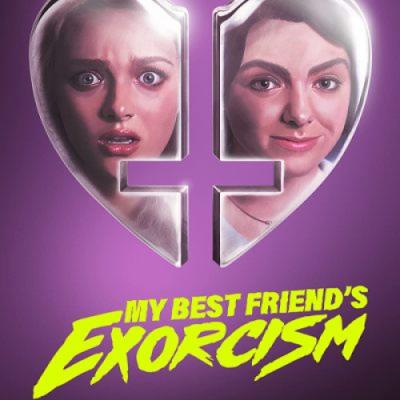
My Best Friend's Exorcism Album Cover

"My Best Friend's Exorcism" Soundtrack Lyrics

Movie • 2022

Track Listing


"My Best Friend's Exorcism (Original Motion Picture Soundtrack & Songs)" – Album Guide to Tracks and Key Scenes

My Best Friend's Exorcism official trailer frame with Abby and Gretchen in 1980s high school hallway
My Best Friend's Exorcism – Prime Video trailer imagery, leaning hard into late-80s teen horror and pop gloss.

Overview

What if an exorcism story swapped incense and Latin chants for A-ha, Tiffany and Blondie on a tinny mall PA? My Best Friend’s Exorcism plays that idea straight. Set in 1988, the film follows inseparable teens Abby and Gretchen as a weekend at a lake house ends with Gretchen possessed by a demon and Abby determined to drag her back, best-friend style, from literal hell.

The soundtrack leans into that premise with zero shame. The score by Ryland Blackinton threads beneath a wall of needle-drops: “Take On Me” as the girls pledge eternal friendship, “I Think We’re Alone Now” over lake-day freedom, “Somebody’s Watching Me” under a Ouija-board dare, and “Karma Chameleon” rolling in over the end credits. The music does almost as much world-building as the hair spray and postered bedroom walls.

Structurally, the film works in four musical phases. First is arrival: phone calls, lip-syncing, crushed-velvet teenhood, drenched in bright synth-pop. Then adaptation: as Gretchen changes, Blackinton’s score creeps in with darker textures under the still-bubbly hits. Rebellion hits in the middle — punkier and more aggressive song choices like “One Way or Another” as Abby pushes back — before the final collapse, where the licensed tracks mostly drop away and the score shoulders the exorcism and fallout.

By design, the soundtrack functions as both nostalgia machine and emotional compass. The pop songs sell the wish-fulfilment fantasy of sleepovers and lake trips; the score undercuts them with low drones, bent synths and sharpened percussion. Together they underline the story’s central tension: high-school life is supposed to sound like a mixtape; instead, it starts to sound like something is wrong in the mix.

In genre terms, you can map styles to themes pretty cleanly. Airy new-wave and synth-pop (“Take On Me”, “Lose All Sense of Time”) signal intimacy and freedom. Bubblegum hits (“I Think We’re Alone Now”, “Karma Chameleon”) stand in for the safe, mainstream world the girls think they inhabit. Darker, stalking tracks like “Somebody’s Watching Me” and “One Way or Another” mark paranoia and bullying. When the story finally strips back to score for the shack sequences and the exorcism, the absence of needle-drops is the point — adolescence has stopped sounding like the radio.

How It Was Made

The film adapts Grady Hendrix’s 2016 novel, directed by Damon Thomas from a screenplay by Jenna Lamia. It keeps the core of the book — a friendship tested by possession in Reagan-era South Carolina — while compressing subplots and sharpening the horror-comedy balance for a 97-minute streaming feature. Amazon Prime Video distributes; production comes from Gotham Group, Endeavor Content and Quirk Books, the novel’s publisher.

Composer Ryland Blackinton handles the original score. He approaches it less like a retro pastiche album and more like a hybrid between synth-driven horror and glossy teen drama. Reviews from horror outlets have singled out how his music “melds the poppy and the spooky”, blending bright, hooky motifs with queasier undercurrents rather than going full synthwave homage. The official digital release is compact: a single cue, “Score Suite (From the Amazon Original Movie ‘My Best Friend’s Exorcism’)”, issued by Amazon Content Services as a standalone track, effectively a five-minute highlights reel of the main ideas.

Most of the musical identity, though, comes from licensing 1980s hits. Music supervision steers hard into big-tent pop: a-ha, Tiffany, Rockwell, John Foxx, Blondie, Pete Seeger and Culture Club, plus “Ride the Line” by Fanfaire (written by Blackinton) to bridge score and song. Several critics noted that the movie’s soundtrack feels like something you might actually tape off the radio at the time, not just the usual canon of endlessly recycled 80s film staples.

The marketing doubles down on that approach. The official Prime Video trailer uses Tiffany’s “I Think We’re Alone Now” as its backbone, cutting between bedroom phone calls, lake-day mischief and flashes of demonic trouble while the song plays almost unbroken. It matches the film’s own opening lake sequence, reinforcing the idea that this is first a story about the fantasy of being alone together — then about what sneaks in when you are.

Behind-the-scenes style trailer frame with Abby and Gretchen in a bedroom surrounded by 1980s posters and cassette tapes
Production leans heavily on era-accurate details; Blackinton’s score slides between those posters and pop songs to give the story its horror edge.

Tracks & Scenes

The song placements in My Best Friend’s Exorcism are unusually well documented, right down to approximate timestamps. Below is a breakdown of the key tracks and how they pair with on-screen moments, based on scene-by-scene soundtrack guides and the film itself.

“Take On Me” — a-ha
Where it plays: Opening phone-call sequence. Abby and Gretchen talk late at night from their bedrooms, doodling, pacing and promising they will always be best friends. The song plays non-diegetically but feels like it could be blasting from one of their tape decks, with quick cuts matching the chorus hits as they mouth lines and laugh about crushes.

Why it matters: It stakes out the emotional baseline: this is a friendship story before it is a horror movie. The hyper-familiar synth riff gives the whole first stretch the feel of an 80s teen movie that will soon be hijacked by the supernatural.

“I Think We’re Alone Now” — Tiffany
Where it plays: Around six minutes in, during the lake-weekend hangout. Gretchen and the girls lounge on the dock, pose for Polaroids and run into the water, the track playing over wide shots of sparkling lake and sunburnt shoulders. Later, the same song serves as the prime musical hook for the main trailer, laid over shots of bedrooms, aerosol clouds and the first hints of something wrong.

Why it matters: The lyrics and the bright, mall-pop sound are almost too on point — two girls convinced nothing can touch them when they are together. That confidence makes the eventual betrayal at the shack feel harsher.

“Somebody’s Watching Me” — Rockwell
Where it plays: Still early in the film, with the group crammed into a living room, eating pizza and messing around with a Ouija board. The TV glows, lights are low and Rockwell’s paranoid chorus slides in just as the board starts to respond a little too quickly. The camera lingers on nervous giggles that shade into genuine discomfort.

Why it matters: It is the most literal musical joke in the film — a song about paranoia under a scene about opening a door you cannot close — but it works because the vibe is still playful. This is where the line between harmless occult dabbling and something darker starts to thin.

“Lose All Sense of Time” — John Foxx
Where it plays: Around eleven minutes in, when Wallace arrives at the lake house and the group heads to the water for a skinny-dipping session, high on LSD that may or may not be doing anything. The track’s moodier, slightly detached synths play over bodies slipping into the dark lake, flashlights bouncing and the wooded shore looming.

Why it matters: The title is a mission statement for the night. It marks the point where the film stops being teen comedy and starts drifting into liminal, horror-movie space; time and boundaries both go fuzzy.

“One Way or Another” — Blondie
Where it plays: Around the mid-film mark, when Gretchen returns to school changed. She walks down the hallway and into class with a sharper, colder vibe while classmates stare. The track kicks in as a quasi-anthem for her new, predatory energy, stitching together shots of side-eye and back-row whispers.

Why it matters: Using a stalker song under a scene where the possessed Gretchen becomes the social predator is on the nose, but effective. It makes her bullying feel like a slasher’s pursuit translated into high-school dynamics.

“Little Boxes” — Pete Seeger
Where it plays: Just past the hour mark, after a particularly vicious confrontation, Gretchen collapses on the floor clutching a knife, the room trashed. Over this, the brittle folk tune about cookie-cutter houses and lives starts playing, turning the scene into a darkly comic, almost surreal beat as adults try to process what is happening.

Why it matters: The contrast between the cheery, satirical song and the raw horror of the situation underlines one of the film’s running jokes: adults keep trying to fit what is happening into neat moral boxes, and absolutely nothing fits.

“Karma Chameleon” — Culture Club
Where it plays: Over the final stretch and end credits, after the exorcism and goodbye. Abby and Gretchen reaffirm their bond as Gretchen prepares to move; as the emotional dust settles, the song rolls in, carrying us into credits with its sing-along chorus.

Why it matters: On the surface, it is just a feel-good 80s closer. Underneath, it is a joke about moral whiplash: karma ultimately comes for the demon, for petty high-school cruelty, and in some ways for the adult world that ignored the girls.

“Ride the Line” — Fanfaire (written by Ryland Blackinton)
Where it plays: Used briefly in the film as a bridging track between straight-up pop needle-drops and Blackinton’s score, likely over a montage or transitional sequence. Public documentation confirms its presence and authorship, but exact on-screen timestamp references are inconsistent across sources.

Why it matters: It is a neat meta gesture: a diegetic-style cut written by the score composer, blurring the line between “song” and “score” in a story obsessed with mixtapes.

“Score Suite (From the Amazon Original Movie ‘My Best Friend’s Exorcism’)” — Ryland Blackinton
Where it plays: As a standalone release, the suite condenses several of the film’s recurring score cues — the creepy shack motif, demonic stingers, tender Abby-and-Gretchen material — into one continuous piece. In the movie, those fragments appear under sequences at the abandoned shack, the gradual escalation of Gretchen’s possession, and the exorcism at the lake house.

Why it matters: The suite is the only official score track available, so it becomes the de facto album for anyone who wants the non-song portion of the soundtrack. It also shows how Blackinton threads 80s-adjacent synth colours into more modern horror scoring techniques.

Songs & specific scene beats

“Take On Me” — a-ha
Where it plays: Starting song; cross-cuts bedrooms, posters, notebooks and landline phones. Abby doodles; Gretchen lies upside-down on her bed. Their promises to stay “forever” friends ride right on top of the chorus.

Why it matters: It practically functions as a thesis: love, friendship, escape into pop culture. Later, when things get horrific, you remember how simple their world once sounded.

“I Think We’re Alone Now” — Tiffany
Where it plays: Around 0:06, the group hangs out by the lake, passing around drinks, teasing each other and planning the night. The sound mixes with lake ambience; the camera lingers on sun flashes and water spray.

Why it matters: It is the film’s purest dose of 80s teen-movie fantasy. That fantasy curdles fast once the shack enters the picture, but the song keeps echoing as what Abby wants to get back to.

“Somebody’s Watching Me” — Rockwell
Where it plays: Still around 0:06, in the living-room Ouija scene. The track rises just as the planchette starts moving more convincingly. The room is crowded; eyes keep darting to shadows off-screen.

Why it matters: It injects camp into the first true horror beat. That balance — jump scares cushioned by pop — is the film’s tonal tightrope.

“Lose All Sense of Time” — John Foxx
Where it plays: Around 0:11, as the girls and Wallace strip down and run into the lake at night, tripping. We get wide, grainy shots of dark water and flashlights cutting through the trees, the song pulsing rather than blasting.

Why it matters: It scores the exact moment when everything goes off the rails. Once Abby and Gretchen head into the abandoned shack, the soundtrack slides from wistful to ominous.

“One Way or Another” — Blondie
Where it plays: Around 0:45, when Gretchen’s transformation becomes obvious. She strides through school halls with a new wardrobe and attitude, classmates parting. The music follows her like a personal theme.

Why it matters: It turns her into a slasher villain in a preppy blazer. The implication: the demon is weaponizing the social power she never felt she had.

“Little Boxes” — Pete Seeger
Where it plays: Around 1:06, after a knife confrontation at the lake house. Gretchen collapses; Abby hovers in shock. Instead of horror stabs, we get a dry, sardonic folk tune about sameness and conformity.

Why it matters: It lets the film crack a joke without undermining the stakes. The demon is tearing open all the hypocrisy under the town’s “nice little boxes”, and the song calls that out directly.

“Karma Chameleon” — Culture Club
Where it plays: Around 1:30 and into the credits. After the exorcism, Abby and Gretchen share a final goodbye as Gretchen’s family prepares to move. The song flows over their promises to stay in each other’s lives.

Why it matters: It keeps the tone light instead of tragic, in line with the film’s horror-comedy tilt. But it also winks at the idea that the universe eventually balances out what everyone has done.

Trailer frame showing Abby and Gretchen in the haunted shack with flashlight beams cutting through darkness
Scenes in the shack lean more on Ryland Blackinton’s score than on obvious 80s hits, marking the shift from teen movie into full possession horror.

Notes & Trivia

  • Despite the wealth of 80s songs used on screen, the official digital “soundtrack album” is just the Blackinton score suite, released as a single.
  • The licensed songs are tracked carefully in fan databases, with timestamps and scene descriptions that make reconstructing the film from audio surprisingly easy.
  • “Ride the Line” appears in credits and databases as performed by Fanfaire but written by Blackinton, effectively making it a bridge between pop song and in-world score.
  • The Tiffany track that anchors the trailer is the same one used for the early lake sequence, giving the promo an unusually accurate feel for the film’s tone.
  • Several critics who were lukewarm on the movie still singled out the soundtrack as one of its most enjoyable elements.

Music–Story Links

The movie’s central relationship — Abby and Gretchen against the world, then Abby versus whatever is inside Gretchen — is mapped directly onto the music. “Take On Me” and “I Think We’re Alone Now” are not just era signifiers; they are promises. When Abby later confronts the demon in the shack by reciting memories instead of prayers, you can almost hear those songs as ghosts of the moments she is describing.

Blackinton’s score tends to show up whenever the film needs to remind us that this is not just quirky nostalgia. The first extended use of original score under the possessed Gretchen comes with more dissonant synths and low-end rumble, undercutting bright hallways and pastel lockers. By the time the exorcism takes place, the pop tracks are gone; the score steps in with tense, slightly off-kilter rhythms that mirror Abby’s desperation and the sense that friendship alone might not be enough.

Song choices also signal who gets to control the narrative. When Gretchen is still herself, music feels shared — songs both girls love, tracks that define their in-jokes. Once the demon has a grip, “One Way or Another” and “Little Boxes” effectively belong to Gretchen’s new, cruel persona and to the adult world clamping down, respectively. Abby’s fight to reclaim her friend is, in part, a fight to reclaim the mixtape of their lives from outside forces.

In a broader sense, the soundtrack embodies the clash between sanitized 80s teen culture and the stuff it never wanted to talk about. As one horror review pointed out, the film pushes bubblegum aesthetics — pastels, pop hits, mall Christianity — then lets demonic horror tear holes in them. The music follows that trajectory: bright, catchy, often silly, then suddenly sinister without changing the playlist.

Reception & Quotes

Critically, My Best Friend’s Exorcism sits in the middle of the pack. Aggregated scores hover around the 50% mark from both critics and audiences. Reviews frequently praise Elsie Fisher’s performance and the sincerity of the friendship at the center, while criticizing the film for being neither especially scary nor consistently funny.

The soundtrack, though, is a recurring bright spot. Horror magazines and blogs have highlighted Blackinton’s ability to blend “poppy and spooky” elements in the score and the way the needle-drops lean into the lighter side of the 80s rather than the usual dark-synth clichés. Some reviewers felt that the sheer number of recognizable songs occasionally made the film feel like an extended playlist, but even those pieces concede that it is a fun one.

The soundtrack reflects the decade in all its glory, with A-ha, Tiffany, Blondie and Culture Club doing a lot of the heavy lifting. — summary of a UK review
A Ryland Blackinton score efficiently melding pop and scares, plus a choice selection of 80s hits, gives the film more personality than its script sometimes does. — paraphrased from a horror-press review
There are flashes of a better movie here; the songs and the sincere friendship often land even when the horror and jokes do not. — distilled from multiple general-press reviews
Trailer frame with Gretchen possessed, eyes hollow, under harsh school bathroom lighting
As Gretchen’s possession deepens, the soundtrack dials back the bops and lets the score and silence do more of the talking.

Interesting Facts

  • The novel’s chapters are all named after 80s songs; the film cannot adapt every title gag, but the soundtrack keeps the spirit by stacking recognizable radio hits.
  • The official score release is only one track long; all the licensed songs are available separately on their original albums or compilations.
  • Fan-made playlists on streaming platforms often mix the film’s songs with 80s horror themes from other movies, turning the story into part of a larger retro-horror mixtape.
  • Because Amazon controls both the platform and the score release, the “Score Suite” single is branded explicitly as “From the Amazon Original Movie”, which is relatively rare language for a one-track soundtrack.
  • “Take On Me” has become a modern soundtrack staple; this movie joins a long list of films and series that deploy the song for nostalgia punches.
  • Some reviewers joked that the soundtrack budget may have eaten into the effects budget — a back-handed way of saying the songs sometimes outshine the scares.
  • The demon Andras comes from real demonological lore; pairing an old name like that with Culture Club and Tiffany is exactly the kind of tonal mash-up the film lives on.
  • Because the film was produced directly for streaming, there was no traditional “original motion picture soundtrack” CD launch; the digital single and online song lists carry most of the documentation load.

Technical Info

  • Title (film): My Best Friend’s Exorcism
  • Release year: 2022
  • Type: Supernatural comedy-horror feature (Amazon Original)
  • Setting: 1988, mainly in and around a Catholic high school and lake house in South Carolina
  • Director: Damon Thomas
  • Screenplay: Jenna Lamia, based on the novel by Grady Hendrix
  • Stars: Elsie Fisher (Abby), Amiah Miller (Gretchen), Rachel Ogechi Kanu (Margaret), Cathy Ang (Glee), Christopher Lowell (Christian Lemon)
  • Original score composer: Ryland Blackinton
  • Score release: “Score Suite (From the Amazon Original Movie ‘My Best Friend’s Exorcism’)” digital single
  • Score label: Amazon Content Services (digital)
  • Score release date: early October 2022 (platform listings cluster around October 7–10, 2022)
  • Key licensed songs in film: “Take On Me” (a-ha), “I Think We’re Alone Now” (Tiffany), “Somebody’s Watching Me” (Rockwell), “Lose All Sense of Time” (John Foxx), “One Way or Another” (Blondie), “Little Boxes” (Pete Seeger), “Karma Chameleon” (Culture Club), “Ride the Line” (Fanfaire)
  • Trailer song: “I Think We’re Alone Now” (Tiffany) prominently used in the main Prime Video trailer
  • Production companies: Gotham Group, Endeavor Content, Quirk Books
  • Distributor: Amazon Prime Video (worldwide streaming)
  • Runtime: approx. 97 minutes
  • Genre tags (film & music): Comedy, Horror, Thriller, 80s pop, synth-based score
  • Availability: Film streaming on Prime Video; score single and all major songs available on standard music services as individual tracks or via original artist albums.

Questions & Answers

Is there a full official soundtrack album for My Best Friend’s Exorcism?
No traditional multi-track album exists. Officially you get Ryland Blackinton’s “Score Suite” as a digital single; all the 80s songs live on their original releases.
Who composed the score, and what does it sound like?
Ryland Blackinton composed the score. It mixes 80s-flavoured synth textures with more contemporary horror writing — pulsing bass, eerie pads, and a few melodic fragments that recur around Abby and Gretchen.
What song plays over the opening phone call and early friendship scenes?
That is “Take On Me” by a-ha, used as a non-diegetic track over Abby and Gretchen’s late-night conversation and promise to stay best friends.
Which song closes the movie over the end credits?
“Karma Chameleon” by Culture Club plays over the final scenes and into the credits, giving the ending a bright, poppy aftertaste despite the dark subject matter.
Does the film keep the book’s idea of chapter titles as 80s songs?
Not literally — the movie has no on-screen chapter headings — but the soundtrack replicates the spirit by building key beats around a run of recognizable 80s tracks.

Canonical Entities & Relations

Subject Relation Object
My Best Friend’s Exorcism (film) is directed by Damon Thomas
My Best Friend’s Exorcism (film) is written by Jenna Lamia (screenplay)
My Best Friend’s Exorcism (film) is based on My Best Friend’s Exorcism (novel) by Grady Hendrix
My Best Friend’s Exorcism (film) is scored by Ryland Blackinton
My Best Friend’s Exorcism (film) is distributed by Amazon Prime Video
My Best Friend’s Exorcism (film) is produced by Gotham Group
My Best Friend’s Exorcism (film) is produced by Endeavor Content
My Best Friend’s Exorcism (film) is produced by Quirk Books
Abby Rivers (character) is portrayed by Elsie Fisher
Gretchen Lang (character) is portrayed by Amiah Miller
Margaret Chisholm (character) is portrayed by Rachel Ogechi Kanu
Glee Tanaka (character) is portrayed by Cathy Ang
Christian Lemon (character) is portrayed by Christopher Lowell
Score Suite (From the Amazon Original Movie “My Best Friend’s Exorcism”) is composed by Ryland Blackinton
Score Suite (From the Amazon Original Movie “My Best Friend’s Exorcism”) is released by Amazon Content Services
Ride the Line is written by Ryland Blackinton
Ride the Line is performed by Fanfaire
My Best Friend’s Exorcism (film) features music by a-ha, Tiffany, Rockwell, John Foxx, Blondie, Pete Seeger, Culture Club
My Best Friend’s Exorcism (film) is set in late-1980s South Carolina

Sources: Wikipedia and other encyclopedic entries for film and novel; Soundtracki scene-by-scene song listings; Filmmusicreporter and Apple Music for score release; soundtrack-specialist sites on Ryland Blackinton; Rotten Tomatoes and a range of critic reviews (Variety, horror press, blogs); general coverage of 1980s songs like “Take On Me” in modern soundtracks; Prime Video trailer pages and write-ups confirming trailer music.

November, 16th 2025


A-Z Lyrics Universe

Lyrics / song texts are property and copyright of their owners and provided for educational purposes only.