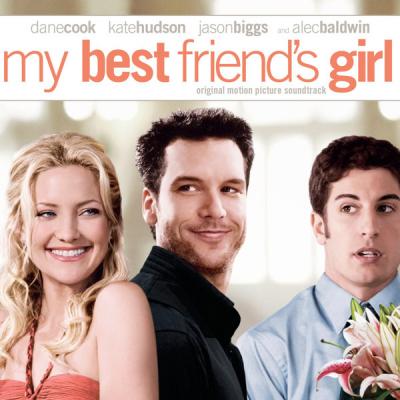
"My Best Friend's Girl" Soundtrack Lyrics
Movie • 2008
Track Listing
Jean Knight
Linda Rondstat
The Cars
Sweet
Nena
Tommy James
Etta James
John Hiatt
Glacier Hiking
Malbec
The Kooks
2 Live Crew
Teddy Thompson
John Debney
"My Best Friend's Girl (Original Motion Picture Soundtrack)" – Album Guide to Tracks and Key Scenes
Overview
What happens when a rom-com about a professional “bad date” leans on a classic Cars single, filthy Miami bass, and Johnny Cash’s apocalypse hymn? You get a soundtrack that behaves much worse than the movie’s heroes, and that’s exactly the point.
The film My Best Friend’s Girl (2008) follows Tank, a self-styled jerk-for-hire who terrorizes women on rebound dates so they run back to their exes. Alexis is the woman who refuses to be shocked, and Dustin is the best friend who hires the monster and then loses control of the script. The soundtrack sits right on top of that triangle: loud, tacky, nostalgic and sometimes surprisingly tender.
Instead of a modern pop playlist, the album leans on deep-cut soul, 70s and 80s rock, and a few carefully chosen standards. “Pop That Pussy” turns Tank’s car into a rolling red flag; “My Best Friend’s Girl” reframes his gig as a cosmic joke; “The Man Comes Around” lets the wedding meltdown play like a biblical prank. When the film finally reaches for sincerity, it grabs John Hiatt and Etta James rather than a power ballad, and that contrast is half the fun.
Across the film the music arcs from arrival to collapse. We enter with gritty New Orleans funk (“Do Me”) and raunchy Miami bass to underline Tank’s performance persona. Mid-film, clean power-pop and 80s radio rock (The Cars, Tom Petty, Nena, The Kooks, Sweet) color the prom and wedding sequences with high-school nostalgia. By the back half, rootsy Americana and classic soul — John Hiatt’s “Have a Little Faith in Me”, Etta James’ “At Last”, Johnny Cash’s “The Man Comes Around” — push the story toward something like emotional adulthood, even while the jokes keep undercutting it.
How It Was Made
The score comes from veteran composer John Debney, who by 2008 had already moved comfortably between family films, genre pieces, and romantic comedies. Here he supplies a light, guitar-friendly score, capped on album by the cue “Best Friends Again / I Love You”, which stitches together Tank’s belated emotional clarity in the final act.
The commercially released album, My Best Friend’s Girl (Original Motion Picture Soundtrack), arrived in mid-September 2008, just before the film’s U.S. theatrical opening. It’s a various-artists package on Lionsgate’s label, fourteen tracks running just under fifty-four minutes, mixing catalog songs with one prominent Debney cue. Soul, classic rock, power-pop and a handful of softer ballads are sequenced to roughly mirror the emotional swing of the movie rather than strict screen order.
Music supervision is credited to industry regulars, with Jay Faires handling overall supervision for Lionsgate. Clearance and editing duties support a pretty aggressive needle-drop strategy: twenty-plus licensed songs packed into a brisk 101-minute runtime. That’s a dense wall of pre-existing music for a mid-budget comedy, and you can feel the production using songs as structural pillars — opening montage, strip-club run, prom, church wedding, and the final restaurant showdown all arrive anchored to recognizable cues.
Behind the scenes, the choice of The Cars’ “My Best Friend’s Girl” as the title needle-drop is almost too perfect, mirroring the film’s premise word-for-word. According to one soundtrack database and several fan playlists, the team doubled down by letting the song bookend the story, appearing both when Tank first inserts himself into Alexis’ orbit and when they finally kiss over the end credits, which makes the track function almost like a sarcastic Greek chorus for the film.
Tracks & Scenes
Below are selected songs and their key scenes. Timestamps follow the theatrical cut (hours:minutes). Diegetic means characters hear the music in-world; non-diegetic is score or overlay.
“Do Me” — Jean Knight
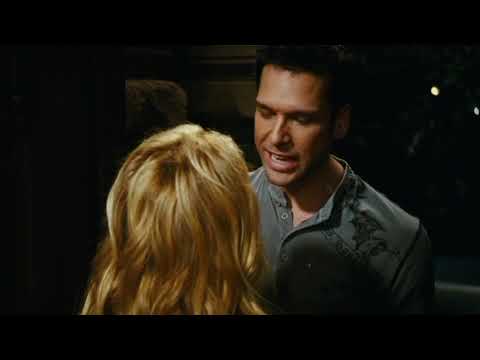
Where it plays: Over the opening minutes (around 0:00), Tank ends a date on a suburban doorstep. She is furious; he is unfazed. The greasy New Orleans funk rolls under their argument and into the cut that reveals his “business” model. A shorter reprise returns over the end credits as we loop back to Tank giving advice, closing the circle on his persona.
Why it matters: Sets the film’s sexual frankness from frame one and paints Tank as someone who hides behind retro party music and bravado.
“Pop That Pussy” — 2 Live Crew
Where it plays: First at about 0:03, Tank cranks the track in his car while telling a date his stereo is “stuck” on the song. Later, around 0:22, he pulls the same stunt with Alexis; instead of being offended, she knows every word and yells the hook out the window as they drive. Both times it’s diegetic, blasting inside the car and bleeding into the street and reaction shots.
Why it matters: This cue is the film’s litmus test: women who bail are “normal” clients, but Alexis rapping along instantly signals she can take Tank’s worst and throw it back at him.
“You’re No Good” — Linda Ronstadt
Where it plays: Around 0:05, Tank struts through a bar in slow motion after a successful “job”, taking cash, accepting toasts, and soaking in admiration. The song returns later near 1:28 when Alexis storms into a restaurant, throws red wine in his face mid-date, and humiliates him in front of a full room.
Why it matters: The first use flatters Tank; the second flips the lyric back on him. The same track frames his rise as a legendary jerk and his karmic comeuppance.
“My Best Friend’s Girl” — The Cars
Where it plays: At about 0:17, the title song kicks in as Dustin gives Tank permission to “do his thing”. We cut to Tank jogging in the park, staging a fake fall to meet Alexis while Dustin watches from a distance. It resurfaces around 1:30 as Alexis and Tank kiss during the restaurant “fake pregnancy” stunt and the track carries into the credits.
Why it matters: Lyrically it maps almost too cleanly onto the plot. Musically it supplies chirpy, ironic sheen that keeps the story from ever feeling like earnest heartbreak.
“Rockit To The Stars” — Lady Diamond & R.G. Tilthouse
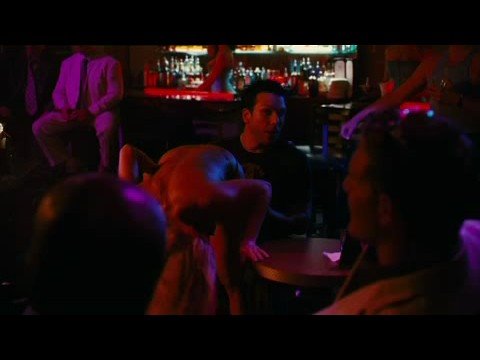
Where it plays: Just after the second “Pop That Pussy” blast (around 0:22), Tank drags Alexis to a strip club. This is the first track we hear inside, bouncing over the PA as dancers move on stage and Alexis surveys the room with detached amusement.
Why it matters: Marks the first moment Alexis fully steps into Tank’s gross world and enjoys it on her own terms, rather than as an object of his routine.
“The Bubble Club” — Michael Sean O’Neal
Where it plays: Around 0:24, second strip-club song. Alexis leaves Tank at the rail, heading to the bathroom, while the camera floats through neon and bodies. The track stays diegetic, loud but slightly muffled as we move around the club.
Why it matters: Gives texture to the strip-club sequence and underlines how normal and casual this environment is to Tank — a workplace as much as a moral test.
“Hot Rod” — Mark Weigle
Where it plays: The third piece of music in the club run (about 0:25) plays while Tank gets a dance and Alexis finally calls time on the whole bit, dragging him away. The song chugs along mid-tempo while Tank pretends to still be in control of the night.
Why it matters: Shows the moment his standard “worst date” formula fails; Alexis is not shocked, just bored.
“Don’t Do Me Like That” — Tom Petty and the Heartbreakers
Where it plays: Roughly 0:36, over a montage where Dustin tries to rebrand himself as Alexis’ “best friend” — coffee deliveries, awkward office encounters — while Tank continues quietly sleeping with her. The jangle-rock sits on top of cross-cut imagery of Dustin’s longing and Tank’s casual sex.
Why it matters: The lyric is almost Dustin’s internal monologue; the jaunty tone makes his humiliation sting less and the betrayal more absurd.
“Blue” — Malbec
Where it plays: Around 0:44 in one of the film’s rare genuinely sad beats. Dustin stands in the rain outside Alexis’ building, shouting up toward her window as the song’s moody indie textures play. It’s non-diegetic, swelling as his voice cracks and the neighbors stare.
Why it matters: Briefly reframes the story from his perspective, hinting that underneath the crude jokes there is one person actually wounded by all this game-playing.
“Separate Ways” — Teddy Thompson
Where it plays: At about 0:53, Tank stands outside the apartment complex after everything blows up between him and Dustin. He ends up sleeping in his car as the melancholic folk-rock plays over night exteriors and lonely streetlights.
Why it matters: Marks Tank’s first true low point; the music gives him a seriousness the script rarely grants him.
“Hallelujah Chorus” — Royal Philharmonic Orchestra
Where it plays: Around 0:55, Tank takes a devout woman to an aggressively themed Christian restaurant on one of his “from hell” dates. A bombastic recording of the “Hallelujah Chorus” blares over kitschy décor and heavily symbolic menu items.
Why it matters: Satirizes both Tank’s lack of boundaries and the film’s willingness to weaponize even sacred music for a bad joke.
“Always Where I Need To Be” — The Kooks
Where it plays: Kicks off the prom sequence around 1:00. Tank has arranged a 1970s-style prom to make up for Alexis missing her own as a teenager. We see decorations, punch bowls, and a school band set-up while this wiry indie-rock tune carries the upbeat mood.
Why it matters: Signals the film’s one sincere romantic gesture from Tank. The lightly scruffy British rock gives the prom a contemporary gloss rather than pure retro pastiche.
“99 Luftballons” — Nena
Where it plays: Immediately after, around 1:01, the German version of “99 Red Balloons” takes over as Tank hauls Alexis onto the dance floor. Colored balloons, disco lights and students crowd the frame as they finally move in sync, laughing for once without sarcasm.
Why it matters: The song is pure 80s nostalgia, but here it stands for brief, weightless happiness — a truce between Alexis’ cynicism and Tank’s show-off tendencies.
“Mercy” — Duffy
Where it plays: Third prom track at roughly 1:03. Tank coaches a mopey teenager, insisting he can get any girl in the room if he just tries, while Duffy’s retro-soul groove drives the background. Their argument escalates; the kid calls Tank a hypocrite for refusing to admit he cares for Alexis.
Why it matters: The lyric “You got me begging you for mercy” lands as an ironic commentary on Tank’s denial. It’s the moment the film gently calls him out via a random kid and a jukebox-styled song.
“Crimson and Clover” — Tommy James and the Shondells
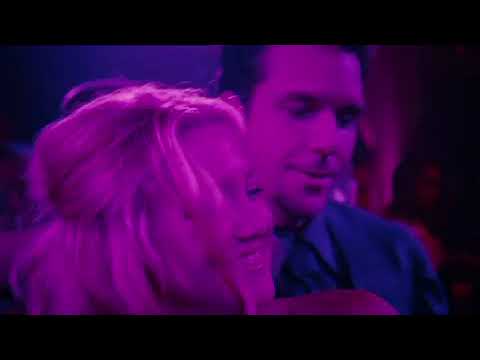
Where it plays: At about 1:04, the prom slows and this hazy, tremolo-drenched classic spins up. Tank and Alexis share a genuine slow dance; we get close-ups, shared jokes, her head on his shoulder, and the sense that she might actually be falling for him.
Why it matters: It is the film’s most straightforwardly romantic use of music. For a few minutes the raunch drops away and we are inside a teen-movie fantasy Tank never really had.
“The Man Comes Around” — Johnny Cash
Where it plays: Around 1:11 as Tank strides down the church aisle in slow motion, cigarette in his mouth, on a mission to sabotage Alexis’ sister’s wedding. Cash’s gravelly voice and apocalyptic imagery turn his entrance into a mock Book of Revelation moment.
Why it matters: The cue elevates a slapstick set-piece into something mythic and ridiculous at the same time. This is Tank playing self-styled angel of chaos — and the soundtrack taking him at his word for one scene.
“At Last” — Etta James
Where it plays: Roughly 1:14, as the newlyweds begin their first dance. The standard barely has time to breathe before Tank barges in, grabs the mic, and derails the moment in front of the entire reception.
Why it matters: Etta’s voice is shorthand for old-school romance. Cutting it off mid-flow underlines just how selfish Tank’s so-called noble sacrifice actually is.
“Have a Little Faith in Me” — John Hiatt
Where it plays: Around 1:20, after the wedding catastrophe. Dustin drives, listening to a voicemail from Tank, with the song spilling over the images of traffic lights and empty roads. It plays non-diegetically but feels like it’s coming from his car stereo.
Why it matters: The lyric asks for patience and trust just as Dustin has none left. It’s one of the few times the film lets music try to heal rather than provoke.
“Love Is Like Oxygen” — Sweet
Where it plays: At about 1:24, Tank jogs alongside Alexis in a long attempt to apologize and win her back. He is out of breath, stumbling over words; the sprawling 70s rock track creates a big, melodramatic halo around his very imperfect effort.
Why it matters: The song’s soaring, proggy structure turns a simple jog into a full montage of romantic penance, showing how seriously Tank finally takes his feelings.
“Best Friends Again / I Love You” — John Debney
Where it plays: Used as score in the later reconciliation beats (more prominent on the album than in casual viewing), this cue ties together Dustin’s and Tank’s truce and Alexis’ eventual forgiveness, particularly around the time-jump toward the ending.
Why it matters: It’s the only major score cue on the commercial album, and it quietly gives emotional glue to scenes that otherwise could feel like quick joke clean-up.
“Love Today” — Mika (trailer only)
Where it plays: In at least one theatrical/online trailer, Alexis shouts “I lost my virginity to this song!” while Mika’s exuberant “Love Today” blasts — a gag specific to the marketing cut, not the final feature.
Why it matters: Shows how the promotional campaign leaned on then-current pop to sell a more mainstream rom-com vibe, even though the film itself favors older catalog tracks.
Final reprises: “You’re No Good”, “My Best Friend’s Girl”, “Do Me”
Where it plays: The last reel cycles rapidly through these three songs: Alexis’ wine-throwing entrance scored to “You’re No Good” (~1:28), the reconciliatory kiss and playful fight set to “My Best Friend’s Girl” (~1:30), and a closing comedic beat over the credits with “Do Me” (~1:31).
Why it matters: The film ends in musical callbacks rather than new material, underscoring that Tank hasn’t fully changed; he’s just found someone willing to share his soundtrack.
Notes & Trivia
- The film uses around twenty-three distinct songs, while the official album only includes fourteen of them.
- Duffy’s “Mercy” is one of the most memorable cues in the prom sequence but is not on the soundtrack CD or digital album.
- Johnny Cash’s “The Man Comes Around” also turns up in other films, but here it scores slapstick wedding sabotage, not apocalypse.
- The soundtrack album carries a Parental Advisory label largely because of “Pop That Pussy” and some explicit lyrics elsewhere.
- The Cars’ title track previously appeared on other film soundtracks long before this movie borrowed both the song and its name.
- On fan forums, some people discovered Mika’s “Love Today” specifically because of the trailer gag, then discovered the movie later.
- A few viewers openly admit they dislike the film but still keep the soundtrack playlist in regular rotation.
Music–Story Links
The soundtrack doesn’t just decorate scenes; it carries a lot of the character work the script sketches in broad strokes.
Tank’s early “jobs” are backed by funk and filthy Miami bass. “Do Me” and “Pop That Pussy” don’t just tell us he is sleazy; they show that he performs sleaziness to a pre-programmed playlist. By the time Alexis effortlessly sings along, we realize she isn’t shocked by his act. She’s auditioning him to see if there is anything behind it.
Dustin, meanwhile, gets the melancholy indie and folk-rock moments. “Blue” and “Separate Ways” are tied to his loneliness in the rain and his sense of being pushed out of his own story. The contrast is sharp: Tank’s scenes are loud and crowded; Dustin’s are quiet, with music doing the emotional talking.
The prom run compresses an entire relationship arc into four songs. The Kooks and Nena handle shared fun, Duffy calls out Tank’s hypocrisy via that background argument, and “Crimson and Clover” marks the first honest intimacy between Tank and Alexis. You could almost watch those minutes without dialogue and still understand the shift from game to genuine risk.
The wedding sequence uses music to show Tank’s relapse into his worst self. Johnny Cash gives him swagger and fake moral authority as he marches down the aisle; cutting into “At Last” to blow up someone else’s relationship exposes that he still sees other people’s love lives as raw material for his performance. Only later, when John Hiatt and Debney’s score cues appear, does the soundtrack start treating the characters as real people again.
Finally, the closing reprise of “My Best Friend’s Girl” and “Do Me” suggests a compromise rather than a full redemption arc. Tank and Alexis are still play-fighting in public, still using outrageous behavior and older pop songs as their shared language. The music says: these two have grown just enough to be bad together in a way that harms fewer bystanders.
Reception & Quotes
Critically, My Best Friend’s Girl was panned. Review aggregators place it in the “generally unfavorable” range, with critics calling out its crude humor and mean-spirited tone. Audience scores land closer to “mixed but passable”, which suits a Friday-night date movie more than an awards contender.
The soundtrack, however, often gets kinder side-comments. One long-running soundtrack blog singled out the film as an example of “questionable” cinema with a genuinely enjoyable song selection, particularly praising the prom run of Duffy, The Kooks and Nena. Another writer, looking back at Dane Cook’s brief movie run, notes how Tank “blared a song called ‘Pop That Pussy’ in his car while smoking” as shorthand for how far the film was willing to go with its musical jokes.
“She knows every word to ‘Pop That Pussy’ and doesn’t mind singing along as loudly as the radio.” DVD review of the unrated cut
“Slow-mo and Johnny Cash accomplish the seemingly impossible feat of making Cook seem borderline cool.” Retrospective film review
“It also has a better soundtrack.” Early online soundtrack write-up
“It starts with Johnny Cash’s ‘When the Man Comes Around’ and is hilarious as [hell].” Reddit user on the wedding scene
The album itself didn’t become a chart phenomenon, but it remains easily available on streaming platforms and second-hand CD markets. For many listeners, it functions as a compact mixtape of 70s/80s rock and soul, with Debney’s cue acting as a small bonus for fans of his film work.
Interesting Facts
- The film’s Wikidata entry explicitly lists My Best Friend’s Girl – Original Motion Picture Soundtrack as its associated soundtrack release.
- The commercial album runs 14 tracks, but the film itself uses 23 distinct licensed songs plus Debney’s score cues.
- “99 Luftballons” is used in German rather than the English “99 Red Balloons”, pushing the prom toward a slightly more off-beat, Euro-80s feel.
- The Johnny Cash cue appears in multiple films and TV shows; this movie is one of the least “serious” uses, tonally speaking.
- The soundtrack album is credited to “Various Artists” even though some marketing materials highlight Debney’s name prominently on the CD packaging.
- Soundtrack sites and fan playlists often reconstruct the complete 23-song sequence, since the official album omits “Mercy” and several strip-club cues.
- On Spotify and similar platforms, the album is filed under Stage & Screen but algorithmically cross-appears in classic rock and oldies mixes.
- The score composer, John Debney, scored several other romantic comedies in the same decade, which gives this album a recognizable stylistic through-line if you know his work.
Technical Info
- Title: My Best Friend’s Girl (Original Motion Picture Soundtrack)
- Year: 2008
- Type: Film soundtrack album (Various artists plus original score cue)
- Associated work: My Best Friend’s Girl (2008 American romantic comedy, dir. Howard Deutch)
- Composer (score): John Debney
- Key songs featured in film: “My Best Friend’s Girl” (The Cars), “Pop That Pussy” (2 Live Crew), “The Man Comes Around” (Johnny Cash), “Crimson and Clover” (Tommy James & The Shondells), “At Last” (Etta James), “Have a Little Faith in Me” (John Hiatt), “Love Is Like Oxygen” (Sweet), “99 Luftballons” (Nena), “Mercy” (Duffy, film only)
- Music supervision (film): Jay Faires (music supervisor credit); additional music editing/supervision support on post-production side
- Label: Lionsgate
- Release details: CD and digital release dated mid-September 2008, shortly before U.S. theatrical opening; later made available on major streaming services.
- Album length / tracks: 14 tracks, approximately 53–54 minutes.
- Availability: Streaming on major platforms; original CD appears periodically on resale and auction sites.
- Content advisory: Explicit-content warning due to language and sexual content in several tracks.
Questions & Answers
- How many songs are used in the film versus on the official soundtrack album?
- The film uses about twenty-three licensed songs plus score, while the commercial album collects fourteen of those tracks along with one key John Debney cue.
- Who composed the original score for My Best Friend’s Girl?
- Composer John Debney wrote the original score, including the cue “Best Friends Again / I Love You”, which appears on the soundtrack album.
- Which songs score the big prom sequence?
- The prom run is built around The Kooks’ “Always Where I Need To Be”, Nena’s “99 Luftballons”, Duffy’s “Mercy”, and “Crimson and Clover” by Tommy James & The Shondells.
- What music plays during the church wedding chaos?
- Johnny Cash’s “The Man Comes Around” scores Tank’s slow-motion walk down the aisle, while Etta James’ “At Last” plays as the bride and groom begin their first dance before he interrupts.
- Why are some prominent songs, like Duffy’s “Mercy”, missing from the soundtrack album?
- As with many film albums, not every licensed song cleared for screen use is cleared for the commercial soundtrack; label and rights issues usually decide what makes the final CD.
Canonical Entities & Relations
| Howard Deutch | directed | My Best Friend’s Girl (2008 film) |
| Jordan Cahan | wrote screenplay for | My Best Friend’s Girl (2008 film) |
| John Debney | composed score for | My Best Friend’s Girl (2008 film) |
| John Debney | composed | “Best Friends Again / I Love You” (score cue) |
| The Cars | performed | “My Best Friend’s Girl” (title song) |
| Ric Ocasek | wrote | “My Best Friend’s Girl” |
| 2 Live Crew | performed | “Pop That Pussy” |
| Nena | performed | “99 Luftballons” |
| Duffy | performed | “Mercy” |
| Johnny Cash | performed | “The Man Comes Around” |
| Lionsgate | released | My Best Friend’s Girl (2008 film) |
| Lionsgate | released | My Best Friend’s Girl (Original Motion Picture Soundtrack) |
| Jay Faires | served as music supervisor on | My Best Friend’s Girl (2008 film) |
Sources: Soundtrackradar editorial tracklist with scene descriptions; Wikipedia entries for the film, song and composer; streaming album listings (Spotify, others); Discogs release data; film reviews and DVD write-ups; fan discussions of trailer music and specific scenes.
November, 16th 2025
A-Z Lyrics Universe
Cynthia Erivo Popular
Ariana Grande Horsepower
Post Malone Ain't No Love in Oklahoma
Luke Combs Good Riddance (Time of Your Life)
Green Day Bye Bye Bye
*NSYNC You're the One That I Wan
John Travolta & Olivia Newton-John I Always Wanted a Brother
Braelyn Rankins, Theo Somolu, Kelvin Harrison Jr. and Aaron Pierre The Power of Love
Frankie Goes to Hollywood Beyond
Auli’i Cravalho feat. Rachel House MORE ›