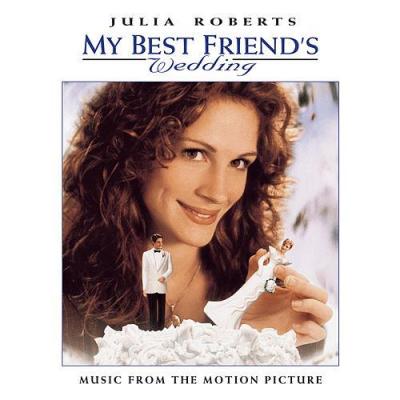
"My Best Friend's Wedding" Soundtrack Lyrics
Movie • 1997
Track Listing
Diana King
Ani DiFranco
Jann Arden
The Exciters
Nicky Holland
Amanda Marshall
Tony Bennett
Jackie DeShannon
Mary Chapin Carpenter
Sophie Zelmani
Jimmy Soul
The Cast of "My Best Friend's Wedding"
James Newton Howard
"My Best Friend’s Wedding (Music From the Motion Picture)" – Album Guide to Tracks and Key Scenes
Overview
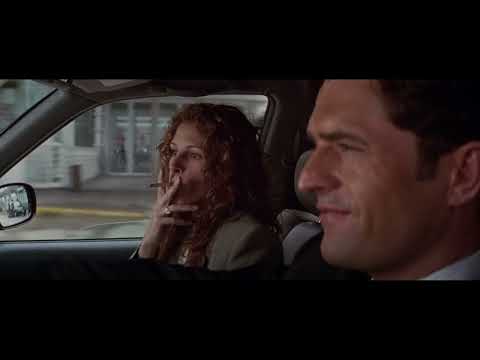
Can a non-musical rom-com work like a jukebox? My Best Friend’s Wedding says yes — and then has the nerve to stage a restaurant sing-along. P.J. Hogan’s film follows food critic Julianne (Julia Roberts) who realizes she loves Michael (Dermot Mulroney) just as he’s about to marry Kimmy (Cameron Diaz). The soundtrack counterpoints her sabotage with sunny standards and glossy covers; the result is prickly, playful, then surprisingly tender.
The album leans hard on Burt Bacharach/Hal David songcraft — “Wishin’ and Hopin’,” “I Say a Little Prayer,” “I’ll Never Fall in Love Again” — plus evergreens like “The Way You Look Tonight.” Those familiar melodies become weapons and bandages: they charm a crowd, expose a lie, or lend grace when grace feels undeserved.
Distinctive choice: the movie makes music part of scenes, not wallpaper. A brunch erupts into a call-and-response hymn to denial; a ferry dance uses a standard as a temporary truce; a karaoke dare tilts humiliation into empathy. According to AllMusic, the compilation works “better than it should” because the vocalists honor the songs’ contours rather than chase novelty.
Genres & themes by phase: 60s pop & Brill Building — flirtation and schemes; torch ballads — confession beats; classic crooner — fantasy intimacy; country/novelty — comic relief; orchestral score — consequences and closure.
How It Was Made
James Newton Howard provides the original score (Oscar-nominated in the Musical/Comedy category), stitching around an aggressive suite of licensed placements. Music supervision on the film included Bonnie Greenberg among department leads; the commercial album (13 tracks) arrived June 17, 1997 on Sony’s Work imprint and later international Columbia issues. MusicBrainz and retailer metadata align on label/catalog and date; the LP has since seen a modern reissue.
Editorially, the movie plays songs loud and on-screen. Hogan stages set-pieces where characters sing, mis-sing, or are sung at. The opening credits are a fully choreographed number to “Wishin’ and Hopin’,” and the mid-film restaurant sequence detonates the most quoted cue in the picture.
Tracks & Scenes
“Wishin’ and Hopin’” — Ani DiFranco
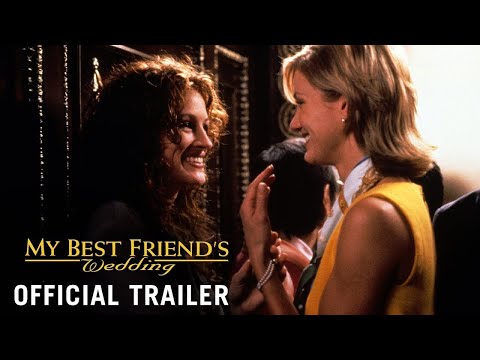
Where it plays: the opening credit sequence: a stylized bride and bridesmaids lip-sync and gesture through the lyrics against a candy-pink backdrop. It’s a self-contained mini-musical that frames the film’s thesis about performative romance.
Why it matters: announces the Bacharach/David palette and the film’s willingness to break into ritualized song — with a wink.
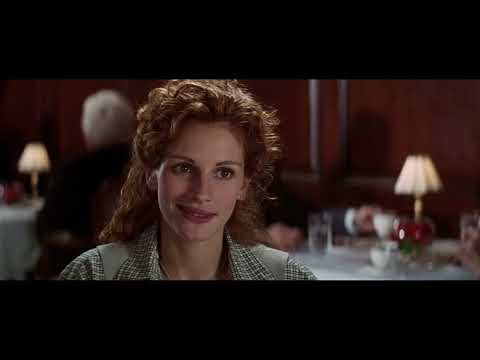
“I Say a Little Prayer” — The Cast (restaurant sing-along)
Where it plays: the famous brunch scene: George (Rupert Everett) leads a table, then the entire seafood restaurant, into a call-and-response chorus to cover Julianne’s lie. The camera tracks faces as strangers harmonize, clink glasses, and Kimmy beams while Jules squirms.
Why it matters: the movie’s heartbeat. Community joy corners a schemer, and the cue becomes a public verdict wrapped in delight.
“I Say a Little Prayer (Reggae Mix)” — Diana King
Where it plays: used on the soundtrack album and in promotional tie-ins; it recurs as upbeat connective tissue around montage and party energy, mirroring the restaurant number with a contemporary sheen.
Why it matters: refreshed the classic for 1997 radio; it charted and pulled new ears into the film.
“I Just Don’t Know What to Do with Myself” — Nicky Holland (cover)
Where it plays: at the karaoke bar dare, Kimmy (diegetic vocal) flails through the number as the crowd winces, then warms; the backing track and room noise carry her to a shaky triumph.
Why it matters: humiliation flips to empathy; the scene softens Kimmy and complicates Jules’ mission.
“The Way You Look Tonight” — Tony Bennett
Where it plays: Michael croons it to Jules on the ferry and later as a motif at the reception; slow-dance close-ups, skyline drifting past, two people pretending they aren’t at cross-purposes.
Why it matters: their “loaner” song — intimacy borrowed, not owned. It becomes a ritual of goodbye.
“What the World Needs Now Is Love” — Jackie DeShannon
Where it plays: a montage-style interlude underscores reconciliations and wedding bustle near the finale.
Why it matters: a classic plea for grace as schemes collapse and contrition lands.
“You Don’t Know Me” — Jann Arden
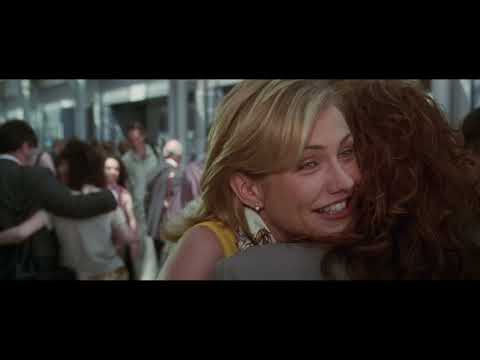
Where it plays: airport arrival and other reflective beats; non-diegetic, with strings cushioning close-ups of Jules’ second thoughts.
Why it matters: the title says it — desire curdles into self-deception.
“If You Wanna Be Happy” — Jimmy Soul
Where it plays: comic bumpers during pre-wedding chaos; cuts against the saccharine to keep things tart.
Why it matters: a novelty smash that mocks fairy-tale thinking, in key with the film’s anti-wish-fulfillment streak.
Notes & Trivia
- The soundtrack peaked on the Billboard 200 and went multi-platinum in several territories.
- Opening credits choreography is by Toni Basil — a full set-piece, not just titles.
- The U.S. album issued on Sony’s Work label; international pressings appeared on Columbia.
- Score is by James Newton Howard; the album closes with a suite from the film.
- The movie uses standards as text — sung in-scene — more than most 90s studio rom-coms.
Music–Story Links
When George launches “I Say a Little Prayer,” he rescues Jules’ lie but also exposes it; the song functions as a communal conscience. On the ferry, “The Way You Look Tonight” suspends conflict long enough for Jules to imagine a future that isn’t hers — a musical pause before the fall. The karaoke misadventure reframes Kimmy: shaky pitch, steady heart; the cue turns a punchline into character growth. And when the reception re-uses the standard as a “loaner,” Jules finally lets go — the melody that once deluded her now releases her.
Reception & Quotes
Critics largely embraced the movie’s bittersweet turn and its use of pop standards. The album’s mainstream embrace (charts, radio singles) kept those cues ubiquitous through 1997–98.
“Works for old-fashioned reasons: it engages us in story and character.” — Variety
“Put on a happy face, pretend to go along and destroy from within.” — Roger Ebert
“One of the great non-musical musical numbers of the 1990s.” — ArtoftheTitle (on the opener)
Interesting Facts
- The restaurant sing-along was shot over two long days in a seafood joint; the smell became infamous among the cast.
- Diana King’s “I Say a Little Prayer” single re-charted the classic globally alongside the film’s success.
- Work-label CD carries catalog OK 68166; U.K. issues list Columbia 488115-2.
- Modern vinyl reissue packages the album in a “tuxedo” black-and-white pressing.
- The opener helped fuel a late-90s Bacharach renaissance across film/TV.
- The film staged multiple songs diegetically — rare for a mainstream rom-com then.
Technical Info
- Title: My Best Friend’s Wedding — Music From the Motion Picture
- Year: 1997
- Type: Various-artists soundtrack with original score suite
- Composer (score): James Newton Howard
- Music supervision: Bonnie Greenberg (among music department leads)
- Selected notable placements: Ani DiFranco — “Wishin’ and Hopin’”; Cast — “I Say a Little Prayer”; Diana King — “I Say a Little Prayer (Reggae Mix)”; Tony Bennett — “The Way You Look Tonight”; Jann Arden — “You Don’t Know Me”; Nicky Holland — “I Just Don’t Know What to Do with Myself”; Jackie DeShannon — “What the World Needs Now Is Love”
- Release context: U.S. soundtrack streeted June 17, 1997; film released June 1997 (U.S.)
- Label / catalog: Work (Sony) — OK 68166 (U.S.); Columbia numbers on international issues
- Availability/editions: CD, digital; later vinyl reissue; album is a curated subset of all in-film music
Questions & Answers
- What song is the big restaurant sing-along?
- “I Say a Little Prayer,” led in-scene by George; it’s diegetic and staged as a full set-piece.
- Who sings the opening-credits number?
- Ani DiFranco’s “Wishin’ and Hopin’,” while on-screen bridesmaids lip-sync in a choreographed vignette.
- What’s the slow dance on the ferry?
- “The Way You Look Tonight” (Tony Bennett on album), used as Michael and Jules’ “loaner” song.
- Is the album the complete soundtrack?
- No — it’s 13 cuts plus a score suite; several film cues don’t appear on the commercial release.
- Who handled the film’s music department?
- James Newton Howard scored; music supervision included Bonnie Greenberg; multiple editors/contractors supported placements and prerecords.
Canonical Entities & Relations
| Subject | Relation | Object |
|---|---|---|
| P. J. Hogan | directed | My Best Friend’s Wedding (1997 film) |
| Ronald Bass | wrote | Screenplay for My Best Friend’s Wedding |
| James Newton Howard | composed | Original score |
| Bonnie Greenberg | music supervision | My Best Friend’s Wedding (film) |
| Sony — Work | released | My Best Friend’s Wedding: Music From the Motion Picture (1997, U.S.) |
| Columbia Records | released | International editions (1997) |
| Ani DiFranco | performed | “Wishin’ and Hopin’” (opening credits) |
| Diana King | performed | “I Say a Little Prayer (Reggae Mix)” |
| Tony Bennett | performed | “The Way You Look Tonight” (album version) |
According to MusicBrainz and label metadata, the U.S. CD was issued on Work (OK 68166) on June 17, 1997. According to AllMusic, the compilation’s covers succeed by respecting the originals. According to Variety, the film works because it invests in story and character. According to a recent cast interview in mainstream press, the restaurant “Prayer” sequence filmed over two long days in a seafood shack.
Sources: MusicBrainz; AllMusic; Variety review; RogerEbert.com; ArtoftheTitle; Apple Music/Spotify listings; Discogs; Real Gone Music reissue notes; People Magazine interview; official trailers (YouTube).
November, 16th 2025
A-Z Lyrics Universe
Cynthia Erivo Popular
Ariana Grande Horsepower
Post Malone Ain't No Love in Oklahoma
Luke Combs Good Riddance (Time of Your Life)
Green Day Bye Bye Bye
*NSYNC You're the One That I Wan
John Travolta & Olivia Newton-John I Always Wanted a Brother
Braelyn Rankins, Theo Somolu, Kelvin Harrison Jr. and Aaron Pierre The Power of Love
Frankie Goes to Hollywood Beyond
Auli’i Cravalho feat. Rachel House MORE ›