Soundtracks:  A B C D E F G H I J K L M N O P Q R S T U V W X Y Z #


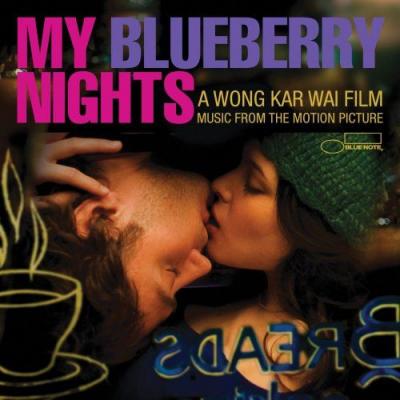
My Blueberry Nights Album Cover

"My Blueberry Nights" Soundtrack Lyrics

Movie • 2008

Track Listing


"My Blueberry Nights (Music From the Motion Picture)" – Album Guide to Tracks and Key Scenes

Official UK trailer thumbnail for My Blueberry Nights (2007/2008) with Norah Jones and Jude Law
My Blueberry Nights — official trailer

Overview

What if heartache sounded like steel strings and highway air? Wong Kar-wai’s first English-language feature follows Elizabeth (Norah Jones) from a New York pie-counter to Memphis bars and Nevada nights, tracking how a broken orbit slowly closes. The soundtrack is both compass and diary — Ry Cooder’s slide guitar sketches the road; soul and torch songs color each stop with memory and mood.

Across cafés, jukeboxes, and long drives, the album pairs Cooder’s spare cues with vintage sides (Otis Redding, Ruth Brown), contemporary voices (Cat Power, Cassandra Wilson, Amos Lee), and a harmonica echo of Wong’s own past (“Yumeji’s Theme”). It feels curated rather than crammed — each cut has a narrative job.

Distinctive trait: diegetic and non-diegetic cues blur. A bar track becomes a character’s confession. A postcard montage rides a folk-gospel pulse. The closer folds the journey back into the café, letting a new Norah Jones song seal the circle. According to Blue Note/retailer listings and contemporary reviews, the compilation arrived alongside the film’s wider releases with 14 tracks mixing score and licensed cuts.

Genres & phases: desert-blues & slide guitar — wandering and distance; classic soul — regret and stalling; torch/standards — fantasies and borrowings; alt-folk — letters and pauses; harmonica waltz — memory loop; lullaby pop — return.

How It Was Made

Composer: Ry Cooder. He threads the film with short, tactile cues (“Ely Nevada,” “Long Ride,” “Bus Ride”) that leave space for dialogue and Wong’s drifting camera. Music supervision credits include Stephen (Steve) Macklam; Blue Note handled the commercial album release. The tracklist balances Cooder’s instrumentals with selections by Norah Jones, Cat Power, Mavis Staples, Cassandra Wilson, Otis Redding, Ruth Brown, Gustavo Santaolalla, Amos Lee, and others.

Editorially, cues are placed to mark thresholds — a key-drop on a counter, a first lie, a last drink. Wong leans into performance provenance: the harmonica “Yumeji’s Theme” nods to his earlier cinema, now refracted through American settings. According to IMDb credits and label metadata, the album was issued by Blue Note, with supervision and A&R split across U.S. and Hong Kong units.

Trailer frame of the New York café where the film’s first needle-drops and Ry Cooder cues begin
The café: where songs become keepsakes — and a map.

Tracks & Scenes

“Yumeji’s Theme (Harmonica Version)” — Chikara Tsuzuki
Where it plays: early in the café, after Elizabeth learns the truth and tears arrive (≈00:16). The harmonica drifts over blue neon and empty plates.
Why it matters: a Wong Kar-wai signature reinterpreted — memory looping inside a new country.

“Try a Little Tenderness” — Otis Redding
Where it plays: Memphis bar sequences (~00:22–00:27). Arnie (David Strathairn) lingers on a stool; Sue Lynne (Rachel Weisz) ghosts in and out; the room hums and hurts.
Why it matters: Otis turns background into subtext — a plea Arnie can’t voice without a drink.

“Eyes on the Prize” — Mavis Staples
Where it plays: over diner shifts and street breath between Memphis scenes. The gospel steadiness counters Elizabeth’s drift.
Why it matters: resolve in song — faith as motion rather than arrival.

“Looking Back” — Ruth Brown
Where it plays: postcard montage (~00:52): Jeremy reads as Elizabeth writes on the road; we crossfade between New York and elsewhere.
Why it matters: the title is literal — longing becomes correspondence.

“The Greatest” — Cat Power
Where it plays: over Nevada waypoints and the gambler interlude; images of neon and borrowed bravado bleed together.
Why it matters: a soft anthem for self-invention that doesn’t quite convince its singer — or the heroine.

“Skipping Stone” — Amos Lee
Where it plays: as Elizabeth weighs what to leave behind (~01:01). The melody flickers like highway reflectors.
Why it matters: small song, big hinge — the trip’s emotional midpoint.

“Harvest Moon” — Cassandra Wilson (Neil Young cover)
Where it plays: night exteriors and breathing space between chapters. Streetlamps, shoulders, and a hush.
Why it matters: tenderness without promises — a pause that feels like shelter.

“Devil’s Highway” — Hello Stranger
Where it plays: cuts in as the night tilts from sorrow to restless motion.
Why it matters: road music with teeth — doubt accelerates.

“We Got Love” — Ryan Shaw (not on the OST album)
Where it plays: Memphis diner workflow (~00:21), clatter and smiles stitched by a backbeat.
Why it matters: non-album source that sells place and pace.

“The Story” — Norah Jones
Where it plays: final café return (~01:26) into end credits. Jeremy (Jude Law) and Elizabeth find the thread again; a kiss that isn’t stolen this time.
Why it matters: a new song to end an old cycle — the voice of the protagonist literally takes us out.

Trailer collage of Memphis bar and Nevada road images where soul cuts and slide-guitar cues live
Memphis to Nevada: soul on the jukebox, slide on the horizon.

Notes & Trivia

  • The album is on Blue Note and mixes Cooder instrumentals with licensed tracks; international listings show a 2007 date, with U.S. retail clustered in early 2008.
  • “Yumeji’s Theme” links back to In the Mood for Love, now performed on harmonica (credit: Chikara Tsuzuki; composition by Shigeru Umebayashi).
  • Cat Power appears in the film (as Katya) and on the album — a casting/songbook mirror.
  • Mavis Staples’ cut was produced in this context by Ry Cooder, extending their real-world collaboration.
  • Not every in-film song made the CD; selections like Ryan Shaw’s “We Got Love” remain non-album placements.

Music–Story Links

When Elizabeth first breaks, the harmonica waltz (“Yumeji’s Theme”) makes the café a memory chamber; the pie is comfort, the melody is relapse. In Memphis, “Try a Little Tenderness” lets Arnie perform masculinity as ache, while “Eyes on the Prize” keeps Elizabeth’s feet moving. Nevada’s sheen gets Cat Power’s ambivalent pep talk (“The Greatest”) — big talk, small voice — and the return home finally earns a Norah Jones original; the singer we’ve watched all film at last sings for herself.

Reception & Quotes

Critics split on the film’s English-language experiment; the album drew steadier praise as a cohesive listen — a road mix that feels lived-in.

“Stacked with fine female singers… old and new.” — PopMatters
“Music: Ry Cooder.” — The Hollywood Reporter (Cannes review credits)
Trailer still of the closing café beat where Norah Jones’s song carries the credits
Back to blueberry pie: a new song for a closed loop.

Interesting Facts

  • Blue Note issued the soundtrack internationally in 2007; U.S. retail press ran in Q1–Q2 2008.
  • Three Ry Cooder cues act as mile-markers: “Ely Nevada,” “Long Ride,” “Bus Ride.”
  • “Harvest Moon” is Cassandra Wilson’s jazz-smoked Neil Young cover — a frequent highlight in reviews.
  • Discogs credits list dual music supervisors (incl. Stephen/Steve Macklam) and Blue Note A&R roles across the package.
  • Soundtrack runtimes differ slightly by region/pressing; digital services standardize at 14 tracks.

Technical Info

  • Title: My Blueberry Nights (Music From the Motion Picture)
  • Year: 2007 (film premiered) / 2008 (U.S. album retail)
  • Type: Various-artists soundtrack with original score cues
  • Composer (score): Ry Cooder
  • Music supervision: Stephen (Steve) Macklam; additional coordination listed in credits
  • Selected notable placements: Norah Jones — “The Story”; Otis Redding — “Try a Little Tenderness”; Cat Power — “The Greatest”; Mavis Staples — “Eyes on the Prize”; Cassandra Wilson — “Harvest Moon”; Ruth Brown — “Looking Back”; Chikara Tsuzuki — “Yumeji’s Theme (Harmonica Version)”
  • Label / release notes: Blue Note (international 2007); U.S. retail around Feb–Apr 2008; 14 tracks
  • Availability: Streaming/retail album; some in-film songs are not on the OST (e.g., Ryan Shaw’s “We Got Love”)

Questions & Answers

Who wrote the original score?
Ry Cooder — spare, slide-guitar sketches that anchor the road narrative.
What’s the end-credits song?
Norah Jones’s “The Story” carries the final café return into credits.
Is “Yumeji’s Theme” really in this film?
Yes — a harmonica rendition nods to Wong’s earlier work and scores Elizabeth’s early heartbreak.
Do all film songs appear on the album?
No. The CD/digital set is selective; a few cues (like Ryan Shaw’s “We Got Love”) are non-album placements.
Which label released the OST?
Blue Note Records handled the commercial release.

Canonical Entities & Relations

SubjectRelationObject
Wong Kar-waidirectedMy Blueberry Nights (2007/2008)
Ry CoodercomposedOriginal score for My Blueberry Nights
Blue Note RecordsreleasedMy Blueberry Nights (Music From the Motion Picture)
Norah Jonesperformed“The Story” (end-credits)
Cat Power (Chan Marshall)performed“The Greatest”; “Living Proof”
Mavis Staplesperformed“Eyes on the Prize” (produced in this context by Ry Cooder)
Cassandra Wilsonperformed“Harvest Moon” (Neil Young cover)
Otis Reddingperformed“Try a Little Tenderness”
Amos Leeperformed“Skipping Stone”
Shigeru Umebayashiwrote“Yumeji’s Theme” (harmonica version performed by Chikara Tsuzuki)

According to label/retailer listings, Blue Note issued a 14-track album mixing Ry Cooder cues with licensed songs. According to IMDb’s soundtrack and credits pages, music is by Ry Cooder with supervision by Stephen (Steve) Macklam. According to SoundtrackRadar, multiple scene placements (with timestamps) align to the café, Memphis, and Nevada chapters. According to PopMatters’ review, the compilation’s strength is its singer roster and cohesion.

Sources: Blue Note/Apple Music & Spotify album pages; Discogs release & credits; IMDb (soundtrack & full credits); SoundtrackRadar (scene timings); Wikipedia (film & soundtrack overview); PopMatters review; The Hollywood Reporter (Cannes review credits); official trailers (YouTube).

November, 16th 2025

'My Blueberry Nights' is a romantic-drama directed by Wong Kar-wai, his first feature in English. Learn more: Wikipedia, IMDb
A-Z Lyrics Universe

Lyrics / song texts are property and copyright of their owners and provided for educational purposes only.