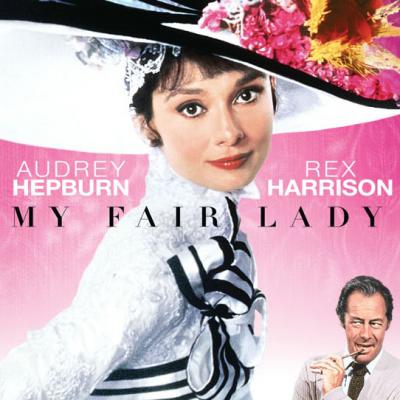
"My Fair Lady" Soundtrack Lyrics
Musical • 1956
Track Listing
"My Fair Lady (Original Broadway Cast Recording, 1956)" – Album Guide to Tracks and Key Scenes
Overview
What happens when a recording turns a stage sensation into a home ritual? The 1956 My Fair Lady cast album answered by bottling Broadway’s hottest ticket and reshaping how musicals live offstage. The Lerner & Loewe score — all wit, waltz, and Edwardian swagger — meets two star turns: Rex Harrison’s spoken-song patter and Julie Andrews’ clear, ringing lyricism. The result: a record that feels like a play you can hold.
The album doesn’t chase literal stage fidelity. It privileges flow and listenability — overture trimmed to shine, patter tightened, choruses punched — so the dramatic arc still reads without scenery. You hear Eliza’s trajectory in the sequencing: grime to glide, prickliness to poise, then that unresolved tug between independence and affection.
Genres & themes by phase: patter & music-hall — class friction and street wit; lilting waltz-time — aspiration and fantasy; salon ballad — self-knowledge; brassy two-step — comic disruption; reprise/underscore — uneasy “happily ever after.”
How It Was Made
Columbia Masterworks recorded the original Broadway cast in late March 1956 at the legendary 30th Street Studio, with Franz Allers conducting and Goddard Lieberson producing. Lieberson’s approach — treat the album as an autonomous work — meant fewer spoken lines and a focus on musical clarity. Sessions followed the smash March 15 Broadway opening; the LP shipped quickly to meet massive advance orders. According to Masterworks Broadway and cast-album histories, this became a template for modern cast recordings.
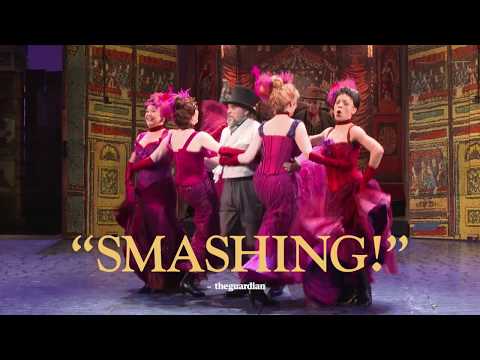
Tracks & Scenes
“Why Can’t the English?” — Rex Harrison
Where it lands in-story: Covent Garden, night rain, a phonetics professor skewers accents and class arrogance while a flower girl bristles. It sets the wager — remake a voice, rewrite a fate — in brisk patter.
Why it matters: frames language as power; the album’s dry bite starts here.
“Wouldn’t It Be Loverly” — Julie Andrews & Ensemble
Where it lands: curbside fantasy — chocolate, heat, and someone to care. Street bustle dissolves into a cozy waltz pocket as Eliza imagines a room of her own.
Why it matters: aspiration in 3/4 time; the LP’s first heart-melter.
“With a Little Bit of Luck” — Stanley Holloway & Cockneys
Where it lands: tenement courtyards and pub corners; Alfred P. Doolittle sings cheerful amorality with a dancer’s bounce.
Why it matters: comic valve and social critique — charm weaponized.
“I’m an Ordinary Man” — Rex Harrison
Where it lands: Higgins’ study. Books everywhere, nerves on edge; misogynist manifesto delivered like chamber music with jokes.
Why it matters: character x-ray — the record’s driest laugh and darkest tell.
“Just You Wait” — Julie Andrews
Where it lands: Eliza alone, fury into fantasy — mock-royal fanfare, then back to grit.
Why it matters: agency through imagination; steel under sweetness.
“The Rain in Spain” — Harrison, Andrews, Robert Coote
Where it lands: the breakthrough night: drills snap, vowels click, and teacher/student erupt into a celebratory tango.
Why it matters: pedagogy as party; the album glows here.
“I Could Have Danced All Night” — Julie Andrews
Where it lands: the morning after the breakthrough; servants bustle as Eliza floats on adrenaline and new possibility.
Why it matters: the show’s signature lift — effortless high notes, unstoppable motion.
“On the Street Where You Live” — John Michael King
Where it lands: Freddy’s ardent stand outside Higgins’ house; strings surge, time dilates.
Why it matters: romantic sincerity against a cynical world — a plush counterweight.
“Show Me” — Andrews & King
Where it lands: alleyway ultimatum; patience spent, Eliza demands proof, not poetry.
Why it matters: propulsion and bluntness; desire gets practical.
“Get Me to the Church on Time” — Holloway & Ensemble
Where it lands: raucous stag-night blowout; pubroom erupts into whistles, bells, and knees-up.
Why it matters: the album’s purest fun — comic relief before the reckoning.
“I’ve Grown Accustomed to Her Face” — Rex Harrison
Where it lands: late-night confession in an empty study; pride fractures into habit, then affection he won’t name outright.
Why it matters: un-sung songcraft — spoken rhythm carrying full melody in your head.
Notes & Trivia
- Producer Goddard Lieberson shaped the album for home listening; dialogue was minimized and some tempos adjusted.
- Recorded at Columbia’s 30th Street Studio — a deconsecrated church famous for its acoustics.
- LP streeted within weeks of the March 15, 1956 Broadway opening and became the best-selling U.S. album of 1956.
- The show ran 2,717 performances on Broadway — then a record — fueling sustained album sales.
- A stereophonic London cast recording (1959) later capitalized on the new format; both remain catalog staples.
Music–Story Links
When Eliza dreams in “Loverly,” the waltz gives class aspiration a lullaby’s simplicity; Higgins’ “Ordinary Man” counters with clipped, self-satisfied patter that dares us to root against him. “Rain in Spain” converts pedagogy into community — three voices, one rhythm — which makes the solo flight of “I Could Have Danced All Night” feel earned. Freddy’s “Street” is the romantic ideal the plot keeps undercutting, and “Accustomed” lands the adult truth: love sometimes sounds like habit learning to be honest.
Reception & Quotes
The album was a phenomenon — a blueprint for cast recordings as standalone experiences. It topped charts for an extraordinary run and crossed the million-sold mark in the LP era.
“Fifteen weeks at No. 1 across an unprecedented 111 weeks on the charts.” — trade retrospective
“The first long-playing cast recording to sell over a million copies.” — label history
Interesting Facts
- Opening night: March 15, 1956 (Mark Hellinger Theatre); the production later transferred twice while still running.
- Julie Andrews was only 20; her crystalline diction defines the original Eliza on record.
- Rex Harrison’s “speak-sing” style required exact orchestra cues; takes were built around his timing.
- The 30th Street Studio’s natural reverb let engineers use a minimal mic setup for warmth and clarity.
- Stereo-era demand prompted a separate London cast album in 1959, also a hit.
Technical Info
- Title: My Fair Lady — Original Broadway Cast Recording
- Year: 1956 (LP release April 2, 1956)
- Type: Cast album (studio recording of the New York stage company)
- Music & Lyrics: Frederick Loewe (music); Alan Jay Lerner (lyrics & book)
- Principal cast (album): Rex Harrison, Julie Andrews, Stanley Holloway, Robert Coote, John Michael King, Cathleen Nesbitt
- Producer: Goddard Lieberson
- Conductor: Franz Allers
- Label: Columbia Masterworks (CBS)
- Recorded at: Columbia 30th Street Studio, New York
- Chart/impact: Best-selling album in the U.S. (1956); extended multi-year chart presence
- Availability: Multiple CD/Legacy reissues and digital editions
Questions & Answers
- Is the 1956 album a straight “stage capture”?
- No. It trims dialogue and optimizes tempos/orchestrations for home listening while preserving the show’s arc.
- Who led the sessions?
- Producer Goddard Lieberson and conductor Franz Allers at Columbia’s 30th Street Studio.
- Was it really that big commercially?
- Yes — it was the best-selling U.S. album of 1956 and spent an exceptional stretch atop the charts.
- Why does a 1959 London cast album also exist?
- Stereo. Columbia re-recorded with the London company to exploit the new format; it, too, sold heavily.
- Where does the Broadway production fit in history?
- Opened March 15, 1956; ran 2,717 performances — a record then — and defined the Lerner & Loewe sound for decades.
Canonical Entities & Relations
| Subject | Relation | Object |
|---|---|---|
| Alan Jay Lerner | wrote book & lyrics for | My Fair Lady (1956 stage musical) |
| Frederick Loewe | composed music for | My Fair Lady |
| Moss Hart | directed | Original Broadway production (1956) |
| Rex Harrison | originated | Henry Higgins (Original Broadway cast) |
| Julie Andrews | originated | Eliza Doolittle (Original Broadway cast) |
| Stanley Holloway | originated | Alfred P. Doolittle (Original Broadway cast) |
| Goddard Lieberson | produced | My Fair Lady OBC recording (Columbia Masterworks) |
| Franz Allers | conducted | OBC recording sessions |
| Columbia Masterworks | released | My Fair Lady (OBC LP, 1956) |
| 30th Street Studio | hosted recording of | OBC album sessions |
According to Masterworks Broadway, Columbia fast-tracked the OBC recording after the smash opening. According to IBDB and Playbill vault entries, the production opened March 15, 1956 and ran 2,717 performances across three theatres. According to cast-album histories, the LP was released April 2, 1956 from sessions at 30th Street Studio. According to chart retrospectives and encyclopedic entries, it became the best-selling U.S. album of 1956 with a prolonged No. 1 run.
Sources: Masterworks Broadway (album page, label history); IBDB; Playbill Vault; Wikipedia (musical & cast-album entries); Columbia/CBS historical notes; industry chart retrospectives.
November, 16th 2025
A-Z Lyrics Universe
Cynthia Erivo Popular
Ariana Grande Horsepower
Post Malone Ain't No Love in Oklahoma
Luke Combs Good Riddance (Time of Your Life)
Green Day Bye Bye Bye
*NSYNC You're the One That I Wan
John Travolta & Olivia Newton-John I Always Wanted a Brother
Braelyn Rankins, Theo Somolu, Kelvin Harrison Jr. and Aaron Pierre The Power of Love
Frankie Goes to Hollywood Beyond
Auli’i Cravalho feat. Rachel House MORE ›