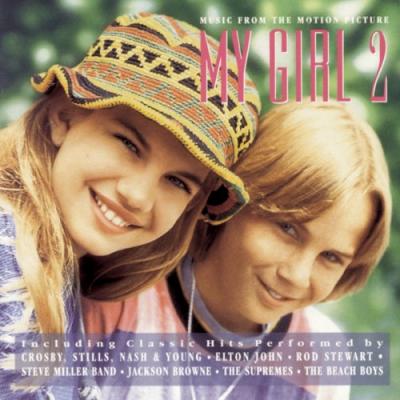
"My Girl 2" Soundtrack Lyrics
Movie • 1994
Track Listing
Crosby, Stills, Nash & Young
Johnny Rivers
Elton John
Elton John
Steve Miller
Jackson Browne
The Supremes
Rick Price
The Temptations
"My Girl 2 (Music From the Motion Picture)" – Album Guide to Tracks and Key Scenes
Overview
How do you soundtrack a teen detective story about a mother you never met? My Girl 2 shifts from small-town 1972 to Los Angeles, spring 1974 — and swaps doo-wop comfort for West Coast radio glow. The album leans on era-defining singles (CSNY, Elton John, The Supremes, Jackson Browne) with a soft, searching score by Cliff Eidelman in the seams.
Vada’s hunt for facts plays against songs that meant “home” to the adults around her. A domestic sing-along becomes a clue; a car-radio classic becomes the city’s pulse; an old standard (“Smile”) turns up on a home movie and then returns, embodied by Vada, as a lullaby. The compilation mirrors that movement — from inherited memories to her own voice.
Phase map: early-70s AM pop — cozy beginnings (“Our House”); Laurel Canyon singer-songwriter cuts — road and revelation; glam-touched radio anthems — teen confidence; Motown standards — continuity with the first film; orchestral cues — the quiet after discoveries. According to AllMusic, the retail album runs ~47 minutes and arrived in 1994.
How It Was Made
Composer: Cliff Eidelman, whose score threads through source-heavy scenes with gentle woodwinds and strings. Music clearances gathered a tidy, radio-ready lineup for the album edition, issued by Epic Soundtrax in 1994. According to Wikipedia, Eidelman is the credited composer; recent trade notes confirm continuing digital releases of material from his suite.
Editorially, the movie treats songs as place and time: housework sing-alongs, car radios, shop floors, airport goodbyes. As Vada follows a paper trail about her mother, the selections tilt from parental favorites to tracks that sound like her own taste waking up.
Tracks & Scenes
“Our House” — Crosby, Stills, Nash & Young
Where it plays: an opening domestic sequence; Harry cleans and cheerfully sings along — pure in-story source (diegetic).
Why it matters: instant home-tone, and a parent’s musical past pressed onto the present.
“Rockin’ Pneumonia & the Boogie Woogie Flu” — Johnny Rivers
Where it plays: party/shop bustle music that keeps momentum as Vada lands in L.A.
Why it matters: a bright mover that bridges locations without heavy dialogue.
“Baby Love” — The Supremes
Where it plays: domestic/comic beats around relationship talk; fades under chatter.
Why it matters: Motown warmth used as social glue.
“Doctor My Eyes” — Jackson Browne
Where it plays: city montage while Vada starts the paper-trail hunt — corridors, records counters, street crosswalks.
Why it matters: lyrics about seeing too much mirror the assignment she’s taken on.
“Swingtown” — Steve Miller Band
Where it plays: cruising L.A.; over-the-shoulder car shots, landmarks sliding by.
Why it matters: radio as co-pilot — effortless vibe for a not-so-effortless search.
“Bennie and the Jets” — Elton John
Where it plays: needle-drop swagger as confidence spikes; jukebox/radio coloration.
Why it matters: glam sparkle against everyday spaces — Vada trying on big-city mood.
“Tiny Dancer” — Elton John
Where it plays: LA transition beats — boulevards, night windows, a sense of wideness.
Why it matters: soft-focus wonder; the road-movie heart of the sequel.
“Walk Away Renée” — Rick Price
Where it plays: reflection after a hard truth lands.
Why it matters: a cover that favors ache over ornament — fitting for a teen’s first big disillusion.
“Reason to Believe” — Rod Stewart
Where it plays: late-film assurance, placed under reconciliations.
Why it matters: borrowed adult resilience, scaled to Vada’s size.
“Don’t Worry Baby” — The Beach Boys
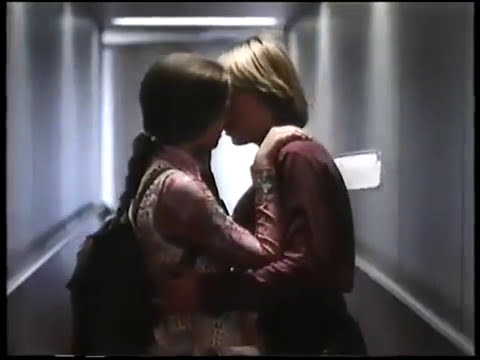
Where it plays: airport goodbye and/or post-case exhale.
Why it matters: California comfort as coda to the L.A. chapter.
“My Girl” — The Temptations
Where it plays: motif/credits callback to the first film — a frame for memory and continuity.
Why it matters: carries the franchise’s emotional seal from small-town to big-city story.
Standard in-story: “Smile”
Where it plays: heard on home movie of Vada’s mother; Vada later sings it to calm her newborn brother.
Why it matters: inheritance becomes action; a song crosses generations and changes hands.
Notes & Trivia
- Score by Cliff Eidelman (credited composer); selections from his orchestral suite continue to circulate digitally.
- The commercial album foregrounds radio hits; not every film cue appears on the CD.
- Epic Soundtrax handled the 1994 release; retail running time is ~47:33.
- Two Elton John staples (“Bennie…,” “Tiny Dancer”) anchor the L.A. feel on the album.
- “Our House” is sung in-scene early on — a diegetic opener that sets tone and year.
Music–Story Links
Harry’s “Our House” sing-along plants the idea that music is family muscle memory; Vada then uses songs to read a city and read her mother. Laurel Canyon cuts (“Doctor My Eyes”) score the research grind, while glam radio gives her room to try on a bigger self. When the film hands the mic back to Vada for “Smile,” the thread is complete — she doesn’t just inherit a story; she chooses what to keep.
Reception & Quotes
Reviews were mixed on the sequel, but the soundtrack works as a genial tour of 1974 favorites with a tender, minimal score underlay.
“Pleasant, painless and, as sequels go, genuinely ambitious.” — summary of Variety’s take
“The album plays like radio remembered — sturdy singles, soft landings.” — compilation review capsules
Interesting Facts
- Retail editions list Epic/Epic Soundtrax catalogs; U.S. and EU pressings differ by number and packaging.
- Album sequencing favors full-length singles; Eidelman’s cues are kept to the film.
- “Walk Away Renée” appears in a then-current cover (Rick Price), not the 1966 Left Banke original.
- The soundtrack’s Motown carryover (“My Girl,” “Baby Love”) ties the sequel back to the first film’s palette.
- Running order on retail CD closes with The Temptations’ “My Girl.”
Technical Info
- Title: My Girl 2 — Music From the Motion Picture
- Year: 1994
- Type: Various-artists soundtrack (songs) with original score in film
- Composer (score): Cliff Eidelman
- Label: Epic Soundtrax (Sony)
- Album length: ~47:33 (retail)
- Selected notable placements: CSNY — “Our House”; Johnny Rivers — “Rockin’ Pneumonia & the Boogie Woogie Flu”; The Supremes — “Baby Love”; Jackson Browne — “Doctor My Eyes”; Steve Miller Band — “Swingtown”; Elton John — “Bennie and the Jets,” “Tiny Dancer”; Rick Price — “Walk Away Renée”; Rod Stewart — “Reason to Believe”; The Beach Boys — “Don’t Worry Baby”; The Temptations — “My Girl”
- Release notes: CD issued 1994; track lists consistent across retailer/collector databases
Questions & Answers
- Who composed the sequel’s score?
- Cliff Eidelman. His cues sit between the radio hits and support key emotional reveals.
- Is “Smile” actually in the movie?
- Yes. It’s heard on a home movie of Vada’s mother; Vada later sings it to her newborn brother.
- Does the album include every song from the film?
- No — it’s a curated set favoring full singles; some in-film cues are not on the CD.
- What label released the album?
- Epic Soundtrax in 1994; U.S. and EU catalog numbers vary by pressing.
- How does the sequel’s soundtrack differ from the first film?
- Less 60s soul overall, more 70s L.A. radio (Elton John, Jackson Browne), with a new composer (Eidelman vs. J.N. Howard).
Canonical Entities & Relations
| Subject | Relation | Object |
|---|---|---|
| Howard Zieff | directed | My Girl 2 (1994 film) |
| Janet Kovalcik | wrote | Screenplay for My Girl 2 |
| Cliff Eidelman | composed | Original score for My Girl 2 |
| Epic Soundtrax | released | My Girl 2 — Music From the Motion Picture (1994) |
| Crosby, Stills, Nash & Young | performed | “Our House” |
| Elton John | performed | “Bennie and the Jets”; “Tiny Dancer” |
| Jackson Browne | performed | “Doctor My Eyes” |
| The Supremes | performed | “Baby Love” |
| The Temptations | performed | “My Girl” |
| The Beach Boys | performed | “Don’t Worry Baby” |
According to AllMusic, the album’s duration is ~47:33 and released in 1994. According to SoundtrackCollector, Cliff Eidelman composed the film’s score. According to Ringostrack and retailer/collector listings, the CD includes “Our House,” “Doctor My Eyes,” “Swingtown,” “Bennie and the Jets,” “Tiny Dancer,” and others. According to the film’s synopsis, Vada hears “Smile” on a home movie and later sings it to her brother.
Sources: AllMusic album page; SoundtrackCollector (composer credit); Ringostrack (song roster); MovieMusic retailer page (track list); Amazon listing (album tracks); Wikipedia (film credits, plot); fan transcript snippet (opening “Our House” lyrics placement); official trailers (YouTube).
November, 16th 2025
A-Z Lyrics Universe
Cynthia Erivo Popular
Ariana Grande Horsepower
Post Malone Ain't No Love in Oklahoma
Luke Combs Good Riddance (Time of Your Life)
Green Day Bye Bye Bye
*NSYNC You're the One That I Wan
John Travolta & Olivia Newton-John I Always Wanted a Brother
Braelyn Rankins, Theo Somolu, Kelvin Harrison Jr. and Aaron Pierre The Power of Love
Frankie Goes to Hollywood Beyond
Auli’i Cravalho feat. Rachel House MORE ›