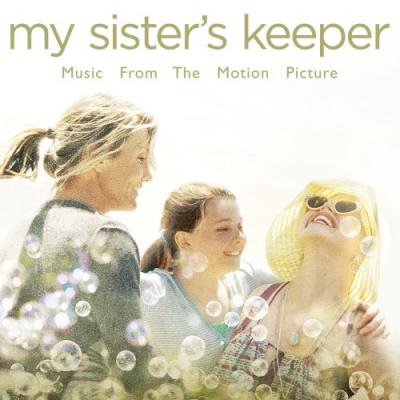
"My Sister's Keeper" Soundtrack Lyrics
Movie • 2009
Track Listing
Edwina Hayes
Pete Yorn
Regina Spektor
Vega 4
James Blunt
Jeff Buckley
Greg Laswell
Priscilla Ahn
Jonah Johnson
E.G. Daily
Jimmy Scott
Pipe Major Jim Drury and Julia McGurk
"My Sister's Keeper: Music From The Motion Picture" – Album Guide to Tracks and Key Scenes
Overview
What does a custody battle over a child’s body sound like when the story never stops loving the family at its center? In My Sister's Keeper: Music From The Motion Picture, it sounds like hushed folk, bruised indie rock and gospel-tinged standards constantly circling between hope and inevitability.
The 2009 film follows the Fitzgeralds: parents Sara and Brian, son Jesse, gravely ill daughter Kate and “designer donor” Anna, conceived to be a genetic match for her sister. When Anna sues her parents for medical emancipation rather than donate a kidney, the film flips between courtroom drama and intimate family flashbacks. The soundtrack album pulls the most emotionally loaded songs out of that structure and lines them up as one continuous arc, from domestic warmth to grief and a kind of hard-earned peace.
On screen, commercial tracks sit beside Aaron Zigman’s orchestral score. On disc, the focus is on songs — Edwina Hayes, Pete Yorn, Regina Spektor, Vega4, James Blunt, Jeff Buckley and others. The result feels less like a random “tearjerker mix” and more like a carefully graded descent: lightness, romance, denial, collapse, farewell. You can follow Kate’s story almost beat by beat without seeing a single frame.
The album’s genre mix mirrors those phases. Folk and acoustic ballads (Hayes, Yorn, Priscilla Ahn) carry the everyday tenderness: kitchen-table decisions, hospital corridors, the beach. Indie and adult-alternative tracks (Spektor, Vega4, Laswell) underline teenage romance and the kids’ interior lives. Standards and spirituals (“Heaven,” “Hymn: Amazing Grace”) close the circle at the funeral and end credits. Even the trailer song, Vega4’s “Life Is Beautiful,” is used as a paradox: a soaring hook laid over scenes that are anything but simple or painless.
How It Was Made
Director Nick Cassavetes, coming off The Notebook, again leaned on music as an emotional translator: intimate close-ups plus lyrical montage. Composer Aaron Zigman, who had already worked with Cassavetes, supplied a full original score album with cues like “Opening,” “Taylor & Anna,” “Prom Night” and “The Last Goodbye,” while a separate song compilation was assembled for New Line / WaterTower Music.
Music supervisor Erin Scully pulled together the songs that became My Sister’s Keeper: Music From The Motion Picture, released in June 2009. Retailer and label blurbs describe a deliberate tilt toward midtempo folk-pop and soft rock — Pete Yorn, James Blunt, Regina Spektor — with more eccentric choices like Greg Laswell’s slow-motion “Girls Just Want to Have Fun” and Jimmy Scott’s “Heaven” taking care of the off-center moods.
The album also hosts a then-unreleased Jeff Buckley recording of “We All Fall In Love Sometimes,” an Elton John / Bernie Taupin song. Film and music press at the time highlighted this as a major draw: a fragile live Buckley vocal laid over the end credits of a cancer drama is a very specific statement of intent.
Outside the film itself, the trailer and TV spots carry their own micro-mixtape. “Life Is Beautiful” by Vega4 became the de facto trailer anthem, with James Blunt’s “Carry You Home” and singer-songwriter tracks like “1, 2, 3, 4” (Plain White T’s) and “More” (Tyrone Wells) peppering TV marketing. Only some of those cues make it to the commercial album; the rest live in promos and fan memories rather than on the CD.
Tracks & Scenes
Below are key songs as they appear in the film, plus several trailer and non-album cues. Timestamps are approximate but follow fan and database listings closely.
“Tiny Bubbles” — Don Ho
Where it plays: Very early in the film (~00:04). The whole family is outside, bouncing on a trampoline and blowing soap bubbles. The camera drifts between close-ups of the kids laughing and wider shots of Sara trying to pretend the moment is normal, even as Kate’s illness hangs over them. The song is non-diegetic but mixed loud, like a memory soundtrack.
Why it matters: It sets a deceptively light tone and locks in the idea that this is a family story first. A kitschy Hawaiian lounge tune over a sick child’s playtime makes the eventual tonal drop hit harder.
“Nomenclature” — Lowd
Where it plays: Around 00:10. Jesse waits by the phone to be picked up, alone and tense. The track hums underneath as he shifts from bored to worried, the frame emphasizing how often he gets left behind while the rest of the family revolves around Kate’s medical needs.
Why it matters: The song’s slightly restless groove underlines Jesse’s emotional limbo. He isn’t the patient or the savior sibling; he’s background, and the cue makes you feel that sidelining.
“Life Is Just a Bowl of Cherries” — E.G. Daily
Where it plays: About 00:19. Brian takes Anna down to the firehouse to eat with his fellow firefighters. The room is noisy, full of jokes and food, and for a few minutes Anna gets to be just a kid surrounded by surrogate uncles. The song drifts through the scene like an old-fashioned radio tune, half heard over the clatter of plates.
Why it matters: The bitterly ironic lyric — life as a bowl of cherries — sits neatly against the reality that Anna’s life is anything but carefree. It also tells you who Brian is: the parent still trying to manufacture pockets of normality.
“Find My Way Back Home” — Priscilla Ahn
Where it plays: Around 00:24. Sara shaves her own head in solidarity with Kate. Afterward, the family squeezes into an instant-photo booth and pulls faces while the camera spits out strips of images. Ahn’s fragile vocal rolls over slow-motion flashes of their heads together, the buzzing fluorescent light, and brief laughter that almost feels guilty.
Why it matters: This is one of the film’s key “we’re in this together” scenes. The song’s title and homesick tone highlight how much everyone wants to get back to a pre-cancer version of life that no longer exists.
“Better” — Regina Spektor
Where it plays: Mid-film (~00:45). Kate goes on a date with fellow patient Taylor. They head to a restaurant, trading awkward jokes, trying on the idea of being a normal teenage couple. The song runs through their walk, dinner and quiet moments outside, smoothing hard cuts into a single, glowing memory.
Why it matters: The lyric’s bargaining — trying to make things “better” by sheer effort — mirrors Kate’s attempt to claim some ordinary happiness before things get worse. It’s their relationship theme in miniature.
“With You (Song for Kate)” — Jonah Johnson
Where it plays: Around 00:57 at the hospital prom. A band plays live while teenage patients dance under paper lanterns and IV stands. Taylor and Kate slow-dance, holding each other carefully so tubes and ports aren’t jostled. The camera alternates between their faces and their parents watching from the doorway.
Why it matters: This is the film’s purest romantic moment, and the song is written to fit it. The refrain turns “being with you” into an act of defiance against prognosis and statistics.
“Girls Just Want to Have Fun” (demo) — Greg Laswell
Where it plays: Just after the prom section (~01:02). As Jesse misses the bus and walks home, worried about getting in trouble, this slowed-down cover drapes melancholy over the ordinary screw-up. The contrast between the pop classic and the hushed delivery matches the way the film treats teen experience under the shadow of illness.
Why it matters: It re-frames a party anthem as a lament. You feel what Kate and Anna are missing, and you feel Jesse’s quiet panic about failing in a family where the stakes are always life-and-death.
“Don’t Wanna Cry” — Pete Yorn
Where it plays: Around 01:07. Brian pulls Kate out of the hospital for a day at the beach. They drive with windows down, the song filling the car. Later, as the family runs into the surf and sets up on the sand, the track continues underneath, cutting between wide ocean shots and close-ups of Kate watching the water.
Why it matters: The title could be the mission statement for the entire trip. The song carries a steady, resigned pulse — this is joy with an expiry date, and everyone knows it.
“Feels Like Home” — Edwina Hayes
Where it plays: Immediately after, around 01:09. The camera lingers on Kate sitting on the shore while her siblings play in the waves. Sunlight, slow motion, very little dialogue. Hayes’ voice lifts over the sound of the ocean as Kate smiles and silently takes it in, fully aware this is probably her last time there.
Why it matters: For many viewers this is the musical moment of the film. The song turns the beach into a symbolic home — a place where Kate can let go of hospitals and lawsuits for a few minutes.
“Kill Me” — Phil X
Where it plays: Around 01:20, as Anna sits in court. The film cuts to a flashback of Kate drunk and furious in her bedroom, smashing things and trying to swallow a fistful of pills before Anna stops her. The track surges as Kate screams at her sister and at the world, the room lit like a bad dream.
Why it matters: It’s the ugliest emotional beat in the film, and the song doesn’t soften it. Instead, it gives voice to the anger medical dramas usually skip in favor of noble suffering.
“Hymn: Amazing Grace” — Pipe Major Jim Drury & Julie McGurk
Where it plays: Around 01:37 at Kate’s funeral. Bagpipes lead the melody as mourners file past the grave. The wind picks up, camera moves slowly between faces: Jesse tight-lipped, Anna small and stunned, Sara barely holding herself together.
Why it matters: It’s the one place the film leans into overt, almost traditional sentiment. After so many contemporary songs, a hymn of grace and salvation gives the ending an older, communal frame.
“We All Fall In Love Sometimes” (live) — Jeff Buckley
Where it plays: First song over the end credits (~01:43). The story has resolved, Kate has died, and Anna’s voice-over has given her final perspective. The film cuts to black and Buckley’s intimate live performance comes in, just guitar and voice capturing the ache of attachments that don’t get long enough.
Why it matters: As several soundtrack write-ups noted, using a rare Buckley cut at this point is a deliberate gut punch. It leaves the audience with a voice that itself was cut off early.
“Heaven” — Jimmy Scott
Where it plays: The song appears near the beginning, briefly, and its theme of an off-kilter afterlife echoes through later scenes. Critics singled out Scott’s performance as one of the film’s most striking early cues, framing the story as already half-in-dialogue with death even before the plot catches up.
Why it matters: Scott’s otherworldly phrasing fits a film obsessed with what comes after — not just for Kate, but for the family once she’s gone.
“Life Is Beautiful” — Vega4 (trailer / promo cue)
Where it plays: Prominently in the theatrical trailer and TV marketing. Editors cut together beach footage, court confrontations and quiet hospital scenes to the song’s slow-build verses and big chorus, using the refrain over quick fades to white and taglines.
Why it matters: It sold the film as an emotional event rather than a bleak medical drama. The track is not used as heavily in the feature itself, so for many people it lives as the “memory” of considering the movie rather than part of the story.
“Carry You Home” — James Blunt (trailer / TV spot)
Where it plays: In promotional spots and music-video tie-ins, often over footage of Sara carrying Kate, or Brian lifting her from hospital beds. The lyric about carrying someone “when they’re not strong enough” is on-the-nose, but that’s precisely the appeal for marketing.
Why it matters: It deepens the association between the film and early-2000s sensitive-radio pop, even though the track is a relatively small presence in the actual narrative compared to the calmer album pieces.
“1, 2, 3, 4” — Plain White T’s & “More” — Tyrone Wells (TV spots)
Where they play: Short TV ads use snippets of both songs over quick-cut happy-family moments — kids in the kitchen, the beach, prom decorations going up. Lyrics are chopped for hooks rather than full verses.
Why they matter: They hint at a lighter, quirkier film than the one Cassavetes actually made. The official soundtrack stays closer to the movie’s more somber folk-pop core.
“These Two Hands” — Hana Pestle (non-album movie song)
Where it plays: Used late in the film around a quiet, domestic moment between Kate and Sara, often cited in scene analyses where Kate shows her mother the reality of her condition. The song’s gentle build matches Kate’s mix of fear and acceptance.
Why it matters: It is one of the songs that fans routinely mention when reconstructing the film’s emotional beats online, despite it not being on the commercial album.
Notes & Trivia
- The songs album and Aaron Zigman’s score were released separately in 2009; the songs disc runs about 38 minutes with 12 tracks, while the score album collects 18 cues.
- Vega4’s “Life Is Beautiful” never became a major chart hit but picked up a long afterlife through its use in this trailer and several TV shows.
- Jeff Buckley’s “We All Fall In Love Sometimes” on the album is a previously rare live recording; film blogs at the time made almost as much noise about it as about the movie itself.
- Jimmy Scott’s “Heaven,” originally a Talking Heads song, drew praise from several reviewers who felt it gave the early scenes an eerie, almost metaphysical layer.
- Some tracks heard clearly in the film — “Tiny Bubbles,” “Nomenclature,” “These Two Hands” — never appeared on the official songs album and are only documented through fan-curated lists and database sites.
- Trailer and TV spot cues like “1, 2, 3, 4” and “More” occasionally lead people to misremember them as part of the main soundtrack even though they function purely in marketing.
- In non-English markets, press materials often singled out the soundtrack’s mix of “indie and classic ballads” as a selling point to adult audiences who might otherwise avoid a teen-cancer story.
Music–Story Links
Most of the soundtrack’s major songs attach themselves to either Kate and Taylor’s romance or to family ritual. “Better” and “With You” frame the relationship: restaurant date, hospital prom, whispered bedroom conversations about what their future could have looked like. Every time one of those cues surfaces, we’re reminded that this teenage love story has less time than it deserves.
Family tracks run on a different axis. “Tiny Bubbles,” “Life Is Just a Bowl of Cherries” and “Find My Way Back Home” define the Fitzgeralds as a unit: trampoline games, dinners at the firehouse, photo-booth silliness after Sara shaves her head. Those cues are bright on the surface but slightly off in context, underlining how much work it takes to keep the family feeling normal.
The beach sequence ties the two strands together. “Don’t Wanna Cry” deals with the adults’ side of the trip — Brian pulling Kate out of the hospital, Sara trying to release control — while “Feels Like Home” belongs to Kate alone. It’s her interior monologue in song form, the sound of savoring something and saying goodbye at the same time.
Finally, the closing stretch uses music to manage the audience’s exit. “Hymn: Amazing Grace” plays the funeral as a ritual the whole community participates in, not just the core family. Buckley’s “We All Fall In Love Sometimes” then narrows the focus back down to Kate and Anna’s bond, and to the idea that love stories continue in memory even after the plot is over.
Reception & Quotes
The film itself received mixed-to-average reviews from critics, but audiences rated it much more highly, especially for the performances and emotional impact. Aggregators show critics hovering around the halfway mark while cinema-goers scored it in the “A–” range.
The soundtrack compilation drew quieter but generally positive notice. Retail descriptions praise the curation of contemporary folk-pop and the inclusion of the rare Jeff Buckley track. One product blurb calls out the way the album leans on “lush, midtempo folk-pop” with carefully chosen covers rather than wall-to-wall hits.
Individual critics singled out songs inside the film. One UK review notes that Cassavetes “has the sense to enrich the story with Jimmy Scott’s exquisite ‘Heaven’,” while others point to “Feels Like Home” as the emotional spine of the beach sequence. Online, the music often comes up when people list “movies that made me cry,” with several threads specifically swapping song titles rather than plot points.
“Cassavetes has the taste to use Jimmy Scott’s ‘Heaven’, an early sign this won’t be a generic weepie.” — early UK review
“The soundtrack leans on hushed, midtempo folk-pop to underscore the family’s turmoil.” — retail album description
“I rewatch that beach scene just to hear ‘Feels Like Home’ with it.” — fan comment in an online discussion
Interesting Facts
- The commercial songs album runs 12 tracks, while fan-curated lists of all music used in the film typically reach 14 or more, depending on how you count score cues and promos.
- The album was issued under the New Line / WaterTower umbrella, with some territories crediting Decca or Universal distribution partners; catalog numbers vary slightly between Europe and North America.
- “We All Fall In Love Sometimes” had circulated in bootleg form before the film; this release effectively legitimized it and led to more official availability.
- “Feels Like Home” (Hayes’ version) has since become strongly associated with the beach sequence — to the point where fan uploads often title it “My Sister’s Keeper beach song.”
- “With You” is co-written by Jonah Johnson and Aaron Zigman, making it one of the few pieces that sits partly in both the “songs” and “score” worlds.
- “Life Is Beautiful” gained another pop-culture life after the trailer, later turning up in TV dramas and other movie marketing campaigns.
- Database entries distinguish “Hymn: Amazing Grace” as a specific pipe-band arrangement, separating it from countless other versions of the hymn used on film soundtracks.
- Some international write-ups mistakenly list an extra track or two on the album, likely from early promotional sheets; official digital releases standardize on twelve songs.
- The score album’s cue titles (“Taylor Dies,” “The Last Goodbye,” “The Beach”) serve almost as a spoiler roadmap if you read them before seeing the film.
- Because of its heavy rotation on cable and streaming, the soundtrack keeps picking up new listeners who encounter the songs first, then go hunting for the film.
Technical Info
- Title: My Sister’s Keeper: Music From The Motion Picture
- Associated work: My Sister’s Keeper (2009 feature film, dir. Nick Cassavetes)
- Year of album release: June 2009 (near the film’s theatrical run)
- Type: Various-artists soundtrack album (songs); separate original score album by Aaron Zigman
- Primary labels / distributors: New Line Records / WaterTower Music (Warner Bros. imprint); European CD pressings credited to Decca / Universal affiliates
- Key featured artists: Edwina Hayes, Pete Yorn, Regina Spektor, Vega4, James Blunt, Jeff Buckley, Greg Laswell, Priscilla Ahn, Jonah Johnson, E.G. Daily, Jimmy Scott, Pipe Major Jim Drury & Julie McGurk
- Notable non-album film songs: Don Ho’s “Tiny Bubbles,” Lowd’s “Nomenclature,” Hana Pestle’s “These Two Hands,” plus additional marketing cues like Plain White T’s “1, 2, 3, 4” and Tyrone Wells’ “More”
- Composer (score): Aaron Zigman
- Music supervisor (film / album assembly): Erin Scully
- Approximate runtime: ~38 minutes (songs album)
- Highlight placements: trampoline cold open (“Tiny Bubbles”), Sara’s head-shaving and photo booth (“Find My Way Back Home”), Kate & Taylor date (“Better”), hospital prom (“With You”), beach day (“Don’t Wanna Cry” / “Feels Like Home”), Kate’s breakdown (“Kill Me”), funeral (“Hymn: Amazing Grace”), end credits (“We All Fall In Love Sometimes”)
- Availability: Physical CD largely out of print; digital release and major tracks widely available on streaming and download stores.
- Charts: No major chart performance widely reported; the album’s reputation rests more on individual song usage and the Buckley track than on sales numbers.
Questions & Answers
- Is the soundtrack album the same as the music used in the film?
- Not exactly. The album covers the main song moments and end credits but leaves out a few film-only cues like “Tiny Bubbles,” “Nomenclature” and “These Two Hands.”
- How is the song album different from the Aaron Zigman score release?
- The song album collects existing artists’ tracks used in key scenes. The score album is entirely Zigman’s instrumental music, cue-based and structured around themes rather than singles.
- Where does “Feels Like Home” appear in the story?
- It plays over the beach sequence as Kate watches her brother and sister in the waves, turning a simple family outing into a farewell that feels like home and goodbye at once.
- Why did people talk so much about the Jeff Buckley song?
- Because it was a comparatively rare live performance of “We All Fall In Love Sometimes” and because placing his voice over the end credits of a cancer drama carries obvious resonance.
- Can you stream the soundtrack today?
- Yes. The songs album is available on major platforms under titles like My Sister’s Keeper (Music From the Motion Picture), and many tracks also appear on artist compilations.
Canonical Entities & Relations
| Subject | Relation | Object |
|---|---|---|
| Nick Cassavetes | directed | feature film My Sister’s Keeper (2009) |
| Jodi Picoult | wrote | novel My Sister’s Keeper on which the film is based |
| Aaron Zigman | composed | original motion picture score for My Sister’s Keeper |
| Erin Scully | assembled as | music supervisor for the film’s song selections and album |
| New Line Records / WaterTower Music | released | My Sister’s Keeper: Music From The Motion Picture |
| Edwina Hayes | performs | “Feels Like Home” used in the beach sequence and on the album |
| Pete Yorn | performs | “Don’t Wanna Cry,” featured during the family’s beach day |
| Regina Spektor | performs | “Better,” used for Kate and Taylor’s date scene |
| Priscilla Ahn | performs | “Find My Way Back Home,” used during Sara’s head-shaving and photo booth moment |
| Jeff Buckley | performs | “We All Fall In Love Sometimes,” first end-credits song |
| Jimmy Scott | performs | “Heaven,” heard early in the film and on the album |
| Pipe Major Jim Drury & Julie McGurk | perform | pipe-band version of “Hymn: Amazing Grace” at Kate’s funeral |
| Cameron Diaz | portrays | Sara Fitzgerald, whose choices drive much of the film’s conflict |
| Abigail Breslin | portrays | Anna Fitzgerald, whose lawsuit frames the story |
| Sofia Vassilieva | portrays | Kate Fitzgerald, the sister whose illness shapes the soundtrack’s emotional arc |
| Warner Bros. Pictures | distributed | the film My Sister’s Keeper in cinemas |
Sources: Wikipedia (film and soundtrack sections); Italian and Portuguese Wikipedia entries; Rotten Tomatoes / Metacritic; Discogs; SoundtrackCollector; Apple Music and Spotify album pages; Soundtrakd, WhatSong and Soundtrackradar scene listings; The Playlist feature on the Buckley track; retail descriptions (Fishpond, other stores); contemporary newspaper and web reviews; fan discussions and video descriptions around key scenes and songs.
November, 16th 2025
Get info about 'My Sister's Keeper', an American drama film on Wikipedia and Internet Movie DatabaseA-Z Lyrics Universe
Cynthia Erivo Popular
Ariana Grande Horsepower
Post Malone Ain't No Love in Oklahoma
Luke Combs Good Riddance (Time of Your Life)
Green Day Bye Bye Bye
*NSYNC You're the One That I Wan
John Travolta & Olivia Newton-John I Always Wanted a Brother
Braelyn Rankins, Theo Somolu, Kelvin Harrison Jr. and Aaron Pierre The Power of Love
Frankie Goes to Hollywood Beyond
Auli’i Cravalho feat. Rachel House MORE ›