Soundtracks:  A B C D E F G H I J K L M N O P Q R S T U V W X Y Z #


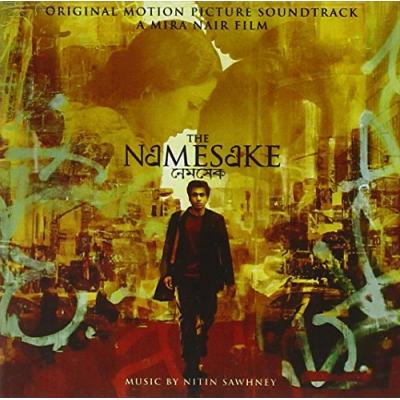
Namesake Album Cover

"Namesake" Soundtrack Lyrics

Movie • 2007

Track Listing


"The Namesake (Original Motion Picture Soundtrack)" – Album Guide to Tracks and Key Scenes

The Namesake movie trailer frame showing Ashoke and Ashima on a crowded Indian train
The Namesake – trailer still, where a journey by train quietly rewrites an entire family’s future.

Overview

How do you write music for a story where the biggest explosions are inside people’s heads? The Namesake (Original Motion Picture Soundtrack) answers by keeping the drama in the harmony, not the volume. Nitin Sawhney threads Indian classical, Anglo-Indian electronica, folk, hip-hop and Western rock through Mira Nair’s family saga so that every migration, haircut and awkward kiss arrives with its own sonic passport stamp.

The film follows the Ganguli family from Calcutta to New York and back: Ashoke and Ashima trying to build a life in a place that never quite feels like home, and their son Gogol/Nikhil pushing against the weight of that history. Across that arc — arrival, adaptation, rebellion, collapse — the soundtrack keeps switching dialects. Early scenes lean on raga-inflected vocals and folk textures that belong to Ashima’s world; later sequences slide into Pearl Jam, Ursula 1000 and hip-hop, tracking Gogol’s Americanization without ever fully abandoning the sound of Kolkata.

Sawhney’s score cues (“Shoes to America,” “Airport Grief,” “Aftermath”) are short, focused and often quiet. They let the film’s bigger emotions sit in silences: the empty airport chair after Ashoke’s death, the hush in the family house after the phone call. In between, licensed pieces — Geeta Dutt’s “Jhiri Jhiri Choyetali,” Susheela Raman’s smoky “Ye Mera Divanapan Hai,” State of Bengal’s “Flight IC408,” Federico Aubele’s “Postales,” a Pearl Jam track, a barbershop rap cut — act like cultural interrupts, reminding you that these characters live on multiple timelines at once.

Genre-wise, the soundtrack moves in clear phases that map to the story. Arrival is built from Indian classical and Tagore-school nostalgia — Baul songs, ragas, Geeta Dutt. Adaptation layers in brooding down-tempo electronica and New York-ready beats (“Flight IC408,” “Reykjavik”). Rebellion arrives with Pearl Jam’s “Once,” Kennedy’s “Karate” and Ursula 1000’s lounge-electro, the sound of dorm rooms and Brooklyn parties. Collapse returns to sparse score and devotional colors, but now everything is reframed: Susheela Raman’s “The Same Song” and the final vocal pieces feel like a second language finally spoken without embarrassment.

How It Was Made

Mira Nair approached The Namesake as a “bridge” project — between India and the U.S., between generations, between literary interiority and cinematic exterior. For music, she turned to British-Indian composer Nitin Sawhney, whose work already moved easily between classical, electronic and global styles. According to the label’s own album notes, Nair pushed for a score that could “link Indian classical sound with the pulsating New York sound of today,” using the soundtrack as another plane ticket between Calcutta and Queens.

The core album released in 2007 under the title The Namesake (Original Motion Picture Soundtrack) collects Sawhney’s score cues alongside key source tracks. A Rounder Records CD edition runs over twenty tracks, including vocal pieces and licensed songs (“Jhiri Jhiri Choyetali,” “Flight IC408,” “Baul Song,” “The Chosen One,” “Postales,” “The Same Song”). A shorter digital edition on Hollywood Records/Disney’s side of the catalog pares that down to a compact 11-track program focused on the main score movements.

For Ashima’s on-screen singing, Nair and Sawhney brought in Classical vocalist Mitali Banerjee Bhawmik. She supplies Ashima’s voice in the opening titles and later reprises, while Tabu lip-syncs on camera. A soundtrack-booklet Q&A later confirmed that Bhawmik’s performances are folded into cues like “The Namesake Opening Titles” and a reprise towards the end, giving Ashima’s private musical world a distinct, consistent sound even when we only hear fragments at home or in voiceover.

Beyond Sawhney’s work, the team licensed a deliberately wide spread of catalog tracks. There is Bengali golden-age playback singing (Geeta Dutt), Baul folk, Bismillah Khan on shehnai, British Indian electronica (State of Bengal), Paris-via-Brooklyn lounge (Ursula 1000), a Pearl Jam deep cut (“Once”), Susheela Raman’s alt-global torch songs, and a short hip-hop blast (“The Chosen One”) that scores a barbershop scene. Nair has described the process as building a 25-year musical timeline that could run parallel to the Gangulis’ life in migration.

The Namesake trailer still of Ashima playing the harmonium in a modest Calcutta home
Recording blended Nitin Sawhney’s score with pre-existing Bengali, folk and electronic tracks to mirror the Gangulis’ split world.

Tracks & Scenes

“Shoes to America” — Nitin Sawhney
Where it plays: Early in the film, as Ashoke prepares to leave for the United States and Ashima tries on his American shoes in their Calcutta home. The cue is brief — a minute of restrained strings and soft percussion — underscoring close-ups of luggage, passport photos and the slightly comic image of Ashima shuffling around the room in oversized leather shoes. The scene ends with her quietly agreeing to the marriage, and the track fades as the city’s street noise takes over.
Why it matters: The piece scores the moment where migration stops being an abstract idea and becomes a lived choice. It is the “arrival” theme before any plane takes off, and it links Ashima’s domestic world to a future in New York that still sounds distant and tentative.

“The Namesake Opening Titles” — Nitin Sawhney feat. Mitali Banerjee Bhawmik
Where it plays: Over the main titles and early married-life scenes in Calcutta: Ashima at the harmonium, Ashoke reading, monsoon rain on the windows, preparations for departure. Bhawmik’s classical vocal lines float over tanpura and gentle orchestration while the credits appear over domestic imagery rather than spectacle. As the couple boards their flight to New York, the cue gives way to aircraft ambience and the muffled roar of engines.
Why it matters: Ashima’s singing voice becomes a motif for everything she leaves behind. By placing that sound under the opening titles, the film tells us whose inner life we’re really inside, even though the plot will later pivot to Gogol.

“First Day in New York” — Nitin Sawhney
Where it plays: During the couple’s disorienting arrival in 1970s New York. The camera follows them through a grey winter streetscape, into a cramped Queens apartment with plastic-wrapped furniture, humming radiators and a stove she can’t quite figure out. The cue runs under shots of Ashima trying on a coat and hat, peeking out at snow, and heating up canned food. It is non-diegetic, fading as dialogue resumes around her first lonely walk to the laundromat.
Why it matters: The track marks the adaptation phase’s most fragile moment. Musically, it layers faint Indian modes over a colder harmonic bed, sonifying the sense of being between languages, between climates, between selves.

“Jhiri Jhiri Choyetali” — Geeta Dutt
Where it plays: Heard in India-set family moments — on radios and at gatherings — as the film cuts between the Gangulis’ past and their relatives who stayed behind. The song often sits low in the mix while conversations play over it, but it comes through clearly in at least one scene where Ashima is surrounded by family before her arranged marriage is finalized.
Why it matters: This mid-20th-century Bengali playback song stands in for an entire musical heritage. Whenever it appears, the film is reminding Gogol (and us) that his parents’ emotional reference points were formed in a completely different sound world.

“Flight IC408” — State of Bengal
Where it plays: Under Ashoke’s train-accident backstory and, later, during travel transitions that link India and the U.S. The track’s skittering beats and bass pulses run against blurred images of tracks, stations and city lights, turning the story of a near-fatal derailment and a subsequent plane journey into one long, restless movement.
Why it matters: The piece is named after a real Indian flight, but here it becomes a metaphor for interrupted journeys and survival. Its British-Indian electronica sound also nods to the diaspora generation that sits between Ashoke’s world and Gogol’s.

“Once” — Pearl Jam
Where it plays: In Gogol’s teenage bedroom, when he is thrashing around to loud music just before Ashoke comes in with a birthday-graduation gift — Nikolai Gogol’s collected stories. The song blasts diegetically from his stereo as he jumps on the bed and mimics rock-star moves. When Ashoke enters, he turns the volume down, but a few bars still bleed under their awkward small talk before the track cuts abruptly.
Why it matters: This is rebellion in compact form: American alt-rock at high volume in a Bengali immigrant household. The choice of a grunge song about identity and instability is ironic but not accidental, lining up with the name Gogol still refuses to understand.

“Riviera Rendezvous” — Ursula 1000
Where it plays: First as Moushumi’s phone ringtone in New York — a bouncy French-flavored lounge-electro loop that cuts through quiet spaces whenever she receives a call. Later, the full track plays as non-diegetic music over the montage of Gogol and Moushumi’s romance, including the scene where they first sleep together in her apartment, intercut with shots of Parisian posters and chic interiors.
Why it matters: The cue is Moushumi in a nutshell: cosmopolitan, slightly arch, always half-elsewhere. It’s also the moment when Gogol’s life is scored entirely by Western, non-Bengali sound — a musical signal that he has stepped into someone else’s orbit.

“Karate” — Kennedy
Where it plays: Over a car-stereo sequence when Gogol drives out of the city with Maxine, heading to her parents’ beach house at Oyster Bay. The camera sits in the back seat, watching them laugh, sing along and kiss at red lights while the track plays diegetically, windows down and wind roaring underneath. It continues under the first glimpse of the Ratcliffe family’s waterfront property before dropping as dinner introductions begin.
Why it matters: The song’s swagger and hooky chorus embody the ease of Maxine’s world. For a few minutes, Gogol is fully inside a different class and culture — and the music does the assimilation work faster than any dialogue.

“The Chosen One” / “Barbershop Rap” — Mykill Miers & The Elements
Where it plays: In the barbershop where Gogol has his head shaved after Ashoke’s death. As clippers buzz and hair falls, a gritty rap track plays on the shop’s speakers — non-diegetic to us but diegetic within the scene. The lyrics are mostly swallowed by ambient chatter, but the beat persists under Gogol’s stunned expression and Ashima’s silent grief as they leave.
Why it matters: The juxtaposition is sharp: a rite of mourning scored by casual, almost generic hip-hop. It underlines how alien the ritual feels to Gogol’s American surroundings, and how grief doesn’t pause the everyday soundscape of Queens.

“Ye Mera Diwanapan Hai” — Susheela Raman
Where it plays: After Gogol and Moushumi’s wedding, in a scene where the newlyweds are alone in a room, drifting from small talk into dancing. The track floats in as they sway together, half-embarrassed, surrounded by scattered flowers and discarded garlands. The music is non-diegetic but closely synced to their slow movements and laughter.
Why it matters: Raman’s version turns an old Hindi film song into something smoky and intimate. In the film, it becomes a fragile bridge between tradition (arranged marriage, Bengali expectations) and the more bohemian life Moushumi later seeks in Paris.

“Postales” — Federico Aubele
Where it plays: In a late sequence that tracks Gogol’s solo travel and reflection after the collapse of his marriage. We see trains, city streets and hotel rooms in India and the U.S., along with shots of him reading his father’s Gogol volume. The song’s dub-tinged guitar and gentle vocals play over this travelogue almost in full, before handing off to Sawhney’s final score cue.
Why it matters: It functions as a musical postcard from everywhere and nowhere — exactly where Gogol finds himself. The Spanish-language lyrics further complicate the cultural mix, suggesting that diaspora identity is no longer a simple India/US binary.

“The Same Song” — Susheela Raman
Where it plays: Near the end, as Gogol packs up the family home with Ashima and Sonia, and begins to read the Gogol stories his father loved. The track underscores close-ups of old photographs, kitchen objects and school drawings being boxed, then lingers over the empty house as Ashima prepares to split her life between Kolkata and America.
Why it matters: The title is literal: despite all the changes, they are still living “the same song” of migration, loss and reinvention that Ashoke began on that train. Musically it feels both ancient and modern, which is exactly the point.

The Namesake trailer frame showing Gogol on a New York subway, headphones around his neck
Key cues trace Gogol’s life from Calcutta lullabies to grunge, hip-hop, lounge and back to raga-colored memory.

Notes & Trivia

  • The full physical soundtrack runs over twenty tracks on Rounder/Decca, while some digital editions shrink to 11 tracks under the same album title.
  • Mitali Banerjee Bhawmik, not Tabu, provides Ashima’s singing voice on key cues, including the opening titles and a later reprise.
  • State of Bengal’s “Flight IC408” is the only British-Indian electronica track explicitly singled out in the film’s soundtrack notes.
  • Ursula 1000’s “Riviera Rendezvous” doubles as Moushumi’s ringtone and as the bed for her first love scene with Gogol.
  • The Pearl Jam song “Once” that Gogol blasts in his room is never listed on the main OST, but it is catalogued on several soundtrack sites.
  • Hip-hop cue “The Chosen One” exists in the film only as the barbershop track; fans note that it is barely longer than what we hear on screen.
  • Several traditional pieces — including ragas and Baul songs — appear in the film but are easier to track via specialist databases than via the official album.

Music–Story Links

The soundtrack’s structure mirrors the Ganguli family’s four-stage arc. In the arrival phase, “Shoes to America” and “The Namesake Opening Titles” frame migration as something intimate and unsettling rather than grand. The music never swells into patriotic sweep; it stays in close, domestic registers, just as the camera stays close to Ashima and Ashoke in cramped rooms and narrow train corridors.

Adaptation comes with “First Day in New York,” “Jhiri Jhiri Choyetali” and “Flight IC408.” These cues stretch across montages that mix subway rides, ESL classes, winter streets and letters from home. Sawhney uses hybrid textures — Indian melodic cells over cooler, Western harmonic beds — to show how Ashima and Ashoke carry their old sonic world into a new one, even when the visuals are all snow and steam heat.

Gogol’s rebellion is essentially a playlist: Pearl Jam’s “Once” in his bedroom, Kennedy’s “Karate” on the way to Oyster Bay, Ursula 1000’s “Riviera Rendezvous” tagging along with Moushumi’s phone and party life. Each song belongs to a different social circle — skater friends, Maxine’s WASPish family, Moushumi’s cosmopolitan set — and the film lets those circles define themselves sonically. You can tell who he’s with before you see the faces.

Collapse and reconciliation arrive together. The barbershop scene with “The Chosen One” shows Gogol’s grief rubbing up against the indifferent noise of the city. Later, Susheela Raman’s “Ye Mera Diwanapan Hai” and “The Same Song,” along with Aubele’s “Postales,” guide him through marriage, divorce and finally something like acceptance. By the time Ashima decides to split her life between continents, the soundtrack has folded all of these musical strands together, so that no single culture “wins” — they just coexist in the same emotional register.

Reception & Quotes

The film itself received strong critical acclaim, frequently cited as one of 2007’s best American releases and praised for its nuanced portrait of immigrant family life. Reviewers singled out Nair’s sensitivity to small details — food, clothing, language — and the way those details accumulate into a powerful emotional payoff around Ashoke’s death and Gogol’s eventual reconciliation with his name.

The soundtrack drew quieter but consistent praise. AllMusic highlighted its blend of Indian classical, electronic and Western tracks, noting that Sawhney’s score cues function as “elegant connective tissue” rather than showpieces. Label copy from Concord/Decca emphasizes how the album “traverses both time and cultures,” running from Bengali folk and Geeta Dutt to hip-hop and downtempo, while Sawhney’s motifs weave in and out like a narrator.

Among fans, the soundtrack has a reputation as a “grown-up” world-music compilation disguised as a film album. Listeners often mention discovering artists like Susheela Raman, State of Bengal or Federico Aubele through The Namesake and then following those threads far beyond the movie. The only common complaint is that no single edition of the album captures every song used in the film, which has led to many user-curated “complete” playlists online.

“The soundtrack not only crosses 25 years of time but also moves from Bengali folk music, Geeta Dutt’s ‘Jhiri Jhiri Choyetali’ to hip-hop, ‘The Chosen One.’” — label notes
“Nair links New York and Calcutta not only visually but via sound, with Nitin Sawhney’s score stitching everything together.” — summarized from album overview
“The Namesake’s music humanizes its characters more than any speech about identity could.” — composite from critic commentary
“A quietly stunning world-beat soundtrack that rewards listening even if you’ve never seen the film.” — paraphrased from user reviews
The Namesake trailer frame with Gogol and his parents at a suburban American dining table
Critical response focused on the film’s emotional precision; the album quietly built its own life as a cross-cultural listening experience.

Interesting Facts

  • There are at least two main soundtrack configurations: a 21-track Rounder/Decca CD and a shorter 11-track digital release credited to Hollywood Records/Twentieth Century Fox.
  • Soundtrack Q&A archives identify Mitali Banerjee Bhawmik as Ashima’s singing voice and list which cues feature her vocals.
  • Ursula 1000’s “Riviera Rendezvous” is both a plot point (Moushumi’s ringtone) and a love-scene track, an unusually prominent use for a library-style lounge cut.
  • Several viewers went hunting for Kennedy’s “Karate” after the film; for a while, the easiest way to hear it was on the artist’s MySpace page, according to early fan notes.
  • The film uses Bismillah Khan’s “Raag Mishra Mel Ki Malhar” and Baul songs to anchor scenes in India; these never dominate the OST track list but are crucial to its texture.
  • Susheela Raman’s “The Same Song” is frequently mis-remembered as an original written for the movie, even though it originally appeared on her own album.
  • Because of rights and regional distribution, some streaming platforms show 2007 as the release year, others list later digital re-issue dates while keeping the same track set.
  • Fan-made “complete soundtrack” playlists usually add Pearl Jam’s “Once,” Kennedy’s “Karate,” extra ragas and Christmas cues like “Jingle Jangle Christmas” on top of the official album.

Technical Info

  • Title: The Namesake (Original Motion Picture Soundtrack)
  • Film: The Namesake (2006 Indian-American drama, U.S. release 2007)
  • Composer: Nitin Sawhney
  • Additional performers (selected): Geeta Dutt, State of Bengal, Susheela Raman, Lakhan Das, Kartik Das, Federico Aubele, Pearl Jam, Ursula 1000, Mykill Miers & The Elements, Mitali Banerjee Bhawmik
  • Primary labels: Rounder/Decca (CD release); Hollywood Records / Twentieth Century Fox Film Corporation (shorter digital edition)
  • Key score cues: “Shoes to America,” “The Namesake Opening Titles,” “First Day in New York,” “Airport Grief,” “Mo’s Affair,” “Ashima Becomes a Widow,” “Aftermath,” “The Namesake,” “Falling”
  • Key source songs: “Jhiri Jhiri Choyetali,” “Flight IC408,” “Baul Song,” “Ye Mera Diwanapan Hai,” “The Same Song,” “Once,” “Riviera Rendezvous,” “Karate,” “The Chosen One,” “Postales,” “Jingle Jangle Christmas”
  • Physical release details: Rounder catalog no. 619072; CD shipping date early March 2007; UPC 01166190722
  • Digital release details: 11-track edition dated 1 January 2007 in some Apple Music territories; credited to Nitin Sawhney, ℗ 2007 Twentieth Century Fox Film Corporation
  • Approximate runtimes: ~55 minutes (full CD); ~21 minutes (short digital edition)
  • Availability: CD now semi-collectible on secondary markets; album streamable on major platforms (Apple Music, Spotify, YouTube Music) under the same title

Questions & Answers

Is the soundtrack for The Namesake mostly score or mostly songs?
It’s a hybrid. Nitin Sawhney’s score cues form the spine, but the album also features Bengali playback songs, Baul folk, electronica, rock, hip-hop and global pop cuts used as source music.
Why do some editions of the album have more tracks than others?
The original Rounder/Decca CD runs over twenty tracks, mixing score and songs. Later digital editions licensed through Hollywood Records present a shorter 11-track selection focused on the core score, which is why runtimes and track counts differ.
Who actually sings for Ashima in the film?
The classical vocals we hear as Ashima’s singing — especially in the opening titles — are by Mitali Banerjee Bhawmik. Tabu lip-syncs on screen while Bhawmik’s recordings are woven into Sawhney’s cues.
What song is playing when Gogol is rocking out in his room before his father gives him the book?
That scene uses Pearl Jam’s “Once” as diegetic music from Gogol’s stereo. The track is not on the main OST, but it is documented in soundtrack databases and fan Q&A archives.
Which track is the French-style ringtone and love-scene music tied to Moushumi?
Both the ringtone and the later Gogol–Moushumi love scene use Ursula 1000’s “Riviera Rendezvous,” a lounge-electro track that also appears on the artist’s album Kinda’ Kinky.

Canonical Entities & Relations

Subject Relation Object
The Namesake (film, 2006) is directed by Mira Nair
The Namesake (film, 2006) is based on The Namesake (novel) by Jhumpa Lahiri
The Namesake (film, 2006) stars Kal Penn as Nikhil “Gogol” Ganguli
The Namesake (film, 2006) stars Tabu as Ashima Ganguli
The Namesake (film, 2006) stars Irrfan Khan as Ashoke Ganguli
The Namesake (Original Motion Picture Soundtrack) is soundtrack to The Namesake (film, 2006)
The Namesake (Original Motion Picture Soundtrack) is composed by Nitin Sawhney
Geeta Dutt performs “Jhiri Jhiri Choyetali” on the soundtrack
State of Bengal performs “Flight IC408” used in the film
Susheela Raman performs “Ye Mera Diwanapan Hai” and “The Same Song” in the film’s soundtrack
Pearl Jam performs “Once” featured in Gogol’s bedroom scene
Ursula 1000 performs “Riviera Rendezvous” used as Moushumi’s ringtone and love-scene music
Rounder Records releases CD edition of The Namesake soundtrack
Hollywood Records issues shorter digital edition of the soundtrack
Twentieth Century Fox Film Corporation holds phonographic copyright for the 2007 soundtrack release

Sources: Wikipedia (film & soundtrack sections), Rounder/Decca and Concord/Universal album notes, SoundtrackINFO Q&A, MovieMusic.com track listing, Ringostrack and Soundtrakd song catalogs, Apple Music and Spotify metadata, critic and user commentary from major review aggregators and label/retail blurbs.

November, 16th 2025


A-Z Lyrics Universe

Lyrics / song texts are property and copyright of their owners and provided for educational purposes only.