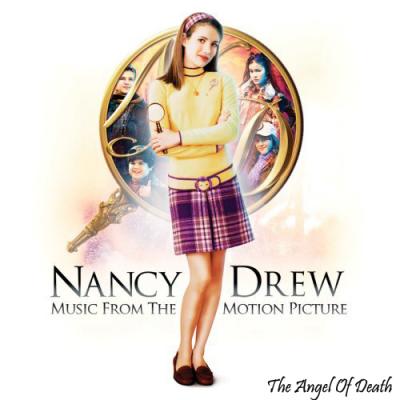
"Nancy Drew" Soundtrack Lyrics
Movie • 2007
Track Listing
Matthew Sweet
Liz Phair
The Donnas
Joanna
Katie Melua
Price
Corinne Bailey Rae
Persephone's Bees
Flunk
J-Kwon
Cupid
Bizarre
"Nancy Drew (Music From The Motion Picture)" – Album Guide to Tracks and Key Scenes
Overview
What happens when a classic teen sleuth walks into a mid-2000s pop playlist? The 2007 film Nancy Drew answers that with a soundtrack that treats every case file like a mixtape. Instead of leaning on orchestral suspense alone, the movie wraps its mystery in jangly guitars, fizzy pop, and a few surprisingly moody downtempo cuts.
The film follows Nancy (Emma Roberts) as she leaves tidy River Heights for Los Angeles, landing in a creaky Hollywood mansion tied to the unsolved death of movie star Dehlia Draycott. The songs trace the same arc: wide-eyed arrival, awkward adaptation, small acts of rebellion, and finally a kind of emotional unmasking. You can almost chart the investigation by when the guitars, synths, or drum machines kick in.
Underneath the teen-friendly surface, the soundtrack also has a control-freak elegance. Producer–composer–music supervisor Ralph Sall threads together new commissions, covers, and crate-digging picks so that Nancy’s uncanny competence never feels too heavy. Even the most radio-ready cuts usually hide a line or mood about being out of place, decoding clues, or seeing more than everyone else in the room.
Stylistically, the album moves in phases. Early scenes lean on bright alt-pop (Matthew Sweet, Liz Phair, The Donnas) to sell Nancy’s optimism and culture shock. As the case darkens, we get cooler textures: retro lounge, indie downtempo, and library-music-style score cues. For social scenes — school, parties, shopping — hip-hop and R&B tracks step in, signaling that Nancy is brushing against a world that isn’t built for magnifying glasses and penny loafers. The result: indie grit for vulnerability, power-pop for courage, and sleek electronic touches for the Hollywood façade she keeps poking holes in.
How It Was Made
The musical identity of Nancy Drew sits squarely on Ralph Sall’s shoulders. He serves as the film’s composer and music supervisor, and he also produced the tie-in album Nancy Drew (Music From The Motion Picture), released in June 2007 on the Bulletproof label. His brief was tricky: keep longtime readers happy, but package Nancy for a tween/teen audience that was listening to pop-rock, college-radio indie, and rap in the same playlist.
Sall’s solution was to build a mostly song-driven soundtrack and treat the score as connective tissue. He commissioned nine newly recorded tracks from artists like Matthew Sweet, Liz Phair, The Donnas, Joanna, Katie Melua, Price, J-Kwon, Cupid, and Bizarre, then anchored them with a few pre-existing favorites — notably Corinne Bailey Rae’s “Like a Star”, Persephone’s Bees’ “Nice Day”, and Flunk’s cover of “Blue Monday”. The commissioned songs often double as character commentary, while the licensed tracks carry more of the emotional weight.
Behind the scenes, this demanded careful coordination. Bulletproof handled the album, while Warner Bros. balanced the need for recognizable names with a modest family-film budget. Library-music cues by composers like Trevor Duncan sit alongside the pop songs, giving Sall flexible suspense motifs he could reuse around the Dehlia Draycott mystery without blowing the music budget on wall-to-wall score.
Licensing also had to account for songs used only in the film — or even just in particular cuts — like Rooney’s “When Did Your Heart Go Missing?” over the end credits, and the Gorillaz hit “DARE”, neither of which appear on the main Bulletproof CD. Those tracks help the movie feel plugged into mid-2000s youth culture without overcomplicating the retail album’s rights situation.
Tracks & Scenes
“Come to California” — Matthew Sweet
Where it plays: Used around Nancy’s move from River Heights to Los Angeles, this track helps score her arrival and early acclimation to Hollywood — car rides along palm-lined streets, glimpses of movie billboards, and the first views of the spooky Draycott mansion. The song sits non-diegetically over montage-style shots rather than playing from any in-world source, framing the whole trip as optimistic but slightly off-kilter.
Why it matters: The lyric perspective — a call toward California as both promise and test — mirrors Nancy’s curiosity and stubborn confidence. It tells us she’s not running away from River Heights; she’s running toward something that might finally be worthy of her skills.
“Perfect Misfit” — Liz Phair
Where it plays: Tied to Nancy’s first experiences at Hollywood High. The song underscores her walk through the campus, cafeteria glances, and the uncomfortable contrast between her vintage outfits and the glossy, fashion-obsessed cliques. The track is non-diegetic, but it almost feels like Nancy’s inner monologue turned into guitar pop.
Why it matters: The theme of being “good” yet out of step matches Nancy’s situation exactly. The song turns her awkwardness into something heroic, reminding the audience that being a “misfit” is the cost of having a moral compass in a school where most kids worry about status, not cold cases.
“Kids in America” — The Donnas
Where it plays: Blasts over a high-energy sequence that throws Nancy into the noisy, sun-drenched reality of Los Angeles teen life — sports fields, crowded corridors, fast-cut glimpses of parties she’s not quite part of yet. The Donnas’ version is louder and more guitar-heavy than the original, which fits the movie’s slightly punked-up idea of modern teen culture.
Why it matters: The song says what the dialogue doesn’t: Nancy has left the safety of River Heights’ small-town rules. She’s now dealing with “kids in America” whose problems are less about justice and more about popularity, which sharpens her outsider status.
“Pretty Much Amazing” — Joanna
Where it plays: Slips in during a lighter stretch as Nancy starts to impress people with her competence — glimpses of her solving small problems, being unexpectedly helpful, and charming adults who underestimate her. It works as a breezy, melodic counterpoint to the film’s more anxious cues.
Why it matters: The song’s title alone sums up how the film wants younger viewers to feel about Nancy. Musically, it softens her perfectionism, giving her wins a slightly dreamy sheen instead of turning them into bragging rights.
“Looking for Clues” — Katie Melua
Where it plays: Used over investigation beats inside the Dehlia Draycott mansion and around Nancy’s research rituals. We see her piecing through old film reels, letters, and hidden spaces while the song’s smooth, noir-inflected arrangement plays in the background.
Why it matters: It’s almost too on-the-nose in title, but the mellow groove suits the idea that Nancy genuinely enjoys the process of sleuthing. The track also bridges pop soundtrack and mystery-movie vibe, easing younger viewers into slower, clue-driven scenes.
“Hey Nancy Drew” — Price
Where it plays: Functions as a kind of meta-theme song in promotional materials and in-film needle drops, usually when the narrative wants to celebrate Nancy rather than test her. We hear it over moments where her detective skills directly save the day or impress another character, playing non-diegetically like a cheer from the film itself.
Why it matters: The lyrics explicitly praise her problem-solving (“When there’s a problem, you can fix it”), turning Nancy from a book-page icon into a pop-culture figure with her own sonic signature.
“Blue Monday” — Flunk
Where it plays: This downtempo New Order cover features prominently during the disastrous CPR demonstration scene in the school gym. As Nancy tries to help a classmate and ends up being mocked, the track drifts in, its slow pulse underlining the sting of public humiliation and her sense of isolation despite doing the right thing.
Why it matters: The song’s cool, detached mood clashes with Nancy’s earnestness, highlighting how out of sync she is with the student body. It’s one of the soundtrack’s moodiest uses of a pop song and gives the film one of its most memorable music cues.
“Won’t You Join Me for a Drink?” — Lemon
Where it plays: Heard when Nancy, Ned, and Corky are preparing for her birthday party. She puts the track on, and the three dance around the empty house while they wait for guests. Here the music is diegetic, coming from Nancy’s chosen playlist as they improvise goofy moves among balloons and snacks.
Why it matters: This little interlude proves Nancy can have fun and be silly without dropping her old-fashioned charm. It also sets up a contrast: the intimate, awkward pre-party dance versus the louder, more chaotic party tracks that follow once the rest of the school shows up.
“Party Tonight” — Bizarre
Where it plays: Used inside the same birthday party as the crowd fills out Nancy’s house. It plays in the background as kids spill onto the dance floor, raid the snack table, and treat Nancy’s carefully curated event more like any other Hollywood High blow-out than a special case-solver’s celebration.
Why it matters: The track pulls the film firmly into mid-2000s party-rap territory, underlining the clash between Nancy’s wholesome instincts and the more hedonistic energy of her peers. The scene lets the soundtrack briefly belong to everyone else, not just her.
“All I Need” — Cupid
Where it plays: Plays softly while Inga and Trish drag Nancy on a makeover-style shopping trip. The song hums underneath as she tries on outfits, negotiates with a skeptical store clerk, and attempts to decode what “fitting in” even means here.
Why it matters: The R&B vibe matches the boutique’s sleek, aspirational atmosphere. It also underlines the emotional stakes: Nancy doesn’t actually need these clothes, but she thinks she needs some version of social acceptance to keep the peace.
“We Came to Party” — J-Kwon
Where it plays: Another track woven into the party sequence, often heard when the energy peaks — loud chatter, dancing in crowded rooms, people spilling into the backyard. It’s non-diegetic but cut to match camera moves and quick edits as the event spirals slightly beyond Nancy’s control.
Why it matters: The song plants a clear marker: for most of the students, this night is just a party. For Nancy, it’s a distraction from the case and a field test of whether she can be “normal” at all.
“Like a Star” — Corinne Bailey Rae
Where it plays: Covers a tender montage near the film’s end: Jane Brighton reunited with her daughter, Nancy later watching a videotape of Jane, Allie, and Leshing, and finally Nancy and Ned talking and sharing a quiet kiss back in River Heights. The track bridges locations and times, floating over these scenes as a non-diegetic emotional through-line.
Why it matters: This is the movie’s big emotional exhale. The gentle vocal and warm chords give the mystery a human payoff, reframing the case not as a puzzle solved but as a family restored — and hinting at Nancy’s own budding romance.
“When Did Your Heart Go Missing?” — Rooney
Where it plays: Runs over the ending credits, following that final River Heights coda. Viewers leave the theater to this upbeat, hooky track while animated or graphic credit elements roll, tying the film back to the wider world of mid-2000s teen media where Rooney were regulars on soundtracks and TV.
Why it matters: The song adds one more layer of pop-rock gloss and gives the credits a sense of continuity with other youth-oriented shows and films of the era. It also keeps the film from ending on too solemn a note after the emotional reunions.
Other notable cues and deep cuts
“Nice Day” — Persephone’s Bees: pops up around lighter interludes, adding quirky indie flavor when the case takes a brief back seat.
“Blue Jungle” — Les Baxter: a vintage exotica track used to tint Hollywood with old-studio mystery, especially in scenes tied to Dehlia Draycott’s golden-age past.
“The Delicate Place” — Spoon; “Homage to Patagonia” — Lemon Jelly: both appear in the wider music list for the film, giving a cooler indie and electronic edge to otherwise straightforward teen-movie visuals.
Score cues by Trevor Duncan and Patrick Cassidy: short library-style stings (“Quotations for Murder”, “Synchro Stings”, “Cosmic Hollow”) are used for discovery, danger, and classic clue-reveal beats.
Notes & Trivia
- Ralph Sall wears three hats here: original music composer, music supervisor, and producer of the commercial soundtrack album.
- According to LizPhair.net, nine of the twelve album tracks were newly recorded specifically for the movie, not recycled from previous albums.
- “Kids in America” is a cover of the 1981 Kim Wilde hit; in this version The Donnas push it toward crunchy guitar pop to match Nancy’s high-school chaos.
- Katie Melua’s “Looking for Clues” is itself a cover of Robert Palmer’s 1980 song, re-contextualized from romantic suspicion to literal clue-hunting.
- Flunk’s cover of “Blue Monday” had already appeared in other films, but many fans associate it most strongly with Nancy’s CPR humiliation scene.
- “Hey Nancy Drew” is by the band Price, led by Chris Price, who later became known in power-pop circles for his collaborations with Taylor Locke.
- Corinne Bailey Rae’s “Like a Star” was not written for the movie, but its use in the final montage helped extend the song’s visibility beyond adult-contemporary radio.
- Several songs heard in the film (notably Rooney’s “When Did Your Heart Go Missing?” and Gorillaz’s “DARE”) do not appear on the Bulletproof soundtrack CD, a common rights-and-runtime compromise.
Music–Story Links
The soundtrack doesn’t just sit on top of the plot; it keeps commenting on Nancy’s negotiation between three identities — classic girl detective, awkward new student, and reluctant Hollywood outsider.
When Nancy first arrives in Los Angeles, the bright pop of “Come to California” plays like a promise and a warning. The upbeat tempo matches her optimism and old-school preparedness, but the lyrics hint that California has its own agenda. Sall uses the song to turn the move itself into a character: the state is inviting Nancy in, but on its terms.
At Hollywood High, “Perfect Misfit” and “Kids in America” work almost in tandem. The former tracks her internal sense of not belonging, while the latter blasts over crowded exteriors and montages that show how loud, fast, and superficial her new environment can be. Together, they dramatize a simple idea: the further Nancy gets from River Heights norms, the more her virtues look like oddities.
As the Draycott mystery deepens, the palette cools. “Looking for Clues” plays over quieter detective work, while short score cues by Trevor Duncan and Patrick Cassidy underline danger. Here the songs stop being just mood setters; they mark transitions between Nancy’s two lives. When a pop song fades and eerie strings come in, we know we’ve left ordinary teen problems and entered the case file again.
The party sequence, scored with Lemon’s “Won’t You Join Me for a Drink?”, Bizarre’s “Party Tonight”, J-Kwon’s “We Came to Party”, and other cues, deliberately fractures Nancy’s world. In the pre-party dance with Ned and Corky, the music feels like hers — playful, slightly odd, intimate. Once the house fills up, the sound shifts to mainstream party rap, and she becomes just one face in a crowd. The music shows how quickly she can lose control of a situation when social expectations drown out her usual methodical thinking.
Finally, the end stretch pairs songs with emotional resolutions rather than clues. “Like a Star” binds Jane’s reunion with her daughter to Nancy’s quiet return to River Heights and first kiss with Ned. The track suggests that the case’s true prize is not the solved crime, but restored relationships. Rooney’s “When Did Your Heart Go Missing?” over the credits then flips the tone back toward carefree, reminding us that while Nancy solves adult-sized problems, she’s still a teenager with a long life ahead.
Reception & Quotes
The film itself drew mixed reviews, but the soundtrack often earned kinder words than the mystery plotting. Critics and fans tended to agree that the album works as a standalone slice of mid-2000s teen pop, even if its integration into the movie sometimes feels like “aural wallpaper” rather than bold storytelling.
According to one Boston-area review, the twelve songs “offer upbeat aural wallpaper” that follows Nancy “out West”, through her nerves about a new school, and into her wider world beyond River Heights. That same piece notes that the last third of the album drifts into party tracks that feel only loosely connected to the character work, echoing how the birthday party sequence almost steals the film away from the central mystery.
Retro-facing commentary on teen-movie soundtracks has also singled out Nancy Drew as a solid entry in the 2000s cycle. One article on 2000s teen-film music highlights the way songs like Liz Phair’s “Perfect Misfit”, Flunk’s “Blue Monday”, and Matthew Sweet’s “Come to California” balance angst and sunniness, and praises the inclusion of a new version of “Kids in America” as a savvy nod to earlier teen-movie eras.
Fans often discuss the soundtrack separately from the film, especially around its availability and the absence of a dedicated score release. Online threads regularly mention how certain scenes — the CPR humiliation with “Blue Monday”, the end montage with “Like a Star”, the end credits with Rooney — live in their memory precisely because of the chosen songs.
“A great soundtrack mix of pop and hip-hop gives this Nancy a slicker, more contemporary feel than her modest mystery really earns.” MovieSmackdown comparative review
“Nine newly recorded tracks keep the tone bright and suitable for pre-teens, lightly tracing Nancy’s journey from River Heights to Hollywood.” soundtrack coverage summarizing the album concept
Interesting Facts
- The commercial album is usually titled Nancy Drew (Music From The Motion Picture), while some retailers shorten it to just Nancy Drew with “Original Soundtrack” as artist.
- The CD clocks in at around 44 minutes and omits several songs heard in the film, including Rooney’s end-credits track and Gorillaz’s “DARE”.
- The album was released on Bulletproof with catalog number BPF 1027, and has circulated both as a standard release and as a promo edition.
- Two album cuts — “Kids in America” and “Looking for Clues” — are themselves covers of earlier hits, layering nostalgia on top of an already retro-based character.
- “Hey Nancy Drew” effectively launched Price, the band fronted by Chris Price, into wider industry view, leading to later collaborations with members of Rooney.
- Flunk’s “Blue Monday” appears on their own releases but is often tagged in streaming platforms specifically with the Nancy Drew OST, thanks to its film usage.
- Online discographies and retailer listings consistently describe the album’s genre mix as spanning pop, rock, electronic, hip-hop, funk/soul, and “stage & screen”.
- While the songs album is widely available on CD and digital platforms, the instrumental score cues remain unreleased as a standalone album, a frequent complaint in fan discussions.
- Some international DVD and TV airings tweak or replace minor background cues for rights reasons, but major song placements like “Blue Monday” and “Like a Star” are typically preserved.
- Emma Roberts didn’t record a character song for this film, unlike her work on Aquamarine, which keeps the musical spotlight firmly on external artists.
Technical Info
- Title: Nancy Drew (Music From The Motion Picture)
- Film: Nancy Drew (2007, feature film)
- Type: Song-driven original motion picture soundtrack (various artists) plus unreleased score
- Year of film release: 2007 (theatrical release June 15, 2007 in the U.S.)
- Album release: June 12, 2007 (CD)
- Primary composer / music supervisor: Ralph Sall (composer, music supervisor, soundtrack producer)
- Label: Bulletproof (catalog BPF 1027; often listed as Bulletproof Records)
- Key artists featured: Matthew Sweet, Liz Phair, The Donnas, Joanna, Katie Melua, Price, Corinne Bailey Rae, Persephone’s Bees, Flunk, J-Kwon, Cupid, Bizarre
- Notable non-album film songs: Rooney — “When Did Your Heart Go Missing?”; Gorillaz feat. Shaun Ryder — “DARE”; Les Baxter — “Blue Jungle”; Spoon — “The Delicate Place”; Lemon Jelly — “Homage to Patagonia”
- Runtime (album): roughly 43–44 minutes
- Formats: CD, digital download/streaming (region availability varies by service)
- Score availability: no official standalone release; selections only heard within the film
Questions & Answers
- Is the Nancy Drew soundtrack mostly original songs or existing hits?
- It’s a hybrid. The Bulletproof album includes nine newly recorded tracks commissioned for the film and a handful of pre-existing songs like “Like a Star” and “Blue Monday”.
- Which song plays during Nancy’s embarrassing CPR demonstration in the gym?
- That scene is underscored by Flunk’s slow, atmospheric cover of “Blue Monday”, which plays as classmates laugh and the situation spirals.
- What song runs over the end credits of Nancy Drew (2007)?
- Rooney’s “When Did Your Heart Go Missing?” plays over the closing credits, but it is not included on the main Bulletproof soundtrack CD.
- Why are some songs from the movie missing on the commercial soundtrack?
- Standard rights, timing, and marketing choices. Tracks like “When Did Your Heart Go Missing?” and “DARE” are licensed for the film but omitted from the curated 12-track album.
- Is the instrumental score available anywhere?
- No full official score album exists. Fans rely on the film itself and scattered library-music releases for cues by Trevor Duncan and Patrick Cassidy.
Canonical Entities & Relations
| Subject | Verb | Object |
|---|---|---|
| Andrew Fleming | directed | Nancy Drew (2007 film) |
| Emma Roberts | plays | Nancy Drew (character) in the 2007 film |
| Jerry Weintraub | produced | Nancy Drew (2007 film) |
| Ralph Sall | composed and supervised music for | Nancy Drew (2007 film) |
| Ralph Sall | produced | Nancy Drew (Music From The Motion Picture) album |
| Bulletproof | released | Nancy Drew (Music From The Motion Picture) on CD |
| Matthew Sweet | performs | “Come to California” on the soundtrack |
| Liz Phair | wrote and performs | “Perfect Misfit” for the soundtrack |
| The Donnas | cover | “Kids in America” for the film |
| Joanna | performs | “Pretty Much Amazing” in the film and on album |
| Katie Melua | performs | “Looking for Clues” in Nancy Drew |
| Price (band) | performs | “Hey Nancy Drew” on the soundtrack |
| Corinne Bailey Rae | performs | “Like a Star” used in the film’s final montage |
| Persephone’s Bees | performs | “Nice Day” in the film and on album |
| Flunk | performs | “Blue Monday” used in the CPR scene |
| J-Kwon | performs | “We Came to Party” in Nancy’s birthday party sequence |
| Cupid | performs | “All I Need” in the shopping montage |
| Bizarre | performs | “Party Tonight” at Nancy’s birthday party |
| Rooney | performs | “When Did Your Heart Go Missing?” over the end credits |
| Gorillaz feat. Shaun Ryder | perform | “DARE” used in the film but not on the main CD |
| Warner Bros. Pictures | distributed | Nancy Drew (2007 film) |
| Virtual Studios | co-produced | Nancy Drew (2007 film) |
| Dehlia Draycott’s mansion | serves as | central investigation location in the film |
Sources: official film credits; soundtrack album credits and retailer listings; Discogs release info; LizPhair.net soundtrack entry; SoundtrackINFO and WhatSong scene descriptions; Nancy Drew (2007 film) production and reception summaries; selected critical articles on teen-movie soundtracks.
November, 16th 2025
A-Z Lyrics Universe
Cynthia Erivo Popular
Ariana Grande Horsepower
Post Malone Ain't No Love in Oklahoma
Luke Combs Good Riddance (Time of Your Life)
Green Day Bye Bye Bye
*NSYNC You're the One That I Wan
John Travolta & Olivia Newton-John I Always Wanted a Brother
Braelyn Rankins, Theo Somolu, Kelvin Harrison Jr. and Aaron Pierre The Power of Love
Frankie Goes to Hollywood Beyond
Auli’i Cravalho feat. Rachel House MORE ›