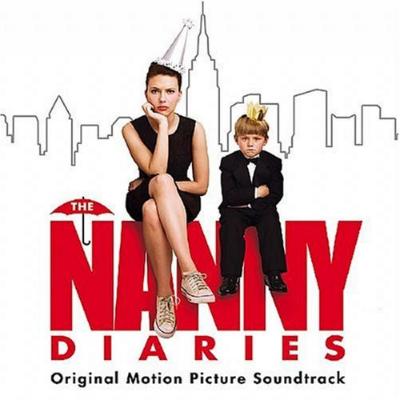
"Nanny Diaries" Soundtrack Lyrics
Movie • 2007
Track Listing
Marvin Gaye
WAR
Lily Allen
Fatal Mambo
Lisa Stansfield
Odyssey
Urban Delights
The Hold Steady
Simply Red
The Main Ingredient
Tommy James & The Shondells
Joshua Radin
Tarika
Mark Suozzo
"The Nanny Diaries (Original Motion Picture Soundtrack)" – Album Guide to Tracks and Key Scenes
Overview
What does a Motown floor-filler, a disco love letter to New York, and a Chipmunks cover of “Macarena” have in common? In The Nanny Diaries, they all end up scoring one young woman’s crash-course in Manhattan class warfare.
The 2007 film follows anthropology graduate Annie Braddock as she stumbles into a nanny job for a wealthy Upper East Side family and starts treating the experience as a field study in modern tribal behavior. The soundtrack leans into that idea: instead of a single, dominant score, the movie hangs Annie’s story on a collage of soul classics, New York disco, 1990s and 2000s pop, and a light original score by composer Mark Suozzo. The result feels like rifling through different “sonic cultures” every time Annie crosses a social boundary.
This is a movie where a Marvin Gaye groove rolls out on a Nantucket beach, a George Michael anthem becomes a friendship pact in a beat-up car, and Laura Izibor’s “Shine” turns a nanny diary into a manifesto about not wasting your life. Underneath the gloss, the playlist constantly reminds you that Annie is always sampling worlds that do not really belong to her — Wall Street, Fifth Avenue, designer playgrounds — before she figures out which one she wants.
Structurally, the soundtrack tracks an arc: arrival → adaptation → rebellion → collapse and reset. Early on, upbeat tracks and bright pop underline Annie’s wide-eyed arrival in Manhattan. Mid-film, slick R&B and world-music cues play under her adaptation to the X family’s rituals and the coded rules of their social circle. As the story turns and Annie starts pushing back, bolder needle-drops and more obvious lyrics (“Freedom ’90”, “Got To Give It Up”) comment on her rebellion and the slow collapse of the X marriage. Finally, the optimistic soul of “Shine” closes the loop on a more grown-up Annie who chooses her own path.
Genre-wise, the album lives at the intersection of Stage & Screen and R&B: 1970s soul and disco (Marvin Gaye, War, Odyssey) frame questions of identity and belonging; glossy 1980s–1990s pop (Lisa Stansfield, Simply Red) stands in for surface polish and aspirational lifestyle; 2000s singer-songwriter and indie rock (Joshua Radin, The Hold Steady) echo Annie’s inner voice and doubts; global and Latin cues (Fatal Mambo, Tarika, Ali Farka Touré on related releases) decorate the anthropologist angle. Each cluster of styles marks a different phase of Annie’s education in money, work, and emotional labor.
How It Was Made
The film itself was written and directed by Shari Springer Berman and Robert Pulcini, adapted from the 2002 bestseller by Emma McLaughlin and Nicola Kraus. They lean heavily on music to keep the tone sliding between satire and empathy; the story can turn on a single song choice as the movie jumps from fairy-tale shopping trip to quiet emotional burnout.
Composer Mark Suozzo provides the original score — short, pointed cues like “Museum Visit” or the sly “Nanny Cam” that frame Annie’s narration and “field diary” voiceovers. His music stays mostly in the background; the score connects scenes, adds gentle irony to anthropological monologues, and gives emotional glue where the licensed songs might otherwise feel like a mixtape.
On the song side, the soundtrack functions as a curated compilation album: the CD and later digital releases group together 15 cuts by artists ranging from Marvin Gaye and War to Lily Allen, Odyssey, The Hold Steady, Jill Scott, Joshua Radin and Simply Red. Labels and credits vary by territory, with physical CDs tied to companies like Artists’ Addiction/Adrenaline and European issues linked with Milan Records, while digital editions appear through platforms such as Apple Music and Spotify as a 57-minute, 15-track set.
Music supervision for the film sits in the orbit of Randall Poster, whose resume around that time includes other character-driven New York stories; the selection here has his fingerprints: deep crate-digging for older R&B and disco, a knack for juxtaposing ironic classics with contemporary pop, and the willingness to sneak in oddities like Chipmunks-style patriotic cues alongside big-name catalog tracks.
Licensing-wise, the film pulls from Motown, RCA, major publishing catalogs and international catalogs for the world-music cues. That explains why the official soundtrack album does not include every track heard in the movie: Blondie’s “The Tide Is High” and several trailer cues (“She Drives Me Crazy”, Andean flute music) appear in the film’s marketing and in-movie scenes but stay off the primary CD, while Laura Izibor’s “Shine” lives around the project as a lead single more than a straightforward album track.
Tracks & Scenes
The list below focuses on key songs, their moments in the film, and why they matter. It includes album cuts, deep-cut placements and several trailer-only tracks.
“Got To Give It Up” — Marvin Gaye
Where it plays: At the Nantucket beach house, during a party where Annie tries to carve out a sliver of freedom. While the grown-ups drink and gossip under striped umbrellas, Annie asks Grandma X to watch Grayer “just for a minute” so she can escape to the bathroom. The slinky groove runs under the blurred chaos of kids, waiters and guests, playing non-diegetically as the camera tracks Annie’s attempt to grab a breath away from childcare and emotional mediation.
Why it matters: The song’s laid-back party feel undercuts how trapped Annie is. The lyrics about needing to cut loose sit in uncomfortable contrast with her reality: everybody else is dancing; she is still working.
“Freedom ’90” — George Michael
Where it plays: After Annie storms out of her mother’s house, having lied about her banking job, she climbs into the car with best friend Lynette. They crank the radio and sing along to “Freedom ’90” as they speed toward Manhattan. The camera stays mostly inside the car — windows down, skyline looming — framing the moment as a messy, joyful escape. The track plays as a semi-diegetic blast from the car stereo that spills over into the soundtrack mix.
Why it matters: The choice is on-the-nose in the best way. The chorus literally scores Annie’s decision to abandon the safe corporate route and throw herself into the unknown, and it cements the friendship with Lynette as her real support system.
“Closer” — Joshua Radin
Where it plays: After an uncomfortable moment when Mr. X crosses a line with her on Nantucket, Annie bolts outside and takes off on a bike ride through the quiet streets near the beach house. “Closer” plays over the sequence, non-diegetic, following her from long shots on empty roads to tight close-ups of her expression shifting from shock to anger to calculation about what to do next.
Why it matters: The soft, melancholic acoustic sound sits against the ugliness of what just happened. The contrast lets us feel Annie’s guilt and self-doubt instead of reducing the scene to a simple villain moment for Mr. X.
“The Tide Is High” — Blondie
Where it plays: As the X family plus Annie arrive at the beach house for the first time, “The Tide Is High” kicks in, echoing across establishing shots of the driveway, the house and the sea. The song may appear partly diegetic from a car or house stereo, then swells out into full-mix as montage score while luggage, toys and staff whirl through the frame.
Why it matters: A 1980s pop anthem about being someone’s number one becomes a sly nod to Annie’s precarious position in the household hierarchy. She is essential, but never quite allowed to be “number one” to anyone.
“Macarena” — The Chipmunks
Where it plays: At a themed party where Annie and Grayer wear over-the-top “American” costumes, a Chipmunks cover of “Macarena” blares in the background. Kids hop through the choreography while Annie, in her ridiculous outfit, tries to keep Grayer under control and juggle Mrs. X’s demands. The track plays diegetically from party speakers, and the over-pitched voices slice through the dialogue.
Why it matters: The song choice takes an already absurd scene and pushes it into satire. The hyperactive novelty track mirrors how infantilized both the children and the adults really are in this social bubble.
“Crystal Blue Persuasion” — Tommy James & The Shondells
Where it plays: In a bar scene with Annie and Lynette, “Crystal Blue Persuasion” plays softly under their conversation as they unpack Annie’s job, her crush on “Harvard Hottie”, and the moral compromises she is starting to make. The song is mixed low but recognizable, as if leaking from the bar’s overhead system.
Why it matters: The mellow, almost spiritual tone of the track gives the scene a reflective bend — a reminder that Annie is persuading herself that this situation is still under control.
“Native New Yorker” — Odyssey
Where it plays: During a sequence often clipped as “Annie Takes the Nanny Job”, the disco classic “Native New Yorker” plays over shots of Annie stepping into the Xs’ world: walking through the lobby, getting the grand apartment tour, and trying on the idea of being a “New York nanny.” The song appears as montage score, foregrounded enough that the iconic “You’re a native New Yorker” line lands over images of Annie trying to look like she belongs in the city.
Why it matters: It is deliciously ironic: Annie is from New Jersey and does not yet feel at home in Manhattan. The track projects an identity onto her that she has not actually earned — just like the Xs project fantasies onto her job.
“LDN” — Lily Allen
Where it plays: “LDN” appears in a mid-film montage, cross-cutting between Annie’s nanny routine and Upper East Side street life: strollers rolling past expensive boutiques, dog walkers in designer tracksuits, nannies clustering on benches with coffee cups. The song plays non-diegetically, its jauntiness contrasting with the sometimes hostile, sometimes absurd vignettes that Annie narrates.
Why it matters: A cheery track about seeing the darker side of a city under the surface of cute scenes suits Annie’s anthropological gaze. She starts to see the cracks in the lifestyle she once admired from the outside.
“All Around the World” — Lisa Stansfield
Where it plays: Used over a more romantic passage, the song plays as Annie and “Harvard Hottie” drift into an almost-relationship: phone calls, elevator glances, a date that nearly works before nanny duties yank her away. The track functions as montage glue, fading in and out between bits of dialogue and sound design.
Why it matters: Its classic adult-contemporary feel marks this as Annie’s fantasy of a “grown-up” romance — smooth, idealized, and not yet complicated by her secrets.
“Won’t Let You Down” — Urban Delights
Where it plays: The track backs a city-energy montage as Annie gets better at her job: quick cuts of her juggling Grayer’s schedule, chatting with doormen, navigating the playground pecking order. The beat-driven, slightly clubby sound plays non-diegetically to keep pace with the visual rhythm.
Why it matters: Lyrically and rhythmically, it sells the idea that Annie is trying not to betray anyone — her mother, the Xs, Grayer, herself — even as those obligations start to collide.
“Stuck Between Stations” — The Hold Steady
Where it plays: Around the time Annie feels pulled between worlds — New Jersey family, Upper East Side job, budding romance — this track crashes in with guitars and a more ragged vocal. It likely plays over a transition sequence: subway rides, late-night walks home, glances up at the Xs’ tower from street level.
Why it matters: The title is almost too perfect. Annie is stuck between stations: child and adult, worker and “almost family,” observer and participant. The track adds some grit to a story that could otherwise float away on pretty pop.
“Stay” — Simply Red
Where it plays: Used as a softer, later-film cue, “Stay” appears around the period where Annie contemplates walking away from the job. It plays over a reflective scene — Annie watching Grayer sleep, or packing her things — as a non-diegetic emotional undercurrent.
Why it matters: The lyric hook about staying versus leaving mirrors the central question of the movie: how long do you keep giving care in a system that does not care back?
“The Fact Is (I Need You)” — Jill Scott
Where it plays: This modern soul cut surfaces in a scene focusing on Mrs. X — possibly a private moment where she lets the mask slip, or a montage of her alone while Mr. X is away. The song plays over the scene, not explicitly diegetic.
Why it matters: The song’s perspective and emotional texture shift our empathy briefly toward Mrs. X, underlining that she is also trapped by expectations and loneliness, even if she inflicts that pain on others.
“Shine” — Laura Izibor
Where it plays: “Shine” serves double duty: it anchors the film’s trailers and plays over the end credits, starting as Annie’s story resolves and her “field diary” closes. After the climactic showdown and Annie’s exit from the X apartment, the song comes in over a final montage of her re-centered life — reconnecting with her mother, moving forward with her own plans — then continues into the credits as a full, non-diegetic track.
Why it matters: It is effectively the thesis statement: wake up, do not let your life be “one big compromise,” and make a choice. The track gives the film a hopeful, contemporary R&B finish that speaks directly to younger viewers who might recognize themselves in Annie’s drift.
Trailer music: “Shine” — Laura Izibor; “She Drives Me Crazy” — Fine Young Cannibals; Andean flute music (“Vienen Bajando las Llamitas”)
Where it plays: The primary theatrical trailer layers multiple pieces: an Andean flute groove at the top to highlight Annie’s anthropology framing, “Shine” as the upbeat spine for the feel-good montage, and “She Drives Me Crazy” punching in midway to sell the high-concept comedy and romance beats. These appear only in trailers, not as full cues on the OST.
Why it matters: The marketing slightly reframes the movie — more rom-com, less class satire — which explains why the trailer’s musical palette is even brighter and hookier than the film’s own blend.
Notes & Trivia
- The official soundtrack album collects 15 songs but omits several recognizable in-film cues, including Blondie’s “The Tide Is High” and some library/world-music cues.
- Laura Izibor’s “Shine” functions as a kind of unofficial theme song: it anchors the trailer, plays over the credits and appears in external adverts unrelated to the film.
- “Native New Yorker” had a long history in New York-set films before this one, so its use here deliberately plugs Annie into a cinematic tradition of wide-eyed newcomers.
- The Chipmunks “Macarena” cameo ties the movie to the broader Alvin and the Chipmunks franchise, which has its own history of pop-song covers in family cinema.
- Composer Mark Suozzo’s score cues have never received a standalone commercial release; they mainly circulate as short clips in composer portfolios and showreels.
- Some soundtrack editions credit different labels or catalog numbers depending on territory, reflecting how the compilation was licensed and re-issued across markets.
Music–Story Links
The soundtrack constantly mirrors Annie’s shifting role in the X household. When “Freedom ’90” blasts in the car, she is still choosing chaos on her own terms; by the time she is biking to Joshua Radin’s “Closer” after Mr. X’s advance, the songs underline how those choices now have real emotional fallout.
“Got To Give It Up” is not just a party banger; it scores one of Annie’s first serious boundaries with the Xs. She momentarily hands over control — leaving Grayer with Grandma X — to reclaim a basic human need: privacy. The song’s unbothered groove makes her stress feel even more out of place in this supposedly carefree environment.
When “Native New Yorker” and “LDN” surface, they frame Annie’s anthropological narration. In one case, she is being granted honorary New Yorker status by the soundtrack; in the other, she is calling out the city’s two-faced charm. The upbeat tone of both tracks masks the critical gaze in her voiceover, just as the polished surface of Upper East Side life masks a lot of quiet misery.
Mrs. X gets her own musical shading. The placement of “The Fact Is (I Need You)” and some of the smoother adult-R&B selections comes when we see her alone or flailing, hinting that beneath the brittle perfection and cruelty there is genuine dependency and fear. These cues keep her from becoming a simple villain.
Finally, “Shine” closes the circle by scoring Annie’s decision to publish her nanny “field diary” and move on. The track’s lyrics about not letting life go to waste map directly onto Annie’s finished arc, where her anthropological curiosity turns into self-knowledge rather than an excuse to stay detached.
Reception & Quotes
The film overall received mixed-to-average reviews on release, with critics divided on whether its class satire hit hard enough. The soundtrack, however, generally escaped criticism; most reviewers treated the music as one of the movie’s smoother elements, helping to maintain tone between comedy and drama.
Some critics noted that the needle-drops occasionally felt “on the nose” — “Native New Yorker” and “Freedom ’90” in particular — but for a light studio comedy that was often seen as part of the charm rather than a flaw. Fans of the movie frequently single out the music as one reason they revisit it, especially the closing rush of “Shine.”
“The film juggles a light touch with more serious moments, and the pop-heavy soundtrack does a lot of that balancing for it.” — summary of contemporary review consensus
“It’s hard to argue with Marvin Gaye on a beach or Lily Allen over Upper East Side absurdity.” — paraphrased fan comment
“Shine” turned the credits into a small pep talk for anyone stuck in a job that feels beneath them. — later retrospective on Laura Izibor’s single
Commercially, the soundtrack album did not become a blockbuster in its own right, but it has persisted quietly in catalog: digital editions remain available on major platforms, and physical CDs circulate steadily on resale sites. Many of its tracks draw more plays through artist-specific playlists than through the album as a whole, which is typical for compilation soundtracks of this era.
Interesting Facts
- Multiple labels, same songs. Depending on country and format, the album appears under different catalog numbers and labels (including Artists’ Addiction/Adrenaline and Milan), but the 15-track lineup stays broadly consistent.
- Lead track status. “Shine” is regularly described as the “lead track” or signature song for the film rather than just another placement, and it helped introduce Laura Izibor to wider audiences.
- Disco migration. “Native New Yorker” and “Got To Give It Up” both already had long filmographies before this movie; the soundtrack taps into that heritage to give Annie’s story a borrowed sense of history.
- Anthropology in the trailer. The use of Andean flute music in the trailer nods to Annie’s anthropology major more directly than most in-film cues do.
- Score in the shadows. Mark Suozzo’s cues like “Museum Visit” and “Nanny Cam” are woven tightly around Annie’s narration but are almost never discussed in casual reviews, overshadowed by the recognizable pop songs.
- Chipmunks crossover. The Chipmunks’ “Macarena” cameo is one of the few times that franchise intersects with an otherwise adult-leaning romantic dramedy.
- Catalog regulars. Several tracks (“Got To Give It Up”, “All Around the World”, “Stay”) are staples on era-themed streaming playlists, so younger viewers often know the songs before seeing the film.
- Exported cues. Cover versions labeled “From ‘The Nanny Diaries’” (for example, by “Hollywood Session” groups) circulate separately, aimed at listeners who want the vibe without licensing the original masters.
- Script without songs. Public scripts and transcripts of the film’s dialogue circulate online with almost no music cues annotated, so most scene-placement knowledge has been pieced together by fan communities.
Technical Info
- Title: The Nanny Diaries (Original Motion Picture Soundtrack)
- Work type: Compilation soundtrack album for the feature film The Nanny Diaries (2007)
- Film directors: Shari Springer Berman, Robert Pulcini
- Original score composer: Mark Suozzo (with additional music/orchestration support credited to collaborators such as James Seymour Brett)
- Primary performers (album highlights): Marvin Gaye, War, Lily Allen, Fatal Mambo, Lisa Stansfield, Odyssey, Urban Delights, The Hold Steady, Simply Red, Jill Scott, The Main Ingredient, Tommy James & The Shondells, Joshua Radin, Tarika, Mark Suozzo
- Notable extra-film tracks: “Shine” (Laura Izibor), “The Tide Is High” (Blondie), “Freedom ’90” (George Michael), “She Drives Me Crazy” (Fine Young Cannibals), Chipmunks “Macarena”, Andean flute music (“Vienen Bajando las Llamitas”)
- Original album release window: 2007 on CD (approx. 57 minutes), with later digital releases around 2008 on major platforms
- Genres (album/film music): Stage & Screen, R&B, soul, disco, pop, adult contemporary, indie rock, world/Latin influences
- Key labels and catalog info: Various editions associated with labels including Artists’ Addiction/Adrenaline and Milan Records, with differing catalog numbers by territory
- Film runtime: 106 minutes; U.S. release August 24, 2007
- Studios / distributors: FilmColony (production); Metro-Goldwyn-Mayer and The Weinstein Company (distribution)
- Availability: Soundtrack streaming on major services; CD copies available via back-catalog retailers and second-hand markets; score not separately released as a full album
Questions & Answers
- Why does the soundtrack rely so heavily on existing songs instead of original score?
- The story lives or dies on Annie’s point of view and social satire. Familiar songs instantly communicate mood and cultural context for each micro-world she enters, while Mark Suozzo’s score quietly connects those jumps without drawing attention.
- Is every song from the movie included on the official soundtrack album?
- No. The commercial release streamlines the selection to 15 tracks. Some prominent cues — Blondie’s “The Tide Is High”, certain trailer tracks and novelty pieces like the Chipmunks’ “Macarena” — appear in the film but not on the core album.
- What song plays over the end credits of The Nanny Diaries?
- The end credits are driven by Laura Izibor’s “Shine”. It also anchors the trailers and is widely treated as the film’s signature song, thematically matching Annie’s decision to stop letting her life “go to waste.”
- Is there a separate album of Mark Suozzo’s score?
- Not in standard commercial form. Individual cues such as “Museum Visit” or “Nanny Cam” show up in composer reels and sample libraries, but there is no widely released, standalone score album; most music fans know the project via the song compilation.
- How does the soundtrack reflect the film’s themes about class and caregiving?
- Older soul and disco tracks often play over scenes of wealth and privilege, suggesting a fantasy of effortless enjoyment. In contrast, more intimate singer-songwriter and indie cues appear when Annie confronts the emotional cost of caregiving, making the musical palette itself a subtle class commentary.
Canonical Entities & Relations
| Subject | Relation | Object |
|---|---|---|
| The Nanny Diaries (film) | is directed by | Shari Springer Berman; Robert Pulcini |
| The Nanny Diaries (film) | is based on | The Nanny Diaries (novel) by Emma McLaughlin and Nicola Kraus |
| The Nanny Diaries (film) | features music by | Mark Suozzo |
| The Nanny Diaries (Original Motion Picture Soundtrack) | is a soundtrack to | The Nanny Diaries (film) |
| The Nanny Diaries (Original Motion Picture Soundtrack) | is performed by | Various Artists (including Marvin Gaye, War, Lily Allen, Odyssey, Laura Izibor and others) |
| Marvin Gaye | performs | “Got To Give It Up” (included in the film and on the soundtrack album) |
| Odyssey | performs | “Native New Yorker” (featured in the film) |
| Laura Izibor | performs | “Shine” (used in trailers and end credits for the film) |
| FilmColony | produces | The Nanny Diaries (film) |
| Metro-Goldwyn-Mayer; The Weinstein Company | distribute | The Nanny Diaries (film) |
| Randall Poster | serves as | music supervisor associated with The Nanny Diaries (film) |
| Upper East Side, Manhattan | is primary setting of | The Nanny Diaries (film) |
| Nantucket beach house | is major location for | scenes featuring “Got To Give It Up” and other party cues |
Sources: Wikipedia, Wikidata, AllMusic, SoundtrackINFO, MoviesOST, RingoStrack, Apple Music, Spotify, IMDb credits, ScreenDaily, Discogs, Muziekweb, Billboard and related artist features.
November, 16th 2025
A-Z Lyrics Universe
Cynthia Erivo Popular
Ariana Grande Horsepower
Post Malone Ain't No Love in Oklahoma
Luke Combs Good Riddance (Time of Your Life)
Green Day Bye Bye Bye
*NSYNC You're the One That I Wan
John Travolta & Olivia Newton-John I Always Wanted a Brother
Braelyn Rankins, Theo Somolu, Kelvin Harrison Jr. and Aaron Pierre The Power of Love
Frankie Goes to Hollywood Beyond
Auli’i Cravalho feat. Rachel House MORE ›