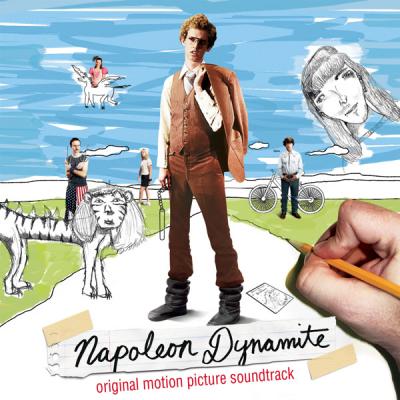
"Napoleon Dynamite" Soundtrack Lyrics
Movie • 2004
Track Listing
Bow Wow Wow
John Swihart
Rogue Wave
John Swihart
John Swihart
Figurine
John Swihart
John Swihart
John Swihart
John Swihart
Fiction Company
Money Mark
John Swihart
John Swihart
John Swihart
Trio Los Panchos
John Swihart
Jamiroquai
John Swihart
John Swihart
Yazoo
John Swihart
John Swihart
Alphaville
Cindy Lauper
John Swihart
When In Rome
The White Stripes
Backstreet Boys
"Napoleon Dynamite (Original Motion Picture Soundtrack)" – Album Guide to Tracks and Key Scenes
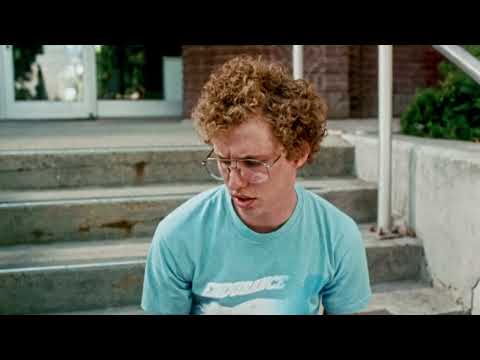
Overview
How do you make a movie about a painfully awkward Idaho teen feel like an epic about arrival, adaptation, rebellion, and collapse — just by picking the right songs? Napoleon Dynamite answers that with a soundtrack that treats every locker slam and tetherball hit as if it deserves its own mixtape moment. The album bottles that strange mix of deadpan humour and genuine tenderness by leaning hard on 1980s synth-pop, indie rock, and John Swihart’s quirky score.
On screen, the story moves from Napoleon’s arrival as an outcast in his own life, to his halting adaptation at school, to the small rebellion of Pedro’s campaign, and finally to the collapse of all the usual high-school hierarchies. The soundtrack shadows this arc: intimate, childlike folk in the opening, slowly widening into neon-lit prom ballads and finally the explosive liberation of “Canned Heat”. You can almost chart Napoleon’s self-confidence just by skipping through the cues.
The album itself is built as a collage: dialogue snippets (“What ever I feel like, gosh!”), short score cues, and full songs from Bow Wow Wow, Yaz, Alphaville, Jamiroquai, When in Rome, Trio Los Panchos and more. It feels less like a conventional OST and more like someone ripped the film’s audio straight to a CD, imperfections and all. That roughness is part of the charm — the record mirrors Preston, Idaho: a bit dated, a bit off, but weirdly warm.
Style-wise, the soundtrack moves in clear phases that map onto character beats. Early on, indie and low-key folk suggest vulnerability and isolation. As Napoleon reaches for connection, 80s synth-pop ballads (“Forever Young”, “Only You”) give the story an earnest romantic pulse. By the time we hit the school assembly and prom, disco-funk (Jamiroquai) and big pop gestures (“Larger Than Life”, “Time After Time”) signal full rebellion against small-town smallness. Even the more minimal score cues underline this: cheap Casio textures and odd rhythms that say, “yes, this is awkward — but it matters.”
How It Was Made
Composer John Swihart came to Napoleon Dynamite as a relatively unknown film composer and built a score out of thrift-store sounds: thin keyboards, drum machines, and odd, sing-song motifs. The production wanted music that matched Jared and Jerusha Hess’s offbeat tone — something that could sit comfortably next to deadpan dialogue and low-budget visuals without feeling slick. Swihart’s cues like “Bus Rider”, “Nap Pulls Kip”, “Summer’s Cake” and “Nap Dance Bedroom” sound almost homemade, which is the point.
The licensed songs were assembled under tight budget constraints. Lakeshore Records released the soundtrack in October 2004, mixing Swihart’s score, dialogue clips, and key pop tracks into one album rather than splitting “songs” and “score” releases. A number of cues in the film — including “We’re Going to Be Friends” by The White Stripes and “Time After Time” in its original Cyndi Lauper form — did not initially appear on the first CD and were highlighted later in vinyl and anniversary editions.
One of the most interesting behind-the-scenes stories involves “We’re Going to Be Friends”. The filmmakers reportedly sent a copy of the film to The White Stripes when they struggled to clear the song; the band approved it, making Napoleon Dynamite the first film to use a White Stripes track. Swihart’s score also hides a playful nod to TV culture: his arrangement of “The A-Team Theme” is woven into campaign sequences and later celebrated in 2xLP reissues that push his cues to the foreground.
The dance climax was a minor production miracle. The crew had only a single roll of film left, and Jon Heder’s routine to Jamiroquai’s “Canned Heat” had to be captured in one go. Years later Heder has described the choreography as largely freestyle, which fits perfectly with the soundtrack’s philosophy: give the character a great track, then let the performance wobble, sweat, and ultimately land on something strangely triumphant.
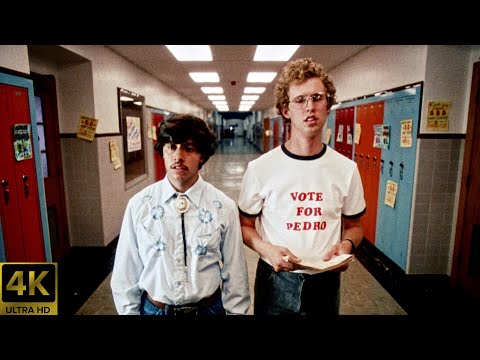
Tracks & Scenes
“We’re Going to Be Friends” — The White Stripes
Where it plays: Over the opening credits, as lunch trays, notebooks, and cafeteria food become improvised title cards on a table. We cut between these close-ups and glimpses of Napoleon’s mundane school life, setting the tone before he even speaks. The cue is non-diegetic, around the first two to three minutes of the film, functioning like a picture book being slowly opened.
Why it matters: The song’s childlike melody and simple guitar line immediately frame Napoleon not as a joke, but as a slightly lost kid. It quietly sets up the idea that friendship — not romance, not glory — is the emotional prize of the story.
“I Want Candy” — Bow Wow Wow
Where it plays: Early in the film, over everyday school-business and Napoleon’s trudging routines. It is used non-diegetically, energising a montage of hallways, lockers, and social micro-dramas without anyone in-universe acknowledging the music.
Why it matters: The track’s hyperactive drums and chanting vocal throw a wild 80s gloss over otherwise drab visuals. It tells you the film will treat ordinary high-school textures with a pop-music sense of exaggeration — nothing is cool, but the soundtrack insists it might be.
“Solamente Una Vez (You Belong to My Heart)” — Trio Los Panchos
Where it plays: During the “cake” sequence at Napoleon’s house, as Grandma’s domestic world, Uncle Rico’s schemes, and Napoleon’s sulking collide. The romantic bolero, heard non-diegetically, floats over a visually unromantic table full of relatives and tension, making the scene feel both sincere and absurd.
Why it matters: The old-fashioned, lush vocal harmonies create a deliberate mismatch with the awkward family dynamic. That clash becomes a running trick in the film: big, emotional music pasted over people who have no idea how to express emotion.
“The Rose” — Darci Monet (performing the Bette Midler song)
Where it plays: In the classroom “Happy Hands Club” performance, where Summer and the club members perform a sign-language interpretation of the song in front of bored classmates. The track is essentially diegetic: we hear it as the tape they perform to, in an almost painfully earnest, low-energy routine.
Why it matters: The choice of an adult-contemporary ballad for teen sign language feels hilariously off, but the lyrics about love and vulnerability echo Napoleon’s own emotional clumsiness. It also foreshadows how performance will later become a battlefield — Napoleon will answer this safe, glossy number with his raw “Canned Heat” routine.
“Larger Than Life” — Backstreet Boys
Where it plays: Used for Summer’s polished routine at the school assembly, complete with tight choreography and cheer-squad confidence. It is diegetic, filling the gym as students cheer and teachers try to look impressed. Napoleon and Pedro watch from the sidelines as this very late-90s pop spectacle dominates the stage.
Why it matters: The boy-band bombast represents the “official” idea of popularity and performance at Preston High. When Napoleon later dances to “Canned Heat”, his chaotic moves feel like a direct challenge to this glossy, pre-packaged idea of greatness.
“Forever Young” — Alphaville
Where it plays: At the school dance, as a wash of synths and reverb fills the gym. Couples sway uncertainly; Napoleon hovers at the fringe, Deb and Pedro navigate their own awkwardness. No one moves particularly well, but the song’s slow grandeur frames the scene like a memory even as it happens.
Why it matters: The song is about the fantasy of staying young and untouched by time, exactly the kind of fantasy the film quietly mocks. Hearing it in a small-town gym with paper decorations and bad lighting turns the grand promise of pop music into something fragile and human.
“Only You” — Yaz
Where it plays: Also in the dance sequence, layered into the middle of the night as the camera drifts between cliques and loners. The track plays non-diegetically, but it feels like the emotional voice of the kids who do not quite know how to say anything out loud.
Why it matters: This is one of the soundtrack’s purest synth-pop ballads, and it deepens the sense that underneath all the jokes, these characters crave connection. The song’s clean electronic sound contrasts with the film’s grainy visuals, making the moment feel like a fantasy laid over reality.
“Time After Time” — Sparklemotion (performing the Cyndi Lauper song)
Where it plays: Performed in-universe at Preston High by the fictional group Sparklemotion, effectively a school cover of Cyndi Lauper’s hit. As decorations droop and lights spin lazily, the performance bleeds into the broader soundscape of the dance. Characters cross the floor, misreading each other’s signals as the chorus repeats.
Why it matters: Using a school performance rather than the original recording keeps the moment slightly off-key and local. It turns an iconic 80s love song into something small, wobbly and perfectly in line with the film’s affection for imperfect effort.
“Canned Heat” — Jamiroquai
Where it plays: The talent-show climax. Pedro’s campaign looks doomed until Napoleon walks on stage, presses play on LaFawnduh’s mix tape, and launches into his improvised routine. The track runs almost uninterrupted as he shuffles, kicks, body-rolls and commits fully to the bit in front of the entire school. The cue is diegetic — we see the tape, hear the track drop, and watch the stunned silence turn into roaring applause.
Why it matters: This is the rebellion beat in the arc. Funky bass, strings and disco drums give Napoleon a groove far bigger than the gym. The dance redefines him from loser to legend in the eyes of his classmates and cements “Canned Heat” as one of the most recognisable needle drops of the 2000s.
“Music for a Found Harmonium” — Patrick Street (cover of Penguin Cafe Orchestra)
Where it plays: In the original ending montage version, playing as Napoleon wanders and the film takes a slightly more lyrical turn. The Celtic-tinged instrumental unfolds over images that feel like an epilogue — walking, thinking, processing what just happened at the assembly and in his friendships.
Why it matters: The cue gives the film a gentle, almost European art-house aftertaste. Interestingly, it does not appear on the main soundtrack album, which has made it a favourite “deep cut” among fans who went hunting for it later.
“The Promise” — When in Rome
Where it plays: Over the iconic tetherball epilogue, as Napoleon and Deb finally play together outside the school. The song begins as he walks up with the ball, then swells when she smiles and joins him. It carries into the credits, functioning as the film’s emotional exit music.
Why it matters: The song’s chorus — about showing up and keeping promises — lands surprisingly sincerely after all the deadpan humour. It retroactively reframes the whole story as the long, strange road to this simple shared moment.

Notes & Trivia
- The soundtrack album famously omits “We’re Going to Be Friends” and “Music for a Found Harmonium”, even though both are central to how fans remember the film.
- “The Rose” in the film is actually sung by studio vocalist Darci Monet, not Bette Midler — a detail that went uncredited for years.
- The music leans heavily on 80s and early 90s tracks despite the story taking place in the early 2000s, helping create the movie’s “time-warp” feel.
- “I Want Candy”, already a soundtrack veteran, picked up a new generation of listeners thanks in part to its placement here.
- The original CD mixes dialogue, score and songs; later 2xLP editions reshape that material into a more conventional “songs + score” four-side journey.
- Swihart’s playful take on “The A-Team Theme” turns what could be a cheap gag into a recurring musical motif for Pedro’s campaign hustle.
- Some anniversary vinyl editions are pressed on colours like “Electric Liger Blue” and ruby red, nodding to Napoleon’s fantasy creatures and kitschy palette.
Music–Story Links
The soundtrack gives each phase of Napoleon’s journey its own musical language. During “arrival”, the gentle acoustic of “We’re Going to Be Friends” and the low-key early score cues paint him as quietly observant rather than loud or abrasive. We see his world before we fully parse his personality.
As he attempts “adaptation” — navigating school, befriending Pedro, awkwardly orbiting Deb — the 80s synth-pop of “Only You” and “Forever Young” colours the dance scenes with an almost painfully sincere romantic glow. The songs let us feel the longing that the characters themselves cannot articulate without sarcasm or mumbling.
The “rebellion” beat comes with performance. Summer’s cheer routine to “Larger Than Life” lays out the official social order: polished, popular, choreographed. Napoleon’s later eruption to “Canned Heat” doesn’t just win votes for Pedro; it musically rips the story away from safe teen-movie norms and hands it to funk-driven chaos and genuine risk.
Finally, “collapse” — in a positive sense — arrives with “The Promise” over the tetherball scene. The old hierarchy has dissolved, Pedro has won, and what matters now is whether these misfits will show up for each other. The song’s big, echoing synths make that tiny patch of blacktop feel like its own universe where Napoleon and Deb are finally on equal emotional footing.
Even small cues support this pattern. Swihart’s “Summer’s Cake” and “Kip Waits” wrap domestic absurdity in oddly tender melodies, implying that these people, for all their flaws, are worth caring about. “Solamente Una Vez” and “The Rose” undercut scenes of awkward performance with full-bodied romanticism, suggesting the emotional scale the characters aspire to, even if they rarely reach it.
Reception & Quotes
Critically, the soundtrack has been singled out as one of the key reasons Napoleon Dynamite moved from oddball indie to long-running cult fixture. Reviewers have repeatedly pointed out how smart the combination of teen dialogue, 80s deep cuts and off-centre score cues feels — like the movie is DJ’ing its own adolescence.
According to one well-known music site, the album “works on the same mix of awkward and sweet that typifies the film”, highlighting how the score and songs mirror Napoleon’s social weirdness without mocking it. Streaming-platform editorials have also emphasised how “Forever Young”, “Only You”, “The Promise” and “Canned Heat” together sketch a surprisingly earnest emotional journey.
Fans have been equally vocal, especially as vinyl and anniversary pressings have emerged. Collectors praise the way the double LPs move from the pop side (Bow Wow Wow, Jamiroquai, Yaz, Alphaville, When in Rome, Money Mark, Trio Los Panchos) into a dense run of Swihart cues and dialogue, turning the record into a kind of audio “director’s cut”. On Bandcamp, buyers have even defended the inclusion of repeated dialogue snippets as part of the experience rather than filler.
“Napoleon Dynamite’s soundtrack works on the same mix of awkward and sweet that typifies the film.” Johnny Loftus, AllMusic
“Laden with sound bites and smart pop tunes… fans will want the backdrop to their hero’s dance triumph.” Editorial copy, digital album notes
“Even though the story is set in 2004, the music raids the 80s and 90s to perfect effect.” Radio feature on film music
“Snippets of dialogue on a movie soundtrack usually annoy me, but here they make so much sense.” Listener review, album download

Interesting Facts
- To secure “We’re Going to Be Friends”, the filmmakers shared an early cut of the movie with The White Stripes rather than simply sending paperwork.
- The film’s school dance plays almost exclusively 80s tracks, underlining how Preston High seems frozen in time compared with the “real” 2004 outside world.
- “Music for a Found Harmonium” became a minor cult item because it scored Napoleon’s walk but stayed off the commercial soundtrack, sending fans to hunt for the Patrick Street recording.
- The original CD soundtrack runs about an hour with more than thirty cues, but later 2xLP editions add or reshuffle material, including additional score fragments and dialogue tags.
- Some 20th-anniversary pressings are marketed with playful descriptions like “Electric Liger Blue” vinyl — a nod to Napoleon’s famed liger drawing.
- Darci Monet later recorded a dedicated “20th Anniversary” version of “The Rose” tied directly back to her uncredited work on the film.
- The soundtrack helped re-contextualise songs like “Forever Young” and “The Promise” for a younger audience who first encountered them not on radio but in this deeply odd comedy.
- Jon Heder has said his dance to “Canned Heat” was largely freestyle, which accidentally aligned with Jamiroquai’s own image as a band built around loose, kinetic movement.
- The album’s mixture of dialogue and music inspired later soundtracks to use more in-movie quotes as connective tissue rather than hide them in DVD special features.
Technical Info
- Title: Napoleon Dynamite (Original Motion Picture Soundtrack)
- Film: Napoleon Dynamite (feature film, 2004)
- Type: Soundtrack album (songs, score and dialogue)
- Primary composer: John Swihart (original score)
- Key performing artists (songs): Bow Wow Wow, Rogue Wave, Figurine, Fiction Company, Money Mark, Trio Los Panchos, Jamiroquai, Yaz, Alphaville, Sparklemotion, When in Rome; plus film-only uses of The White Stripes, Backstreet Boys, Zapp, Darci Monet and others.
- Label: Lakeshore Records (original CD and later vinyl reissues)
- Original soundtrack release: 5 October 2004 (CD and digital)
- Notable later editions: multiple 2xLP pressings (including coloured-vinyl and 20th Anniversary editions) combining pop tracks, Swihart’s score and dialogue.
- Signature placements: “We’re Going to Be Friends” (opening titles), “The Rose” and “Larger Than Life” (school performances), “Forever Young” / “Only You” / “Time After Time” (dance), “Canned Heat” (talent show dance), “Music for a Found Harmonium” (original ending montage), “The Promise” (tetherball and end credits).
- Release context: Film premiered at Sundance 2004, with the soundtrack arriving later that year as the movie expanded theatrically and built its cult following.
- Availability: Widely available on streaming platforms and digital download; vinyl editions periodically go in and out of print, especially coloured runs tied to anniversaries.
Questions & Answers
- Why does the soundtrack lean so hard on 80s music if the film is set in the 2000s?
- The 80s tracks emphasise how Preston feels stuck in time. Sonically, they also mirror Napoleon’s nostalgia and the characters’ wish to live in a cooler, more cinematic version of their own lives.
- Is the version of “The Rose” on the soundtrack the same one used in the film?
- Yes, but the important detail is the voice: the film performance is sung by Darci Monet, who was originally uncredited. Later features and a commemorative recording have helped make that clear.
- Why are “We’re Going to Be Friends” and “Music for a Found Harmonium” missing from the original CD?
- Those omissions likely come down to licensing and running time. Rights for certain songs can be cleared for film but not always for the album, and the CD already runs more than an hour.
- What exactly is on the newer 2xLP and 20th anniversary vinyl editions?
- They generally put the big songs and a handful of pop and indie cuts on the first record, then stack Swihart’s score cues and dialogue clips on the second. Track lists vary slightly between pressings.
- Was Jon Heder’s dance to “Canned Heat” carefully choreographed to the track?
- There was planning, but Heder has repeatedly said he freestyled much of it. That loose, make-it-up energy is part of why the scene feels so alive against the precise groove of the song.
Canonical Entities & Relations
| Subject | Verb | Object |
|---|---|---|
| Jared Hess | directed | feature film “Napoleon Dynamite” (2004) |
| Jared Hess and Jerusha Hess | wrote | screenplay for “Napoleon Dynamite” |
| John Swihart | composed | original score for “Napoleon Dynamite” |
| Lakeshore Records | released | album “Napoleon Dynamite (Original Motion Picture Soundtrack)” |
| Fox Searchlight Pictures | distributed | “Napoleon Dynamite” theatrically in North America |
| Napoleon Pictures | produced | feature film “Napoleon Dynamite” |
| Bow Wow Wow | performed | song “I Want Candy” used on the soundtrack |
| Jamiroquai | performed | song “Canned Heat” used for Napoleon’s dance scene |
| Alphaville | performed | song “Forever Young” used in the school dance sequence |
| Yaz | performed | song “Only You” featured at the dance and on the soundtrack album |
| When in Rome | performed | song “The Promise” used for the tetherball ending and credits |
| The White Stripes | performed | song “We’re Going to Be Friends” used in the opening credits |
| Trio Los Panchos | performed | “Solamente Una Vez (You Belong to My Heart)” used in a home and cake sequence |
| Darci Monet | sang | film version of “The Rose” for the Happy Hands Club scene |
| Patrick Street | recorded | version of “Music for a Found Harmonium” used in an ending montage |
| Penguin Cafe Orchestra | composed | original piece “Music for a Found Harmonium” later covered by Patrick Street |
| Sundance Film Festival | premiered | feature film “Napoleon Dynamite” in January 2004 |
Sources: film and album credits; AllMusic album overview; Apple Music editorial notes; Louisville Public Media SoundTRAX feature; official soundtrack releases and reissue descriptions; Wikipedia entries on the film, soundtrack and key songs; MoviesOST and SoundtrackINFO cue listings; band and artist discographies; press interviews with John Swihart and Jon Heder; retailer notes on 20th Anniversary vinyl editions.
November, 16th 2025
A-Z Lyrics Universe
Cynthia Erivo Popular
Ariana Grande Horsepower
Post Malone Ain't No Love in Oklahoma
Luke Combs Good Riddance (Time of Your Life)
Green Day Bye Bye Bye
*NSYNC You're the One That I Wan
John Travolta & Olivia Newton-John I Always Wanted a Brother
Braelyn Rankins, Theo Somolu, Kelvin Harrison Jr. and Aaron Pierre The Power of Love
Frankie Goes to Hollywood Beyond
Auli’i Cravalho feat. Rachel House MORE ›