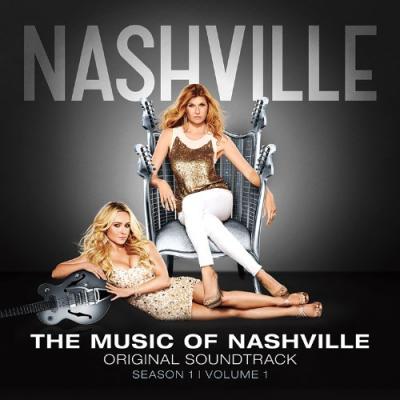
"Nashville season 1" Soundtrack Lyrics
TV • 2012
Track Listing
Hayden Panettiere
Sam Palladio & Clare Bowen
Charles Esten
Hayden Panettiere
Charles Esten and Hayden Panettiere
Jonathan Jackson
Connie Britton & Charles Esten
Sam Palladio & Clare Bowen
Clare Bowen & Sam Palladio
Rayna James
Juliette Barnes (Hayden Panettiere)
Sarah Buxton & Jedd Hughes
Jonathan Jackson
"The Music of Nashville: Season 1 (Original Soundtrack)" – Album Guide to Tracks and Key Scenes
Overview
What happens when a prime-time soap treats its songs like life-or-death diary entries instead of background noise? In season 1 of Nashville, the answer is this soundtrack: a double-volume country songbook where every chorus doubles as character development. The music isn’t just pasted onto the show; it is the show’s bloodstream.
The season tracks four main musical perspectives. Rayna Jaymes, a veteran country star, leans on bruised mid-tempo anthems and rootsy band cuts that carry the weight of a long career and a messy marriage. Juliette Barnes, the pop-country upstart, fires off sharp, hook-heavy bangers that slowly give way to confessional ballads. In the margins, Scarlett O’Connor and Gunnar Scott supply the show’s intimate heartbeat with hushed, harmony-driven folk-country, while the Conrad sisters, Maddie and Daphne, bring family and innocence into the mix with their acoustic covers.
Across 21 episodes, those threads twist into one long musical argument about fame, family, love and self-respect. “If I Didn’t Know Better” and “Fade Into You” turn a writing partnership into a near-affair in slow motion. “Wrong Song” weaponises a diva feud into a feminist revenge anthem. “Ho Hey” reframes an indie hit as a fragile peace offering between sisters. By the time “Nothing in This World Will Ever Break My Heart Again” turns up, the soundtrack has moved from big label showcases to raw, personal confession.
Stylistically, the season moves in phases. Early episodes lean on glossy country pop and radio-ready hooks — big choruses mirroring the characters’ public personas. Mid-season, grittier country rock and bar-band blues creep in as lives start to unravel. By the finale, sparse piano ballads and acoustic laments dominate, matching the emotional fallout. In shorthand: bright pop-country for ambition, harmony folk for intimacy, rock-inflected cuts for rebellion, and bare-bones ballads for collapse.
How It Was Made
Season 1’s sound starts with creator Callie Khouri and executive music producer T Bone Burnett. He treated the show like a long-form feature soundtrack: original songs tailored to characters, cast performing their own vocals, and a heavy emphasis on live-feeling arrangements rather than synthetic pop sheen. Many cues were tracked in Nashville studios with session players who also work on mainstream country records, which is why the songs can sit comfortably next to real-world radio hits.
The show partnered with Big Machine Records, the label behind Taylor Swift’s early catalogue. That deal meant every original song or cover that cleared rights could be packaged quickly as a digital single or soundtrack cut, which is why you see overlapping releases: individual tracks on iTunes, two physical/digital albums (The Music of Nashville: Season 1, Volume 1 and Volume 2), plus later a sprawling Season 1: The Complete Collection set.
Behind the scenes, music supervisor Frankie Pine and her team scouted writers from the Nashville publishing ecosystem: John Paul White of The Civil Wars, Kacey Musgraves, Ashley Monroe, Trent Dabbs, Elvis Costello, Patty Griffin, Striking Matches and others. Many songs began life as outside pitches, then were re-shaped in the writers’ room to suit specific scenes, melodies adapted to actor ranges, keys shifted to fit the dramatic context. Once season 1 wrapped, Burnett stepped away and Buddy Miller took over the executive music producer role in later seasons, but the founding template — character-driven original songs, performed in-universe — comes from this first batch.
Tracks & Scenes
Below are selected highlights from season 1 — not a full tracklist, but the core cues where story and music lock together.
“If I Didn’t Know Better” — Scarlett O’Connor & Gunnar Scott (Sam Palladio & Clare Bowen)
Where it plays: First heard in the pilot at the Bluebird Café. Scarlett reluctantly steps up to the mic with Gunnar; the room falls quiet as their harmonies bloom over a hushed, minor-key groove. Rayna’s long-time guitarist Deacon watches from the bar, recognising the talent and danger in equal measure. The camera keeps cutting to Juliette, clocking the chemistry she can’t buy. Diegetic performance, full song, used almost like a short film inside the episode.
Why it matters: This cover of a Civil Wars tune lays the foundation for the Scarlett–Gunnar will-they/won’t-they. It telegraphs desire they can’t articulate yet and introduces the “song as temptation” motif that recurs all season.
“No One Will Ever Love You” — Rayna Jaymes & Deacon Claybourne (Connie Britton & Charles Esten)
Where it plays: Episode 2, at the Bluebird. Watty White pushes Rayna and Deacon to revisit their old material on a stripped-down club tour. They step onstage with just guitar and harmonies; the lyric “no one will ever love you like I do” lands like a confession in front of Rayna’s husband and Juliette, who bolts from the room. In the car afterwards, Rayna admits she wishes they hadn’t done that song, realising what she’s just exposed. Entirely diegetic, and the episode structures itself around this performance and its aftermath.
Why it matters: One of the purest distillations of the Rayna–Deacon history. The duet makes clear that for them, music is the affair. Later seasons keep circling back to this song as shorthand for unfinished business.
“Fade Into You” — Scarlett & Gunnar
Where it plays: Episode 3 (“Someday You’ll Call My Name”). It closes the hour: after a day of financial stress and career ultimatums, the camera settles back at the Bluebird. Scarlett and Gunnar perform a song they’ve written together, trying to ignore the charge between them. The scene lingers on the way they avoid eye contact, then finally give in, the room blurring into soft focus around them.
Why it matters: This original, written for the show, becomes the duo’s signature ballad. It reframes their relationship from “maybe we shouldn’t” to “we’re already halfway there,” and helps sell the series as a place where TV songs can stand on their own outside the plot.
“Telescope” — Juliette Barnes (Hayden Panettiere)
Where it plays: Introduced in early episodes as Juliette’s calling-card single. We see pieces of it in rehearsal, in a slick music video shoot and onstage at big label events. The editing cross-cuts between Juliette nailing the hook in full pop-star mode and her messy private life — shoplifting scandal, chaotic family background — that the upbeat lyrics are trying to outrun.
Why it matters: Establishes Juliette’s musical persona: radio-friendly, aggressive, and suspicious of vulnerability. Later ballads like “Nothing in This World Will Ever Break My Heart Again” only land because we first meet her through this polished, guarded sound.
“Undermine” (acoustic demo) — Juliette & Deacon
Where it plays: Episode 2’s writing session. Juliette lures Deacon to her house, ostensibly for help writing, and they work on “Undermine” in a dim living room. The scene mixes flirty banter with serious craft: Deacon tweaks lines, Juliette hums new melodies; the acoustic demo feels intimate and slightly dangerous.
Why it matters: The song’s metaphor — being slowly eroded from underneath — mirrors how Juliette is chipping away at Rayna’s life by courting Deacon. Musically, it also shows she’s more than a manufactured act; she can hang with a seasoned songwriter.
“Wrong Song” — Rayna & Juliette
Where it plays: Episode 7 (“Lovesick Blues”). Under label pressure to duet at the Edgehill anniversary show at the Ryman, Rayna and Juliette fight over material, then grudgingly stay up all night writing a new track. The episode ends with their performance: both in glittering gold dresses, trading verses and stalking the stage as Marshall Evans watches from the wings. The crowd roars; the camera catches the flash of genuine enjoyment between them before the walls go back up.
Why it matters: Turns a business arrangement into an unlikely alliance. The lyric about pushing back against expectations becomes meta-commentary on how women in country are supposed to behave. The song later goes to number one in-universe and becomes the spine of their co-headlining tour.
“Buried Under” — Rayna
Where it plays: Mid-season, during a stretch where Rayna’s marriage, finances and career all wobble at once. She sings it in the studio and we hear it again underscoring scenes of her juggling label demands and family drama. The production leans on ringing guitars and a steady backbeat, balancing radio polish with a weary lyric about being overwhelmed.
Why it matters: Functions as Rayna’s thesis statement for season 1: still a star, but dragged down by accumulated compromises. On the album, it anchors Volume 1’s Rayna-heavy material.
“I Will Fall” — Scarlett & Gunnar
Where it plays: Early in the season at the Bluebird, presented as a demo-level performance. The melody is simpler and more major-key than “If I Didn’t Know Better,” filmed almost like a rehearsal that just happens to be great. Scarlett’s boyfriend Avery watches, clearly threatened by what he sees on stage even if he can’t quite name it.
Why it matters: Shows a softer, more hopeful chapter in Scarlett and Gunnar’s arc. Where “If I Didn’t Know Better” crackles with risk, “I Will Fall” is about willingness to leap — setting up how hard the eventual crash will be.
“Love Like Mine” — Juliette
Where it plays: Scattered through early episodes: a radio interview, a polished show, snippets in backstage montages. It’s catchy and slightly bratty, the kind of song that fits perfectly over gossip-mag B-roll. We often hear it when Juliette is doing damage control with the press, using the single as proof that her brand is still intact.
Why it matters: This is Juliette’s armour. It sells the pop-star myth even as the show quietly undermines it with scenes of her mother’s addiction and industry condescension.
“Ho Hey” — Maddie & Daphne Conrad (Lennon & Maisy Stella)
Where it plays: Episode 16. Rayna finally lets her daughters run a proper soundcheck at her venue. The girls stand in front of a full band and do a stripped-down cover of The Lumineers’ hit, their voices in close sibling harmony. The camera cuts between proud, nervous parents side-stage and the girls losing themselves in the performance. Later, fragments of the song return in a quieter bedroom scene as a private sister anthem.
Why it matters: Introduces the Conrad sisters as musical beings in their own right and softens the show’s focus from industry politics to family. Off-screen, their version became a charting country single, proving the soundtrack could launch real-world careers.
“When the Right One Comes Along” — Scarlett & Gunnar
Where it plays: First appears late in season 1 as a tentative new song at the Bluebird. The scene keeps cuts minimal, letting the performance breathe: Scarlett almost backs out before starting; Gunnar quietly coaxes her through with harmony lines. By the last chorus, the room is spellbound.
Why it matters: Co-written by Striking Matches, it became one of the show’s breakout writer showcases. Lyrically, it catches both characters at a crossroads between clinging to old relationships and making room for something new.
“We Are Water” — Juliette
Where it plays: Near the end of the season, around the time Juliette is dealing with her mother’s relapse and the fallout from a disastrous relationship. She performs it as a more mature, mid-tempo ballad on stage — less choreography, more focus on vocal control and emotion — while intercut footage shows private grief.
Why it matters: Marks Juliette’s pivot from bratty firebrand to someone capable of genuine vulnerability. On Volume 2, it balances out the harder-edged cuts and hints at the direction her music will take in later seasons.
“Nothing in This World Will Ever Break My Heart Again” — Juliette
Where it plays: Used as a climactic ballad in a late-season episode, essentially functioning as a confession about trauma, betrayal and resilience. The staging is simple: spotlight, piano, a slow build to full band. The show uses the song over a montage of personal crises resolving or deepening across the cast.
Why it matters: The song earned an Emmy nomination for Outstanding Original Music and Lyrics, and it crystalises the show’s thesis that country can carry complex, female-driven emotional narratives without flinching.
Notes & Trivia
- The first promos for the show used the Civil Wars’ original “If I Didn’t Know Better” before the series introduced its own Scarlett–Gunnar version.
- Episode titles in season 1 (after the pilot) are all borrowed from Hank Williams songs, quietly anchoring the show in classic country tradition.
- The Edgehill anniversary concert in “Lovesick Blues” was shot in the actual Ryman Auditorium, which adds authenticity to “Wrong Song”.
- Lennon & Maisy’s “Ho Hey” cover charted on country radio, an unusual feat for a TV performance by pre-teen actors.
- Several writers whose songs appear in season 1 — like Kacey Musgraves and Ashley Monroe — were simultaneously building their own acclaimed country careers.
- The four-disc UK Season 1: Complete Collection gathers more than 40 tracks, including cues that never made it to the two U.S. volumes.
Music–Story Links
Season 1 works because character turns are scored by songs that know more than the characters do.
Rayna’s arc from complacent superstar to risk-taking label rebel is mapped in her material. Early on, songs like “Already Gone” and “Buried Under” exist squarely in mainstream country, mirroring her loyalty to Edgehill and a safe marriage. Once she reconnects with Deacon on “No One Will Ever Love You,” the musical palette strips down: fewer bells and whistles, more live-band warmth, foreshadowing her eventual break from corporate control.
Juliette’s journey flips that pattern. She begins as the queen of hard-edged singles like “Telescope” and “Love Like Mine,” using attitude and tempo to drown out the shame of a chaotic upbringing. As her relationship with her mother and various lovers implodes, the soundtrack gradually hands her slower, more reflective songs — “We Are Water,” “Nothing in This World Will Ever Break My Heart Again” — that let her admit what the bangers only hinted at.
Scarlett and Gunnar’s songs track the blurring of professional and personal boundaries. “If I Didn’t Know Better” frames attraction as a problem to be resisted, while “Fade Into You” admits the inevitability of crossing that line. “I Will Fall” and “When the Right One Comes Along” chart their oscillation between hope and self-sabotage. Each duet is a status update on whether they’re writing for the charts, for each other, or both.
The family storylines tie in more subtly. Maddie and Daphne’s “Ho Hey” cover arrives just as Rayna is trying to keep her daughters out of the industry that defines her. Letting them perform is both a plot choice and a musical one: it shows that talent in this universe is hereditary but not yet corrupted by the business. The song’s folk-pop vibe bridges worlds, connecting the Nashville soundstage to the broader pop culture moment.
Even secondary characters get musical mirrors. Avery’s more ragged rock influences on cuts like “Twist of Barbed Wire” underline his outsider status in the country scene and his tendency to self-sabotage. Deacon’s bar-blues repertoire (“Matchbox Blues,” “Sideshow”) underscores his role as the show’s conscience — rooted, slightly worn, always telling the truth a little too plainly.
Reception & Quotes
The Music of Nashville: Season 1, Volume 1 debuted inside the U.S. top 20 and near the top of the country album chart, an unusually strong showing for a TV soundtrack. Volume 2 followed the next year and ended up among the year’s best-selling soundtracks, confirming that the show had crossed from cult favourite to a real commercial player in country music.
Critics singled out the music almost immediately. One major trade review called Nashville “one of the most well-rounded fictionalised portraits of the music industry yet,” with its songs doing as much narrative lifting as its scripts. Another outlet’s list of the show’s best music moments put Rayna and Deacon’s “No One Will Ever Love You” and the Rayna–Juliette “Wrong Song” duet alongside fan favourites like “Fade Into You.”
“Scarlett and Gunnar’s harmonies on ‘Fade Into You’ turned a mid-season episode into a full-on country romance fantasy.” Entertainment weekly-style recap
“If one song encapsulates Nashville, it’s ‘No One Will Ever Love You’ — history, regret and desire compressed into three minutes.” Music magazine feature
“The Wrong Song’ isn’t just a hit in the show; it’s a manifesto about women refusing to stick to the script.” Cultural criticism column
“Rarely has a TV drama used original music so aggressively and so well.” Television critic review
Fans treated the soundtrack almost like a separate franchise: songs charted on iTunes after episodes aired, Lennon & Maisy performed at the Opry off the back of “Ho Hey,” and cast tours blurred the line between fictional band and real one. The music supervision team later picked up guild awards for their work, reflecting industry respect for what started here in season 1.
Interesting Facts
- The first season’s music was strong enough that a four-disc Complete Collection set was released in the UK, bundling album cuts, deluxe bonuses and stray digital singles into one package.
- Lennon & Maisy’s “Ho Hey” cover hit the Billboard country charts, an unusual chart run for a TV tie-in by a sibling duo who hadn’t yet released a traditional debut album.
- “If I Didn’t Know Better” existed as a Civil Wars song years before the show; its placement in both promos and the pilot dramatically boosted streams and downloads for the original duo.
- Striking Matches, the guitar-driven duo behind “When the Right One Comes Along” and later tracks, reportedly had nine songs used across the show’s run, turning the series into a stealth showcase for their writing.
- T Bone Burnett left after season 1 to focus on film projects, but several of his collaborators — including bassist Zach Dawes and producer Buddy Miller — carried his sonic template into later seasons.
- Because of label and rights issues, a few high-impact songs performed on the show never appeared on the standard U.S. soundtracks and only surfaced on digital compilations or international editions.
- The Emmy-nominated “Nothing in This World Will Ever Break My Heart Again” helped push awareness of TV music categories, arriving amid a broader wave of prestige-series soundtracks.
- Some season 1 performances were captured twice: once for on-set filming with live vocals and once in the studio for album-quality masters, which is why keen ears can hear subtle differences between broadcast and soundtrack versions.
- Big Machine’s involvement meant Nashville songs sometimes shared release days with real-world country singles, letting fans see fictional characters and actual artists side by side on digital charts.
- The show’s internal label “Edgehill Republic” is a thinly veiled nod to real Nashville label politics, and the songs chosen for its artists often echo those real-world strategies.
Technical Info
- Title: The Music of Nashville: Season 1 (Original Soundtrack) – mainly represented on disc by Season 1, Volume 1 and Season 1, Volume 2
- Year / Context: TV season aired 2012–2013; Volume 1 released December 11, 2012; Volume 2 released May 7, 2013.
- Type: Television soundtrack (original songs and selected covers performed by the cast).
- Main composers / songwriters’ pool: T Bone Burnett (executive music producer), Buddy Miller and a rotating group including John Paul White, Arum Rae, Trent Dabbs, Kacey Musgraves, Ashley Monroe, Marv Green, Sonya Isaacs, Jimmy Yeary, Patty Griffin, Elvis Costello and others.
- Music supervision: Frankie Pine and the Whirly Girl Music team, responsible for sourcing outside songs and managing clearances and placements.
- Primary performers: Nashville Cast — Connie Britton, Hayden Panettiere, Clare Bowen, Sam Palladio, Charles Esten, Jonathan Jackson, Lennon & Maisy Stella and others.
- Labels: Big Machine Records (soundtrack release); Lionsgate Television and ABC Studios own underlying series rights.
- Genres: Country, country pop, country rock, Americana, folk pop.
- Key album releases: The Music of Nashville: Season 1, Volume 1 (standard and Target deluxe), Volume 2 (standard and deluxe), and The Music of Nashville, Season 1: The Complete Collection (UK multi-disc set).
- Availability: Widely available on major streaming platforms; physical CDs for Volumes 1 and 2 and the UK box set circulate on the used market.
- Notable accolades: Strong Billboard chart debuts for Volume 1 and 2; Emmy nomination for “Nothing in This World Will Ever Break My Heart Again”; multiple Guild of Music Supervisors honours for the show’s music team.
Questions & Answers
- Do I need both Season 1 albums or is the Complete Collection enough?
- If you can access the Season 1: Complete Collection, it effectively supersedes Volumes 1 and 2 by folding in deluxe tracks and a few extra cuts. Otherwise, owning both main volumes gives you the core canon of Rayna, Juliette, Scarlett and Gunnar’s season 1 songs.
- How much of the soundtrack is original vs. covers?
- Most marquee numbers — “Wrong Song,” “Fade Into You,” “We Are Water,” “Nothing in This World Will Ever Break My Heart Again” — were written specifically for the show. A handful, like “If I Didn’t Know Better” and “Ho Hey,” are covers recontextualised as character pieces.
- Why does Season 1 sound different from later seasons?
- Season 1 bears T Bone Burnett’s fingerprints: earthy tones, organic band feel, less overt pop gloss. When Buddy Miller took over, the show leaned a bit more into broader TV-pop polish, though the writer and player pool overlapped heavily so the DNA stays recognisable.
- Where should a new listener start if they only want a few songs?
- A good starter bundle: “If I Didn’t Know Better,” “Fade Into You,” “Wrong Song,” “No One Will Ever Love You,” “Ho Hey,” and “Nothing in This World Will Ever Break My Heart Again.” That set covers the big relationships and the main musical styles of the season.
- Are the trailer songs on the soundtrack albums?
- The early TV promos that used the Civil Wars’ “If I Didn’t Know Better” point you toward the cast version on the album. Other marketing spots occasionally used outside tracks that never appeared on any Nashville soundtrack, so trailer hunting can turn into its own little crate-digging project.
Canonical Entities & Relations
| Subject | Relation | Object |
|---|---|---|
| Callie Khouri | created | Nashville (2012 TV series) |
| T Bone Burnett | served as | Executive music producer for Nashville season 1 |
| Buddy Miller | succeeded | T Bone Burnett as executive music producer from season 2 |
| Frankie Pine | acted as | Music supervisor on Nashville |
| Big Machine Records | released | The Music of Nashville: Season 1, Volume 1 and Volume 2 |
| The Music of Nashville: Season 1, Volume 1 | is a | Soundtrack album for Nashville season 1 |
| The Music of Nashville: Season 1, Volume 2 | follows | Season 1, Volume 1 in the soundtrack chronology |
| Connie Britton | portrays | Rayna Jaymes in Nashville |
| Hayden Panettiere | portrays | Juliette Barnes in Nashville |
| Clare Bowen | portrays | Scarlett O’Connor in Nashville |
| Sam Palladio | portrays | Gunnar Scott in Nashville |
| Lennon & Maisy Stella | perform | “Ho Hey” in Nashville season 1 as Maddie and Daphne Conrad |
| “Wrong Song” | is performed by | Rayna Jaymes & Juliette Barnes within Nashville season 1 |
| The Music of Nashville, Season 1: The Complete Collection | compiles | Expanded Season 1 soundtrack recordings |
Sources: official soundtrack liner notes and label credits; television and music trade coverage; soundtrack discography listings; episode guides and fan-maintained song indexes; interviews with producers, writers and the music supervision team.
November, 16th 2025
'Nashville season 1': Wikipedia, Rotten TomatoesA-Z Lyrics Universe
Cynthia Erivo Popular
Ariana Grande Horsepower
Post Malone Ain't No Love in Oklahoma
Luke Combs Good Riddance (Time of Your Life)
Green Day Bye Bye Bye
*NSYNC You're the One That I Wan
John Travolta & Olivia Newton-John I Always Wanted a Brother
Braelyn Rankins, Theo Somolu, Kelvin Harrison Jr. and Aaron Pierre The Power of Love
Frankie Goes to Hollywood Beyond
Auli’i Cravalho feat. Rachel House MORE ›