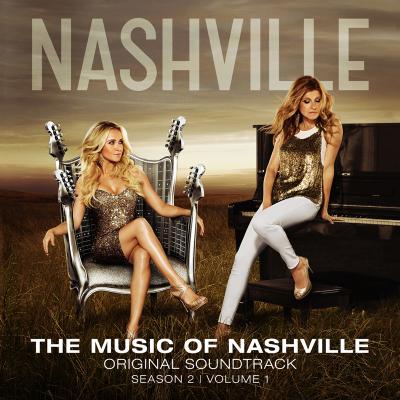
"Nashville, Season 2, Vol. 1" Soundtrack Lyrics
Movie • 2013
Track Listing
Connie Britton
Chris Carmack
Sam Palladio
Lennon & Maisy Stella
Connie Britton & Will Chase
Clare Bowen & Chip Esten
Hayden Panettiere
Chip Esten
Clare Bowen & Sam Palladio
Aubrey Peeples
Chaley Rose
Lennon & Maisy Stella
Jonathan Jackson
Hayden Panettiere and Chris Carmack
"The Music of Nashville: Season 2, Volume 1 (Original Soundtrack)" – Album Guide to Tracks and Key Scenes
Overview
What happens when a TV soap about country stars builds a music catalog that can stand next to real Nashville records? That’s the quiet paradox behind The Music of Nashville: Season 2, Volume 1. The show’s second-year soundtrack charts a familiar human cycle — arrival, adaptation, rebellion, collapse — in song form, tracking characters as they chase hits, sabotage themselves, and try to put families back together.
The album collects performances from the early and middle stretch of Season 2 of the ABC/CMT drama Nashville, created by Callie Khouri and led by Connie Britton (Rayna Jaymes) and Hayden Panettiere (Juliette Barnes). It’s the third soundtrack in the franchise and the first from Season 2, released in December 2013 as the story pushes Rayna to rebuild her career after a car crash and Juliette to fight for creative control while her personal life spirals.
On disc, you mostly hear the “in-universe” artists: Will Lexington, Gunnar Scott, Scarlett O’Connor, Deacon Claybourne, Maddie and Daphne, Rayna, Juliette, Layla Grant and Zoey. Their songs aren’t mere background cues; they’re plot beats. “What If I Was Willing” sells Will’s swagger and fear; “Can’t Get It Right” exposes Gunnar’s guilt; “A Life That’s Good” becomes a thesis statement for the whole series, sung by the kids but written in-story by Deacon as a love letter to Rayna.
Stylistically the record moves in phases. Straight country and country-rock frame the veteran generation (Rayna, Deacon, Luke). Sleeker country-pop and almost-Top-40 hooks underline Juliette’s brand and the label machinery around her. Folkier, acoustic-leaning cuts (“Wayfaring Stranger”, “Share With You”) mark the younger voices and family moments. The mix lets the album play like a night at the Ryman: big radio-ready anthems, hushed confessions and a couple of spirituals, all in one set.
How It Was Made
The Music of Nashville: Season 2, Volume 1 is officially credited as a soundtrack album by the Nashville Cast, released through Big Machine Records on 10 December 2013. Production is shared between Michael Knox, Buddy Miller, Brett Beavers, Luke Wooten and Ross Cooperman, reflecting how Season 2’s music moved from T Bone Burnett’s early imprint into Buddy Miller’s more rootsy, band-in-a-room direction.
According to AllMusic and the show’s own materials, Buddy Miller stepped up as executive music producer for Season 2, overseeing the overall sound, while individual tracks were cut with different producer teams and Nashville session regulars. Many songs started as pitches from Music Row writers — Ashley Monroe and Sarah Siskind (“A Life That’s Good”), Kim Richey (“Why Can’t I Say Goodnight”), Gretchen Peters and Mary Gauthier (“How You Learn to Live Alone”) — then were rearranged to suit the actors’ ranges and the scenes they had to play through.
ABC’s Music Lounge and the short-form docu-series Nashville: On the Record chronicled several of these cuts: writers explaining where the songs came from, cast members rehearsing at the Ryman or in small studios, and then the fully staged performances you see on TV. Some songs, like “Ball and Chain” and “This Town”, were promoted with “exclusive full performance” clips online before or just after they aired, effectively turning each episode into a mini-release campaign for the soundtrack.
The album exists in standard and Target-exclusive deluxe editions. The core program highlights the main narrative songs up to the Season 2 mid-point; the deluxe adds extra cuts and alternate versions, like another take on “A Life That’s Good”, catching how often the show re-used its strongest themes in different emotional contexts.
Tracks & Scenes
Below are key songs from the album (and a couple of related promo tracks), with how they land in the show. I’m focusing on scene function rather than giving a dry track list.
“What If I Was Willing” — Chris Carmack (Will Lexington)
Where it plays: First featured in Season 2, episode “I Don’t Wanna Talk About It Now”, Will performs the song at the Wildhorse Saloon. It’s a full, diegetic bar-room performance: bright lights, label execs in the crowd, Gunnar watching as the song he wrote gets claimed in public by his friend. Later in the season, a studio/live version reappears as Will’s calling card on TV and at label events, underlining his push toward solo stardom.
Why it matters: The song’s cocky, up-tempo groove sells Will as a potential radio star while the lyrics about risk and temptation quietly mirror his closeted sexuality and complicated friendship with Gunnar.
“Can’t Get It Right” — Sam Palladio (Gunnar Scott)
Where it plays: Heard in Season 2 episodes including “Tomorrow Never Comes” and “Just for What I Am”, this ballad shows up in a televised benefit performance and in smaller rehearsal moments. On stage, Gunnar sings it under bright cameras with a large band behind him, playing to a big crowd while Zoey and other characters watch from the wings or at home.
Why it matters: The lyric is almost brutally on-the-nose about regret and self-sabotage. Critics have described the televised performance as a melodic plea to Zoey; the show uses it to flip her “I can’t do this” into “okay, I’m in”, turning a love life decision into a musical beat.
“A Life That’s Good” — Lennon & Maisy Stella (Maddie & Daphne Conrad)
Where it plays: Introduced in Season 2’s early episodes, the song first surfaces as a quiet family performance, with Maddie and Daphne singing and playing in their home while Rayna listens. Later in the season, it returns as an emotional duet with Rayna and Deacon, and eventually as a full-cast sing-along in the series’ larger mythology. On this album you get the intimate, kid-led version that aired in Season 2.
Why it matters: Written in-story by Deacon “about” Rayna, the song becomes a thesis for the whole show: wanting “a life that’s good” rather than fame. Its gentle, waltzing feel and sibling harmonies underline how the children carry the emotional cost of the adults’ choices.
“Ball and Chain” — Connie Britton & Will Chase (Rayna Jaymes & Luke Wheeler)
Where it plays: In the Season 2 finale “On the Other Hand”, Rayna and Luke perform this big, stomping duet on a large stage, shot like an arena country show. The song runs under the sequence where Luke proposes to Rayna on stage, with Deacon, Maddie, Daphne and Teddy watching from the audience as the whole scene teeters between spectacle and ambush.
Why it matters: The lyric about being “tied together” turns into ironic commentary the second Luke pulls out the ring. The show weaponises a crowd-pleasing duet into a pressure tactic, and the album freezes that charisma without the awkwardness — you can enjoy the performance even if you hated the engagement.
“This Town” — Clare Bowen & Charles Esten (Scarlett O’Connor & Deacon Claybourne)
Where it plays: Performed in Season 2 and revisited in the On the Record special, “This Town” is staged as a heartfelt duet at the Ryman Auditorium and in more intimate rehearsal spaces. Deacon and Scarlett stand side by side, two generations of strugglers, singing about a city that can both make and break you.
Why it matters: The track binds the show’s meta-project (a TV drama about Nashville) to the real place. Fans and at least one Entertainment Weekly recap singled it out as a song that can make even non-locals feel nostalgic for a town they’ve never lived in.
“Trouble Is” — Hayden Panettiere (Juliette Barnes)
Where it plays: In episode “I Don’t Wanna Talk About It Now”, Juliette performs “Trouble Is” at an opulent Wentworth estate party. It’s fully diegetic: a glossy set with rich guests, cameras, and a guest guitarist joining her on stage. Later seasons reuse the song in rehearsal contexts where Juliette is clearly fraying, singing it while exhausted or sick during season three.
Why it matters: Lyrically it’s about knowingly chasing bad decisions; visually the show frames it as Juliette charming high-society patrons while her private life implodes. Some country critics have called it a near-perfect piece of modern mainstream country — slick but emotionally direct.
“Why Can’t I Say Goodnight” — Clare Bowen & Sam Palladio (Scarlett & Gunnar)
Where it plays: Premieres in Season 2’s opener “I Fall to Pieces”. Scarlett is celebrating her new label deal at the Bluebird Café when Gunnar turns up; they end up on stage together singing this slow-burning duet while Avery watches from the crowd. It’s a soft, candle-lit, very Bluebird moment: close-up harmonies, hushed audience, lots of shared looks.
Why it matters: The song is originally a Kim Richey cut; here it becomes a way of saying everything Scarlett and Gunnar can’t say directly. Reviewers noted how the performance turns a relatively small scene into one of the episode’s emotional peaks.
“Share With You” — Lennon & Maisy Stella (Maddie & Daphne)
Where it plays: In “Hanky Panky Woman”, the sisters perform the song at Teddy Conrad and Peggy Kenter’s wedding. It’s staged as a sweet, slightly awkward family performance: two young girls with guitars and mics in front of an adult crowd, cutting through the tension of a politically loaded marriage with something pure and guileless.
Why it matters: The lyric about life being better when it’s shared lands as a commentary on the messy blended family in the pews. It also cements Lennon & Maisy as core musical assets of the series rather than just child actors.
“Wayfaring Stranger (A Cappella Version)” — Chaley Rose (Zoey Dalton)
Where it plays: In episode “You’re No Angel Yourself”, Zoey performs the traditional spiritual a cappella, framed as a raw, near-solo moment. The cameras stay tight on her voice and face, with minimal instrumentation, underscoring her nerves and the sheer talent she brings into a crowded scene.
Why it matters: Dropping a 19th-century spiritual into a glossy network drama is a bold move. It gives Zoey depth beyond “new love interest” and reminds viewers that Nashville’s music is built on older, darker songs about wandering and survival.
“How You Learn to Live Alone” — Jonathan Jackson (Avery Barkley)
Where it plays: Introduced in the Season 2 premiere, Avery performs this introspective ballad on stage as the camera intercuts with characters dealing with the aftermath of the Season 1 car crash and assorted breakups. The staging is semi-diegetic: the song is being performed in-world, but the show also uses it like a montage score over multiple storylines.
Why it matters: Written by Gretchen Peters and Mary Gauthier, it’s one of the series’ most writerly pieces. It quietly reframes Avery from “jerk ex” into someone capable of self-knowledge, which is crucial for his later redemption arc.
“Tell Me” — Aubrey Peeples (Layla Grant)
Where it plays: In mid-season episodes like “I’m Tired of Pretending”, Layla performs “Tell Me” both in a polished televised context and in more stripped acoustic form, including an extended on-stage moment highlighted in coverage of the show. The cameras lean into her insecurity — strong voice, fragile expression, watching how others react.
Why it matters: The song helps position Layla as more than a shallow reality-show runner-up. Its pleading chorus matches her offstage desperation to be taken seriously, especially in contrast to Juliette’s sometimes cynical approach to similar material.
“Can’t Say No to You” — Hayden Panettiere & Chris Carmack (Juliette & Will)
Where it plays: Heard in episodes around “Tomorrow Never Comes”, the duet is recorded as a label-engineered collaboration, then performed and replayed as the characters argue over ownership and strategy. In at least one episode it plays over a live-TV context that doubles as an in-story promotional push for both characters.
Why it matters: The song sounds like a radio single, and that’s the point: it’s the kind of glossy duet labels chase. Dramatically, it ties Will more tightly to Juliette’s orbit while Rayna and others fight to keep their own artistic identities intact.
Off-album promo note: The show’s marketing around Seasons 1 and 2 also leaned on Juliette Barnes’ single “Boys and Buses”, first heard in an early teaser for the series. It’s not on this Season 2, Volume 1 disc, but many viewers still associate that song with the overall promo imagery that led into later seasons.
Notes & Trivia
- The album is the third main Nashville soundtrack, following two Season 1 volumes and preceding Season 2, Volume 2.
- Standard edition runtime is just under 42 minutes; the Target deluxe stretches past 54 minutes with extra tracks and alternate versions.
- Many songs here appear in multiple episodes in different arrangements — a realistic touch mirroring how real artists reuse material on tour and TV.
- Several cuts (“A Life That’s Good”, “Share With You”) later reappear on spin-off releases focused specifically on Lennon & Maisy and other cast members.
- “Why Can’t I Say Goodnight” predates the show; Nashville repurposes a 1990s Kim Richey song into a signature Scarlett/Gunnar moment.
- “How You Learn to Live Alone” premiered on the Season 2 opener only days after its writers blogged excitedly about landing the cut, giving fans rare real-time insight into the sync process.
- Because the songs are performed in-character, the same track can exist as a “Nashville Cast” credit, a solo-artist cut and an in-episode performance credit across different releases.
Music–Story Links
On this record, almost every track doubles as character development. The writers use familiar country tropes — confession, swagger, spiritual yearning — as shorthand for deeper arcs.
Will Lexington’s “What If I Was Willing” is the clearest example. On a surface level it’s an up-tempo bar-burner about romantic risk. In context, he’s singing a song that Gunnar wrote, at a moment when Will is hiding his sexuality and his past move on Gunnar. The performance lets him test-drive a hyper-masculine, womanizing persona in front of industry gatekeepers, even as the audience knows he’s lying to himself.
Gunnar’s “Can’t Get It Right” sits on the other side of that mirror. Where Will pushes forward with bravado, Gunnar stands under bright lights and admits he keeps “missing it” in love. The televised performance in “Tomorrow Never Comes” plays like a public apology to Zoey and a confession to himself; you can feel him trying to rewrite his story mid-song.
Rayna’s world gets its own musical grammar. “Ball and Chain” shows her trying on a glossier, Luke-style arena persona, right up to the on-stage proposal. Earlier, quieter numbers and later Season 2 songs pull her back toward more introspective material, mapping her journey from label-controlled hitmaker to independent label boss.
Juliette’s arc on this album runs through “Trouble Is” and “Can’t Say No to You”. In the estate-party performance, she uses “Trouble Is” to charm and distract wealthy patrons while navigating a predatory power couple. On the duet, she turns a manufactured collaboration into another chart move, even as the lyrics about not being able to resist someone echo her own tendency to jump into destructive relationships.
The younger characters’ songs — “A Life That’s Good”, “Share With You”, “Wayfaring Stranger” — operate almost like a Greek chorus. Maddie and Daphne sing about gratitude and togetherness while adults around them file for divorce, negotiate custody and trade public scandals. Zoey’s spiritual, sung a cappella, brings a rare note of old-school faith into a story obsessed with fame and commerce. Those contrasts are where the show’s moral spine lives.
Reception & Quotes
Commercially, The Music of Nashville: Season 2, Volume 1 performed solidly. According to Billboard it reached the mid-30s on the Billboard 200, top 10 on Top Country Albums and top 5 on the US Soundtrack chart, confirming that fan appetite for the show’s music extended beyond its first year.
Critical reaction was generally positive, especially on the songwriting side. A Billboard review grouped it with releases by mainstream country acts and treated it as a serious entry in that field, not just a TV tie-in. According to one Philadelphia daily review, the album’s songs “hold the show together” even when the storylines get melodramatic, arguing that you could skip the series and still enjoy the soundtrack as a standalone country record.
UK outlets also weighed in. Entertainment Focus praised the balance between character songs and radio-friendly cuts, noting that Volume 1 showed the writers were still capable of pulling out big emotional numbers in Season 2. Country critic Alan Cackett singled out “Trouble Is” and “Why Can’t I Say Goodnight” as highlights, emphasising both the production polish and the conviction in the cast’s performances.
“While the story lines strain credulity, these sonic underpinnings hold the show together.” — regional US newspaper review of the album
“Modern Nashville pop with enough grit and heart to satisfy country fans, whether they watch the series or not.” — summary of Entertainment Focus’ verdict
“Panettiere’s ‘Trouble Is’ falls neatly into today’s modern country format… a strong contender for broad acceptance.” — paraphrased from Alan Cackett’s review
“This isn’t just background music for a soap; it’s a well-sequenced country album in its own right.” — composite view from early 2010s reviews
Interesting Facts
- The album exists in multiple physical variants: US CD, later vinyl pressings, and region-specific deluxe editions with bonus tracks.
- Label credits often read “ABC Studios / Lionsgate / Big Machine / BMLG”, reflecting a four-way partnership between TV producers and the country label.
- Some tracks first appeared as digital singles in ABC’s Music Lounge before the album street date, then were bundled into this volume.
- “Share With You” and “A Life That’s Good” later surfaced again on a focused Lennon & Maisy compilation, showing how the franchise spun off micro-brands from its own cast.
- Several songs have “On the Record” live versions not included here, turning one title into three or more officially released recordings.
- Streaming platforms now file the album under both “Nashville Cast” and individual artist pages, which can confuse listeners trying to build chronological playlists.
- Although the show ran through 2018, this 2013 release still tends to be the go-to recommendation for new viewers who want “one Nashville album” to sample the concept.
- The musical diversity — traditional spirituals next to slick pop-country — foreshadowed later, even more adventurous placements in Seasons 3–6.
- International chart data shows the record performing particularly well in the UK and some European territories, where the series aired on different schedules but still built a music-first cult audience.
Technical Info
- Title: The Music of Nashville: Season 2, Volume 1 (Original Soundtrack)
- Year: 2013 (US release 10 December 2013; some international dates in early 2014)
- Type: Television soundtrack album
- Main artists: Nashville Cast (including Connie Britton, Hayden Panettiere, Charles Esten, Clare Bowen, Sam Palladio, Chris Carmack, Lennon & Maisy Stella, Aubrey Peeples, Chaley Rose, Jonathan Jackson)
- Series context: Third soundtrack for TV series Nashville, and first for Season 2
- Producers: Michael Knox, Buddy Miller, Brett Beavers, Luke Wooten, Ross Cooperman
- Label & rights: Big Machine Records in partnership with ABC Studios and Lionsgate Television
- Genres: Country, country pop, country rock, Americana-leaning ballads
- Length: Approx. 41:52 (standard) / 54:21 (Target deluxe)
- Key tracks (non-exhaustive): “What If I Was Willing”, “Can’t Get It Right”, “A Life That’s Good”, “Ball and Chain”, “This Town”, “Trouble Is”, “Why Can’t I Say Goodnight”, “Share With You”, “Wayfaring Stranger (A Cappella Version)”, “How You Learn to Live Alone”, “Tell Me”, “Can’t Say No to You”
- Chart performance: Approx. #34 on US Billboard 200, top 10 on Top Country Albums, top 5 on Soundtrack Albums
- Formats: CD, digital download, later vinyl; standard and retailer-exclusive deluxe editions
- Availability (current): Widely available on major streaming platforms and digital stores; physical copies still in print or easy to find as catalog items.
Questions & Answers
- Do I need to watch the show to enjoy this album?
- No. Knowing the characters adds layers, but the songs work as a straight country record with strong writing and performances.
- What’s the difference between the standard and deluxe editions?
- The deluxe adds several extra tracks and alternate versions, extending the runtime and covering a few more Season 2 story beats.
- Are these live takes from the set or studio recordings?
- They’re polished studio versions cut by the cast, usually very close to what you hear on TV but mixed and mastered like a standalone album.
- How does Season 2, Volume 1 compare to other Nashville soundtracks?
- It’s more confident than the first season sets, leaning into character-specific material while still offering plenty of radio-styled hooks.
- Is the album still easy to find today?
- Yes. It’s on the major streaming services under “Nashville Cast” and also available as digital download and catalog CD/vinyl.
Canonical Entities & Relations
| Subject | Relation | Object |
|---|---|---|
| Nashville (TV series) | created by | Callie Khouri |
| The Music of Nashville: Season 2, Volume 1 | is soundtrack for | Nashville, Season 2 |
| The Music of Nashville: Season 2, Volume 1 | released by | Big Machine Records |
| Buddy Miller | served as | Executive music producer on Nashville Season 2 |
| Michael Knox | produced tracks on | The Music of Nashville: Season 2, Volume 1 |
| Brett Beavers | produced tracks on | The Music of Nashville: Season 2, Volume 1 |
| Luke Wooten | produced tracks on | The Music of Nashville: Season 2, Volume 1 |
| Ross Cooperman | produced tracks on | The Music of Nashville: Season 2, Volume 1 |
| Connie Britton | portrays | Rayna Jaymes |
| Hayden Panettiere | portrays | Juliette Barnes |
| Charles Esten | portrays | Deacon Claybourne |
| Clare Bowen | portrays | Scarlett O’Connor |
| Sam Palladio | portrays | Gunnar Scott |
| Chris Carmack | portrays | Will Lexington |
| Lennon & Maisy Stella | portray | Maddie & Daphne Conrad |
| Aubrey Peeples | portrays | Layla Grant |
| Chaley Rose | portrays | Zoey Dalton |
| Jonathan Jackson | portrays | Avery Barkley |
| Big Machine Records | is record label for | The Music of Nashville: Season 2, Volume 1 |
| ABC Studios & Lionsgate Television | produce | Nashville (TV series) |
Sources: Wikipedia; Nashville Wiki; ABC Music Lounge; Billboard; AllMusic; Entertainment Focus; Alan Cackett review; AV Club; MJsBigBlog recaps; Rolling Stone; MoviesOST; Gretchen Peters’ blog; various streaming metadata.
November, 16th 2025
'The Music of Nashville: Season 2, Volume 1' is the third soundtrack album for the American musical drama television series. More info on Wikipedia, buy it on Apple MusicA-Z Lyrics Universe
Cynthia Erivo Popular
Ariana Grande Horsepower
Post Malone Ain't No Love in Oklahoma
Luke Combs Good Riddance (Time of Your Life)
Green Day Bye Bye Bye
*NSYNC You're the One That I Wan
John Travolta & Olivia Newton-John I Always Wanted a Brother
Braelyn Rankins, Theo Somolu, Kelvin Harrison Jr. and Aaron Pierre The Power of Love
Frankie Goes to Hollywood Beyond
Auli’i Cravalho feat. Rachel House MORE ›