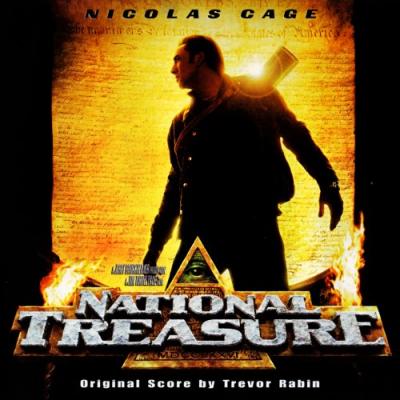
"National Treasure" Soundtrack Lyrics
Movie • 2007
Track Listing
The Format
Breaking Benjamin
"National Treasure (Soundtrack from the Motion Picture)" – Album Guide to Tracks and Key Scenes
Overview
How do you score a heist where the target is the Declaration of Independence and the villain is as polite as he is dangerous? The National Treasure (Soundtrack from the Motion Picture) album answers by treating the whole thing like a sincere adventure epic instead of a joke, even when the plot leans into conspiracy-theory fun.
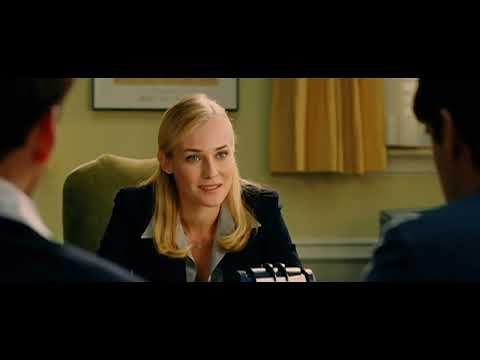
The 2004 film follows historian and treasure hunter Benjamin Franklin Gates (Nicolas Cage) as he chases a legendary hoard hidden by Templars, Founding Fathers and Freemasons. His path runs from an ice-locked ship in the Arctic to a gala at the National Archives, then down into church crypts beneath Manhattan. Along the way he drags hacker sidekick Riley, archivist Abigail Chase and his estranged father into a race against ex-partner Ian Howe. The score has to juggle puzzle-solving, rom-com banter, and big-room action without losing the thread.
Trevor Rabin’s soundtrack does that by anchoring everything to a bold, brass-led adventure theme that can either thunder over chases or whisper over candlelit discoveries. When Ben and his team decode ciphers or flip secret lenses over the Declaration, the music leans on suspense ostinatos and ticking figures. When the film cuts to sweeping vistas or the final treasure chamber, the same thematic material opens up into full orchestral statements, closer to family-friendly fantasy than gritty thriller.
In terms of genre and mood shifts, the album moves through phases. At first, muscular action writing and heroic brass frame Ben as a pulp adventurer. In the middle, stealthy strings, muted percussion and low brass handle the archive heist and cat-and-mouse work with the FBI. The last stretch leans into choral-tinged, almost awe-struck writing for torchlit tunnels and the treasure vault. Between those score cues, a few needle-dropped songs and classical quartet pieces sit directly in the film’s soundscape, but the official score album stays focused on orchestral adventure rather than song compilation.
How It Was Made
National Treasure came out of the Jerry Bruckheimer machine: a mid-2000s Disney action-adventure aimed at families, shot like a straight thriller. For the music, the producers turned to Trevor Rabin, already known for big-themed scores on Armageddon, Enemy of the State and other Bruckheimer projects. According to Disney’s own soundtrack notes and label listings, Rabin delivered a compact 12-cue album running just under 39 minutes, distilled from a much larger recording session.
Rabin built the score around a core “National Treasure Suite,” recorded with full orchestra and electronics. That suite essentially compresses the main title, chase figures and treasure-discovery material into one track for album listening. The rest of the cues bear plain, functional titles — “Ben,” “Finding Charlotte,” “Library of Congress,” “Preparation Montage,” “The Chase,” “Treasure” — because they are exactly that: focused score cues for specific narrative beats rather than standalone songs.
Behind the scenes, expanded promo CDs and later complete-score leaks circulated among collectors, showing how much music was written beyond the retail album. Those include individual cues for prologues, alternate action passes and extended underground sequences. But the official Walt Disney Records release keeps things tight: twelve cues, chronological flow, and just enough development of the main theme to give the album a satisfying arc on its own.
Tracks & Scenes
Because this is a score album, each cue ties to a specific chunk of the film. Below, key tracks and the scenes they drive; timings refer roughly to the 131-minute theatrical cut.
“National Treasure Suite” — Trevor Rabin
Where it plays: The suite is album-first but film-everywhere: it condenses the main title, Ben’s theme and the triumphant treasure material. Elements of it appear over the opening and end credits, as we move from the Gates family legend in the attic to modern-day Washington, and again over the final scenes after the treasure is found and Ian is arrested. You hear the full hero theme most clearly when Ben and Abigail step out into the daylight after the underground chamber sequence and during the closing overhead shots of Independence Hall and city skylines.
Why it matters: This is the musical brand of the film. Strong brass, propulsive strings and snare-drum figures frame the whole story as a patriotic caper instead of a dry history lesson.
“Ben”
Where it plays: Used in early modern-day scenes that establish Ben as an obsessive but likable historian. You hear versions of this cue when he and Riley track clues on Ian’s financed Arctic expedition to the Charlotte, and again as Ben decides to protect the Declaration by stealing it himself. The music is less bombastic than the suite: lower strings, guitar textures and a more introspective take on the main theme, often under dialogue in the ship’s hold or at his father’s house.
Why it matters: It humanizes Ben. Instead of pure swashbuckling, this cue leans into curiosity and stubbornness, hinting that his intellect is as important as his willingness to take insane risks.
“Finding Charlotte”
Where it plays: Very early in the film, when Ben, Riley and Ian dig through ice and finally locate the Charlotte — a wrecked 18th-century ship buried under the Arctic snow. Inside, they search through frozen barrels and timbers until Ben discovers the meerschaum pipe that kicks off the rest of the plot. The cue mixes shimmering high strings with low pulses, then swells as Ben scrapes away ice and reads the pipe engraving out loud.
Why it matters: It sets the tone for clue-discovery scenes: anticipation, a short burst of awe, then immediate calculation about what the clue means.
“Library of Congress”
Where it plays: Around the section where Ben and Riley work out that the Silence Dogood letters hold the key to the next cipher. They move from Patrick Gates’s living room to the Franklin Institute and into the Library of Congress, using a school field trip as cover. On screen we bounce between dusty reading rooms and Riley bribing a kid to copy the letters; the music stays low-key but tense, with repeating figures under dialogue and a subtle build as they close in on the cipher solution.
Why it matters: It proves the score can do “brain work” without going silent. The cue gives the puzzle scenes momentum so they feel like part of the same heist energy, not exposition breaks.
“Preparation Montage”
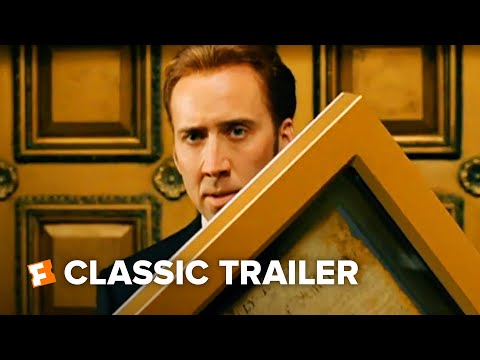
Where it plays: In the middle of the film as Ben, Riley and Abigail plan the Declaration heist at the National Archives. We see Abigail’s office, schematics of the Preservation Room, Ben studying guard rotations and environmental controls, and Riley hacking security systems. The cue runs over a classic heist-movie montage: quick cuts between gadgets, blueprints and rehearsal talk-throughs.
Why it matters: It is the movie’s “planning engine.” Rabin combines ticking percussion, muted brass stabs and rising string lines to make what is basically a research session feel like an assault on a fortress.
“Arrival at National Archives”
Where it plays: During the gala night, as guests arrive and Ben infiltrates the party in a tuxedo. Abigail greets donors, Riley monitors from the surveillance van, and Ian’s crew assembles across town, preparing their own break-in. The cue alternates between elegant, slightly lighter music for the gala and darker undercurrents whenever the camera cuts to security hardware or Ian’s tools.
Why it matters: It sells the double life of the event: what the guests think is happening (a normal fundraiser) versus the layered heist both sides are about to attempt.
“The Chase”
Where it plays: Over the car-chase sequence after the heist. Ben escapes with the Declaration in a delivery van, only to be pursued by Ian’s SUV convoy through Washington streets. There are hard turns, narrow escapes and a near-crash at a construction site before they finally shake pursuit. The music leans on relentless ostinatos, pounding percussion and brass outbursts synced with tight edits as cars dart around corners and Abigail and Riley argue in the back of the van.
Why it matters: This is Rabin doing pure Bruckheimer-style action. The main theme fragments get tossed into the texture, but rhythm is king; it keeps the sequence feeling bigger than the mid-budget reality.
“Declaration of Independence”
Where it plays: During the actual steal inside the Preservation Room. Ben drops down behind secure glass, uses Abigail’s fingerprint, and swaps the real document into a protective tube while alarms and mechanical systems hum around him. Much of the scene plays in near-silence except for environmental sound; this cue slides in as he handles the parchment, with delicate strings and a noble version of the theme hinting that he genuinely reveres what he is stealing.
Why it matters: It keeps the film from treating the Declaration as just a MacGuffin. The music underlines that, in Ben’s mind, this is a rescue, not a theft.
“Foot Chase”
Where it plays: Immediately after the heist, when the plan goes sideways. Abigail takes the tube, Ian’s men grab her, Riley keeps the van moving, and Ben sprints through alleys, loading docks and streets to get her back. The cue syncs with hand-held camera work, cutting hard between brass and string flurries as characters pass the Declaration back and forth like a relay baton.
Why it matters: It ties the personal stakes (Abigail in danger, Ben’s guilt) directly to the physical object of the Declaration. Every musical accent says: if they drop this, history literally hits the pavement.
“Spectacle Discovery”
Where it plays: In Philadelphia, when the team climbs Independence Hall and discovers the hidden bifocal spectacles left by Franklin. Ben flips colored lenses over the Declaration’s back, revealing new lines of invisible ink while Independence Hall’s bell tower and the city skyline loom in the background. The music blends a sense of historical weight with puzzle-box excitement, adding a small choral glow as new symbols appear.
Why it matters: It is one of the film’s most iconic “aha” moments, and the cue leans into that, making the reveal feel like genuine wonder even if you know the story beats by heart.
“Interrogation”
Where it plays: In the third act, when the FBI sits Ben down and lays out the charges against him. Agent Sadusky questions him about the theft, Ian’s scheme and the treasure myth while Ben tries to convince him there is a larger conspiracy. The music stays restrained: low strings, a hint of Ben’s motif on woodwinds, and slow harmonic shifts under exchanges about responsibility and blame.
Why it matters: It grounds the film. For a few minutes the score emphasizes legal reality instead of adventure fantasy, which makes Ben’s eventual deal with Sadusky feel earned.
“Treasure”
Where it plays: Deep under Trinity Church, when Ben, Abigail, Riley and Patrick finally break through the dead-end chamber and uncover the vast treasure vault. Torches flare to reveal stacked artifacts, golden statues and scrolls from multiple civilizations. The cue starts quietly, then swells into the score’s biggest, warmest statement: full orchestra, cymbal crashes, and a triumphant version of the main theme, with soaring strings and choir-like textures as the characters walk through the chamber in stunned silence.
Why it matters: It is the emotional payoff for both the treasure hunt and the Gates family obsession. The music makes the vault feel less like loot and more like a shared human inheritance.
“Forget It” — Breaking Benjamin (non-album song)
Where it plays: Heard in the mall scene where Ben, Abigail and Riley walk and argue about daylight saving time and the timing of the heist. The song plays diegetically from speakers as shoppers move past; the camera stays with the trio weaving around kiosks while Riley rants about losing an hour of sleep.
Why it matters: It is one of the few contemporary rock songs in an otherwise orchestral soundscape. The slightly moody alt-rock tone gives the scene a grounded, early-2000s texture, and the title echoes Ben’s refusal to let the plan go.
“Give It Up” — The Format (non-album song)
Where it plays: Used over the end credits in some cuts and cable airings, following the orchestral finish. The song kicks in once the main score winds down, covering credit scrolls with a bright indie-pop feel and clean vocal hooks.
Why it matters: It snaps the film back into contemporary radio mode after all the ancient-treasure mystique, giving younger viewers a last hook to walk out humming.
Classical Quartets — Haydn
Where they play: At Washington social events and formal interiors, especially early scenes around Abigail’s work at the National Archives. String quartets by Joseph Haydn, performed by ensembles like The Lindsays, play quietly under cocktail chatter and banter about security protocols.
Why it matters: They frame the American founding era as part of a broader European classical culture, contrasting nicely with Rabin’s modern, punchy orchestral writing whenever the plot leaves polite society and dives into tunnels.
Notes & Trivia
- The commercial album is a pure score release: no Breaking Benjamin or The Format tracks appear on the official Walt Disney Records disc.
- According to Disney-focused soundtrack listings, the score album dropped just days before the film’s November 2004 US release, effectively acting as an audio teaser.
- Expanded “complete score” sets circulating among collectors run to two CDs, revealing alternate takes and cues that never made the retail release.
- The cue names on the album are almost comically literal — “Library of Congress,” “Preparation Montage,” “Foot Chase” — which makes it easy to sync them mentally with the film even years later.
- Trevor Rabin would return to the franchise for National Treasure: Book of Secrets in 2007, reusing and expanding themes introduced here.
- While the film uses a few licensed songs, the orchestral score does most of the heavy lifting; there is no separate “songs from and inspired by” compilation for the first movie.
- Some international TV broadcasts swap or trim end-credit songs while leaving Rabin’s main title and “Treasure” cue untouched.
Music–Story Links
Ben Gates’s arc is basically mapped onto the main theme. Early in the film, the theme appears in fragments — a brass figure here, a string phrase there — whenever he chases clues or delivers earnest speeches about history. During failures or arguments (the FBI interrogation, fights with his father), the theme drops into slower, minor-key variations, sometimes buried in cellos or low horns.
The closer the team gets to the treasure, the more confident the theme becomes. In Independence Hall and Trinity Church, bits of “National Treasure Suite” emerge over ticking suspense textures; once the vault opens, the theme unfolds in full, finally matching Ben’s lifelong obsession with something real and physical. The album makes that progression easy to hear because it keeps the cues in story order.
Abigail’s relationship with Ben also has a musical footprint. In early archive scenes, she tends to share space with the polite Haydn quartets and relatively neutral underscore — she is part of the formal, institutional world. Once she sides with Ben and ends up on the run, she moves into Rabin’s palette: tense, syncopated strings in the foot chase, then softer statements of the main theme during quiet conversations in Patrick’s house and the underground chambers.
Riley, on the other hand, often pulls the film toward lighter textures. Many of his comic beats play against thinner arrangements or diegetic sound (computer beeps, traffic noise) with very little score. When music does underline his moments — for example during the mall conversation scored by “Forget It” — it tends to be contemporary, slightly sardonic rock rather than noble orchestral writing, echoing his role as the skeptic and audience surrogate.
Even the antagonists get subtle musical cues. Ian’s appearances usually come with darker harmonies and heavier percussion — not a full villain motif, but enough low-brass presence that you feel the threat. When he and Ben briefly cooperate, the score stays ambiguous, using neutral suspense textures instead of heroic or sinister statements, mirroring the uneasy alliance.
Reception & Quotes
Critics were divided on the film but generally positive about the score. Specialist soundtrack sites describe National Treasure as a “solid, theme-driven adventure score” that does more dramatic work than the movie strictly requires, with one review calling it “Rabin’s most classically minded Bruckheimer collaboration.” Another reviewer notes how the album keeps a tight running time while still offering several satisfying payoffs of the main theme.
Among fans, the soundtrack sits in that comfortable “underrated workhorse” category. It rarely tops all-time lists, but people who grew up with the film often single out the main theme and “Treasure” cue as instant nostalgia triggers. Complete-score wishlists pop up regularly on film-music forums, which is usually a sign that the music is doing more than just wallpapering scenes.
“Rabin delivers a sturdy, rousing theme and wraps the whole caper in sincere orchestral adventure. It’s better than the movie needs, which is exactly why it works.” Film-music review
“You can roll your eyes at the plot and still get goosebumps when the treasure chamber opens — the score is doing most of that heavy lifting.” Fan comment
The album never became a chart monster, but it has stayed in print and on streaming platforms, helped by the film’s regular TV reruns and its status as a family-friendly comfort watch. When people joke online about “stealing the Declaration,” the National Treasure theme underneath those memes is almost always Rabin’s.
Interesting Facts
- Apple Music and other services list two very similar albums — National Treasure (Original Score) and National Treasure (Soundtrack from the Motion Picture) — but they share the same 12 Rabin cues and running time.
- The score album was released by Walt Disney Records; physical copies credit it as part of the studio’s mid-2000s push for branded adventure soundtracks alongside titles like Pirates of the Caribbean.
- Breaking Benjamin’s “Forget It” and The Format’s “Give It Up” are strongly associated with the film in fan memory but live on the bands’ own releases, not on the official score disc.
- Some expanded bootlegs include cues like “Prologue / Attic Intro” and extended chases, showing that Rabin wrote more connective tissue than the album could reasonably hold.
- The score’s main theme has been reused in promotional edits, trailer mash-ups and fan-cut “National Treasure suites” on video platforms, often stitched from isolated music tracks.
- When the TV series National Treasure: Edge of History arrived, its main title referenced Rabin’s thematic language but used a different composer, making the original film score feel like the franchise’s musical “source text.”
- There is also a completely separate album titled National Treasure (Original Soundtrack) by Cristobal Tapia de Veer for a UK TV drama; despite the shared name, it has nothing to do with the Nicolas Cage film.
- Because the film leans heavily on American landmarks, the score occasionally echoes classic Americana gestures — open brass intervals, snare patterns reminiscent of fife-and-drum bands — without quoting actual patriotic tunes.
- Fans who grew up with DVDs often first encountered the score in compressed 5.1 mixes; hearing the album in good headphones or lossless formats reveals details like harp lines and inner brass figures that get buried on TV speakers.
- Directors and editors have mentioned in interviews that temp tracks from other Bruckheimer projects were replaced by Rabin’s cues late in the cut, which may explain why the final music sometimes feels tailored very tightly to edit points.
Technical Info
- Title: National Treasure (Soundtrack from the Motion Picture)
- Year: 2004 (film release 2004; score album issued the same year)
- Type: Original orchestral score album
- Film: National Treasure — 2004 action-adventure heist film directed by Jon Turteltaub
- Composer: Trevor Rabin
- Studios / Production: Walt Disney Pictures; Jerry Bruckheimer Films; Junction Entertainment; Saturn Films
- Label: Walt Disney Records
- Album contents: 12 score cues (approx. 38–39 minutes) including “National Treasure Suite,” “Ben,” “Finding Charlotte,” “Library of Congress,” “Preparation Montage,” “Arrival at National Archives,” “The Chase,” “Declaration of Independence,” “Foot Chase,” “Spectacle Discovery,” “Interrogation,” “Treasure.”
- Running time: about 38:45
- Key themes: Main adventure theme (heroic brass and strings), suspense ostinatos for heist and puzzle scenes, choral / expansive treatment for treasure discovery.
- Additional music in film (non-album highlights): “Forget It” — Breaking Benjamin; “Give It Up” — The Format; Haydn string quartets performed by The Lindsays and library sources.
- Sequel score: National Treasure: Book of Secrets (2007), also composed by Trevor Rabin, reusing and expanding thematic material.
- Availability: Streaming on major platforms; CD releases via Walt Disney Records; expanded complete scores only via limited promo/collector channels.
Questions & Answers
- Is the National Treasure soundtrack mostly songs or mostly score?
- It is almost entirely score. The official Walt Disney Records album is a Trevor Rabin orchestral soundtrack; rock songs like “Forget It” and “Give It Up” appear only in the film and on the artists’ own releases.
- What music plays when Ben actually steals the Declaration of Independence?
- The heist is covered by a combination of the cues commonly labeled “Preparation Montage,” “Arrival at National Archives” and “Declaration of Independence,” which keep things tense but relatively quiet so the scene feels precise, not cartoonish.
- Which track covers the final treasure-chamber reveal?
- The cue widely known as “Treasure” underscores the moment the vault opens and the characters walk through the hoard. It is also one of the most satisfying standalone listens on the album.
- Where does Breaking Benjamin’s “Forget It” appear in the movie?
- You hear “Forget It” in the mall sequence where Riley vents about daylight saving time while the trio walks among shoppers. The track is not on the official score album, but fans often associate it strongly with that scene.
- Are there big differences between the album and the complete film score?
- Yes. The album condenses the score into 12 cues and drops many short transitions and alternates. Collector “complete score” sets reveal more prologue material, extended action passages and variations on the main theme, but they were never widely released commercially.
Canonical Entities & Relations
| Subject | Relation | Object |
|---|---|---|
| National Treasure (film, 2004) | directed by | Jon Turteltaub |
| National Treasure (film, 2004) | produced by | Jerry Bruckheimer |
| National Treasure (film, 2004) | stars | Nicolas Cage as Benjamin Franklin Gates |
| National Treasure (film, 2004) | music by | Trevor Rabin |
| National Treasure (Soundtrack from the Motion Picture) | is soundtrack to | National Treasure (film, 2004) |
| National Treasure (Soundtrack from the Motion Picture) | record label | Walt Disney Records |
| Trevor Rabin | composed | National Treasure (Soundtrack from the Motion Picture) |
| Trevor Rabin | also composed | National Treasure: Book of Secrets (2007 score) |
| Breaking Benjamin | performed | “Forget It,” used in National Treasure mall scene |
| The Format | performed | “Give It Up,” used in National Treasure end credits |
| Walt Disney Pictures | released | National Treasure (film, 2004) |
| Walt Disney Records | released | National Treasure (Soundtrack from the Motion Picture) |
Sources: film entry and credits; official Walt Disney Records / Apple Music / Spotify listings; Disney Wiki soundtrack page; Discogs and specialist soundtrack databases; long-running film-music review sites; IMDb soundtrack and credits entries; fan cue-mapping discussions and scene breakdowns; interviews and retrospectives on Trevor Rabin’s work with Jerry Bruckheimer.
November, 16th 2025
A-Z Lyrics Universe
Cynthia Erivo Popular
Ariana Grande Horsepower
Post Malone Ain't No Love in Oklahoma
Luke Combs Good Riddance (Time of Your Life)
Green Day Bye Bye Bye
*NSYNC You're the One That I Wan
John Travolta & Olivia Newton-John I Always Wanted a Brother
Braelyn Rankins, Theo Somolu, Kelvin Harrison Jr. and Aaron Pierre The Power of Love
Frankie Goes to Hollywood Beyond
Auli’i Cravalho feat. Rachel House MORE ›