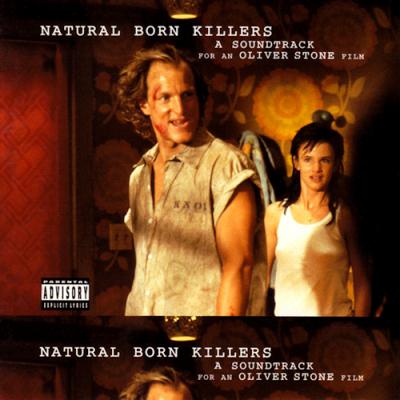
"Natural Born Killers" Soundtrack Lyrics
Movie • 1994
Track Listing
Leonard Cohen
L7
Dan Zanes
Patti Smith
Cowboy Junkies
Bob Dylan
Duane Eddy
Nine Inch Nails
Brian Berdan
Remmy Ongala And Orchestre Super Matimila
Patsy Cline
Peter Gabriel And Nusrat Fateh Ali Khan
Jane's Addiction/Diamanda Galas
A.O.S.
Nine Inch Nails
Russel Means
Hollywood Persuaders
Barry Adamson
Dr. Dre
Juliette Lewis
Sergio Cervetti
Lard
Budapest Philharmonic Orchestra
Nine Inch Nails
Nusrat Fateh Ali Khan And Party
Leonard Cohen
Tha Dogg Pound
"Natural Born Killers: A Soundtrack for an Oliver Stone Film" – Album Guide to Tracks and Key Scenes
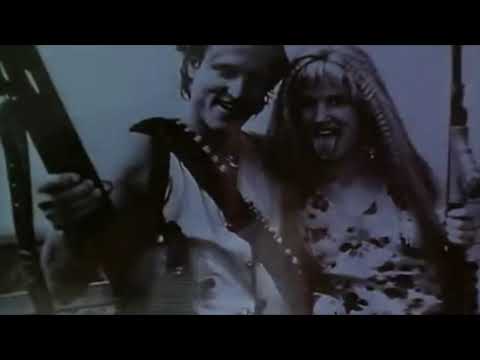
Overview
What does a movie about media-saturated killers sound like when the soundtrack itself behaves like a remote control? Natural Born Killers: A Soundtrack for an Oliver Stone Film answers by flipping channels every few seconds: Leonard Cohen into L7, country ballads into West Coast rap, industrial into qawwali. It is not a normal “songs from the film” album; it is a compressed, violent hallucination of the film itself.
The film follows Mickey and Mallory Knox, two abused kids turned celebrity mass murderers, then follows the TV show that follows them. Arrival, adaptation, rebellion, collapse — the story runs through that cycle three times: first for the couple, then for the media circus, then for the prison system that thinks it can contain them. The soundtrack mirrors each phase. Early Cohen tracks and dusty country cues sketch a mythic outlaw romance; mid-film, hardcore rap and noise-industrial tracks reflect the rebellion and riot; by the end, Cohen’s “The Future” and Nine Inch Nails’ “Something I Can Never Have” sit over the wreckage.
On disc, Trent Reznor stitches 27 tracks into a continuous collage: dialogue bites, distorted TV audio, half-heard fragments of score. According to Wikipedia, he built the whole thing on a portable Pro Tools rig while touring with Nine Inch Nails, deliberately editing songs together in ways that do not appear in the film at all. The result is closer to a concept mix-tape than to a souvenir album. You can drop the disc in without seeing a frame and still feel the film’s moral nausea and black humour.
Genre-wise the album runs through phases that map very neatly onto the story’s emotional beats. Cohen’s apocalyptic folk and Cowboy Junkies’ narcotised rock colour the doomed romance. Surf twang (Duane Eddy), vintage country (Patsy Cline) and 60s girl-group pop underline the fake nostalgia of TV re-enactments. Gangsta rap (Dr. Dre, Tha Dogg Pound) and industrial (Nine Inch Nails, Lard) drive the armed rebellion in the prison. World and spiritual textures — Nusrat Fateh Ali Khan, Sergio Cervetti, Native American chanting — appear around the hallucinatory drug sequences and “visions” in the desert. Each style marks a rung on the ladder from fantasy to collapse.
How It Was Made
Oliver Stone’s film is already built like a collage: multiple film stocks, fake commercials, sitcom inserts, animated flashes, VHS grime, news footage. Stone and producer Jane Hamsher brought in Trent Reznor not just to pick songs but to treat the soundtrack as another experimental layer. As Wikipedia summarises, Reznor watched the film dozens of times on the road and then cut up songs, dialogue and effects into a single 75-minute piece, often fading directly between unrelated artists mid-track.
Reznor produced the album for Nothing / Interscope / Atlantic, using both new commissions and existing material. Nine Inch Nails contributed “Burn” and an extended, reworked “Something I Can Never Have”; Tha Dogg Pound delivered “What Would U Do?”; Juliette Lewis recorded “Born Bad” in character as Mallory. Several pieces, like the “Sex Is Violent” collage (Jane’s Addiction and Diamanda Galás) and “Hungry Ants” (built around Barry Adamson cues), exist only in this edited form on the album.
On the film side, Stone and his music editors used far more music than the CD could hold. The theatrical mix jumps through Rage Against the Machine, The Specials, Marilyn Manson, Melvins, Peter Gabriel, Barry Adamson and library cues during the infamous “I Love Mallory” sitcom sequence and the Super Bowl prison riot. The Tarantino.info extended soundtrack guide tracks more than 50 cues in order, many of which never made the commercial release. Reznor’s job was not to be complete; it was to bottle the overall sensation.
Technically, the album also prefigures the later Reznor/Ross film scores. Drum loops and drones link otherwise unrelated tracks, and spoken-word fragments — especially Russell Means’ “I Will Take You Home” — act as thematic glue. That approach, more curator than traditional composer, turned out to be surprisingly influential on later 90s soundtracks that tried similar mixtape-collage tricks.
Tracks & Scenes
Below are selected songs and how they play in the film, focusing on major emotional beats rather than a full cue sheet.
“Waiting for the Miracle” — Leonard Cohen
Where it plays: Heard first in the opening diner sequence as Mickey and Mallory size up the rednecks who are harassing her at the counter, and again in a motel-room interlude. Cohen’s weary voice leaks in under the jukebox rock, then takes over as the couple drive away across the desert. The song is non-diegetic, drifting over slowed-down images and jump cuts of the killings and aftermath.
Why it matters: It frames the couple as doomed mystics rather than simple psychopaths. The lyric about waiting for a miracle underlines that, in their heads, the killing spree is a spiritual journey out of trauma.
“The Way I Walk” — Robert Gordon
Where it plays: In the diner prologue, before the violence kicks off, Mallory dances alone in front of the jukebox to this rockabilly strut. Sonny and Earl enter and start making crude comments, the camera circling her in lurid colours as laugh-track-style cackles bleed in from nowhere. The song is diegetic — it is literally playing on the jukebox she is grinding against.
Why it matters: The swaggering bassline and Gordon’s vocal give Mallory a kind of cartoon sexuality. The scene shows how the film uses “cool” oldies to dress up behaviour that, stripped of the song, would be plainly terrifying.
“Shitlist” — L7
Where it plays: After the teasing escalates, the track slams in as Mallory explodes, beating Sonny senseless with martial-arts moves and crockery. Later, fragments reappear over chaotic prison-corridor shots as Mickey and Wayne Gale’s crew fight their way through the riot. The guitar churn is mixed hot against screaming and sirens.
Why it matters: It is pure, blunt catharsis. The song makes Mallory’s violence feel like a 90s alt-rock fantasy of revenge, which is exactly the point — the movie is accusing the audience of enjoying that release too much.
“Rock N Roll Nigger” — Patti Smith (Flood Remix)
Where it plays: Snippets drop in during the hyper-cut opening credits and again when Mickey realises the pharmacist has hit the alarm. The song blasts over strobing black-and-white images and rapid-fire TV fragments, with Smith’s scream chopped against gunshots and freeze-frames of headlines.
Why it matters: Stone and Reznor use it as a manifesto. The title and lyric about being “outside of society” line up with Mickey’s self-mythologising as a “natural born killer,” and the abrasive remix fits the film’s visual overload.
“Sweet Jane” — Cowboy Junkies
Where it plays: Heard in a more reflective register before the “I Love Mallory” sitcom flashback. Mickey writes to Mallory from his cell; later they reunite and kiss after a year apart. The languid tempo and hushed vocal play over slow dissolves and lonely shots of highways and prison bars.
Why it matters: It humanises them just enough. The song makes their reunion feel intimate and sad, even though we know what they will go on to do. Without it, the flashback might play as pure parody.
“Back in Baby’s Arms” — Patsy Cline
Where it plays: In a nighttime car scene, Mickey drives while Mallory prods him about whether he still finds her attractive. The vintage country tune plays on the car radio, bleeding softly into their tense conversation until a cut to the outside of the vehicle makes it dominate the soundscape for a moment.
Why it matters: The sugary, domestic lyrics sit next to two people who solve every problem with murder. That contrast — cosy Nashville romance vs. lethal reality — is the film’s whole thesis in miniature.
“History (Repeats Itself)” — A.O.S.
Where it plays: After detective Jack Scagnetti gloats, “Mallory Knox, meet Jack Scagnetti,” we cut to a frantic highway chase. This industrial dance track pulses over flashing police lights, helicopter shots and documentary-style close-ups of terrified drivers.
Why it matters: The title is not subtle. It underlines the idea that Mickey and Mallory are just the latest in a long line of killers turned into spectacle, and that the media will move on to the next one soon enough.
“The Day the Niggaz Took Over” — Dr. Dre
Where it plays: In the prison sequence, after two inmates attack each other in the yard and guards drag them apart, Dre’s track slams in over slow-motion shots of the crowd, guards and watchtowers. As the riot spreads, the song keeps going, bleeding into new camera angles and security footage.
Why it matters: This is one of the bluntest uses of music in the film: a straight gangsta-rap track over a largely white prison uprising. It links the spectacle of televised urban unrest to the Super Bowl broadcast framing the escape.
“Born Bad” — Juliette Lewis
Where it plays: Mallory sings this in her cell, bathed in coloured light, performing for herself and for the television audience that will later consume Wayne Gale’s special. It is semi-diegetic: we hear both her raw on-set vocal and a more polished mix on the album.
Why it matters: Having the actor sing in character blurs the line between Juliette Lewis the 90s indie icon and Mallory the tabloid icon. The lyrics about being “born bad” simply restate the film’s title as a self-fulfilling prophecy.
“Forkboy” — Lard
Where it plays: During the second, larger riot sequence, inmates throw a guard into a washing machine and chaos spills through multiple levels of the prison. The song’s pounding drums and distorted vocals cut rapidly with handheld camera shots, CCTV angles and news footage textures.
Why it matters: It pushes the soundtrack into pure noise. By this point, the difference between score, song and sound design collapses, mirroring how the difference between “real” violence and its media coverage collapses in the story.
“Something I Can Never Have” — Nine Inch Nails
Where it plays: Heard when Mickey and Mallory run out of gas and argue in the desert, and again after they execute Wayne Gale. The extended album version stretches the track into an even more desolate space, with additional ambient sections linking to other cues.
Why it matters: This is the closest the film gets to a traditional love theme, but it is a love song soaked in self-disgust. It scores the moment when their myth starts to crack and the possibility of a life beyond killing appears — and then disappears.
“Anthem” — Leonard Cohen
Where it plays: During the final escape, as McClusky turns to see a tide of inmates charging toward him and the Knoxes weave through hallways and stairwells, “Anthem” swells underneath. The “ring the bells that still can ring” refrain surfaces amid gunfire and screaming.
Why it matters: It reframes the jailbreak as something almost spiritual — a corrupted kind of liberation. Cohen’s lyric about cracks letting the light in sits uneasily over a scene where the only light comes from burning debris and muzzle flashes.
“Burn” — Nine Inch Nails
Where it plays: In the theatrical version, a montage of “demonology” images — satanic iconography, corpses, animals, TV static — erupts after a channel-zapping sequence near the end. “Burn” roars over this barrage, Reznor’s vocal practically fighting the picture for attention. On the album, the song appears earlier as a stand-alone blast of industrial rock before being folded into the dialogue collage.
Why it matters: Written specifically for the film, it condenses the whole thing into four minutes of misanthropy. The line about burning the world down matches Mickey and Mallory’s acceleration toward total destruction, and the production is a blueprint for Reznor’s later score work.
“The Future” — Leonard Cohen
Where it plays: Plays over the end credits as we see Mickey and Mallory years later, driving a battered RV down a country road with children in tow, a home-video camera capturing their “normal” life. Cohen’s apocalyptic lyric runs on as the titles unfurl.
Why it matters: The song’s references to chaos, decay and fascism cast that closing domestic image as deeply ironic. The killers survived; the world that made them is getting worse. The future here is not hopeful.
Other notable cues not on the original CD
Where they play: Rage Against the Machine’s “Bombtrack” and “Take the Power Back” underscore parts of the interrogation-room shootout and Mickey’s takeover of the guards. “Ghost Town” by The Specials plays under a bleak walk through the prison, while Melvins’ “Spread Eagle Beagle” lurks as uncredited surreal percussion in the bathroom scene. Library pieces and classical cues — from “Dance of the Sugar Plum Fairy” to Mussorgsky’s “Night on Bare Mountain” — pop up as TV sting music and mock news themes.
Why they matter: They show how deep the needle-drop bench really is. The official album is dense, but the full film mix is even more of a sonic junkyard, and that excess is part of its effect.
Notes & Trivia
- The soundtrack album runs about 75 minutes and uses heavy crossfades and voice samples, so many tracks are heard only in edited form compared to their full versions.
- Several songs in the film — including Rage Against the Machine tracks and Melvins’ “Spread Eagle Beagle” — are absent from the CD, which instead highlights the curated collage.
- Some album tracks (“Hungry Ants”, “Sex Is Violent”) are constructed from multiple artist recordings plus dialogue, and do not exist as stand-alone songs outside this context.
- Snoop Dogg was reportedly considered for the soundtrack, but the studio blocked the idea while he was on trial, prompting the inclusion of other West Coast rap instead.
- Juliette Lewis sings both “Born Bad” and a cover of “These Boots Are Made for Walkin’” in the film, leaning into Mallory’s pop-culture self-image.
- A Sergio Cervetti piece, “Fall of the Rebel Angels”, recurs around Mickey’s prison interview and later in the green room as they plan the escape, acting almost like a twisted moral theme.
- Barry Adamson’s cues (“Checkpoint Charlie”, “Violation of Expectation”) are used for Scagnetti’s scenes, subtly branding him with his own sleazy jazz-funk palette.
- The DVD menu reportedly uses “Fall of the Rebel Angels” as background music, turning a serious modern classical piece into interactive menu wallpaper.
Music–Story Links
The soundtrack constantly welds songs to character beats. When Mickey and Mallory first appear together in the desert, Cohen’s songs make them feel like tragic lovers from a darker universe, not pulp villains. As soon as Wayne Gale’s “American Maniacs” starts glorifying them, the music shifts toward TV-friendly genres: surf licks, catchy pop, expository rap.
Scagnetti’s world sounds different. Barry Adamson’s cool, noirish tracks follow him into hotel rooms and confession monologues, painting him as a self-styled movie cop. When Mallory sings “These Boots Are Made for Walkin’” and later “Born Bad” to him, the sound flips: suddenly she is the performer, he is the audience, and the song becomes a weapon.
During the prison riot, the rap and industrial cues feel like they belong equally to Mickey, the inmates and the TV broadcast. “The Day the Niggaz Took Over” and “Forkboy” do not just energise the action; they mirror the way Wayne Gale’s show cuts violent footage to whatever is popular that week. Mickey even jokes about being “one big happy family” with the audience while the music roars.
The Cohen tracks bookend the story. “Waiting for the Miracle” hints at some fragile hope that the couple might escape their past; “The Future” over the credits flatly denies it. In between, “Something I Can Never Have” plays at the exact points where the relationship could break — after the fuel stop argument, after Gale’s death — and the fact that it never quite breaks is part of why the film remains so disturbing.
Reception & Quotes
At release, the film divided critics, but the soundtrack quickly found defenders. According to AllMusic, it is less an accompaniment than a “non-stop pastiche” that recreates the movie’s disturbing mood on its own. It charted in the US, Australia and New Zealand and went Gold in several territories.
Q magazine praised the disc for updating the idea of a soundtrack album, arguing that if soundtracks wanted to be relevant in the 1990s, they would “be Natural Born Killers” — fragmented, aggressive, curated. The Seattle-based magazine The Rocket described it as a chilling sonic collage that nearly matches the film’s impact.
Later retrospectives on Trent Reznor’s career regularly single out Natural Born Killers as the moment he moved from rock frontman into full-blown film-music architect, even though he would not start co-writing conventional scores until years later. Fans still debate whether the album is best experienced on its own or strictly as an extension of the movie.
“A non-stop pastiche of sound bites, songs and instrumentals that eerily recreates the film’s surreal darkness.” Paraphrased from contemporary review
“If you were a soundtrack album in the 1990s, you’d be Natural Born Killers.” Paraphrased from Q magazine
Interesting Facts
- The album’s full title, as printed on many releases, is Natural Born Killers: A Soundtrack for an Oliver Stone Film, emphasising Reznor’s author-like role.
- The first CD edition credits Nothing Records alongside Interscope and Atlantic, helping cement Nothing’s reputation as more than a straight industrial label.
- The Music On Vinyl reissue in the 2010s split the soundtrack across two LPs, slightly altering the flow but preserving the crossfades.
- Several international vinyl pressings describe the genre simply as “Soundtrack / Pop / Hip Hop”, a rare mix on a single spine in 1994.
- Some cuts of the film reportedly ended with “Something I Can Never Have” instead of “Burn”, changing the emotional temperature of the final montage.
- Because of rights issues, TV broadcasts in certain regions have replaced or lowered specific cues, making the experience noticeably flatter compared to the theatrical mix.
- The soundtrack helped introduce Leonard Cohen to a younger 1990s audience; fan forums often cite this album as their first exposure to his work.
- Reznor later refined the collage technique on other projects, but NBK remains one of the few soundtracks where he is effectively the album’s main “author” without writing most of the underlying songs.
- The extended cue list on Tarantino-focused fan sites has become an unofficial reference for anyone trying to reconstruct a complete, chronological playlist.
- Bootleg playlists that combine the official album with omitted songs (“Bombtrack”, “Ghost Town”, “Spread Eagle Beagle” and others) circulate as alternative “complete” versions.
Technical Info
- Title: Natural Born Killers: A Soundtrack for an Oliver Stone Film
- Year: 1994
- Type: Feature film soundtrack (collage of licensed songs, original material and dialogue)
- Primary work: Natural Born Killers — 1994 US crime film directed by Oliver Stone
- Soundtrack producer / curator: Trent Reznor
- Key composers / songwriters (original or new-for-album tracks): Trent Reznor, Nine Inch Nails, Tha Dogg Pound, A.O.S., various others
- Notable featured artists: Leonard Cohen, L7, Cowboy Junkies, Bob Dylan, Duane Eddy, Nine Inch Nails, Patsy Cline, Peter Gabriel, Nusrat Fateh Ali Khan, Dr. Dre, Juliette Lewis, Lard
- Labels (original CD releases): Nothing Records, Interscope Records, Atlantic Records
- Original soundtrack release date: 23 August 1994 (US CD)
- Approximate album duration: about 75 minutes
- Film release context: US theatrical release 26 August 1994; screened at Venice shortly after; widely discussed for its violence and media satire.
- Chart performance: Peaked around top 20 on the US Billboard 200; also charted in Australia and New Zealand.
- Certifications: Certified Gold in the US and Canada; Silver in the UK.
- Later formats: Reissued on vinyl (including Music On Vinyl editions) and digital platforms; currently available on major streaming services.
Questions & Answers
- Why does the soundtrack feel different from the music as heard in the film?
- Trent Reznor deliberately reshaped the material into a continuous collage, editing songs, adding dialogue and changing the running order so the album would stand alone rather than simply mirror the cue sheet.
- Are all the songs from the film on the official album?
- No. Several high-profile cues — including Rage Against the Machine tracks, Melvins’ “Spread Eagle Beagle” and some Barry Adamson pieces — only appear in the film mix. The CD focuses on a curated subset plus collage tracks.
- Was “Burn” ever released outside the soundtrack?
- Yes. “Burn” appears on various Nine Inch Nails compilations and digital releases, but its original context — surrounded by dialogue and other artists on the NBK album — remains unique to this soundtrack.
- How central are the Leonard Cohen songs to the film’s identity?
- They bookend the story and define its tone. “Waiting for the Miracle” and “The Future” turn Mickey and Mallory into apocalyptic lovers, and many viewers associate the film as strongly with Cohen as with Reznor.
- Did the soundtrack influence later film music?
- Indirectly, yes. Its aggressive mix-tape structure and use of dialogue over commercial tracks helped normalise more experimental, curated soundtracks and paved the way for Reznor’s later, more traditional scores.
Canonical Entities & Relations
| Subject | Verb | Object |
|---|---|---|
| Oliver Stone | directed | Natural Born Killers (1994 film) |
| Quentin Tarantino | wrote the story for | Natural Born Killers |
| Trent Reznor | produced | Natural Born Killers: A Soundtrack for an Oliver Stone Film |
| Leonard Cohen | performed | “Waiting for the Miracle” and “The Future” on the soundtrack |
| Nine Inch Nails | contributed | “Burn”, “Something I Can Never Have” and “A Warm Place” edits to the album |
| Juliette Lewis | portrays | Mallory Knox, co-lead of the film |
| Woody Harrelson | portrays | Mickey Knox, co-lead of the film |
| Regency Enterprises | co-produced | Natural Born Killers |
| Warner Bros. | distributed | Natural Born Killers theatrically in the United States |
| Nothing / Interscope / Atlantic | released | Natural Born Killers: A Soundtrack for an Oliver Stone Film in 1994 |
Sources: Wikipedia (film and soundtrack), The Quentin Tarantino Archives soundtrack guide, AllMusic, Discogs, MusicBrainz, contemporary reviews (Q, The Rocket), interview and profile pieces on Trent Reznor and Nine Inch Nails.
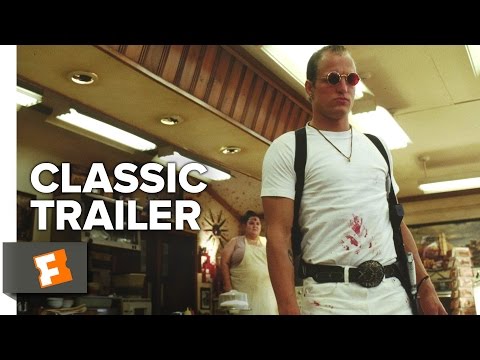
A movie of 1994, where Woody Harrelson is still young and he had a bright future. He did not have to play various scum-backs yet. The same as Juliette Lewis was hot and desirable in every way, not that unstraight and confusing as she is now. Yet another star, Quentin Tarantino, was an author of the story and Robert Downey, Jr. – the most paid actor of 2015 – acted here not knowing that he would become Iron Man and will greatly advertise the Marvel Universe. Tommy Lee Jones, who is 69 (looking much older than he is), is here also. All they haven’t managed to collect tremendous figures in the box office. All they have is slightly above USD 50 million, which is something USD 16 million over the budget. Nice, but not too kewl for such a dream team. This movie is some kind a trashy. First of all, it doesn’t have normal trailer to admire – only nasty anti-commercial thing. Total opposition to nowadays trailers like The Suicide Squad has, as an example. Second – its soundtrack does not really have loud names in it. There are few: Leonard Cohen, Nine Inch Nails and Dr. Dre. If the main heroes had their personal songs, conveying them in the best ways, they would be Route 666 for Woody Harrelson and Totally Hot for Juliette Lewis. As for the genres – there are many – Rock and Roll, pop, rock, and ever quite guitar performance like You Belong To Me with soft lyrics sang by strange voice of Bob Dylan. The spirit is everything in this film. Youth, psychopathic insanity and bloodthirsty thrill to kill and to break rules are main driving forces. That is why this piece is of especial adoration of everyone who doesn’t wants to deal with the big world. But very seldom they think how this life way ends – instead of brave lyrics in the songs that minstrels write about you in future, you got shot by the police.November, 16th 2025
A-Z Lyrics Universe
Cynthia Erivo Popular
Ariana Grande Horsepower
Post Malone Ain't No Love in Oklahoma
Luke Combs Good Riddance (Time of Your Life)
Green Day Bye Bye Bye
*NSYNC You're the One That I Wan
John Travolta & Olivia Newton-John I Always Wanted a Brother
Braelyn Rankins, Theo Somolu, Kelvin Harrison Jr. and Aaron Pierre The Power of Love
Frankie Goes to Hollywood Beyond
Auli’i Cravalho feat. Rachel House MORE ›