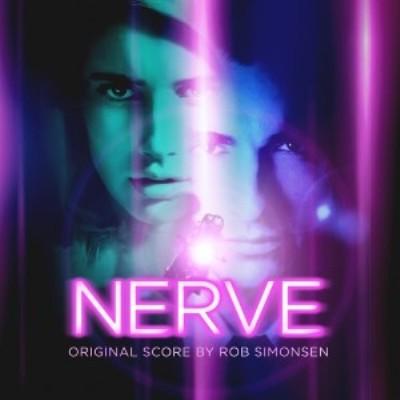
"Nerve" Soundtrack Lyrics
Movie • 2016
Track Listing
Basenji
MØ
Jess Kent
Sweetmates
Melanie Martinez
Crystal Stilts
The Skyliners
Roy Orbison
Little Jerry Williams
BØRNS
Benny Mardones
Lowell
The Diplomats of Solid Sound
Wu-Tang Clan
Halsey
Pyramid Vritra
Darke Complex
Family Portrait
Valentino Khan
Bro Safari
Tei Shi
Holy Ghost!
Alex Winston
Holy Ghost!
Blood Orange
Jungle
"Nerve (Original Motion Picture Soundtrack & Songs)" – Album Guide to Tracks and Key Scenes
Overview
What happens when a teen thriller borrows the sound of a nightclub, a livestream, and a heart monitor? Nerve answers with an electric mix of licensed pop/EDM cuts and Rob Simonsen’s pulsing synth score, turning every dare into a countdown you can feel.
The story follows Vee (Emma Roberts) and Ian (Dave Franco) through a one-night escalation of online dares across New York. The soundtrack mirrors the game’s life cycle — arrival, adaptation, rebellion, collapse. Early cues sell the promise of adventure; mid-film drops push adrenaline past reason; the final reels drift into cold, suspended chords where consequences live.
Distinctive feature: the film treats songs like interface elements. Drops coincide with UI flashes, vocal hooks act like prompts, and the score’s arpeggios behave like status bars rising toward red. Genres map cleanly to meaning: bright electropop for new choices; club rap/bass for public dares; retro pop standards for irony and intimacy; icy synth score when the game stops being fun.
How It Was Made
Directors Henry Joost and Ariel Schulman (of Catfish) returned to their online-culture roots and tasked Rob Simonsen with building a sleek, neon-tinted score that could sit beside contemporary playlist cuts without getting swallowed. Lakeshore Records issued the score digitally in July 2016, with 20 tracks (c. 48 minutes) and a bonus single “Let’s Play” featuring White Sea — a pop-forward capstone that bridges score and song world.
Music supervision threads a needle: mid-2010s floor-fillers (Valentino Khan, Bro Safari), indie/electro (Holy Ghost!, Tei Shi, Jungle, BØRNS), and throwback textures (Roy Orbison, The Skyliners). Clearances and placement choices emphasize diegetic energy: many tracks blast from car systems, store speakers, or party rigs so the film’s world feels “loud” in-story, not just in the mix.
Tracks & Scenes
Below: key placements (ordered roughly by story flow). Scene descriptions focus on function and setting; exact timecodes vary by cut.
“Can’t Get Enough” — Basenji
Where it plays: Opening stretch at Vee’s computer in Staten Island. The interface clicks and chat notifications sit on top of this bright, bouncy groove as she scrolls through the Nerve phenomenon from a safe distance.
Why it matters: Daylight, headphones, optimism. The film starts in “arrival” mode — low stakes, low BPM.
“Kamikaze” — MØ
Where it plays: Vee bikes toward school, earbuds in, mood up. The city is small and personal; the cut glides with handlebar POVs.
Why it matters: First clue that velocity itself is seductive. The lyric swagger foreshadows risk-as-identity.
“Get Down” — Jess Kent
Where it plays: In the diner/café where Vee and friends orbit each other’s screens and dares. The track’s crisp percussion cuts under cross-talk and side-eyes.
Why it matters: It frames “watching” as a social activity — background music for peer pressure.
“Since I Don’t Have You” — The Skyliners
Where it plays: The kiss-dare in the diner. Classic doo-wop warmth slides in just as Vee decides to leap, kissing a stranger (Ian) while phones rise to record.
Why it matters: Old-fashioned romance under a very modern humiliation engine — perfect friction.
“You Got It” — Roy Orbison (also performed in-scene by Dave Franco)
Where it plays: After that first dare, Ian serenades Vee; Orbison’s original also threads the moment. The retro sweetness disarms the room while watchers egg them on.
Why it matters: The film uses a 1989 hit as consent theater — public intimacy that’s partly performance.
“Electric Love” — BØRNS
Where it plays: Vee and Ian accept the “go to the city” dare. Ferry lights, skyline, the first rush of being a team.
Why it matters: It’s the “honeymoon montage,” musically branding them as a couple the game can sell.
“C.R.E.A.M.” — Wu-Tang Clan
Where it plays: Tattoo parlor. Ian jokingly cues Wu-Tang as Vee steels herself. She half-sings along before opting for something tamer.
Why it matters: The money hook (“Cash Rules…”) winks at the watchers’ pay-per-dare economy.
“Deep Down Low (VIP Remix)” — Valentino Khan
Where it plays: Party sequences where Sydney courts the crowd’s attention. Bass hits, cutaways to phones, and her competitive glare toward Vee.
Why it matters: Pure crowd control — the movie’s most festival-coded cue.
“Bender” — Bro Safari
Where it plays: Same party, just before the ladder dare lands on Sydney. The drop syncs to the dare alert; energy turns to dread.
Why it matters: The soundtrack flips the crowd’s hype into pressure. The beat becomes a dare countdown.
“Lucky I Got What I Want” — Jungle
Where it plays: Intercut travel to the finale — Vee on the ferry, Ian on the subway — as the game corrals them to a showdown.
Why it matters: Cool, fatalistic strut. Agency narrows; the system dictates the next move.
“Crime Cutz” — Holy Ghost!
Where it plays: Elevator make-out and party entry; later over end credits. Disco-slick confidence returns just long enough to promise a good ending.
Why it matters: A celebratory overlay that doesn’t erase what just happened.
“The Sun’s Gone Dim and the Sky’s Turned Black” — Jóhann Jóhannsson
Where it plays: The aftermath of the shooting twist. The world narrows, lights feel colder, the game’s voyeurism goes quiet.
Why it matters: Stark art-music intrusion — the movie finally pauses to feel the cost.
Score highlights — Rob Simonsen
“Player”, “Dare Accepted”, “New York F***ing City”, “Player vs Player”, “Coliseum”
Where they play: Sign-up and UI beats; the blindfolded 60 mph motorcycle dare; Tyler’s theft; the final arena and vote. Arps and side-chained pads lock to the edit, with kicks mimicking heart-rate spikes.
Why they matter: The score is the game’s operating system. When songs sell vibe, Simonsen sells stakes.
More needle-drops you’ll hear: Melanie Martinez “Soap” (post-diner bike burst), Darke Complex “Invertebrate” (tattoo build), Tei Shi “Bassically” (Ty recruiting Sydney), Alex Winston “Down Low” (carousel talk), Blood Orange “Forget It” (jealousy reveal), Lowell “Ride (feat. Icona Pop)” (department store sprint), Valentino Khan “Deep Down Low” (car arrival), Holy Ghost! “Okay” (Tommy driving), The Diplomats of Solid Sound “Give Me One More Chance” (Tommy watching feeds).
Notes & Trivia
- The official commercial album is the score by Rob Simonsen (20 tracks), not a multi-artist songs compilation; Lakeshore handled the release.
- “Let’s Play” features singer-producer White Sea and functions as a bridge between score cues and the film’s pop profile.
- Dave Franco’s in-scene performance of “You Got It” is uncredited on screen but documented in soundtrack listings.
- Vintage tracks (The Skyliners, Roy Orbison) are used for contrast — tender melodies inside a surveillance circus.
- The film’s party cues track the mid-2010s bass scene closely (Valentino Khan, Bro Safari), giving the dares a real-world festival texture.
Music–Story Links
Arrival → adaptation → rebellion → collapse is audible. Early electropop cues (“Can’t Get Enough”, “Kamikaze”) sell freedom and small choices. The middle stack — Wu-Tang jokes at the tattoo parlor, store-system bangers during heists — turns the city into a playable interface. Party drops (“Deep Down Low”, “Bender”) mark rebellion: perform for the crowd or disappear. Collapse lands with Simonsen’s cold pads and Jóhannsson’s dirge; the crowd goes quiet, the UI dissolves, and consequences replace clout.
Reception & Quotes
Reviews called the film slick, fast, and sharper about social media than expected. The music drew praise for feeling “live” inside scenes — pop for the spectacle, synths for the dread. The score album arrived day-and-date with the theatrical run and has stayed available digitally.
“A teen-friendly thriller with enough energy to offset its muddled execution; the neon look and EDM-leaning soundtrack keep it moving.”
— Summary of aggregator consensus
“Simonsen’s synths function like the app’s heartbeat — whenever the drops stop, you feel the floor fall away.”
— Album review paraphrase
Interesting Facts
- Many cues are diegetic (heard by characters), which is why bass tracks often start from a car stereo or party rig before filling the mix.
- Jóhann Jóhannsson’s track is licensed amid a mostly pop/electro set — a sharp tonal pivot by design.
- The score’s cue names (“Player”, “Dare Accepted”, “Player vs Player”, “Coliseum”) mirror in-app states; they’re effectively UX labels.
- Despite heavy use of songs, the studio did not issue a “various-artists” OST — fans built the de facto album as playlists.
- Orbison and doo-wop placements were chosen for irony — old romance under new surveillance.
Technical Info
- Title: Nerve (Original Motion Picture Soundtrack) — score by Rob Simonsen
- Year: 2016
- Type: Feature film soundtrack (score) with extensive needle-drops
- Label: Lakeshore Records (digital; CD followed)
- Key personnel: Rob Simonsen (composer); White Sea (featured on “Let’s Play”); Henry Joost & Ariel Schulman (directors)
- Notable song placements: Basenji “Can’t Get Enough”; MØ “Kamikaze”; Jess Kent “Get Down”; The Skyliners “Since I Don’t Have You”; Roy Orbison “You Got It” (with in-scene performance by Dave Franco); Jungle “Lucky I Got What I Want”; Holy Ghost! “Crime Cutz”; Valentino Khan “Deep Down Low (VIP Remix)”; Bro Safari “Bender”; Wu-Tang Clan “C.R.E.A.M.”; Blood Orange “Forget It”; Jóhann Jóhannsson “The Sun’s Gone Dim and the Sky’s Turned Black”.
- Runtime (film): ~96 minutes; score album: ~48 minutes (20 tracks)
- Availability: Score album on major platforms; songs available via original artist releases/compilations.
Questions & Answers
- Is there an official “songs” album for Nerve?
- No. The only official release is Rob Simonsen’s score (Lakeshore Records). The film’s licensed tracks are found on artist albums; fans typically recreate them in playlists.
- Who performs the track over the end credits?
- End credits cycle between Holy Ghost!’s “Crime Cutz” and Simonsen’s cues (e.g., “Game On”), depending on the section of the roll.
- What song is playing when Vee bikes early in the movie?
- MØ’s “Kamikaze”. It’s part of the film’s early, feel-free phase before the dares turn dangerous.
- Does Dave Franco really sing in the film?
- Yes — he performs “You Got It” in-scene (the original Roy Orbison recording is also referenced).
- Why does the score feel like an app?
- Simonsen uses arpeggios, side-chain swells and clicky percussion that mimic UI feedback and heart-rate spikes, so cues behave like the game’s operating system.
Canonical Entities & Relations
| Subject | Relation | Object |
|---|---|---|
| Henry Joost & Ariel Schulman | direct | Nerve (2016) |
| Rob Simonsen | composes | Nerve (Original Motion Picture Soundtrack) |
| Lakeshore Records | releases | Score album for Nerve |
| Dave Franco | performs (in scene) | “You Got It” (Roy Orbison song) |
| Emma Roberts | stars as | Vee Delmonico |
| Jungle | performs | “Lucky I Got What I Want” (travel to the finale) |
| Holy Ghost! | performs | “Crime Cutz” (elevator/credits) |
| Valentino Khan | performs | “Deep Down Low (VIP Remix)” (party cue) |
| Jóhann Jóhannsson | composes | “The Sun’s Gone Dim and the Sky’s Turned Black” (aftermath) |
| Wu-Tang Clan | performs | “C.R.E.A.M.” (tattoo parlor joke) |
Sources: Lakeshore Records release notes; Apple Music/Spotify album pages; WhatSong track list; MoviesOST/Soundtrakd scene-by-scene placements; IMDb Soundtrack credits; Wikipedia (film overview).
Nerve is another play-or-lose-everything film, when you are accepting something you can’t handle. The film of 2016 contains pretty huge soundtrack of more than two dozens of tunes, and their genres are so diverse: they have hard metal Invertebrate, Indie pop Bassically, dance Bender and so many other genres like R&B, pop, rock, ethno, folk, hip hop and counting. Thanks to such diversity, the creators have a plentiful material to put a sound in the movie. The trailer’s songs are many, not one and there are no big names except of only one, Roy Orbison, it this collection. There aren’t much lyrical songs, as the major part of them is fast, daring and pretentious, like the film itself. Pity it didn’t gain much profits, but maybe it had not sufficient advertising campaign? At least, outside the US, it was hard to hear anything of this movie upfront its coming-out to cinemas. After a month, when its run ends, many people will found out of this film thanks to this site. There are some screaming names of the soundtrack like Holy Ghost! or BØRNS. But do they give at least some part of fervent mood like MØ did in their full of young energy lyrics in song Kamikaze? We aren’t sure in that. Will this film be remarkable to anyone who isn’t young? Maybe not, as there are plenty of moments in the film, where protagonists could exit the game with their lives without much losses, but choose the continue option, which is pretty dumb, as for us.November, 17th 2025
Nerve IMDb page, Official Website, Wikipedia articleA-Z Lyrics Universe
Cynthia Erivo Popular
Ariana Grande Horsepower
Post Malone Ain't No Love in Oklahoma
Luke Combs Good Riddance (Time of Your Life)
Green Day Bye Bye Bye
*NSYNC You're the One That I Wan
John Travolta & Olivia Newton-John I Always Wanted a Brother
Braelyn Rankins, Theo Somolu, Kelvin Harrison Jr. and Aaron Pierre The Power of Love
Frankie Goes to Hollywood Beyond
Auli’i Cravalho feat. Rachel House MORE ›