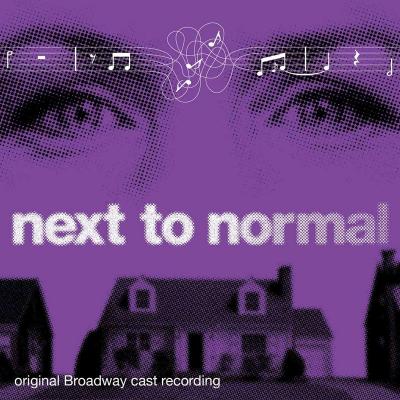
"Next To Normal" Soundtrack Lyrics
Musical • 2009
Track Listing
Next to Normal Band
Alice Ripley
Jennifer Damiano
Alice Ripley
Jennifer Damiano
Alice Ripley
Alice Ripley
J. Robert Spencer
Alice Ripley
Alice Ripley
Jennifer Damiano
Aaron Tveit
Alice Ripley
Alice Ripley
Aaron Tveit
J. Robert Spencer
Alice Ripley
J. Robert Spencer
Alice Ripley
Alice Ripley
Jennifer Damiano
Louis Hobson
Alice Ripley
Aaron Tveit
Jennifer Damiano
Alice Ripley
Alice Ripley
J. Robert Spencer
Alice Ripley
Aaron Tveit
Alice Ripley
Alice Ripley
Alice Ripley
Jennifer Damiano
Alice Ripley
J. Robert Spencer
Alice Ripley
“Next to Normal (Original Broadway Cast Recording)” – Album Guide to Tracks and Key Scenes
Overview
What if a rock musical about a “normal” suburban family decides that normal is a myth? Next to Normal turns that question into a pulse that never lets up — arrival, adaptation, rebellion, collapse. The cast album bottles that arc with bruised harmonies, jagged rhythms, and a conversational lyric style that feels like eavesdropping on a marriage, a daughter’s disappointment, and a son who won’t let go.
The protagonist, Diana, navigates bipolar disorder and grief; Dan, her husband, clings to routine; Natalie, their daughter, plays scales as armor; Gabe, the absent/present son, sings with a pop sheen that glints like memory. Across the record, the band sounds compact and live-wired, moving from piano-driven confessionals to guitar-forward surges. You can hear therapy sessions become duets, diagnoses become reprises, and a household rewiring itself in real time.
The album’s narrative function is precise: act breaks feel earned, musical motifs return with new meaning, and “light” isn’t salvation so much as a workable truce. It’s a score that argues with itself — clinical vs. romantic, acceptance vs. denial — and lands on clear-eyed tenderness. That’s why the listening experience holds even if you’ve never seen the show: the songs carry the plot beats cleanly enough to follow the story in headphones.
Genres & Themes in phases: alt-rock pulse — agitation and pushback; chamber-pop piano — fragile domestic hope; power ballad glow — memory idealized; minimalist ostinatos — therapy and medication cycles; finale ensemble — communal honesty over “fixing.”
How It Was Made
Composer Tom Kitt and book/lyricist Brian Yorkey developed the show from workshops to a 2009 Broadway run, where it won Tonys for Score and Orchestrations. The Original Broadway Cast Recording was released by Ghostlight/Sh-K-Boom in spring 2009, captured just after Broadway opening with the pit band’s punch intact. Orchestrations by Michael Starobin with Kitt emphasize lean textures — piano, guitars, strings, and drum kit — leaving space for vocal storytelling. AnnMarie Milazzo’s vocal arrangements shape the overlapping family arguments into clean counterpoint.
Production-wise, the album balances dramatic intelligibility with rock energy. The miking stays close for intimacy; rhythm section hits are tight but never sterile. Several numbers were recorded over two winter dates and mixed to keep scene-to-scene continuity, so the album plays like a radio-drama with applause stripped away.
Tracks & Scenes
“Just Another Day” — Company
Where it plays: The album’s curtain-rise: a morning routine combusts into a counterpoint pileup. Diana lays out sandwiches on every surface; Dan rallies optimism; Natalie watches the cracks spread; Gabe radiates swagger. It’s the suburban kitchen as overture, roughly the show’s first 5–7 minutes. Mostly diegetic-adjacent (heightened reality), turning non-diegetic as voices layer.
Why it matters: Establishes the family’s rhythms and reveals that “normal” is performance — four melodic lines colliding under fluorescent light.
“Everything Else” — Natalie
Where it plays: Late-night school music room, Natalie practicing piano. She vents about overachievement and control, name-checking Chopin as a lifeline. Intimate, solo-spot feel at ~10–15 minutes into Act I. Non-diegetic song sprung from diegetic practice.
Why it matters: Frames Natalie’s perfectionism as survival; the motif returns when she can’t keep life in time.
“I Miss the Mountains” — Diana
Where it plays: A candid reckoning in a psychiatrist’s office spillover: Diana mourns the numbing side-effects of meds and the lost peaks/valleys of feeling. Mid–Act I. Non-diegetic confession that reads like a diary set to 6/8 sway.
Why it matters: The score’s thesis on cost vs. stability; the melody aches upward, then plateaus — exactly the point.
“You Don’t Know” → “I Am the One” — Diana; then Dan/Gabe/Diana
Where it plays: In the family home, frustration detonates into a two-song argument. Diana charges Dan with incomprehension; Dan counters with steadfastness; Gabe slices in with a temptingly bright hook. Late Act I sequence.
Why it matters: Two contrapuntal pop-rock numbers dovetail, dramatizing three incompatible truths without choosing a winner.
“Superboy and the Invisible Girl” — Natalie (with Diana, Gabe)
Where it plays: Bedroom confession turned power-anthem: Natalie sings about being unseen next to a mythologized brother. The band kicks up; the hook is acidic-sweet. Act I, just after the family’s latest blow-up.
Why it matters: Refracts grief through sibling envy; you can almost see the posters peeling on the wall.
“I Dreamed a Dance” / “There’s a World” — Diana; then Gabe
Where it plays: A waltz of surrender morphs into a siren-song duet with memory. The stage softens; time loses edges. Late Act I.
Why it matters: Sets the table for a drastic medical choice; harmony turns seductive, then ominous.
“Didn’t I See This Movie?” — Diana
Where it plays: Pre-procedure defiance: Diana pushes back on ECT with black humor and movie-reel sarcasm. End of Act I/hinge into Act II. Non-diegetic declaration with satiric bite.
Why it matters: The show’s sharpest critique of quick-fix psychiatry — wit as armor.
“Song of Forgetting” — Dan/Diana/Natalie
Where it plays: Post-ECT dinner, the family attempts “normal” small talk. The melody pretends to be light; undertones won’t comply. Early Act II, domestic table scene, non-diegetic trio that mimics diegetic chatter.
Why it matters: Shows memory as a missing furniture piece you keep bumping into.
“How Could I Ever Forget?” — Diana & Dan
Where it plays: In the home’s dimmer corners, the couple finally names the core loss. Act II midsection, time-stopped duet.
Why it matters: The first honest marriage song: two versions of the same past, tuned to the same pitch.
“I Am the One (Reprise)” — Dan & Gabe
Where it plays: Dan’s shattering confrontation with the memory he’s avoided. Late Act II, threshold scene where resolve breaks into light.
Why it matters: The album’s most cathartic modulation; grief finally speaks with Dan’s voice.
“Light” — Company
Where it plays: Finale on the home front: nobody’s “fixed,” but everyone chooses candor. Non-diegetic ensemble that glows without lying.
Why it matters: A gentle reset instead of a bow-tied cure — you leave humming acceptance.
Trailer/non-album context: Promotional trailers spotlight quick cuts from “Just Another Day,” “I Am the One,” and “Superboy and the Invisible Girl,” leaning on guitar stabs and title cards to telegraph the show’s electricity.
Notes & Trivia
- The Broadway production earned Tonys for Score and Orchestrations; the show later won the 2010 Pulitzer Prize for Drama.
- Vocal arrangements help the family arguments “stack” into clean, singable counterpoint — a signature sound of the album.
- The cast recording was released digitally first, then as a two-disc set, mirroring the show’s two-act structure.
- Reprises are plot engines here: hooks return as arguments with new evidence.
- Listen for rhythmic “tics” (handclap-like accents) during therapy songs — musical metronomes for medical routine.
Music–Story Links
When Natalie pounds through “Everything Else,” the steady left-hand piano figures echo her need for control; later, “Hey” fractures that steadiness with flirtatious syncopation as Henry enters her orbit. Diana’s “I Miss the Mountains” romanticizes volatility — so when “Better Than Before” arrives, its patter and pep feel suspicious, a salesman’s cadence over a medical chart. Gabe’s “I’m Alive” floats on bright, radio-clean intervals that mask danger; every time that pop brightness intrudes, we know memory is steering the scene. And when Dan finally takes the melodic lead in “I Am the One (Reprise),” the harmony stops dodging — grief and love share one mic.
Reception & Quotes
Critics praised the album’s emotional clarity and the writing team’s ambition; fans built a word-of-mouth canon around a handful of “must-cry” tracks. According to the Tony Awards records, the score’s Broadway run marked a high point for contemporary pop-rock writing in the late 2000s. Ghostlight’s release schedule helped the album travel quickly: digital first for immediacy, physical for keepsakes.
“A brave, breathtaking musical… much more than a feel-good musical: it is a feel-everything musical.” Ben Brantley
“Bittersweet melodies… a tremendous cast; it resonates even when the plot frustrates.” The Times (London)
“Double-disc, fabulously produced — predicts a cast-album shelf life.” Broadway press
Interesting Facts
- Recording dates fell shortly after Broadway opening, capturing the original pit band energy.
- Label credit appears as Ghostlight (Sh-K-Boom’s imprint) on retail listings; digital stores tag © 2009 Sh-K-Boom Records.
- A London company album arrived years later, showing the score’s portability across accents and orchestral balances.
- The Tony for Orchestrations was shared — a rare nod to collaborative texture-building in a small band show.
- “Light” has become an audition staple; paradoxically, it’s an ensemble closer repurposed as a solo cut-down.
- Promo trailers often cut to the climactic “I Am the One” hook because it sells conflict in four bars.
- Fans debate whether “Mountains” romanticizes mania or simply mourns numbness — the arrangement stays neutral on purpose.
Technical Info
- Title: Next to Normal (Original Broadway Cast Recording)
- Year / Type: 2009 — Stage musical cast album (2×CD; digital)
- Composers/Lyricists: Music by Tom Kitt; Book & Lyrics by Brian Yorkey
- Orchestrations: Michael Starobin & Tom Kitt; Vocal arrangements by AnnMarie Milazzo
- Label: Ghostlight / Sh-K-Boom
- Release: Digital release April 7, 2009; CD release May 12, 2009
- Key placements (story moments): “Just Another Day” (kitchen overture), “I Miss the Mountains” (meds reckoning), “Superboy and the Invisible Girl” (sibling invisibility), “How Could I Ever Forget?” (grief named), “I Am the One (Reprise)” (Dan’s break), “Light” (finale)
- Awards context: 2009 Tonys — Best Original Score; Best Orchestrations. 2010 Pulitzer Prize for Drama.
- Availability: Streaming on major platforms; CD still in print via Ghostlight.
Questions & Answers
- Is the cast album a complete narrative without dialogue?
- Yes. The writing and reprises carry plot and character turns cleanly, so you can follow the story from track order alone.
- Why does the orchestration feel “small” yet cinematic?
- It’s designed for intimacy: a tight band with strategic doubling lets vocals lead while rhythm hits underline emotional spikes.
- Which single track best represents the show’s sound?
- “You Don’t Know / I Am the One.” It blends rock drive, counterpoint, and character conflict in one breathless package.
- What changed for Act II sonically?
- Post-ECT numbers use cleaner textures and straighter grooves — a deliberate “clinical” polish that gradually cracks.
- Is there a notable difference in later London recordings?
- Yes — brighter treble and some tempo trims; the core arrangements remain but diction and mix choices shift the emphasis.
Canonical Entities & Relations
| Subject | Relation | Object |
|---|---|---|
| Tom Kitt | composed | Next to Normal (score) |
| Brian Yorkey | wrote book & lyrics for | Next to Normal |
| Michael Starobin; Tom Kitt | orchestrated | Next to Normal |
| AnnMarie Milazzo | vocal arrangements for | Next to Normal |
| Ghostlight Records (Sh-K-Boom) | released | Original Broadway Cast Recording |
| Booth Theatre, Broadway | hosted | 2009 production |
| Next to Normal (OBC Album) | features performances by | Alice Ripley; J. Robert Spencer; Aaron Tveit; Jennifer Damiano; Adam Chanler-Berat; Louis Hobson |
| Tony Awards (2009) | awarded | Best Original Score; Best Orchestrations |
| Pulitzer Prize for Drama (2010) | awarded to | Tom Kitt & Brian Yorkey for Next to Normal |
Sources: Tony Awards records; IBDB; Playbill; Ghostlight Records; AllMusic; Broadway.com; Wikipedia; The Times (London).
November, 18th 2025
'Next to Normal', an American rock musical on the Web: Wikipedia, MTIShows.comA-Z Lyrics Universe
Cynthia Erivo Popular
Ariana Grande Horsepower
Post Malone Ain't No Love in Oklahoma
Luke Combs Good Riddance (Time of Your Life)
Green Day Bye Bye Bye
*NSYNC You're the One That I Wan
John Travolta & Olivia Newton-John I Always Wanted a Brother
Braelyn Rankins, Theo Somolu, Kelvin Harrison Jr. and Aaron Pierre The Power of Love
Frankie Goes to Hollywood Beyond
Auli’i Cravalho feat. Rachel House MORE ›