Soundtracks:  A B C D E F G H I J K L M N O P Q R S T U V W X Y Z #


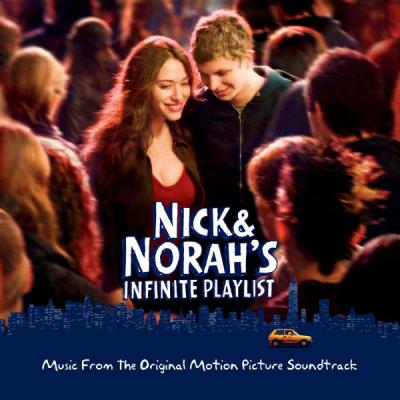
Nick And Norah's Infinite Playlist Album Cover

"Nick And Norah's Infinite Playlist" Soundtrack Lyrics

Movie • 2008

Track Listing


“Nick & Norah’s Infinite Playlist (Original Motion Picture Soundtrack)” – Album Guide to Tracks and Key Scenes

Official trailer frame: Nick and Norah speed through late-night Manhattan under neon, indie guitars chiming
Nick & Norah’s Infinite Playlist — downtown romance scored by 2008 indie finds

Overview

What if a teen romcom ditched the prom and chased a playlist through New York till dawn — arrival → adaptation → rebellion → collapse? Nick & Norah’s Infinite Playlist answers with hand-stamped indie cuts and a warm, low-budget glow. The songs don’t just decorate; they function like waypoints in a scavenger hunt for a secret show, a missing band, and a workable version of young love.

Nick (Michael Cera), a heartbroken bassist, and Norah (Kat Dennings), a skeptic with taste, ricochet from club to club with friends, dead phones, and rumors of a Fluffy gig. The soundtrack behaves like the city: jittery guitars, subway-sway ballads, late-night synth whispers. A various-artists album on Atlantic ties the needle-drops together, while Mark Mothersbaugh’s brief, peppy score buttons transitions and comic beats.

What makes it distinct is the curation principle — “the best music you haven’t heard yet.” The mix leans emerging 2007–08 indie (Bishop Allen, Vampire Weekend, We Are Scientists) with a few timeless ringers (Chris Bell). Phases map cleanly: jangly power-pop for pursuit; dream-pop for infatuation; guitar hush for truth-telling; neon-disco edges for chaos.

Genres & themes (in phases): college-rock & jangle — flirtation and chase; dream-pop — suspended possibility; post-punk shimmer — urban maze; acoustic confessional — honesty; synth-tinged indie — end-credits afterglow.

How It Was Made

Director Peter Sollett and editor Myron Kerstein built the crate-digging vibe alongside music supervisor Linda Cohen — the trio filtered temp tracks and iTunes swaps into scene-specific picks. The Atlantic Records album dropped September 23, 2008 with 15 cuts; a few cues recur as character motifs (one song can be both diegetic bar music and inner monologue, depending on the scene). According to Soundtrack.net, Mothersbaugh handled the original score cues that stitch the night together.

Licensing favored then-current NYC–adjacent acts and mixtape-friendly textures; several placements double as in-world band sounds (the Jerk-Offs) or club PA ambience. The DVD later bundled a music video of Bishop Allen’s “Middle Management,” reflecting how central that track’s energy was to the cut.

Trailer card: title pops over a collage of gig posters and subway tiles while a jangly riff rings
How It Was Made — crate-digging curation and quick, character-first edits

Tracks & Scenes

“Speed of Sound” — Chris Bell
Where it plays: Early-doors melancholy as Nick voice-mails the ex; the city’s cold blue light meets Bell’s tender, chiming guitar. Non-diegetic, opening minutes.
Why it matters: Sets the film’s mix of sweetness and ache; a classic among new finds.

“Lover” — Devendra Banhart
Where it plays: Opening credits / deli run-in; breezy percussion and falsetto as the friend-groups’ paths start crossing. Non-diegetic that plays like overheard PA.
Why it matters: Signals that the night will be more vibe than plan.

“Middle Management” — Bishop Allen
Where it plays: Club chaos while the crew wrangles a disastrously drunk friend; guitars sprint, edits match the rhythm. Largely diegetic (PA bleed) into non-diegetic montage.
Why it matters: The night’s kinetic engine; the DVD even features a promo cut around this cue.

“Ottoman” — Vampire Weekend
Where it plays: Kicks in at/into the closing credits after dawn clarity — bright piano and strings as the story exhale lands. Non-diegetic, end-credits lead.
Why it matters: A bespoke soundtrack version that became a fan totem — the “we made it” feeling.

“Xavia” — The Submarines
Where it plays: Late-night epiphany / camera lingers on satisfied, sleepy faces; a soft-vocoder glow holds the final montage before the credits.
Why it matters: Emotional handoff to “Ottoman”; intimacy without inertia.

“After Hours” — We Are Scientists
Where it plays: Between clubs, the group charts the next rumor of Fluffy’s secret gig; sidewalk choreography, taxi doors, laughter. Non-diegetic montage.
Why it matters: Turns logistics into momentum; title doubles as mission statement.

“Our Swords” — Band of Horses
Where it plays: A quieter street-beat as Nick and Norah finally talk without the posse; guitar bloom + sodium lights. Non-diegetic.
Why it matters: Gives the couple a private frame inside the all-nighter.

“How to Say Goodbye” — Paul Tiernan
Where it plays: One of the film’s tender pivots: an acoustic postcard beneath a truth-telling chat. Non-diegetic with dialogue foregrounded.
Why it matters: The “you can be kind and still move on” cue.

“Very Loud” — Shout Out Louds
Where it plays: Van-in-motion and club exterior cross-cuts; synth chime + four-on-the-floor urgency. Non-diegetic.
Why it matters: Reframes impatience as possibility.

“Riot Radio” — The Dead 60s
Where it plays: A rowdier venue sweep; ska-bite bass as elbows fly and clues misfire. Diegetic club energy.
Why it matters: Reminds us: New York will jostle you, musically and otherwise.

“Baby, You’re My Light” — Richard Hawley
Where it plays: Taxi lull — eyes meet, jokes soften. Non-diegetic, mid-film breather.
Why it matters: Crooner warmth = permission to be sincere.

Trailer / non-album notes: The marketing leaned on the album’s indie cachet — Band of Horses and Bishop Allen textures pop in promotional cuts; the trailer’s jangly mix establishes “NYC at 2 a.m.” in 10 seconds.

Trailer montage: club doorway bouncers, cramped taxi, friends sprinting between venues — timed to a snare snap
Tracks & Scenes — needle-drops as waypoints across a single sleepless night

Notes & Trivia

  • The soundtrack album (Atlantic) landed September 23, 2008 and charted on both Billboard 200 and the Top Soundtracks tally.
  • Score composer Mark Mothersbaugh adds brief connective cues; the album itself is a songs compilation.
  • “Ottoman” appears in a special “soundtrack version”; it later became a cult favorite at Vampire Weekend shows.
  • The DVD includes a “Middle Management” video cut around film footage — a time-capsule of the scene’s energy.
  • Several scenes were shot in and around Electric Lady Studios and Don Hill’s — fitting for a music-chasing plot.

Music–Story Links

Nick’s voicemail intro under Chris Bell’s chiming guitar tells you his heart is analog, not algorithmic. When Bishop Allen kicks in, bodies and edits move faster — the city starts DJing the night. Soft-focus cuts like Paul Tiernan’s acoustic track open space for confession; then “After Hours” flips the switch back to motion. By sunrise, Xavia → Ottoman acts like a two-song epilogue: private relief, then public glow as the credits roll.

Reception & Quotes

Critics generally praised the film’s NYC mood and the soundtrack’s curatorial feel; some argued the album plays more like a sampler than a narrative. Pitchfork was notably cool on the disc, while others singled out the mix as a perfect teen-night-out companion. Teen Vogue simply called it irresistible and downloaded it immediately.

“The best music you haven’t heard yet” — the film’s bet, paid off in club-sized doses. production notes, interviews
“A lovely NYC nightcap with a killer mix.” Wired
“As a playlist, it’s more sampler than statement.” Pitchfork
Audience POV: end-credits glow over dawn Manhattan while piano from the soundtrack swells
Reception — sampler vs. story debate aside, the mix became a 2008 time capsule

Interesting Facts

  • Album producer credits include Peter Sollett, Linda Cohen, and Myron Kerstein — the editing ear is literally on the disc.
  • Two tracks (“Xavia,” “Ottoman”) tag-team the ending — many fans identify the movie by those last two songs alone.
  • Atlantic’s release later got a vinyl pressing, underlining the record-nerd romance baked into the film.
  • Chris Bell’s 1970s classic sits alongside then-new artists, giving the mix a bridge between eras.
  • Some cues play diegetically in clubs, then return non-diegetically in montage — a playful bleed the film uses often.
  • Trailer chatter and press blurbs helped break lesser-known acts to a wider teen audience in 2008.

Technical Info

  • Title: Nick & Norah’s Infinite Playlist — Original Motion Picture Soundtrack
  • Year / Type: 2008 — Film soundtrack (various artists) with brief original score cues
  • Label: Atlantic Records
  • Release: September 23, 2008 (album)
  • Score Composer: Mark Mothersbaugh
  • Music Supervision / Album Production: Linda Cohen (with Peter Sollett & Myron Kerstein)
  • Selected placements: “Speed of Sound” (opening); “Lover” (credits/open beats); “Middle Management” (club scramble); “After Hours” (montage); “How to Say Goodbye” (quiet talk); “Xavia” → “Ottoman” (final montage + end credits)
  • Availability / Charts: Widely available on streaming/download; peaked #44 (Billboard 200) and #2 (Top Soundtracks)

Questions & Answers

Is the album mostly needle-drops or original score?
Mostly licensed songs. Mothersbaugh’s score cues are short transitions; the released album is a various-artists mix.
What’s the end-credits song everyone asks about?
Vampire Weekend’s “Ottoman” — the soundtrack version that became a cult favorite.
Which track most captures the movie’s feeling?
“Middle Management” for the chase-and-grin energy; “How to Say Goodbye” for the heart.
Are the songs diegetic?
Often. Club scenes use in-world PA/bands; the same songs sometimes reappear non-diegetically in montage.
Did the soundtrack actually help break bands?
Yes — 2008 teens met several rising acts here; the album played like a mixtape introduction.

Canonical Entities & Relations

SubjectRelationObject
Peter SollettdirectedNick & Norah’s Infinite Playlist (2008)
Lorene Scafariawrote screenplay forNick & Norah’s Infinite Playlist
Linda Cohenmusic supervision & album productionNick & Norah OST
Myron Kersteinedited and co-produced albumNick & Norah OST
Mark Mothersbaughcomposedoriginal score cues for the film
Atlantic RecordsreleasedNick & Norah’s Infinite Playlist: Original Motion Picture Soundtrack
Vampire Weekendperformed“Ottoman” (end credits)
Bishop Allenperformed“Middle Management” (club sequence feature)
Electric Lady Studios (NYC)appears asrecording-studio location in film
Don Hill’s (NYC)appears asclub performance location

Sources: Atlantic/Apple Music listings; Wikipedia (film & soundtrack); Soundtrack.net; Pitchfork; Teen Vogue; IMDb; Discogs; Wired.

Have you ever considered yourself loser, who was always lagging behind your contemporaries? Have you had no successful love relations or loyal friends or wild parties lasting all night? Or maybe your pets were dying in extremely young age, just several days after being bought from the pet shop? This is almost the template for this guy, Nick, who was overly dissatisfied with his life, outward appearance and everything he was. The only bright thing he had – we was a guitar player in the local adolescents band, which one night brought him success – he met a girl Norah and kissed her at once, she fell in love with him and they were hanging all night, making tremendous memories out of what’s happening around. They are helped in their relation by such good singers as Mark Mothersbaugh or Vampire Weekend. As it is pretty easy to guess, the soundtrack for the teenage film should be accomplished mostly of rock songs, unless it isn’t a lyrical drama about great loss. It isn’t and that is why the listeners may be pleased by such gems as Speed of Sound or How To Say Goodbye. The soundtrack contains everything you must know in order to understand the spirit. Well, you know how it happens – first love, zillion of wonderful emotions within one hour, endorphins and so on. This pretty chemistry allows people to fall in love and when it passes – first 6 or something like this months – the love is over. That’s why people love to watch various kinds of scenic and filming creations, which tell of first-time-falling-in-love and other pink snots. This is best represented by the music and lyrics of a song Fever.

November, 18th 2025


A-Z Lyrics Universe

Lyrics / song texts are property and copyright of their owners and provided for educational purposes only.