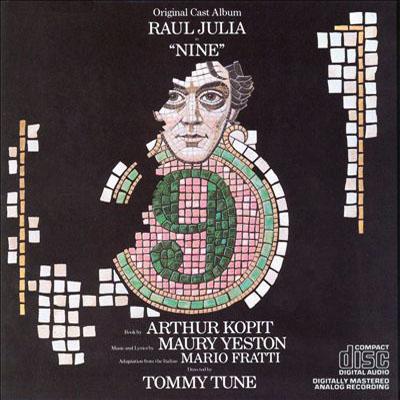
"Nine" Soundtrack Lyrics
Musical • 1982
Track Listing
Maury Yeston
Maury Yeston
“Nine (Original Broadway Cast Recording, 1982)” – Album Guide to Tracks and Key Scenes
Overview
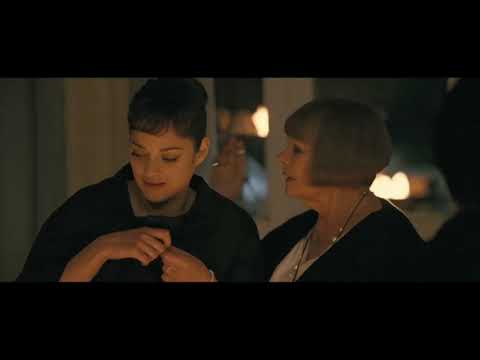
How do you set a midlife crisis to music without losing the glamour — arrival → adaptation → rebellion → collapse? Nine answers with an orchestra of women and a score that shimmers between confession and spectacle. Maury Yeston’s songs, inspired by Fellini’s 8½, turn Guido Contini’s blocked imagination into a stage filled with the women who made him and may yet undo him.
The 1982 Broadway premiere (Raul Julia as Guido; a 21-woman chorus plus four boys) won five Tonys, including Best Musical. The cast album became a calling card: sharp, Italianate lyric lines; sinuous waltzes; music-hall snaps; and a parade of star turns — Luisa’s weary poise, Carla’s velvet mischief, Claudia’s aching clarity, Liliane’s velvet-and-feathers command. According to Masterworks Broadway’s album notes, this recording preserves the show’s momentum as if you were in the 46th Street Theatre on opening week.
It’s a study in contrasts: austere black-and-white design against technicolor music; a single man’s crisis sung by a multitude; comic pastiche turning on a dime into bruised intimacy. Genres phase like Guido’s psyche: operetta glow for memory; café chanson for seduction; brassy revue for denial; lyrical arioso when the truth finally arrives.
Genres & themes (phases): choral overture & waltz — the mind’s floodgates open; music-hall / tango — desire as performance; jazz-tinged ballad — private reckoning; grand sequence — fantasy as avoidance; reprise mosaic — acceptance and release.
How It Was Made
Composer-lyricist Maury Yeston conceived the score in the 1970s before Arthur Kopit reshaped the book, and Tommy Tune staged it in his signature monochrome dream. Thommie Walsh co-choreographed; Jonathan Tunick provided orchestrations and served as music supervisor, casting a crack studio band to realize the score’s woodwind color and café shimmer. Producer Mike Berniker and engineer Mike Moran captured the cast album unusually — by recording the entire show in real time, twice, then editing — so the album breathes like a performance rather than a patchwork (as per the label’s historical essay).
The Broadway run opened May 9, 1982 and logged 729 performances; the LP followed that fall, later expanded to a 2-CD reissue that restored dialogue lead-ins and musical connectors. Yeston’s notes also trace last-minute additions: the women’s choral overture and the fully staged “Folies Bergère” grew out of late casting inspirations, locking the show’s architecture.
Tracks & Scenes
“Overture delle Donne / Not Since Chaplin” — Company
Where it lands: The women enter as an orchestra of voices — syllabic “la”s conducted by Guido — then pivot into a mock-newsreel salute to genius. It’s the mind opening and the press barging in, all at once.
Why it matters: Yeston’s premise in one move: one man, many muses, zero peace.
“Guido’s Song” — Guido
Where it lands: Alone amid the spa’s clamor, Guido admits he’s out of stories — then charms himself into believing he isn’t. The melody sells bravado; the rests confess the block.
Why it matters: A character thesis: wit as armor, melody as self-deception.
“My Husband Makes Movies” — Luisa
Where it lands: Kitchen-table candor. Luisa weighs love against the cost of living beside a man who turns life into material. The vocal sits low and honest, refusing glamour.
Why it matters: The album’s quietest cut — and its moral center.
“A Call from the Vatican” — Carla
Where it lands: A breathy, telephone-seduction tango; rhymes wink, vowels purr, and the orchestration bows politely out of the way.
Why it matters: Comedy by way of chemistry — a masterclass in double-entendre without vulgarity.
“Folies Bergère” (with “The Script”) — Liliane La Fleur & Company
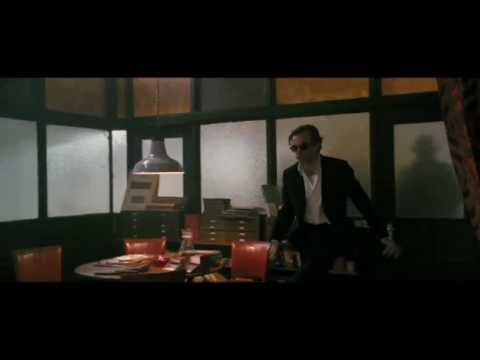
Where it lands: The producer hijacks the meeting, demands musical éclat, and conjures her old act. Waltz turns to revue, feathers descend, a critic’s counter-melody needles the fantasy.
Why it matters: Tune’s stage picture in audio: it swells from office squabble to Parisian delirium.
“Be Italian (Ti Voglio Bene)” — Saraghina & Boys
Where it lands: On a beach of memory, a taboo lesson in appetite and consequence; hand-drum pulse, boys’ chorus, and a melody that both tempts and warns.
Why it matters: The musical’s folk-ritual — Guido’s origin story in heel-drums and sand.
“Unusual Way” — Claudia
Where it lands: The muse draws a boundary. Sweeping line, suspended harmony, and a refusal to be just an idea.
Why it matters: The show’s purest ache — acceptance without bitterness.
“The Grand Canal” — Guido & Company
Where it lands: A film-within-the-mind explodes: gondoliers, every woman, a kaleidoscope of reprises. It’s triumph scored like denial.
Why it matters: Audio set-piece that proves the album’s theatrical recording method — you can hear the scene changes happen in your head.
“Be On Your Own” / “I Can’t Make This Movie” — Luisa; Guido
Where they land: The reckoning: her exit aria, then his collapse. Strings thin, woodwinds speak plainly, and the bravado finally breaks.
Why it matters: Two mirror confessions — the crisis stops being charming and becomes true.
Notes & Trivia
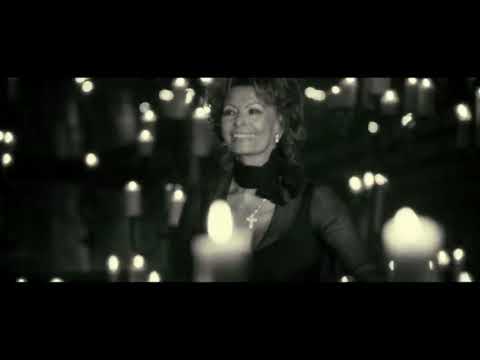
- The album was recorded as two complete run-throughs — dialogue and underscoring included — then edited; a later 2-CD issue restores connective material.
- Orchestrator/music supervisor Jonathan Tunick hand-picked players for coloristic solos (E-flat clarinet in “The Script,” alto flute in “Waltz di Guido”).
- Original Broadway opened May 9, 1982 at the 46th Street Theatre and ran 729 performances.
- Liliane Montevecchi won a Tony for Liliane La Fleur; Nine also took Best Musical and Best Original Score.
- Yeston conceived the women’s overture late in development to literalize Guido “conducting” the voices in his head.
Music–Story Links
When the women’s overture swells, the chorus becomes Guido’s orchestra — memory as instrumentation. Carla’s tango weaponizes charm; Luisa’s jazz-tinged ballad strips it away. La Fleur’s “Folies Bergère” proves how easily Guido hides in spectacle; Claudia’s “Unusual Way” denies him that shelter. By “The Grand Canal,” melody is a smokescreen. The final pair — Luisa’s exit, Guido’s incapacity — drop the mask; only then can the reprises return as benedictions, not distractions.
Reception & Quotes
The 1982 cast album quickly became a canonical listen for musical-theatre fans: a dramatic recording with star turns but a genuine ensemble pulse. According to Masterworks Broadway and Tony histories, its success paralleled the show’s upset Best Musical win over Dreamgirls, cementing the album’s legend.
“A live-in-the-studio feel — breath, scene flow, even page turns — a rarity among cast albums.” label notes
“A monochrome dream made technicolor by the band.” revival retrospectives
“Nine doesn’t just sing; it edits, like cinema.” fan shorthand
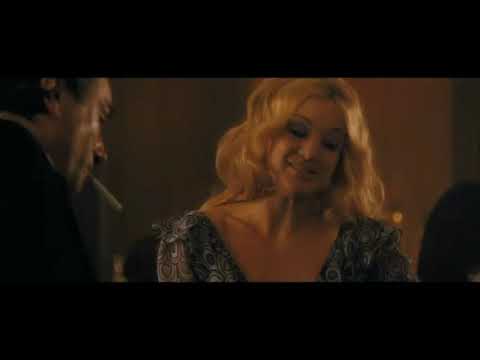
Interesting Facts
- First LP release: late September 1982; later reissued as a two-disc set with bonus demos and scene lead-ins.
- The album’s cassette originally contained extra music beyond the LP’s time limit — a rare perk in the format wars.
- Yeston’s early demos (included on reissue) show different lyrics for “Unusual Way” and an alternate conception of “The Grand Canal.”
- The women-only “orchestra of voices” was born when the team reconceived the show in fall 1981 workshops.
- The Tony night rivalry with Dreamgirls is Broadway lore; Nine walked away with Best Musical.
Technical Info
- Title: Nine — Original Broadway Cast Recording
- Year / Type: 1982 — Cast album (with later expanded reissue)
- Music & Lyrics: Maury Yeston
- Book: Arthur Kopit (after Mario Fratti’s adaptation of Fellini’s 8½)
- Direction/Choreography: Tommy Tune (director); Thommie Walsh (choreographer)
- Orchestrations / Music Supervision: Jonathan Tunick
- Album Production: Mike Berniker; engineered by Mike Moran
- Original Cast Highlights: Raul Julia (Guido), Karen Akers (Luisa), Anita Morris (Carla), Shelly Burch (Claudia), Liliane Montevecchi (Liliane La Fleur), Kathi Moss (Saraghina), Taina Elg (Guido’s Mother)
- Label: Sony/Columbia (Masterworks Broadway)
- Stage Premiere: May 9, 1982 — 46th Street Theatre, Broadway
- Awards: Tony Awards for Best Musical and Best Original Score (1982)
- Availability: Streaming on major platforms; 2-CD expanded edition in print
Questions & Answers
- Why does the cast album feel unusually “theatrical”?
- It was recorded as full run-throughs with dialogue lead-ins, then edited — closer to a performance than a piecemeal session.
- Which songs became standards beyond the show?
- “Unusual Way” and “Be Italian” are most covered; “My Husband Makes Movies” and “Guido’s Song” are frequent audition pieces.
- Is the orchestration big?
- It’s detailed rather than huge — woodwind colors, café rhythm section, and chamber-like strings; clarity over bombast.
- How does the album handle the “film within the musical” idea?
- Through montage-like sequencing: “The Script” blooms into “Folies Bergère,” and Act II’s “Grand Canal” collages previous motifs.
- What’s the best entry point track?
- Start with “My Husband Makes Movies” for the show’s heart, then “Be Italian” for its myth and “Folies Bergère” for its swagger.
Canonical Entities & Relations
| Subject | Relation | Object |
|---|---|---|
| Maury Yeston | wrote music & lyrics for | Nine (1982) |
| Arthur Kopit | wrote book for | Nine |
| Tommy Tune | directed | Original Broadway production |
| Thommie Walsh | co-choreographed | Original Broadway production |
| Jonathan Tunick | orchestrated & supervised music for | Original Broadway production / cast album |
| Mike Berniker | produced | Original cast recording |
| Sony / Columbia (Masterworks Broadway) | released | Nine — Original Broadway Cast Recording |
| Raul Julia | starred as | Guido Contini |
| Karen Akers | originated | Luisa Contini |
| Anita Morris | originated | Carla Albanese |
| Shelly Burch | originated | Claudia |
| Liliane Montevecchi | originated | Liliane La Fleur (Tony winner) |
| Kathi Moss | originated | Saraghina |
| 46th Street Theatre (Broadway) | premiered | Nine on May 9, 1982 |
| Academy of the Tony Awards | awarded | Best Musical & Best Original Score (1982) |
| Federico Fellini’s 8½ | inspired | Nine (source of concept) |
Sources: Masterworks Broadway (album history & credits); Wikipedia (musical overview, awards, numbers); Discogs (1982 LP credits/notes); Spotify (album imprint info); Tony Awards archival performance & promotional trailer.
November, 18th 2025
A-Z Lyrics Universe
Cynthia Erivo Popular
Ariana Grande Horsepower
Post Malone Ain't No Love in Oklahoma
Luke Combs Good Riddance (Time of Your Life)
Green Day Bye Bye Bye
*NSYNC You're the One That I Wan
John Travolta & Olivia Newton-John I Always Wanted a Brother
Braelyn Rankins, Theo Somolu, Kelvin Harrison Jr. and Aaron Pierre The Power of Love
Frankie Goes to Hollywood Beyond
Auli’i Cravalho feat. Rachel House MORE ›