"Noah" Soundtrack Lyrics
Movie • 2014
Track Listing
Clint Mansell & Kronos Quartet
Patti Smith
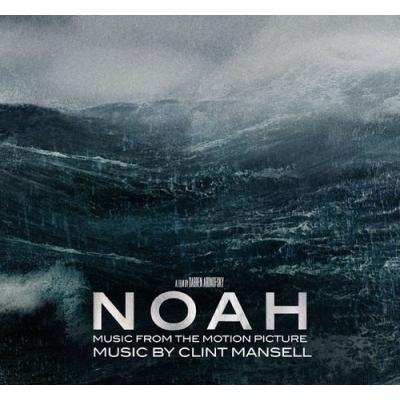
"Noah (Music from the Motion Picture)" – Album Guide to Tracks and Key Scenes
Overview
How do you write music for a world “before” culture? Darren Aronofsky’s Noah asks that riddle, and Clint Mansell answers with a score that sounds ancient yet unplaceable. It rejects easy “biblical epic” tropes; instead, strings snarl, choirs hover like weather, and rhythms arrive like tectonic shifts.
Arrival → adaptation → rebellion → collapse: the album mirrors the film’s arc. Early cues feel spare and earthbound; momentum gathers through hammering ostinati in ark-building sequences; then comes the deluge—percussion and low strings pounding—before a long exhale into mournful, humane motifs. The Kronos Quartet is the emotional spine; their close-miked bow noise gives matter weight and grain.
Most of the record is score, but two songs frame the human center: “Father Song (Lullaby)”—a diegetic thread characters sing to each other—and Patti Smith’s end-credits hymn “Mercy Is.” Together they anchor an otherwise storm-tossed soundscape, giving the catastrophe a face and a voice.
Genres & themes in phases: textural modernism → ritual minimalism → percussive apocalypse → elegiac postlude. Translation: string quartet grit = burden and resolve; choral drones = awe and dread; drum swells = judgment; quiet modal lines = mercy.
How It Was Made
Composer: Clint Mansell. Performers: Kronos Quartet with orchestra and choir. Principal orchestrator/conductor: Matt Dunkley. Album label: Nonesuch Records. According to the label’s release notes, Mansell blended prepared piano, Mellotron, bass guitar, and Moog with the quartet’s strings, led by Dunkley’s forces in the studio.
Aronofsky and Mansell explicitly avoided period “ethnic” markers; they wanted something “timeless,” neither liturgical nor modern cliché. In development discussions described by The New Yorker, the Watchers’ material was pushed toward “primitive” chaos—free-jazz energy reimagined for strings—so rock-textured bowing and distortion-like layers became part of the palette.
Two original songs interface with the score. “Father Song (Lullaby)” was written for the characters to sing on screen. “Mercy Is,” written by Patti Smith with Lenny Kaye, is performed by Smith with Kronos over the end credits, its harmony and arrangement interwoven with Mansell’s motifs, as per label and review materials.
Tracks & Scenes
“In the Beginning, There Was Nothing” — Clint Mansell
Where it plays: creation montage. A brisk, time-lapse vision of origins unspools as the music stacks evolving textures—quiet pulse, then luminous strings—as if history accretes layer by layer. Non-diegetic.
Why it matters: sets the album’s “pre-culture” thesis—less period color, more elemental awe.
“The Fallen Ones” — Clint Mansell
Where it plays: the Watchers’ reveal and early confrontations. The quartet saws primitive figures; harmony stays unstable; low percussion lurches. Non-diegetic.
Why it matters: timbral “rock” for rock angels—the borderline between the human and the mythic.
“Make Thee an Ark” — Clint Mansell
Where it plays: ark-building montage. The cue ratchets from grim labor to choral lift, matching the sight of beams rising and family rhythms locking in. Non-diegetic.
Why it matters: Mansell’s surging crescendos make toil feel liturgical without sounding like church music.
“The Flood Waters Were Upon the World” — Clint Mansell
Where it plays: deluge. Strings collide with drum strikes as animals pack the ark and the world turns to water. Non-diegetic.
Why it matters: the album’s shock front—impact, scale, then a stunned stillness.
“Forty Days and Nights” — Clint Mansell
Where it plays: locked inside the ark. Low strings pulse like hull stress; motives recur as arguments flare and food dwindles. Non-diegetic.
Why it matters: transforms a disaster film into a chamber drama; pressure is the instrument.
“The Judgement of Man” — Clint Mansell
Where it plays: moral crisis with Tubal-cain and Noah’s vow colliding. Rhythms grind; dissonance hardens.
Why it matters: frames the ethical center—judgment isn’t only divine; humans choose.
“And He Remembered Noah” — Clint Mansell
Where it plays: covenant aftermath. The quartet sings through the bow; harmony finally relaxes. Non-diegetic.
Why it matters: a rare balm; resolve without triumphalism.
“Day and Night Shall Not Cease” — Clint Mansell
Where it plays: closing epilogue on land. Long-lined theme, choir like distant surf. Non-diegetic.
Why it matters: the album’s dignified exhale—time restarts.
“Father Song (Lullaby)” — Russell Crowe & Emma Watson (diegetic)
Where it plays: an intimate bedside moment early on as Noah comforts the wounded Ila; later, Ila sings the lullaby on the ark to her newborns, the melody tilting Noah’s heart. Diegetic both times.
Why it matters: not ornament—plot leverage. The song passes through generations and softens a hard decision.
“Mercy Is” — Patti Smith with Kronos Quartet
Where it plays: end credits. A spare, prayer-like melody with strings and quiet choir traces the film’s last image into darkness.
Why it matters: a human voice after the storm; closes the circle thematically.
Trailer spotlight (not on OST)
Where it plays: marketing trailers widely used “New Beginning” by Audiomachine—big, percussive trailer cue.
Why it matters: sets a different expectation: blockbuster bombast vs. the album’s textural gravity.
Notes & Trivia
- The score is performed by Kronos Quartet with orchestra/choir; Matt Dunkley served as principal orchestrator and conductor.
- Aronofsky and Mansell ruled out “period” instrumentation; they aimed for something pre-cultural and elemental.
- “Mercy Is” was co-written by Patti Smith and Lenny Kaye and performed over the end credits; it received a Golden Globe nomination.
- Nonesuch Records released the album in March 2014; catalog information associates the issue with number 542164.
- Different editions list 22 or 23 tracks; some include “Mercy Is” as track 23.
Music–Story Links
When Noah first commits to building, “Make Thee an Ark” elevates toil into ritual—strings pile like beams, then widen as family purpose aligns. During the deluge, “The Flood Waters Were Upon the World” hammers a moral beat: creation can unmake itself. In the cramped ark, “Forty Days and Nights” compresses space; the ostinato becomes conscience. And when Ila sings the lullaby, the diegetic melody becomes agency—her voice turns a patriarch’s edict back into care.
Reception & Quotes
Critical response emphasized weight and invention. Some praised the “timeless” ambition; others bristled at its severity. A few highlights:
“Underneath all the madness is Clint Mansell’s surging, swirling, haunting score.” — Mark Kermode, The Guardian
“A richly orchestrated score… alternating thunderous percussive beats with New Age-y twangs and hums.” — Scott Foundas, Variety
“Buy it… if you respect Mansell’s ability to reflect Aronofsky’s eccentricities while striving for emotional extroversion.” — Filmtracks
“Very emotional on many levels… from anguish and torment to hope and joy.” — Movie Music UK
Interesting Facts
- Kronos’s intimate miking lets bow noise act like “distortion,” bridging chamber music and rock attack.
- Label notes mention prepared piano, Mellotron and Moog—electro-acoustic hybrids used sparingly but decisively.
- The lullaby’s function was discussed with Patti Smith as a handed-down comfort song within the story world.
- Reviewers frequently compared one theme’s ache to Bowie’s “Warszawa.”
- Trailer music (Audiomachine) was not part of the official score album.
- Matt Dunkley’s orchestrations/conducting shaped the album’s large crescendos and choir balance.
- Geoff Foster is credited as album co-producer and recording/mix engineer on review/credit sheets.
Technical Info
- Title: Noah (Music from the Motion Picture)
- Year / Type: 2014 — Film score soundtrack
- Composer: Clint Mansell
- Primary performers: Kronos Quartet; orchestra & choir (conducted by Matt Dunkley)
- Key songs: “Father Song (Lullaby)” (diegetic); “Mercy Is” (Patti Smith feat. Kronos)
- Label / Release: Nonesuch Records, March 25–26, 2014 (regional street dates vary)
- Running time: ~78:30 (edition-dependent)
- Edition notes: 22–23 tracks depending on region; some versions list “Mercy Is” separately
- Awards note: “Mercy Is” nominated — Golden Globe, Best Original Song
- Notable placements: Creation montage; ark-building; deluge; ark interior tensions; covenant epilogue; end credits song
Questions & Answers
- Who actually performs most of the score?
- Kronos Quartet, augmented by orchestra and choir; Matt Dunkley handled principal orchestrations and conducted the sessions.
- Why doesn’t the music sound “ancient” in a traditional sense?
- The team intentionally avoided period instrumentation to feel timeless and elemental rather than tied to any culture.
- What’s the song over the end credits?
- “Mercy Is,” written by Patti Smith and Lenny Kaye, performed by Smith with Kronos Quartet; it was Golden Globe–nominated.
- Is the lullaby part of the plot or only on the album?
- It’s diegetic. “Father Song (Lullaby)” is sung on screen—first as comfort, later as a plea that shifts a key decision.
- Which trailer track people ask about isn’t on the album?
- Audiomachine’s “New Beginning” featured in marketing; it’s trailer music, not part of Mansell’s OST.
Canonical Entities & Relations
| Subject | Verb | Object |
|---|---|---|
| Clint Mansell | composed | Noah (Music from the Motion Picture) score |
| Kronos Quartet | performed | principal string parts on the score |
| Matt Dunkley | orchestrated & conducted | orchestra/choir for the score |
| Patti Smith | wrote & performed | “Mercy Is” (with Lenny Kaye; with Kronos) |
| Russell Crowe | sang | “Father Song (Lullaby)” on screen |
| Emma Watson | sang | “Father Song (Lullaby)” on screen |
| Darren Aronofsky | directed | Noah (2014 film) |
| Nonesuch Records | released | the soundtrack album |
| Paramount Pictures | distributed | the film worldwide |
Sources: Nonesuch Records notes; The New Yorker feature; Variety review; The Guardian review; Filmtracks review; Movie Music UK review; Apple Music/Spotify listings; IMDb soundtrack credits; Pitchfork news item; Discogs master entry.
November, 17th 2025
'Noah' is an American epic biblical drama film directed by Darren Aronofsky and inspired by the Biblical story of Noah's Ark from the Book of Genesis. Get more info: Wikipedia, IMDbA-Z Lyrics Universe
Cynthia Erivo Popular
Ariana Grande Horsepower
Post Malone Ain't No Love in Oklahoma
Luke Combs Good Riddance (Time of Your Life)
Green Day Bye Bye Bye
*NSYNC You're the One That I Wan
John Travolta & Olivia Newton-John I Always Wanted a Brother
Braelyn Rankins, Theo Somolu, Kelvin Harrison Jr. and Aaron Pierre The Power of Love
Frankie Goes to Hollywood Beyond
Auli’i Cravalho feat. Rachel House MORE ›