"Normal Heart, The" Soundtrack Lyrics
Movie • 2014
Track Listing
Roxy Music
The Salsoul Orchestra
Sylvester
Culture Club
Tom Tom Club
Bing Crosby
Patrice Rushen
Mildred Hill, Patty Hill
Gloria Gaynor
Sylvester
George Gershwin, Ira Gershwin
The Rolling Stones
Johnny Mathis
Roxy Music
Simon & Garfunkel
Simon & Garfunkel
“The Normal Heart — Music & Songs from the HBO Film (2014)” – Album Guide to Tracks and Key Scenes
Overview
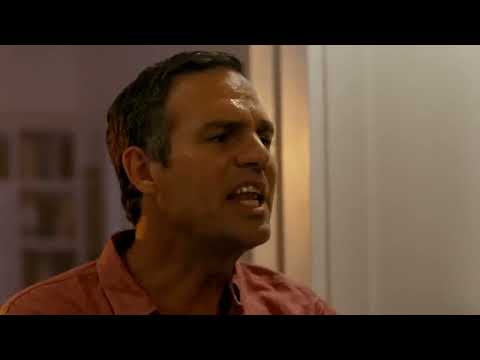
What does love sound like while a city learns a new word — AIDS — and then breaks? In The Normal Heart, pop euphoria collides with elegy: club heaters and soft classics, then a hush that leaves room for grief.
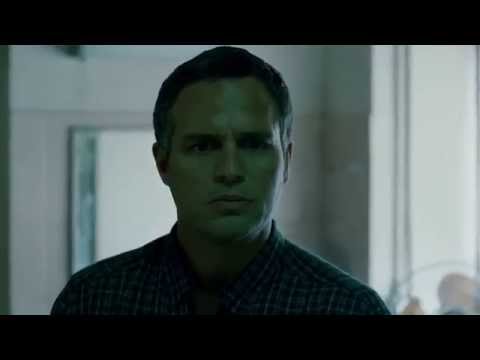
The film traces Ned Weeks and his circle from beach-party arrival → frantic adaptation → public rebellion → private collapse. Songs place you in 1981–84 New York — discos, downtown bars, living rooms turned sickrooms. The score (Cliff Martinez) stays spare and internal, a low-voltage current under speeches and fights; needle-drops carry time, place, and community.
Distinctives: queer dance-floor canon (“Dance (Disco Heat),” “You Make Me Feel (Mighty Real)”), New Wave and downtown funk (“Genius of Love”), and tender standards (“Chances Are”). The final note lands with folk-rock clarity — one perfect, devastating cut.
Genres & phases: disco & Hi-NRG — freedom, denial; New Wave/funk — activism energy; crooner ballads — intimacy; folk rock — reckoning.
How It Was Made
Composer: Cliff Martinez. His palette here is restrained — pulses, light electronic beds, and air — designed to leave the stage to dialogue and period songs. (According to Film Music Reporter and Martinez’s filmography, he scored the HBO film.)
Music supervision: PJ Bloom. The brief leans on truthful period cues (1981–84 clubs, radio, and apartment stereos), using diegetic playbacks where possible. The work was recognized by the Guild of Music Supervisors.
Tracks & Scenes
“Angel Eyes” — Roxy Music
Where it plays: Early-party ambiance (Fire Island/arrival period). Non-diegetic or system playback; exact timestamp varies by cut.
Why it matters: Glam gloss foreshadows how quickly beauty curdles in the story.
“Dance (Disco Heat)” — Sylvester
Where it plays: Club/party montage while the group’s friendships widen; crowd, sweat, lights; diegetic feel.
Why it matters: Joy at full volume — a baseline the film keeps measuring loss against.
“You Make Me Feel (Mighty Real)” — Sylvester
Where it plays: Bar-to-dancefloor sequence; laughter into motion; diegetic.
Why it matters: Self-recognition as liberation, then a gut-punch when the music stops.
“Genius of Love” — Tom Tom Club
Where it plays: Downtown montage; street life, phone trees, flyers; non-diegetic bridge between activist beats.
Why it matters: Funky, nervy; it sounds like organizing feels — playful, improvised, fast.
“Do You Really Want to Hurt Me” — Culture Club
Where it plays: Post-argument drift; radio/TV bleed; diegetic.
Why it matters: Irony on the nose becomes sincerity in context.
“Forget Me Nots” — Patrice Rushen
Where it plays: Friends’ night-out montage; cutaways to missed calls; non-diegetic.
Why it matters: A dance classic repurposed as a plea for memory.
“Chances Are” — Johnny Mathis
Where it plays: Quiet, intimate interlude (Ned & Felix); source-music warmth, room tones audible; diegetic.
Why it matters: 1950s romance steadies a terrifying present.
“Waiting on a Friend” — The Rolling Stones
Where it plays: Street-watching beat; stoops, doorways, lingering; non-diegetic.
Why it matters: The lyric reframes waiting rooms and waiting years.
“I Will Survive” — Gloria Gaynor
Where it plays: Community gathering sequence; a cut-to-black button; diegetic singalong energy.
Why it matters: Anthem becomes vigil — same melody, different meaning.
“The Only Living Boy in New York” — Simon & Garfunkel
Where it plays: Final scene / closing movement. Non-diegetic; images of survival and remembrance pair with the track’s open-air ache.
Why it matters: A last, devastating reset; the song’s solitude matches the film’s summation.
Trailer notes (not OST): The marketing used Roxy Music’s “More Than This” and (fan-identified) Cascadeur’s “Meaning (Choral Version).”

Notes & Trivia
- Score by Cliff Martinez; music supervision by PJ Bloom.
- Bloom won the Guild of Music Supervisors award for this HBO film.
- No official commercial score/soundtrack album was issued; curated playlists circulate instead.
- The finale uses Simon & Garfunkel’s “The Only Living Boy in New York.”
- Needle-drops skew 1978–84; disco/NW choices are historically grounded, not jukebox-random.
Music–Story Links
When Ned and his friends first gather, Sylvester’s tracks make the room bigger than fear — bodies moving, futures assumed. As diagnoses multiply, glossy love songs (“Chances Are”) turn into private shelters. “Genius of Love” carries montage urgency; the beat is a to-do list. Then the last cut — “The Only Living Boy in New York” — empties space around Ned. The film stops scoring events and scores a feeling: alone, but seen.
Reception & Quotes
Critics focused on performances and moral clarity; music choices were praised for clean period feel and emotional restraint.
“Powerful, heartbreaking… a vital document of the early AIDS crisis.” Rotten Tomatoes consensus
“Written, directed and acted with a passion that radiates off the screen.” Peter Travers, Rolling Stone

Interesting Facts
- Period source cues regularly play in-scene (radios, stereos, clubs) to ground time/place.
- Martinez’s approach here is minimalist; long pads and light percussion leave dialogue untouched.
- Roxy Music appears twice in prominent moments (“Angel Eyes,” “More Than This” in marketing).
- Tom Tom Club’s “Genius of Love” is a downtown time-stamp — a sonic address.
- The movie premiered on HBO on May 25, 2014; home video followed that August.
- The music supervision win helped spotlight long-form TV movies at the Guild ceremony.
Technical Info
- Title: The Normal Heart — Music & Songs from the HBO Film
- Year / Type: 2014 — Television film (score + licensed songs)
- Composer: Cliff Martinez
- Music Supervisor: PJ Bloom
- Selected notable placements: “Dance (Disco Heat)”; “You Make Me Feel (Mighty Real)”; “Genius of Love”; “Do You Really Want to Hurt Me”; “Chances Are”; “The Only Living Boy in New York.”
- Release context: HBO premiere — May 25, 2014
- Album/availability: No official OST; fan/curated playlists on DSPs gather the film’s songs.
Questions & Answers
- Who composed the score?
- Cliff Martinez. His cues are sparse and mostly textural.
- Was there an official soundtrack album?
- No commercial OST has been issued; playlists cover the licensed songs.
- What song plays over the ending?
- “The Only Living Boy in New York” by Simon & Garfunkel.
- Who supervised the music?
- PJ Bloom; the show’s music supervision won at the Guild of Music Supervisors Awards.
- Which songs set the early party tone?
- Disco staples like Sylvester’s “Dance (Disco Heat)” and Roxy Music’s “Angel Eyes.”
Canonical Entities & Relations
| Subject | Verb | Object |
|---|---|---|
| Cliff Martinez | composed | original score for The Normal Heart |
| PJ Bloom | supervised | music for The Normal Heart |
| Ryan Murphy | directed | The Normal Heart (HBO film) |
| Larry Kramer | wrote | screenplay (from his 1985 play) |
| Roxy Music | featured with | “Angel Eyes” (in-film), “More Than This” (trailer) |
| Tom Tom Club | featured with | “Genius of Love” |
| Sylvester | featured with | “Dance (Disco Heat)”, “You Make Me Feel (Mighty Real)” |
| Simon & Garfunkel | featured with | “The Only Living Boy in New York” (finale) |
| HBO | released | the film on May 25, 2014 |
| Guild of Music Supervisors | awarded | Best Music Supervision (Long Form) to PJ Bloom |
Sources: Film Music Reporter; Wikipedia (film page); RingoStrack database; The Hollywood Reporter (usage note re: closing song); Guild of Music Supervisors / Variety coverage; YouTube trailer listing; fan-tracked trailer cue note.
This film was not widely released, so such a thing as "box office" simply does not exist for it. You should buy DVD or Blu-ray if you are intended to watch it. The film tells the story about pretty serious lethal incurable disease. And about a person willing to know its origins and confront the epidemic spread. Of course, the whole cohort of some other people try to resist the protagonist in his aspire. However, there is one person – a doctor – who helps him in this. She is played by Julia Roberts, who is quite a while was absent on the screens. Music for the film is chosen different. There is a charming pop songs and exhausting dance hits. Here we have Gloria Gaynor and The Rolling Stones. Some songs such as Dance (Disco Heat), did not differ with refinement name, but immediately respond to the question of what genre they are. I Love You Samantha – for the sake of such songs is worth living. They must be included in the gold fund of sounds. The Only Living Boy In New York is cute song. These ones simply cannot avoid going straight into memory. At least for a few hours. And their performers (Simon & Garfunkel) are the favorite artists of several generations. They always make the music of very stable quality, all the years of work. This soundtrack is for those who love good sound. For those who do not shy that some songs, just like some people, are slightly different from other with the sound and essence. Collection in its carelessness is very different from the film's plot. So it can both complement it and ruin the impression – it is everyone’s own vision that must be formed after watching and listening. And comparing.November, 17th 2025
'The Normal Heart' movie on the Web: IMDb, WikipediaA-Z Lyrics Universe
Cynthia Erivo Popular
Ariana Grande Horsepower
Post Malone Ain't No Love in Oklahoma
Luke Combs Good Riddance (Time of Your Life)
Green Day Bye Bye Bye
*NSYNC You're the One That I Wan
John Travolta & Olivia Newton-John I Always Wanted a Brother
Braelyn Rankins, Theo Somolu, Kelvin Harrison Jr. and Aaron Pierre The Power of Love
Frankie Goes to Hollywood Beyond
Auli’i Cravalho feat. Rachel House MORE ›