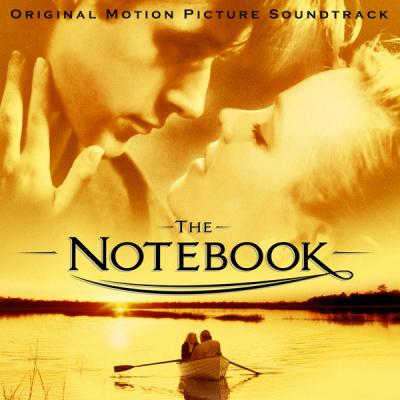
"Notebook" Soundtrack Lyrics
Movie • 2004
Track Listing
Jimmy Durante
Duke Ellington
Benny Goodman & His Orchestra
Glenn Miller & His Orchestra
Rex Stewart And The Ellingtonians
Benny Goodman & His Orchestra
Jimmy Durante
"The Notebook (Original Motion Picture Soundtrack)" – Album Guide to Tracks and Key Scenes
Overview
What if memory fails but music still knows the way back? That’s the core of how this soundtrack works — nostalgia as compass, not just color.
The score leans on Aaron Zigman’s piano-and-strings writing: clear motifs, close-miked intimacy, and swells that never drown dialogue. Around it, 1940s big-band and crooner sides place the lovers in time — swing on the socials, torch songs at goodbye. The album balances both strands without clutter.
Functionally, cues mark the relationship’s cycle: arrival (bright piano figures), adaptation (dance-band sheen), rebellion (minor-mode turns, sax weight), collapse (solo piano restraint). Then renewal — the theme returns warmer, slower.
Genres & themes in phases: swing-era jazz — social ritual and class pressure; lyrical piano score — private vows; torch standards — longing and recall; chamber textures — fragility of memory. Clear, legible choices throughout.
How It Was Made
Composer: Aaron Zigman. Orchestra: The Hollywood Studio Symphony. Conductor/orchestrator support: Jerry Hey. Core sessions recorded at Sony Pictures Studios scoring stages in 2004. Label origin: New Line Records; later digital availability under WaterTower Music. The album version mixes Zigman suites (“Overture,” “Allie Returns,” “Noah’s Journey”) with period recordings (“I’ll Be Seeing You,” Duke Ellington, Benny Goodman, Glenn Miller).
Production-side music oversight included an executive-in-charge role (studio music department) handling budget/clearances, while Zigman shaped leitmotifs around piano, woodwinds, and a mellow sax voice for period flavor.
Tracks & Scenes
“I’ll Be Seeing You” — Billie Holiday
Where it plays: Late in the story at the care home when recognition returns and they dance softly; the tune is also “their song” echoed earlier. Non-diegetic lead-in that turns quasi-diegetic through character memory.
Why it matters: A memory key — the lyric’s promise ties love to recall; it frames the film’s thesis.
“I’ll Be Seeing You” — Jimmy Durante
Where it plays: End credits; the gravelly 1960s cut caps the final image. Non-diegetic.
Why it matters: Same song, different timbre — age, acceptance, and a last look back.
“Alabamy Home” — Duke Ellington
Where it plays: Early-period social milieu — radio/party source while Allie’s world is defined by family status. Mostly diegetic background.
Why it matters: Signals class-coded spaces; jazz as décor versus feeling.
“Always and Always” — Benny Goodman & His Orchestra
Where it plays: Dance-hall/club ambience during courtship; period swing on-camera. Diegetic.
Why it matters: Public romance in a room that approves — the “acceptable” version of love, before the break.
“A String of Pearls” — Glenn Miller & His Orchestra
Where it plays: A society dance cue; brass and reeds glide under smiles. Diegetic big band.
Why it matters: Smooth veneer; contrasts with the rawness of later piano-led score cues.
“Minnie the Moocher” — Big Bad Voodoo Daddy
Where it plays: Club scene around Lon’s proposal to Allie; band on stage, crowd energy up. Clearly diegetic performance.
Why it matters: Flashy spectacle and certainty — a rival love framed as showmanship.
“Opus One” — Tommy Dorsey
Where it plays: Noah riding the bus after the war; he glimpses Allie from the window. Source cue (radio/band in world).
Why it matters: A moving world keeps swinging while his heart stalls — irony by contrast.
“Prelude in E minor, Op. 28 No. 4” — Frédéric Chopin (piano solo on screen)
Where it plays: Allie at the piano; an intimate practice moment that shows discipline and class expectations. Diegetic, performed on screen.
Why it matters: Not romantic fluff — it’s her interior voice, clipped by etiquette.
“Piano Sonata No. 19 in G minor, Op. 49/1” — Ludwig van Beethoven
Where it plays: Very early in the film. Source classical bed.
Why it matters: Period anchoring and tonal contrast with later jazz cues.
“On the Lake” — Aaron Zigman
Where it plays: The swan-filled boat sequence and its quiet before-the-storm calm; non-diegetic score that later gives way to the famous rain scene’s emotional crest.
Why it matters: Suspends time — string lines hold a breath before confession.
“House Blues / The Porch Dance / The Proposal / The Carnival” — Aaron Zigman
Where it plays: A suite covering multiple memories: tinkering at the house, the playful street/porch dance, fairground sparks, and a charged proposal beat; non-diegetic montage scoring with rhythmic lift.
Why it matters: One cue threads several milestones; rhythm = momentum toward choice.
“Noah’s Journey” — Aaron Zigman
Where it plays: Post-war drift and the house rebuild; tenor sax color inside the orchestral texture. Non-diegetic.
Why it matters: Labor and longing; the theme carries weight, not sugar.
Music–Story Links
When Noah hums or the band plays standards, Allie’s world seems fixed — etiquette first. Zigman’s piano enters whenever they speak plainly; the melody strips away décor and has them alone in frame. During the lake-to-rain confession, legato strings open the space, then thin to near-silence so the lines land. Later, the same theme returns slower at the care home — memory faded, vow intact.
The Goodman/Miller swing cues map to public ritual (parents, parties, proposals). The Billie Holiday/Durante “I’ll Be Seeing You” thread is private ritual — a promise, then a benediction.
Reception & Quotes
Release dating and label details confirm a 2004 score album presence with later digital reissues; contemporary reviews singled out the piano-led theme and the tasteful blend with period songs.
“Conservatively pretty writing between the 1940s songs; buy it for Zigman’s sentiment, if that’s what moved you.” Filmtracks
“A bittersweet nostalgic mood sustained by Zigman’s music; baritone/tenor sax heightens the period feel.” MusicWeb International
Availability: streaming on major services; physical CD via New Line Records pressings; digital now under WaterTower’s catalog banners.
Notes & Trivia
- Trailer music used library/other film cues rather than the score — notably Randy Newman’s “Mural” and Rachel Portman’s “Main Title” from The Cider House Rules.
- Two versions of “I’ll Be Seeing You” appear across film/album: Billie Holiday (on album/within story) and Jimmy Durante (end credits).
- Allie’s on-screen piano spots track to Chopin (Prelude in E minor) and a Beethoven sonata; neither appears on the original CD.
- Jerry Hey conducted and contributed orchestrations; the orchestra credit is The Hollywood Studio Symphony.
- Recording location listed as Sony Pictures Studios scoring stages; original U.S. album issued by New Line Records.
Interesting Facts
- “On the Lake” is a fan-favorite cue; many wedding playlists lift it for aisle walks.
- “House Blues / Porch Dance …” is a single suite covering four distinct memories; helpful when matching scenes to album tracks.
- “Opus One” and other period sides play in-film but aren’t on all editions; check regional/label variants.
- Digital storefronts sometimes list WaterTower as licensor even for the 2004 program — catalog consolidation.
- Durante’s cut at credits subtly ages the motif — same lyric, lived-in voice.
- Q&A archivists note a tenor sax color in “Noah’s Journey,” not bass clarinet.
- Some retail pages time the album at ~66:46 (full program); others show a slimmed 43:xx digital runtime — edition differences.
Technical Info
- Title: The Notebook (Original Motion Picture Soundtrack)
- Year/Type: 2004 — Film soundtrack (score + period recordings)
- Composer: Aaron Zigman; Conductor/Orchestrations: Jerry Hey
- Orchestra: The Hollywood Studio Symphony; Recording: Sony Pictures Studios
- Label (orig.): New Line Records; Digital catalog: WaterTower Music (Warner Bros.)
- Key placements (selected): “I’ll Be Seeing You” (Holiday/Durante); “Minnie the Moocher” (Big Bad Voodoo Daddy); “Opus One” (Tommy Dorsey); “A String of Pearls” (Glenn Miller); Chopin Prelude in E minor (diegetic)
- Release context: U.S. theatrical release June 25, 2004; soundtrack street date June 8, 2004
- Formats: CD (2004); streaming/download (subsequent years)
Questions & Answers
- Who composed the score?
- Aaron Zigman wrote the original score; Jerry Hey conducted; The Hollywood Studio Symphony performed.
- What song closes the film?
- Jimmy Durante’s “I’ll Be Seeing You” runs over the end credits; Billie Holiday’s version appears earlier/on album.
- Which big-band cuts are actually in the movie?
- Benny Goodman and Glenn Miller selections appear in dance/party scenes; Duke Ellington’s “Alabamy Home” is also featured.
- What’s the cue for the boat-and-rain sequence?
- “On the Lake” leads into the confession stretch; Zigman’s strings and piano set the calm before the emotional break.
- What does Allie play on the piano?
- Chopin’s Prelude in E minor, Op. 28 No. 4 appears on-screen; Beethoven’s Sonata in G minor, Op. 49/1 is heard early.
Canonical Entities & Relations
| Subject | Relation | Object |
|---|---|---|
| The Notebook (2004 film) | music by | Aaron Zigman |
| Aaron Zigman | conducted/orchestrations by | Jerry Hey |
| The Notebook (Original Motion Picture Soundtrack) | record label | New Line Records |
| The Notebook (Original Motion Picture Soundtrack) | digital catalog | WaterTower Music |
| The Hollywood Studio Symphony | performed | Score cues for The Notebook |
| Billie Holiday | performed | “I’ll Be Seeing You” |
| Jimmy Durante | performed | “I’ll Be Seeing You” (end credits) |
| Duke Ellington | performed | “Alabamy Home” |
| Benny Goodman & His Orchestra | performed | “Always and Always”, “One O’Clock Jump” |
| Glenn Miller & His Orchestra | performed | “A String of Pearls” |
| Big Bad Voodoo Daddy | performed (in-film) | “Minnie the Moocher” |
| Frédéric Chopin | music heard on-screen | Prelude in E minor, Op. 28 No. 4 |
| Ludwig van Beethoven | music heard | Sonata No. 19 in G minor, Op. 49/1 |
Sources: AllMusic; Apple Music; Spotify; IMDb; SoundtrackINFO; Filmtracks; Discogs; Wikipedia.
November, 17th 2025
A-Z Lyrics Universe
Cynthia Erivo Popular
Ariana Grande Horsepower
Post Malone Ain't No Love in Oklahoma
Luke Combs Good Riddance (Time of Your Life)
Green Day Bye Bye Bye
*NSYNC You're the One That I Wan
John Travolta & Olivia Newton-John I Always Wanted a Brother
Braelyn Rankins, Theo Somolu, Kelvin Harrison Jr. and Aaron Pierre The Power of Love
Frankie Goes to Hollywood Beyond
Auli’i Cravalho feat. Rachel House MORE ›