Soundtracks:  A B C D E F G H I J K L M N O P Q R S T U V W X Y Z #


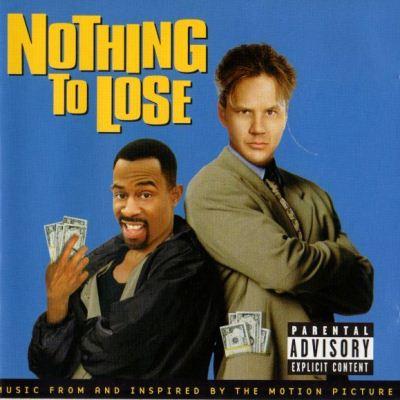
Nothing to Lose Album Cover

"Nothing to Lose" Soundtrack Lyrics

Movie • 1997

Track Listing


“Nothing to Lose: Music From and Inspired by the Motion Picture” – Album Guide to Tracks and Key Scenes

Nothing to Lose (1997) trailer still — Robbins and Lawrence in a getaway moment, with soundtrack energy rising
Nothing to Lose movie Soundtrack, 1997

Overview

What happens when a buddy-heist comedy leans hard on hip-hop hooks and a sly, big-hearted score? You get a soundtrack that turns panic into propulsion and mishap into groove.

The film pairs Tim Robbins and Martin Lawrence as reluctant partners whose bad decisions get a musical co-pilot: club-friendly rap and R&B on the surface, and a springy orchestral engine underneath. The album delivered charting singles (“Not Tonight (Ladies Night Remix)”, “C U When U Get There”), while the movie itself sprinkles needle-drops that mark comic beats, reversals, and reconciliations.

Distinctive? Yes. The tone swings from prankish to soulful. A security-guard lip-sync becomes a set-piece; a freeway freak-out is punctured by novelty-pop; and the goodbye scene lands softly with reflective neo-soul. The score—built for capers and chases—stitches it together.

Genres by phase: opening domestic idyll → new jack swing gloss (confidence, denial); middle road-movie chaos → party-rap and novelty pop (impulse, farce); late revelations → alt-rock cool and neo-soul (introspection, détente); end credits → gospel-laced hip-hop uplift (closure, community). According to industry charts and label notes at the time, the commercial focus sat squarely on radio-ready rap/R&B while the film’s placements range wider.

How It Was Made

Original score by Robert Folk—lithe rhythm beds, quick motif turns, and cue titles that telegraph the film’s zany detours (“Hoop Schemes,” “Trip Hoppin’”). A separate promo CD of score cues circulated to industry and collectors, while the retail album on Tommy Boy compiled songs “from and inspired by” the film.

Music supervision paired hit-song A&R instincts with on-screen comedy timing; the supervisors cleared marquee tracks for the album push and targeted character-driven needle-drops for scenes (e.g., vintage soul for the after-hours guard gag; novelty-pop to deflate a panic set-piece).

Editorially, the team alternates diegetic jokes (music the characters hear) with big, non-diegetic sweeps when plans go sideways. That interplay is why the soundtrack sells both the buddy dynamic and the caper mechanics. As per album credits and trade listings, the songs disc was the commercial driver; the Folk score CD covers the connective tissue.

Nothing to Lose trailer frame — nighttime office caper that cues the security-guard music gag
Nothing to Lose movie Soundtrack, 1997

Tracks & Scenes

“If I Had No Loot” — Tony! Toni! Toné!
Where it plays: Opening credits/domestic montage before the life-implosion. Upbeat new jack swing undercuts the cracks forming in Nick’s “perfect” life. Diegetic feel transitions to score.
Why it matters: Sets a polished mood that the plot will gleefully wreck, establishing the film’s irony-forward music voice.

“Honey White” — Morphine
Where it plays: Early urban sequence as a theft goes off half-cocked; the trio’s baritone-sax snarl underscores jumpy, wrong-place energy. Non-diegetic, brief but vivid.
Why it matters: A left-turn cut that adds grit and adult cool amid the rap-heavy set, signaling the movie isn’t just chasing radio trends.

“(She’s Got) Skillz” — All-4-One
Where it plays: A radio-on gag—Nick fumbles and accidentally blasts this R&B earworm, momentarily derailing the tense mood. Diegetic, quick hit.
Why it matters: Classic tonal needle—comedy via contrast; it breaks tension and humanizes the characters mid-scramble.

“Buena” — Morphine
Where it plays: Convenience-store/supermarket robbery thread with the secondary crooks; the slinky riff rides over their menace-meets-bumble vibe. Non-diegetic groove, mid-film.
Why it matters: Reframes the antagonists with swagger; the cue’s cool detachment makes their threat funnier, not scarier.

“New York City” (remix) — Sonia Dada
Where it plays: Office-overnight stakeout: the sleepy guard turns on music and loosens up, unaware our duo is hiding nearby. Diegetic, a warm-up to the big lip-sync bit.
Why it matters: Character color. The guard’s private dance party sets up the film’s most iconic music gag.

“Hey There Lonely Girl” — Eddie Holman
Where it plays: The security guard’s full lip-sync performance during the building break-in sequence. Diegetic, extended, pure comic release.
Why it matters: Contrast is the joke: sentimental Philly soul over a high-stakes burglary. It’s the movie’s signature musical set-piece.

“Scatman (Ski-Ba-Bop-Ba-Dop-Bop)” — Scatman John
Where it plays: The infamous “spider/feet-on-fire” panic. As chaos peaks, the novelty-pop scat kicks in, propelling frantic slapstick. Non-diegetic topper to the gag.
Why it matters: Maximal comic punctuation—rhythmic nonsense to score literal nonsense. The placement became a fan-memory anchor.

“Crazy Maze” — Des’ree
Where it plays: Quiet near-the-end moment as the partners separate and reflect on what changed. Non-diegetic, contemplative.
Why it matters: The album’s soul ballast. It legitimizes the “growth” beat without syrup.

“C U When U Get There” — Coolio feat. 40 Thevz
Where it plays: Family picnic/cookout into end credits. Gospel-choir lift over Pachelbel’s Canon progression closes the circle on chaos to community.
Why it matters: Uplift with cultural memory baked in. The single doubled as the soundtrack’s calling card.

“Route 66” — Mark Lennon (produced/arranged by Robert Folk)
Where it plays: Road-prep/planning texture during the desert leg; a cheeky Americana wink while these two try to act like pros.
Why it matters: Bridges the songs disc and Folk’s score—source-styled, yet tailored to picture.

“She’s a Bad Mama Jama” — Carl Carlton
Where it plays: Hotel-room seduction misfire near the finale; the track oozes confidence as the scene swerves away from bad choices. Diegetic.
Why it matters: A period-correct funk nod that keeps the movie’s libido playful, not leering.

Classical cameo — Pachelbel’s “Canon in D”
Where it plays: A car-stereo/classical stinger during the criminals’ ride; later echoed thematically by the Coolio single’s interpolation.
Why it matters: The score’s neat joke: elite-coded calm in the moment, then democratized into pop uplift at the end.

Trailer cues: Promotional cuts leaned on the big singles; the first widely circulated trailer syncs the caper beats to radio-ready hip-hop hooks.

Nothing to Lose trailer — chaos montage teasing the ‘spider’ gag and novelty-pop sync
Nothing to Lose movie Soundtrack, 1997

Notes & Trivia

  • Two distinct releases: a commercial songs album and a promo-only Robert Folk score CD.
  • “Not Tonight (Ladies Night Remix)” and “C U When U Get There” powered the album’s chart run.
  • “If I Had No Loot” frames the opening but wasn’t part of the retail OST tracklist.
  • Morphine shows up three times (“Honey White,” “Buena,” “Have a Lucky Day”)—a rare alt-rock through-line in a hip-hop-led package.
  • The security-guard sequence is a two-parter: warm-up dance and the big Eddie Holman lip-sync.
  • “Route 66” in-film performance credit goes to Mark Lennon; arrangement ties back to the score team.

Music–Story Links

When Nick mistakes everything at home, the slick lift of “If I Had No Loot” telegraphs a surface-only stability—so the crash hits harder.

At peak panic, “Scatman” turns fear into rhythm, letting the audience laugh with the characters instead of at them. When the guard croons “Hey There Lonely Girl,” the heist breathes; danger pauses, empathy sneaks in.

As the duo part ways, Des’ree’s “Crazy Maze” reframes the film as a detour toward responsibility. The closing picnic uses “C U When U Get There” to convert individual fixes into communal hope—story resolved, chorus carries it out.

Reception & Quotes

Critics were mixed on the film yet singled out several music moments. The album itself charted well for a summer comedy release; the singles kept it in rotation long after theatrical.

“A textbook example of our old friend the Idiot Plot.” Roger Ebert
“An absolute smash.” Alan Jones, Music Week (on “C U When U Get There”)

Availability: the songs compilation is widely streamable; the Folk score exists as a promo CD and scattered digital uploads. According to album/label references, the retail OST does not mirror every song heard in the film.

Nothing to Lose trailer — end-card frame pairing cast credits with the album’s radio singles
Nothing to Lose movie Soundtrack, 1997

Interesting Facts

  • Label split: Tommy Boy led the songs album; the film credits also reference Warner Bros. Records participation.
  • “Not Tonight (Ladies Night Remix)” video folded in movie clips to cross-promote the film and soundtrack.
  • Folk’s promo score CD (Super Tracks) circulated to press/collectors; cue titles map cleanly to set-pieces.
  • “C U When U Get There” rides Pachelbel’s Canon—echoed by a brief car-radio classical gag in-film.
  • “If I Had No Loot” is in the movie but missing from the commercial OST—classic “songs in film ≠ songs on disc” case.
  • Sonia Dada pulls a double: an early guard warm-up cut, plus a club sequence needle-drop elsewhere.
  • Morphine’s baritone sax gives the crooks unexpected noir swagger in two different scenes.

Technical Info

  • Title: Nothing to Lose: Music From and Inspired by the Motion Picture
  • Year / Type: 1997 — Film soundtrack (songs album) + original score (promo)
  • Composer (score): Robert Folk
  • Music Supervision: Jeff Carson; Kathy Nelson
  • Selected placements (film): Eddie Holman “Hey There Lonely Girl”; Scatman John “Scatman”; Morphine “Honey White” / “Buena”; Tony! Toni! Toné! “If I Had No Loot”; Des’ree “Crazy Maze”; All-4-One “(She’s Got) Skillz”; Coolio feat. 40 Thevz “C U When U Get There”; Mark Lennon “Route 66”.
  • Film release: July 18, 1997 (US theatrical)
  • Album release: July 1, 1997 (songs compilation)
  • Label: Tommy Boy (with Warner Bros. Records involvement on the set)
  • Chart/Cert notes: OST peaked at #12 (Billboard 200) / #5 (Top R&B/Hip-Hop); RIAA Gold. Singles: “Not Tonight (Remix)” Top 10; “C U When U Get There” Top 20 US.
  • Format/availability: Retail songs album on CD/streaming; Robert Folk score promo CD (collector/secondary market), scattered digital uploads.

Questions & Answers

Who composed the original score?
Robert Folk, whose caper-friendly cues knit the comedy and chases together.
What song plays during the “spider/feet-on-fire” scene?
“Scatman (Ski-Ba-Bop-Ba-Dop-Bop)” by Scatman John.
Which songs anchor the closing stretch?
Des’ree’s “Crazy Maze” before the parting; “C U When U Get There” over the picnic into credits.
What’s the security-guard music?
A warm-up dance to a Sonia Dada remix (“New York City”), then an extended lip-sync to Eddie Holman’s “Hey There Lonely Girl.”
Is “If I Had No Loot” on the official OST?
No—heard in the film’s opening, but absent from the retail soundtrack tracklist.

Canonical Entities & Relations

SubjectVerbObject
Steve OedekerkdirectedNothing to Lose (1997 film)
Robert FolkcomposedOriginal score for Nothing to Lose
Tommy Boy MusicreleasedNothing to Lose (songs soundtrack)
Warner Bros. Recordspartnered onSoundtrack release/marketing
Jeff CarsonsupervisedMusic for Nothing to Lose
Kathy NelsonsupervisedMusic for Nothing to Lose
Coolio feat. 40 Thevzrecorded“C U When U Get There” (OST single)
Lil’ Kim + Left Eye + Da Brat + Missy Elliott + Angie Martinezrecorded“Not Tonight (Ladies Night Remix)” (OST single)
Eddie Holmanperformed“Hey There Lonely Girl” (security-guard scene)
Sonia Dadaperformed“New York City” (guard warm-up dance)
Morphineperformed“Honey White” / “Buena” (robbery threads)
Tony! Toni! Toné!performed“If I Had No Loot” (opening)
Mark Lennonsang“Route 66” (arr./prod. by Robert Folk)

Sources: SoundtrackINFO; RogerEbert.com; AllMusic; Wikipedia (film & soundtrack); Discogs; TCM (Kathy Nelson, Jeff Carson); MovieMusic; RingoStrack; YouTube scene/trailer clips.

November, 17th 2025


A-Z Lyrics Universe

Lyrics / song texts are property and copyright of their owners and provided for educational purposes only.