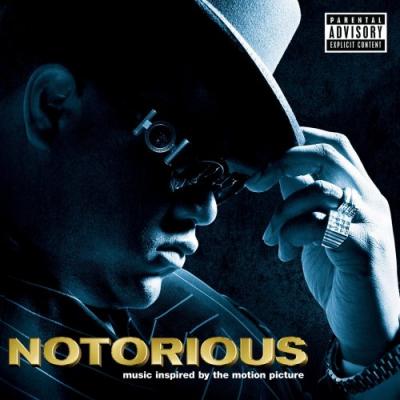
"Notorious" Soundtrack Lyrics
Movie • 2009
Track Listing
The Notorious B.I.G.
The Notorious B.I.G.
The Notorious B.I.G. f/ Puffy Daddy & Lil' Kim
The Notorious B.I.G.
The Notorious B.I.G.
The Notorious B.I.G.
The Notorious B.I.G.
Jay-Z feat. Santogold
Jadakiss feat. Faith Evans
The Notorious B.I.G.
The Notorious B.I.G.
Notorious B.I.G. ft Diddy & Too Short
The Notorious B.I.G. f/ CJ Wallace & Faith Evans
The Notorious B.I.G.
The Notorious B.I.G.
The Notorious B.I.G.
The Notorious B.I.G.
"Notorious: Music from and Inspired by the Original Motion Picture" – Album Guide to Tracks and Key Scenes
Overview
How do you fit a megaton of classic East Coast rap into a two-hour rise-and-fall and keep the pulse right? Notorious answers by pairing a marketing-heavy compilation with a film that leans on a wider crate: the album sells the legend; the picture stages the grind, the parties, and the grief.
The biopic follows Christopher Wallace from Bed-Stuy hallways to Bad Boy victory laps and finally to Los Angeles, March 8–9, 1997. The soundtrack mirrors that arc: day-one staples (“Party and Bullshit,” “Microphone Murderer” a.k.a. “It’s a Demo”) give way to breakthrough anthems (“Juicy,” “Big Poppa”) and arena-scale flex (“Hypnotize,” “Who Shot Ya?”). A short, orchestral “Notorious Theme” threads between them — a tonal reset between diegetic club heat and non-diegetic memory.
On disc, some cuts are “inspired by” rather than on-screen. In the film, several Biggie deep cuts and demos appear under alternate titles in the credits, a reminder that licensing and storytelling don’t always overlap. According to Apple’s album notes and the film’s credits, the release arrived January 13, 2009, with Bad Boy as label and Atlantic handling manufacture/distribution; only a subset of the album’s tracks actually plays in the movie.
Genres & themes in phases: early-90s boom-bap & demo grit — hunger, street codes; mid-90s R&B-infused hits — swagger, romance-as-brand; orchestral score cues — distance and fate; late-era pop-rap polish — legacy building versus paranoia.
How It Was Made
Score: Danny Elfman composes an economic, motif-led score; the two-minute “Notorious Theme” punches in between needle-drops. Album build: executive production under Sean “Diddy” Combs with Voletta Wallace and Mark Pitts. The tracklist folds classics, new tributes (Jadakiss & Faith Evans’ “Letter to B.I.G.”), demos, and a marquee add (“Brooklyn Go Hard”).
Music supervision: studio credits list Barry Cole and Francesca Spero among the music supervisors, coordinating clearances across Bad Boy catalog cuts, early Wallace demos, and source cues tied to specific scenes and venues.
Tracks & Scenes
“Hypnotize” — The Notorious B.I.G.
Where it plays: the opening Los Angeles party on March 8, 1997; pre-title scene, diegetic in-room playback as Biggie arrives with entourage.
Why it matters: sets the thesis — success is loud, public, and exposed; the night’s glamour will turn to tragedy.
“Party and Bullshit” — The Notorious B.I.G.
Where it plays: early-career house/club set; diegetic performance with tight, sweaty crowd energy; camera rides the chant and call-and-response.
Why it matters: first proof of command — cadence as crowd control; the room turns with his phrasing.
“Juicy” — The Notorious B.I.G.
Where it plays: studio-booth recording and ascent montage; non-diegetic cross-fade into radio takeover, friends hearing it on the block.
Why it matters: the dream flips to documentation — “it was all a dream” becomes an edit point that re-cuts Biggie’s life into a victory reel.
“Big Poppa” — The Notorious B.I.G.
Where it plays: club showcase; diegetic performance with lights down and hands up; intercut glamour shots and VIP interactions.
Why it matters: the romance persona becomes brand — smooth hooks as currency, not just seduction.
“Who Shot Ya?” — The Notorious B.I.G.
Where it plays: mid-film live show (Chicago); diegetic onstage performance, crowd reaction split by East/West tension.
Why it matters: weaponized repertoire — the song’s reputation reframes the tour stop as provocation and accelerant.
“Ten Crack Commandments” — The Notorious B.I.G.
Where it plays: rules-as-script montage; non-diegetic needle-drop under scenes of discipline and business calculus.
Why it matters: turns code into catechism; character voice becomes doctrine.
“Going Back to Cali” — The Notorious B.I.G.
Where it plays: late-act travel and West Coast promo; non-diegetic with brief diegetic bleed from car stereos.
Why it matters: ironic foreshadow — a celebratory groove shading into elegy as the date approaches.
“Microphone Murderer” (credited in-film as “It’s a Demo”) — The Notorious B.I.G.
Where it plays: early booth session with DJ 50 Grand; diegetic — cassette, one-take swagger, cramped room acoustics.
Why it matters: shows the origin point: diction, breath control, and punchline density already there.
“Guaranteed Raw” (listed onscreen as “Bed-Stuy Brooklyn”) — The Notorious B.I.G.
Where it plays: street-level montage during pre-deal hustling; non-diegetic with neighborhood textures.
Why it matters: roots the myth in corners and crews; no limos, just routine and risk.
“Flava in Ya Ear” — Craig Mack
Where it plays: label-moment scene for Bad Boy’s early run; diegetic radio/club background that frames Biggie’s lane opening.
Why it matters: context cue — shows the ecosystem Biggie will soon dominate.
Other key placements: “Everyday Struggle,” “Machine Gun Funk,” “Unbelievable,” “Warning,” “I Love the Dough,” “Get Money,” “Gimme the Loot,” “Suicidal Thoughts,” “Sky’s the Limit.” Some appear briefly or in performance montage form; a few album cuts (e.g., “Brooklyn Go Hard,” “Notorious Thugs”) are album-only and never appear on-screen.
Notes & Trivia
- The film credits list several tracks under alternate names (“It’s a Demo” for “Microphone Murderer,” “Bed-Stuy Brooklyn” for “Guaranteed Raw”).
- Only a fraction of the retail soundtrack’s tracks are heard in the movie; the album mixes classics, demos and “inspired by” titles.
- “Hypnotize” frames both celebration and mourning — it opens the party sequence and returns in funeral street-procession coverage.
- Danny Elfman’s “Notorious Theme” runs just over two minutes — a rare orchestral island on a rap-heavy disc.
- “Who Shot Ya?” is staged as a lightning-rod performance, with crowd energy tipping from hype to hostility.
Music–Story Links
When the party drops “Hypnotize,” Biggie walks into a room curated by his own mythology — and the camera treats the beat like destiny. The early “Party and Bullshit” set shows the inverse: the room bends to him, not the other way around. The demo session (“It’s a Demo” / “Microphone Murderer”) lands like a thesis defense; every later banger is just proof. On tour, “Who Shot Ya?” stops being a song and becomes a question the crowd throws back — the plot absorbs the controversy. And “Going Back to Cali” plays like a promise he intends to keep, right up until fate says otherwise.
Reception & Quotes
The film opened January 16, 2009 to mixed reviews but strong interest; the companion album debuted in the U.S. top five. As one trade recap put it, the soundtrack doubled as an entry point for new listeners while giving long-timers hard-to-find Biggie cuts. Roger Ebert praised the focus on Christopher Wallace the person, not just the icon.
“A bright kid… raised by a mother from Jamaica… ‘Notorious’ tells us of [him], not just the rapper.” Roger Ebert
“Opulent orchestral theme meets classic hip-hop muscle — a risky blend that works.” contemporary album review summary
Interesting Facts
- The retail album arrived January 13, 2009; the film hit U.S. theaters January 16.
- Eight or so album tracks actually appear in the film; many others are “inspired by” additions.
- “Letter to B.I.G.” pairs Jadakiss and Faith Evans for a newly recorded tribute.
- “Brooklyn Go Hard” (Jay-Z feat. Santigold) headlines the “inspired by” lane and isn’t heard on-screen.
- The deluxe digital edition expands the set to 22 tracks; standard has 17.
- Elfman’s cue list is short; the record’s spine is Biggie’s catalog rather than score.
- Album packaging credits Bad Boy, with manufacturing/distribution by Atlantic (Warner).
- Some demo titles in the end credits match tape-trader names rather than later compilation names.
- Live “Who Shot Ya?” in the film is staged as a flash-point performance, mirroring 90s discourse.
Technical Info
- Title — Notorious: Music from and Inspired by the Original Motion Picture (2009)
- Type — Film soundtrack (compilation) + short original score
- Composer — Danny Elfman (score: “Notorious Theme” and related cues)
- Music Supervision — Barry Cole; Francesca Spero (feature credits)
- Labels — Bad Boy Records; manufactured/distributed by Atlantic (Warner). Fox Searchlight is credited on physical editions.
- Release — Album: Jan 13, 2009; Film: Jan 16, 2009 (U.S.).
- Chart/Notes — U.S. Billboard 200 debut top-5; Canada top-20; Australia top-100.
- Selected on-screen placements — “Hypnotize,” “Party and Bullshit,” “Juicy,” “Big Poppa,” “Who Shot Ya?,” “Ten Crack Commandments,” “Going Back to Cali,” “Microphone Murderer” (as “It’s a Demo”), “Guaranteed Raw” (as “Bed-Stuy Brooklyn”).
- Availability — Standard (17 tracks) & Deluxe (22) digital versions; streaming across major platforms.
Questions & Answers
- Which songs from the retail album are not in the movie?
- Several “inspired by” cuts (e.g., “Brooklyn Go Hard,” “Notorious Thugs”) are album-only; they don’t appear onscreen.
- Does the film use Biggie’s early demos?
- Yes. The credits list “It’s a Demo” and “Bed-Stuy Brooklyn,” which correspond to “Microphone Murderer” and “Guaranteed Raw.”
- Who handled the music supervision?
- Feature credits include Barry Cole and Francesca Spero coordinating clearances and placements alongside Bad Boy catalog access.
- What opens the movie musically?
- “Hypnotize” plays over the Los Angeles party sequence that frames the prologue.
- Is there much original score on the album?
- A little. The standout is Elfman’s short “Notorious Theme,” used as connective tissue between needle-drops.
Canonical Entities & Relations
| Subject | Verb | Object |
|---|---|---|
| George Tillman Jr. | directed | Notorious (2009 film) |
| Danny Elfman | composed | Notorious score (“Notorious Theme”) |
| Sean “Diddy” Combs | executive-produced | soundtrack album |
| Voletta Wallace | produced | Notorious (film) |
| Barry Cole | served as | Music Supervisor (feature) |
| Francesca Spero | served as | Music Supervisor (feature) |
| Bad Boy Records | released | soundtrack album |
| Atlantic Recording Corporation | manufactured/distributed | album (U.S.) |
| The Notorious B.I.G. | performed | “Juicy,” “Big Poppa,” “Hypnotize,” “Who Shot Ya?” et al. |
| Craig Mack | performed | “Flava in Ya Ear” (context cue) |
| Fox Searchlight Pictures | distributed | Notorious (2009) |
Sources: Apple Music editorial, Wikipedia (film & album pages), IMDb soundtrack/plots, The Numbers credits, Metacritic credits, Discogs release pages, Billboard coverage, Ringo/track aggregators, official trailer channel.
November, 17th 2025
A-Z Lyrics Universe
Cynthia Erivo Popular
Ariana Grande Horsepower
Post Malone Ain't No Love in Oklahoma
Luke Combs Good Riddance (Time of Your Life)
Green Day Bye Bye Bye
*NSYNC You're the One That I Wan
John Travolta & Olivia Newton-John I Always Wanted a Brother
Braelyn Rankins, Theo Somolu, Kelvin Harrison Jr. and Aaron Pierre The Power of Love
Frankie Goes to Hollywood Beyond
Auli’i Cravalho feat. Rachel House MORE ›