
"Notre Dame de Paris" Soundtrack Lyrics
Movie • 2000
Track Listing
Bruno Pelletier
Luck Mervil
Noa
Patrick Fiori
Daniel Lavoie
Luck Mervil
Noa
Daniel Lavoie
Garou
Daniel Lavoie
Patrick Fiori
Julie Zenatti
Noa
Garou
Bruno Pelletier
Garou
"Notre-Dame de Paris (Filmed Musical Soundtrack & 2000 English Highlights)" – Album Guide to Tracks and Key Scenes
Overview
Which version are we talking about — the filmed Paris stage show or the English studio highlights you could buy in 2000? That distinction matters. The widely circulated “movie” is a live capture of the 1998 Paris production (broadcast/released 1999). The 2000 date usually points to the English-language highlights album and the West End engagement. We cover both where they intersect.
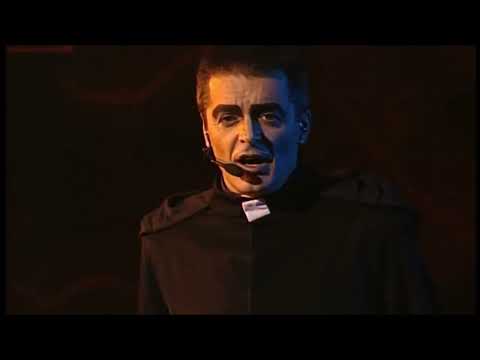
The filmed performance preserves the original sung-through arc: Gringoire opens with a thesis on stone and time; refugees test the doors of power; Esmeralda’s dance lights the fuse; Frollo’s obsession corrodes everything; Quasimodo’s bells become both prison and prayer. The soundtrack’s job is simple and hard at once — carry the story without spoken dialogue. It does.
Style map: pop-rock anthems (public feeling), chanson-tinged ballads (confession), choral/processional writing (ritual and law), percussion-driven dance breaks (crowd and carnival), plus recurring leitmotifs (cathedral/time; desire/sin). Phases track the plot: arrival → fascination → edict and backlash → siege → collapse.
How It Was Made
Music by Riccardo (Richard) Cocciante; original French lyrics by Luc Plamondon; English lyrics (for the 2000 album/staging) by Will Jennings. The stage direction in Paris was by Gilles Maheu; the television/film capture credits are typically listed under French TV production, with the original Paris principals (Garou, Hélène Ségara, Daniel Lavoie, Bruno Pelletier, Patrick Fiori, Luck Mervil). The English highlights disc (Epic/Sony, 2000) features Celine Dion (“Live (for the One I Love)”) alongside cast voices from the French/English companies.
According to AllMusic and Discogs, the 2000 English album is a curated “highlights” set rather than a straight film soundtrack; key numbers are re-recorded in English and sequenced for listeners new to the show. The filmed Paris performance, by contrast, preserves the complete show order and French texts.
Tracks & Scenes
“Le temps des cathédrales” — Bruno Pelletier (Gringoire)
Where it plays: Prologue on the cathedral steps; Gringoire frames the story and the idea that cathedrals are history written in stone (early Act I).
Why it matters: The show’s thesis motif. Returns at curtain, closing the circle.
“Les sans-papiers” — Luck Mervil (Clopin) & Ensemble
Where it plays: Refugees demand sanctuary before Notre-Dame; the stage crowds, banners rise (Act I).
Why it matters: Stakes the social ground — people vs. institution — that will govern the siege later.
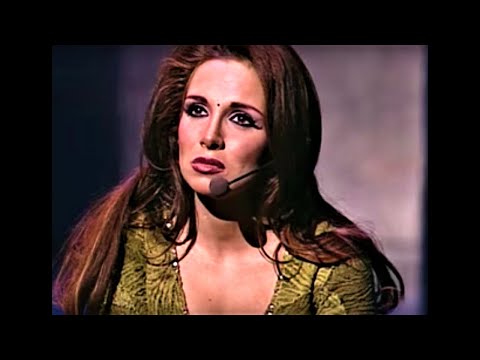
“Bohémienne” — Hélène Ségara (Esmeralda)
Where it plays: Esmeralda’s dance draws Phoebus’s gaze; Frollo watches, tightened by envy (Act I).
Why it matters: Desire enters as public spectacle; the triangle ignites.
“La fête des fous” → “Le pape des fous” — Ensemble, then Garou (Quasimodo)
Where it plays: Feast of Fools erupts; Quasimodo is crowned and paraded (mid-Act I).
Why it matters: The city laughs at the bell-ringer; public cruelty becomes private shame — fuel for Act II.
“Belle” — Garou, Daniel Lavoie, Patrick Fiori
Where it plays: Three men confess the same fixation, each in his register; the staging isolates them while the crowd blurs (late Act I).
Why it matters: Signature trio; it crystallizes obsession as plot engine.
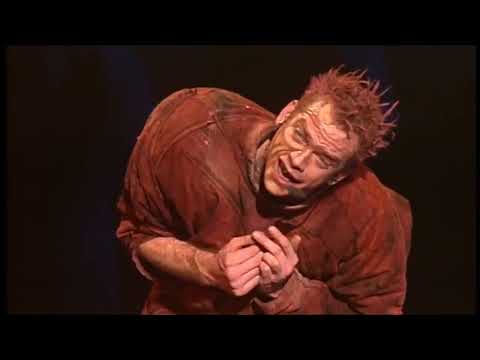
“Les cloches” — Garou
Where it plays: In the bell tower; Quasimodo names the “Maries” and claims the bells as his only companions (Act II opening stretch).
Why it matters: Sound-as-character. The metal and the man are one — a theme the finale will break.
“Vivre” — Hélène Ségara (English album: “Live (for the One I Love)” — Céline Dion)
Where it plays: Esmeralda’s private vow under sentence; resolve and fear in equal measure (Act II).
Why it matters: The show’s core ballad — in French it pleads; in English it declares.
“Tu vas me détruire / Your Love Will Kill Me” — Daniel Lavoie (Frollo)
Where it plays: Confessional spiral; Frollo names his desire as doom (Act II mid).
Why it matters: Moral collapse set to melody — a cleric arguing with himself and losing.
“L’attaque de Notre-Dame” → “Déportés” — Ensemble
Where it plays: Soldiers break sanctuary; Clopin falls; survivors are driven out (late Act II).
Why it matters: The social argument from Act I returns with iron — and wins.
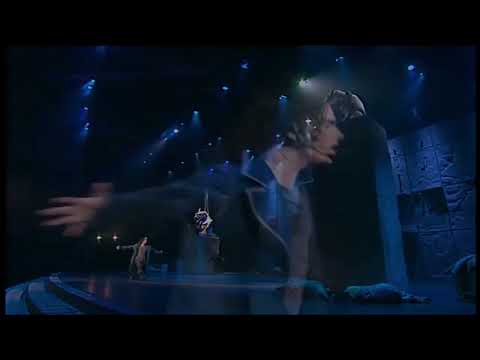
“Danse mon Esmeralda” — Garou
Where it plays: Final lament at the gallows; Quasimodo claims Esmeralda’s body (finale).
Why it matters: The bell-ringer sings without bells; grief, unaccompanied by spectacle.
Trailer/album notes: The 2000 English highlights album substitutes English texts (“The Age of the Cathedrals,” “The Refugees,” “Belle (Is the Only Word),” “Your Love Will Kill Me”) and features guest singles (e.g., Dion) not present in the filmed Paris performance.
Notes & Trivia
- The filmed Paris cast features Garou (Quasimodo), Hélène Ségara (Esmeralda), Daniel Lavoie (Frollo), Bruno Pelletier (Gringoire), Patrick Fiori (Phoebus) and Luck Mervil (Clopin).
- Will Jennings supplied the authorized English lyrics used on the 2000 studio highlights and the West End production.
- “Belle” became a cross-border hit in several languages; the English album credits Garou, Daniel Lavoie and Steve Balsamo on the trio cut.
- The 2000 CD is a “highlights” set; the filmed musical preserves the full French running order.
Music–Story Links
When the crowd roars through “La fête des fous,” you hear the city weaponize laughter; that sets up Quasimodo’s isolation for “Les cloches.” “Belle” isn’t just a hit — it triangulates three moral positions (a poet’s awe, a soldier’s appetite, a priest’s denial). “Vivre/Live” moves the story inward so “L’attaque de Notre-Dame” can swing it outward again — from private vows to public violence. The reprise of “Le temps des cathédrales” at curtain snaps back to the thesis: stone lasts, desire doesn’t.
Reception & Quotes
Variety’s 2000 West End review called the arena staging blunt but undeniable in sheer scale. AllMusic’s English highlights entry frames the disc as a gateway rather than a document of the Paris show.
“An arena show that pounds and pleases in equal measure.” Variety
“A curated highlights set that introduces the material afresh for English-language listeners.” AllMusic (summary)
Interesting Facts
- Céline Dion’s “Live (for the One I Love)” is the English adaptation of “Vivre”; the single’s 2000 rollout tied the show to mainstream pop radio in francophone markets.
- English staging and album credit Will Jennings (also the English lyricist for “My Heart Will Go On”).
- Multiple official audio documents exist: 1997 concept, 1998 live Paris cast, 2000 English highlights, later live revivals and regional casts.
- The filmed Paris performance has circulated on DVD/TV; later captures (e.g., Arena di Verona) document other language editions.
- Track titles in English albums often differ from literal translations (“Les sans-papiers” → “The Refugees”, “Tu vas me détruire” → “Your Love Will Kill Me”).
Technical Info
- Title (film): Notre-Dame de Paris — filmed Paris stage performance (TV/Video, 1998–1999).
- Title (album, 2000): Notre-Dame de Paris: Cast Recording Highlights (English; Epic/Sony).
- Music / Lyrics: Riccardo Cocciante — music; Luc Plamondon — French lyrics; Will Jennings — English lyrics.
- Key performers (Paris film): Garou; Hélène Ségara; Daniel Lavoie; Bruno Pelletier; Patrick Fiori; Luck Mervil.
- Notable numbers (film): “Le temps des cathédrales”, “Les sans-papiers”, “Bohémienne”, “Belle”, “Les cloches”, “Vivre”, “L’attaque de Notre-Dame”, “Danse mon Esmeralda”.
- Notable numbers (2000 highlights): “The Age of the Cathedrals”, “The Refugees”, “Belle (Is the Only Word)”, “Your Love Will Kill Me”, “Live (for the One I Love)”.
- Availability: Paris film on DVD/TV; multiple cast recordings on CD/streaming; 2000 English highlights widely available.
Questions & Answers
- Is there a 2000 movie of Notre-Dame de Paris?
- The filmed Paris production dates to 1998 (with 1999 broadcast/video). The 2000 date usually refers to the English highlights album and West End run.
- How does the 2000 English CD relate to the filmed French show?
- It’s a highlights set in English — re-recorded cuts, not the Paris live audio. The filmed show is complete and in French.
- Who wrote the English lyrics?
- Will Jennings authored the sanctioned English texts used on the album and West End staging.
- Which song should I start with if I only have five minutes?
- “Belle” for the show’s heart; then “Le temps des cathédrales”, “Vivre/Live”, and “Danse mon Esmeralda”.
- Are the song titles the same across languages?
- No. English albums often use adapted titles (“The Refugees,” “Your Love Will Kill Me”) rather than literal translations.
Canonical Entities & Relations
| Subject | Verb | Object |
|---|---|---|
| Riccardo (Richard) Cocciante | composed | music for Notre-Dame de Paris |
| Luc Plamondon | wrote | French lyrics |
| Will Jennings | adapted | English lyrics (2000 highlights/West End) |
| Garou | performed | Quasimodo (Paris filmed cast) |
| Hélène Ségara | performed | Esmeralda (Paris filmed cast) |
| Daniel Lavoie | performed | Frollo (Paris filmed cast) |
| Bruno Pelletier | performed | Gringoire (Paris filmed cast) |
| Patrick Fiori | performed | Phoebus (Paris filmed cast) |
| Luck Mervil | performed | Clopin (Paris filmed cast) |
| Epic / Sony Music | released | English highlights album (2000) |
| Paris production (1998) | filmed as | TV/Video capture of the stage musical |
Sources: AllMusic; Discogs; IMDb (TV movie entry & soundtracks); Wikipedia (musical, recordings, “Vivre”/“Live”); FilmedOnStage; official/archival trailer uploads.
November, 17th 2025
A-Z Lyrics Universe
Cynthia Erivo Popular
Ariana Grande Horsepower
Post Malone Ain't No Love in Oklahoma
Luke Combs Good Riddance (Time of Your Life)
Green Day Bye Bye Bye
*NSYNC You're the One That I Wan
John Travolta & Olivia Newton-John I Always Wanted a Brother
Braelyn Rankins, Theo Somolu, Kelvin Harrison Jr. and Aaron Pierre The Power of Love
Frankie Goes to Hollywood Beyond
Auli’i Cravalho feat. Rachel House MORE ›