Soundtracks:  A B C D E F G H I J K L M N O P Q R S T U V W X Y Z #


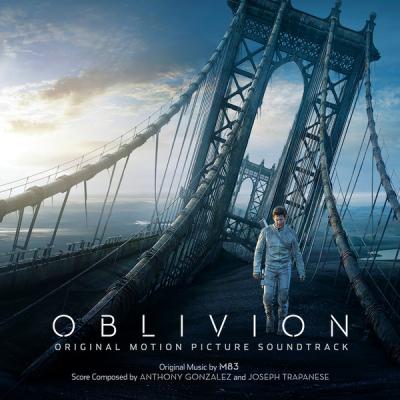
Oblivion Album Cover

"Oblivion" Soundtrack Lyrics

Movie • 2013

Track Listing


"Oblivion (Original Motion Picture Soundtrack)" – Album Guide to Tracks and Key Scenes

Oblivion 2013 official trailer still with Jack Harper walking across ruined Earth
Oblivion — film and soundtrack intertwined in a stark post-apocalyptic vision, 2013.

Overview

What does a dying Earth sound like when someone still believes it is worth saving? In Oblivion, the answer is a blend of towering electronic swells, martial percussion and fragile piano lines that follow Jack Harper’s path from obedient technician to rogue savior.

The film’s story structure moves through four clear phases — arrival, adaptation, rebellion, collapse — and the soundtrack mirrors each one. Early cues sketch the routine life of a drone repairman in orbit above a “cleansed” Earth, all pristine pads and measured pulses. As Jack’s doubts surface and memories bleed through, the music thickens and distorts, pushing against its own patterns until it finally erupts in full, apocalyptic grandeur when he turns on the system that created him.

The score is credited to M83 (Anthony Gonzalez) with composer–arranger Joseph Trapanese. Together they fuse synth-driven dream pop with broad, Zimmer-style orchestral writing: huge low brass, choral pads and pounding toms. The mood is earnest and straight-faced, sometimes almost liturgical, which fits a film obsessed with identity, faith in institutions and the possibility of redemption after genocide.

The album’s title song, “Oblivion” featuring Susanne Sundfør, plays over the end credits as a kind of benediction. It reframes the film’s final image — a clone stepping into a borrowed family — as something close to cosmic romance, not horror. That is the soundtrack’s trick throughout: it keeps treating Jack’s manufactured life as real, so we feel the loss when he abandons it.

Genre-wise, the music moves in phases that align closely with the narrative. Early “adaptation” sequences lean on sleek electronic textures and minimal piano motifs, suggesting control and amnesia. Action passages — canyon chases, drone attacks, assaults on the Tet — shift into hybrid blockbuster scoring: ostinato strings, synth bass, choral hits, almost militaristic in their regularity. The late-film “rebellion” and “collapse” cues bring in more mournful harmony and long string lines, turning the album into a surprisingly emotional elegy rather than just a sci-fi thrill ride.

How It Was Made

Director Joseph Kosinski wanted a band rather than a traditional film composer from the very start. His earliest treatment for Oblivion in 2005 already had M83 pencilled in as the dream act for the score, long before the film entered active production. After working with Daft Punk on Tron: Legacy, he repeated the experiment: bring in a distinctive electronic artist and then surround them with film-music infrastructure.

Anthony Gonzalez began composing based only on the script, not finished footage. He built suites and textures for Jack’s isolation, the destroyed Earth and the godlike Tet in orbit, then reshaped them once the picture was locked. Joseph Trapanese, who had already orchestrated and arranged for Daft Punk, acted as co-composer, arranger and on-the-ground score producer, translating M83’s studio sound into something playable by a large orchestra.

Recording took place across several major scoring stages, including the Newman Scoring Stage at 20th Century Fox and AIR Studios in London, with additional work at Remote Control Productions and several Los Angeles studios. The result is a dense hybrid: live orchestra and choir layered with analog synths, processed drums and guitars. According to interviews, there were tensions with the studio over how “indie” and textural the music could be, and Gonzalez has said he briefly considered walking away when asked to simplify some of his more experimental ideas.

The soundtrack rollout followed the now-standard big-sci-fi pattern. The instrumental “StarWaves” was previewed online ahead of release, followed by the single “Oblivion” with Susanne Sundfør, which the band and singer performed on network television as part of the promotional campaign. A standard digital / CD edition and an expanded deluxe edition (with extra cues and alternates) appeared in April 2013, while boutique label Mondo issued a double-LP vinyl with new artwork and full credits for collectors.

Oblivion recording sessions and concept artwork montage impression
Hybrid production: M83’s synth textures meeting full orchestral forces for the Oblivion score.

Tracks & Scenes

“Jack’s Dream” — M83 & Joseph Trapanese
Where it plays: Built around the film’s early dream and memory imagery, this cue underpins Jack’s recurring visions of the pre-war Empire State Building and an unknown woman on its observation deck. The music is spare: soft piano over slowly rising pads, keeping the focus on disorientation rather than spectacle. It tends to bleed into “Waking Up” in the finished film, creating one long prelude to his daily routine.
Why it matters: This is the score’s thesis statement. The delicate piano motif becomes a stand-in for Jack’s true past, surfacing whenever the sanitized Tet narrative starts to crack.

“Waking Up” — M83 & Joseph Trapanese
Where it plays: Over the opening sequence in the Sky Tower, as Jack narrates the war with the Scavs, checks the drones and prepares for his shift. The camera glides through glass rooms above the clouds while the cue slowly builds from careful arpeggios to wider chords and percussion swells, matching the rhythm of his perfectly regimented morning. We cut between Jack’s routine and surveillance imagery of drowned stadiums and craters on the surface below.
Why it matters: It sells the illusion of order. The music is almost too clean and inspirational, which makes later ruptures in the sound world — harsher synths, heavier drums — feel like a moral shock.

“Tech 49” — M83 & Joseph Trapanese
Where it plays: Used across several action-oriented passages tied specifically to Jack Harper’s work identity, particularly drone repairs in hostile zones and first confrontations with the “Scavs.” It pushes a relentless rhythmic pattern under brass stabs, while the cameras track his bubble ship weaving between ruined skyscrapers or over blasted canyons.
Why it matters: The cue literally carries Jack’s designation in its title. Musically, it represents the “company man” version of him — efficient, weaponized, and locked into Tet-approved objectives.

“StarWaves” — M83
Where it plays: Prominently in the Sky Tower swimming-pool scene, when Jack and Victoria float in the open pool high above the clouds after a successful mission. The world outside is silent sky; inside, blue light and glass. The camera lingers on their bodies in the water and Victoria’s desperate need for Jack to stop questioning, while the track’s slow-burn build wraps the whole scene in a sensual haze.
Why it matters: This is the soundtrack’s most obviously “M83-like” moment, a full pop-inflected swell. It turns a corporate habitat into a romantic dream and, as some commentators have noted, underlines how much of their relationship is a manufactured fantasy rather than something grounded.

“Canyon Battle” — M83 & Joseph Trapanese
Where it plays: During the fighter-pod chase through the canyon, as Jack pursues and is counter-attacked by drones skimming tight rock corridors. The edit leans heavily on cut-to-black hits and sudden perspective shifts; the music tracks every roll and dive with rising string figures, pounding drums and aggressive synth noise. When Jack ducks under an overhang and a drone blasts the wall apart just behind him, the cue drops to a tense, pulsing bed before surging again as he re-engages.
Why it matters: It is the clearest example of the score’s blockbuster backbone. The track is almost aggressively forward, but it also gives the canyon environment its own personality — you feel the echo and compression of sound between the walls.

“Radiation Zone” — M83 & Joseph Trapanese
Where it plays: As Jack pushes his bubble ship beyond the mapped safe area into the so-called radiation zone, the music thins out into long, uneasy chords with distant choral textures. The landscape turns stranger and more desolate — toppled towers half-buried in sand, collapsed bridges, the crust of long-cooled lava. When he realizes the zone is a lie and the air is breathable, the harmony shifts subtly toward something more luminous.
Why it matters: The track marks the narrative pivot from “adaptation” to “rebellion.” Sonically, it’s where suspicion enters the score in earnest; nothing sits comfortably on the tonic.

“You Can’t Save Her” — M83 & Joseph Trapanese
Where it plays: Around the first major ground-level confrontation at the remote house where Jack searches for medical supplies, and where his memories of a different woman and a different life intensify. The cue underlines a tug-of-war between duty and personal grief: rising string clusters, chopped-up synth rhythms and a low, almost mechanical swell that keeps insisting he move on.
Why it matters: The title refers directly to Jack’s failure to save the woman in his dreams. The music keeps threatening to erupt into full tragedy but repeatedly gets yanked back into action mode, mirroring his refusal to fully process what he’s remembering.

“Raven Rock” / “I’m Sending You Away” — M83 & Joseph Trapanese
Where it plays: In the subterranean base sequences where Beech (Morgan Freeman) explains the true nature of the war and the Tet, and in the scenes where Jack must accept that his life and marriage are copies of another man’s. Drones hang from ceilings like metal hornets while the music grinds in low strings and distorted synths; later, as Jack is separated from Julia and sent back toward the Tet, the harmony opens into a painfully slow chord progression with more prominence for strings and choir.
Why it matters: These cues carry the heaviest exposition in the film. They keep tension high so long dialogue scenes never feel static, and they gradually shift Jack’s “hero” motif from something triumphant to something more sacrificial.

“Ramble On” — Led Zeppelin
Where it plays: At about 34 minutes in, when Jack visits his secret cabin in the woods for the first time. He pulls out a battered copy of Led Zeppelin II, drops the needle and lets “Ramble On” fill the small space while he leafs through old books, basketballs and vinyl — all relics of a world he was told no longer exists. The record player and the soft crackle on the track make the moment firmly diegetic.
Why it matters: The choice of classic rock underlines Jack’s unconscious loyalty to old Earth rather than the Tet. It is also one of the very few moments when the soundtrack hands the emotional weight to a pre-existing song rather than original score.

“A Whiter Shade of Pale” — Procol Harum
Where it plays: Around 1:26:00, in the lakeside house sequence where Julia plays the song on the cabin’s turntable and talks about how much she loves it. Jack watches her from across the room, both of them half-aware that the music carries echoes of the life they shared before the war. Outside, the lake is calm, the forest still; inside, the late-1960s organ line and melancholy vocal hang in the air.
Why it matters: This needle-drop does what the score cannot: it anchors their relationship in real, pre-Tet human culture. The song’s status as a classic of melancholy romance adds a second layer of meaning to a scene that, on paper, is two strangers trying to remember they were once married.

“Undimmed by Time, Unbound by Death” — M83 & Joseph Trapanese
Where it plays: In the final movement of the film, as Jack takes the bomb toward the Tet and in the epilogue that shows Julia living in the lake house with their child, then meeting a different Jack clone who still carries Tech 49’s memories. The cue slowly rises over shots of the shattered Tet, the restored valley and Julia looking up as he appears. The arrangement leans on strings and choir more than electronics, with a steady, heartbeat-like pulse in the low end.
Why it matters: It turns a fairly bleak twist — a dead man replaced by his copy — into a statement of continuity. The title quotes Jack’s final monologue about love persisting beyond death, and the music earns that sentiment without tipping over into saccharine.

“Oblivion” — M83 featuring Susanne Sundfør
Where it plays: Over the end credits, immediately after the epilogue. The film cuts from Julia’s face to black, then the track’s synths and Sundfør’s vocal hit almost at once. As names roll, the song moves from a slow build into a full, anthemic chorus and an extended, piano-led outro.
Why it matters: This is the album’s standalone hit. It reframes the entire story as a love song — not just between two people, but between Jack and the ruined planet he refuses to abandon.

Oblivion pool and canyon battle scenes associated with key soundtrack cues
From Sky Tower pool to canyon dogfights — Oblivion ties its most striking images to signature cues like “StarWaves” and “Canyon Battle.”

Notes & Trivia

  • The film uses only a handful of licensed songs — chiefly Led Zeppelin’s “Ramble On” and Procol Harum’s “A Whiter Shade of Pale” — making the M83 score the dominant musical voice.
  • “Ramble On” is played from a Led Zeppelin II vinyl, but the needle placement shown on screen does not match the actual groove position for that song.
  • “A Whiter Shade of Pale” has appeared in many films; Oblivion adds it to a long list that includes The Big Chill and Breaking the Waves.
  • The soundtrack was mixed and released in time for the film’s Dolby Atmos premiere, taking advantage of height channels for drones and environmental effects.
  • Some early commentary argued that “StarWaves” is almost too lush for the relatively restrained pool scene, which has turned the moment into a minor cult favorite online.
  • Mondo’s vinyl edition quickly became a collector’s item, thanks to Killian Eng’s retro-future artwork and the prominence of the Tet on the cover.

Music–Story Links

M83’s score is tightly woven into Jack Harper’s arc from loyal maintenance worker to self-sacrificing insurgent. Early on, “Waking Up” and “Tech 49” treat his life as a loop: clean synth pulses, predictable harmonic turns, and steady 4/4 drums that mirror the routines of checking drones and reporting to “Sally.” The music’s job here is to make stasis feel normal.

Once Julia crashes to Earth and Jack rescues her, the palette shifts. Tracks like “Earth 2077,” “Radiation Zone” and “Losing Control” lean harder on dissonant string clusters and less predictable synth movement. When he defies orders and flies into forbidden territory, the score literally leaves behind the safe, consonant harmonies associated with the Tet and moves into more ambiguous modes. You can hear his rebellion before he fully understands it.

The use of needle-drops tracks the same psychological journey. “Ramble On” plays only in Jack’s private cabin — a space where the Tet has no cameras and no narrative. That song, with its restless lyrics about journeys and leaving “this town of mines,” stands in for Jack’s buried desire to escape the story he’s been given. Later, “A Whiter

November, 17th 2025

The American post-apocalyptic science fiction film 'Oblivion' on the Web: Internet Movie Database, Wikipedia
A-Z Lyrics Universe

Lyrics / song texts are property and copyright of their owners and provided for educational purposes only.