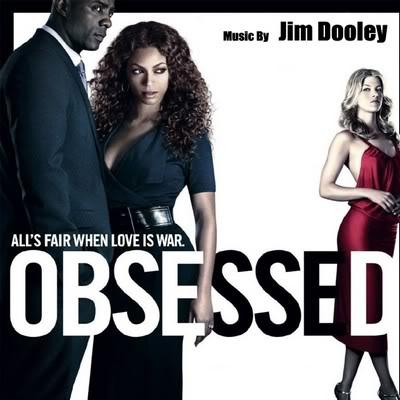
"Obsessed"Soundtrack Lyrics
Movie • 2009
Track Listing
Estelle
Wyclef Jean f/ Norah Jones
Patch
Sam Sparro
Zero 7
Jill Scott
Ruben Studdard and Tamyra Gray
Crudo
James S. Pierpont
Mike Strickland
Draque Bozung
James Dooley
With The Quickness
Wild Cherry
Beyonce Knowles
Martina Topley-Bird
Marcus Miller
Tone Loc
"Obsessed (2009 Film Soundtrack)" – Album Guide to Tracks and Key Scenes
Overview
What does a glossy office-stalker thriller sound like when Beyoncé is on the poster, but the story is about a terrified marriage, not a pop star? Obsessed answers with a soundtrack that balances adult-contemporary comfort, slick R&B-radio hits, and a very traditional suspense score. The result feels like two albums running at once: one for the upscale, aspirational life Derek and Sharon project, and one for the creeping dread Lisa brings into their house.
The film follows Derek Charles, a successful executive whose career and family life implode when temp worker Lisa Sheridan fixates on him. On paper, it is a straight Fatal Attraction–style plot. On screen, the music keeps shifting our point of view. Contemporary tracks by Estelle, Beyoncé, Zero 7 and Jill Scott sell the Charles’ world as aspirational and modern. Underneath, James (Jim) Dooley’s score adds the “low-register whoosh-thump” and piano pulses you expect from a stalker movie, always reminding us that something is off even in bright daylight.
The soundtrack’s dramatic arc mirrors the story: arrival, adaptation, rebellion, collapse. The opening act uses adult-contemporary textures around the Charles’ home — polite piano, warm production — as if the film is advertising their lifestyle. Once Lisa locks on to Derek, the movie leans harder on pop and soul cuts that feel like they belong on a lifestyle playlist, not a horror film, which makes her intrusion seem almost normal at first. In the back half, Dooley’s score and sharper sound design take over; stings and aggressive motifs mark Lisa’s escalations, and by the final fight and hospital scenes, the songs concede the stage to pure, bruising suspense writing.
Stylistically, you can divide the soundtrack into phases that map neatly to themes. Adult contemporary and smooth soul announce domestic safety and aspiration — the life Sharon has built and intends to protect. Neo-soul, R&B and UK club-pop (Estelle, Jill Scott, Sam Sparro) stand in for status and modern taste: this couple is doing well, they have good taste, they entertain. Minimal, piano-led thriller score represents Lisa’s presence: each whoosh, thump and string swell is another boundary crossed. Finally, Beyoncé’s “Smash into You” lands over the ending as a kind of emotional epilogue, romantic on the surface, bruised underneath — exactly like the Charles marriage after the attic fight.
How It Was Made
The score for Obsessed comes from composer James (Jim) Dooley, a media-music veteran whose work often combines thematic clarity with genre mechanics. He wrote a fairly traditional suspense score here: piano motifs, string textures, and those deep, percussive hits that underline Lisa’s jump-scare entrances. According to a Guardian piece on the film’s gender politics, the first act relies on light piano and “low-register whoosh-thump noises” whenever Lisa appears unexpectedly, even in harmless situations, which turns routine office moments into small shock beats.
On the songs side, the production leans heavily on pre-existing tracks rather than original pop material. According to the film’s music notes and discography-style write-ups, the picture licenses “Any Other Day” (Wyclef Jean featuring Norah Jones), “Black & Gold” (Sam Sparro), “Soul Food” (Martina Topley-Bird), “American Boy” (Estelle), “Destiny” (Zero 7), “Golden” (Jill Scott), “Wild Thing” (Tone Lōc), “Play That Funky Music” (Wild Cherry), and other cuts that were already familiar to R&B and downtempo listeners. They function both as character color and as a time capsule of late-2000s playlist culture.
There was no wide commercial album collecting all of this. A promo-only score disc titled “Selections From The Motion Picture Obsessed” circulated within the industry, and later turned up in collector circles, but according to a film-music review the full Dooley score never had a retail release and exists mainly in that 20-plus-minute sampler. A separate cluster of fan-made playlists on streaming platforms recreates the song component of the soundtrack, essentially building the “missing” album from individual tracks.
Tracks & Scenes
“Black & Gold” — Sam Sparro
Where it plays: Early in the film, during one of the first “everything is going great” passages, a fast, pulsing club groove kicks in as Derek glides through his office and the camera shows the firm’s open-plan floors. The track runs under shots of him joking with colleagues, checking in with his assistant, and taking a call from Sharon. It plays non-diegetically, as if the movie is scoring Derek’s sense of forward momentum in career and life.
Why it matters: The song’s sleek electro-pop feel sells Derek as successful and modern, and its restless bassline quietly introduces the theme of imbalance. You feel energy, but also the sense that this rhythm cannot last.
“Any Other Day” — Wyclef Jean feat. Norah Jones
Where it plays: Used over a domestic interlude, the song drifts through scenes of the Charles family at home — Derek with his young son, Sharon managing the morning routine, small affectionate moments around the kitchen and hallway. It plays like an easy Sunday soundtrack, softening the edges of their arguments and hinting at why this marriage is worth fighting for when things later fracture.
Why it matters: The duet’s laid-back groove and wistful tone emphasize how ordinary days are the real treasure here. Once Lisa invades that space, every later hint of this warmth feels more fragile.
“American Boy” — Estelle
Where it plays: In a social sequence built around Derek’s professional success — drinks with colleagues, a work event, background chatter about promotions — “American Boy” slides onto the soundtrack. The song sits partly under dialogue and crowd noise, like a party track pumping through venue speakers or a bar sound system, while the camera tracks Lisa watching Derek a little too closely from across the room.
Why it matters: Estelle’s song underlines Derek’s status as exactly the sort of polished, upwardly mobile man whose life looks perfect from the outside. The playful lyrics and bright beat contrast with the increasingly predatory way Lisa reads that image.
“I’m Gonna Getcha” — Crudo
Where it plays: At Derek’s desk, Lisa drops by with a “harmless” gift — a CD she insists he listen to. As he slides it into his computer and the speakers kick in, “I’m Gonna Getcha” starts up, a sly, edgy track that plays diegetically from his office system. We watch his face move from polite amusement to discomfort as the lyrics and tone double as commentary on Lisa’s behavior; she lingers in the doorway just a little too long.
Why it matters: It is one of the most on-the-nose but effective needle drops in the film. The fact that the song literally comes from Lisa, and she chooses this title, turns the cue into a musical red flag Derek refuses to read.
“Play That Funky Music” — Wild Cherry
Where it plays: During the office Christmas party, colored lights bounce off glass partitions while coworkers dance and loosen their ties. “Play That Funky Music” blares from the PA, fully diegetic — we see people shouting the chorus and laughing with drinks in hand. Derek tries to keep things professional as Lisa edges closer on the dance floor; under the retro party anthem, their interaction takes a darker, more uncomfortable turn that the surrounding crowd does not notice.
Why it matters: The track is a quintessential party song, which is exactly why the scene feels so queasy. Against that upbeat funk, Lisa’s advances look almost socially acceptable until you read Derek’s body language; the music highlights how predators can hide in plain sight.
“Destiny” — Zero 7
Where it plays: In a quiet mid-film sequence, Derek tries to repair his relationship with his son and with Sharon. We see him taking more active care of Kyle — feeding, playing, bedtime rituals — while Sharon watches, torn between anger and the desire to trust him again. “Destiny” floats over the montage with its downtempo beat and soft vocal harmonies, turning the house into a cocoon of tentative hope for a few minutes.
Why it matters: The song’s title and lyrics fit the sense that this family could still survive if everyone chooses the right path. It is one of the few cues in the movie that grants Derek time to be something other than the man under siege.
“Golden” — Jill Scott
Where it plays: Sharon prepares for what the movie frames as a “first date” do-over with her own husband: laid out clothes, mirror checks, small moments of nervousness. “Golden” plays over her getting-ready routine, with its warm neo-soul groove and lyrics about living life like it is golden. We see her choosing to believe in this marriage again, even after Lisa’s earlier chaos.
Why it matters: This is one of the clearest pieces of character scoring in the film. The song infuses Sharon with agency and joy: she is not just reacting to Lisa, she is actively claiming her life back, at least for the evening.
“Soul Food” — Martina Topley-Bird
Where it plays: In a more intimate transitional scene, “Soul Food” colors shots of late-night conversations and quiet domestic beats — partly in the Charles home, partly in Derek’s empty office corridors. The track’s slightly eerie, trip-hop inflection gives even simple images (a hallway, a car park, an elevator) a sense of being watched.
Why it matters: The cue is a bridge between the pop world and the thriller score. It feels like a song that wandered into a horror film, which is exactly what Obsessed keeps doing with its characters’ carefully curated lives.
“Wild Thing” — Tone Lōc
Where it plays: On the lighter end of the spectrum, “Wild Thing” surfaces in a setting where flirtation and risk feel like they are supposed to be fun — party chatter, light teasing, drinks flowing. Lisa uses that ambience to push boundaries, turning what for everyone else is just a throwback jam into permission to be more explicit with Derek. The track pulses under dialogue, clearly audible but never foregrounded enough to break the illusion of casualness.
Why it matters: Using a song this iconic as background noise is a neat trick. It tells us how normalized this kind of sexual bravado is in Derek’s world; Lisa simply takes that energy several steps further than anyone else.
“Smash into You” — Beyoncé
Where it plays: After the brutal attic fight between Sharon and Lisa, when the house is finally quiet and the police work is done, “Smash into You” comes in over the ending and into the credits. Derek and Sharon regroup, injured but alive; we see emergency vehicles outside, glimpses of the wrecked bedroom, and the couple walking together toward an uncertain future. The song sits on top like a bittersweet coda, its romantic imagery slightly at odds with the recent violence but perfectly tuned to the emotional exhaustion on their faces.
Why it matters: This is the cue everyone remembers. As a Reelsoundtrack blog updated at the time, viewers kept asking for “the song at the end,” and it turned out to be a deep Beyoncé cut rather than a single. In context, it reads almost ironically — a love song about collision scoring a marriage that has just barely survived a literal one.
Score cue: “Bitch Fight Pt. 1 / Pt. 2” — Jim Dooley
Where it plays: Dooley’s score comes into full focus in the climactic confrontation. As Sharon follows Lisa through the house, up the stairs and into the attic, short, stabbing strings and pounding percussion punctuate each impact and fall. Glass shatters, beams crack, and the music keeps snapping back to rhythmic motifs that mimic the physical blows, dropping out entirely for a few key sound effects (a scream, a fall, the crash through the ceiling) before roaring back for the final resolution.
Why it matters: The “bitch fight” cues are the score’s calling card. They show Dooley shifting from background suspense to full action writing, and they carry the sequence that later won MTV’s Best Fight award. Even without a commercial score album, these tracks became cult favorites among thriller-score collectors.
Notes & Trivia
- The film combines a full thriller score with more than thirty licensed songs, but there was no commercial “songs from the movie” album at release.
- According to the film’s music section on major reference sites, “Smash into You” is the only Beyoncé studio recording used on the soundtrack, despite her starring role.
- “Golden” by Jill Scott had already appeared in other films and even a video game; Obsessed uses it specifically to underscore Sharon’s attempt to start fresh.
- Dooley’s score won some film-music praise even though it only exists as a 26-minute promo disc, not a retail album.
- Several fan playlists on streaming services try to reconstruct the soundtrack from scattered releases, effectively doing the job of a missing compilation.
Music–Story Links
The main songs in Obsessed are carefully tied to the three-way dynamic between Derek, Sharon and Lisa. “Black & Gold” and “American Boy” belong to Derek’s professional self-image — songs you might hear at a successful executive’s party. They frame him as charismatic and desirable, which helps explain why Lisa projects so much onto relatively minor kindnesses from him. When those same sonic textures later play under scenes where he is clearly uncomfortable, the disconnect becomes the point.
Sharon’s emotional journey, by contrast, is mapped with “Any Other Day”, “Destiny” and “Golden”. The first presents her home life as stable and warm. “Destiny” plays while she watches Derek try harder as a father, illustrating the gap between the man she wants him to be and the man she suspects. “Golden” finally gives her a moment of solo subjectivity: she is not just the wronged wife, she is a woman deciding whether to re-invest in this relationship.
Lisa does not get many songs that are “hers” explicitly, but the ones she hands over — like the CD with “I’m Gonna Getcha” — or the moments she engineers under certain tracks turn existing music into weapons. A song like “Wild Thing”, which in another film might simply be nostalgic, becomes ominous when paired with her fixation and Derek’s forced politeness. The music never tells us what happened in Lisa’s past; instead, it shows how she reinterprets communal cues as private declarations.
Dooley’s score glues all of this together. His piano and string material creeps in at the edges of song-driven scenes, often right as Lisa appears in a doorway or elevator. Those “whoosh-thump” accents mark the story beats where Derek’s denial slips: the party encounter, the hotel incident, the discovery of Lisa in his bed, the break-in. By the time of the attic fight, the songs have largely fallen away; pure score carries the story through collapse, leaving “Smash into You” to handle the fragile attempt at reconstruction.
Reception & Quotes
Critically, Obsessed took a beating. Review aggregators show low scores and many critics dismissed it as a “generic, toothless thriller” that borrowed too much from Fatal Attraction without adding depth. The music, however, rarely came in for direct criticism; if anything, the combination of contemporary R&B and solid thriller scoring felt more polished than the script.
A number of soundtrack-focused blogs and fan discussions in 2009 singled out the songs as a highlight. A Reelsoundtrack post, for example, openly shrugged at the movie but gave the soundtrack “a thumbs up”, noting the mix of Beyoncé, Estelle, Wyclef and Jill Scott and pointing out that viewers were obsessing over the end-credits song. Film-music reviewers also lamented that Dooley’s score stayed locked on a short promo disc instead of getting a wider release.
Home-video reviews often mentioned how clearly songs like “American Boy” came through on 5.1 mixes, using them as technical demo material even when the critics were lukewarm on the film itself. Fan anniversary threads today still joke about how on-the-nose “Smash into You” is for a movie that ends with someone literally going through a ceiling.
“I cannot say much for the movie, but the soundtrack gets a thumbs up.” – Reelsoundtrack blog, 2009
“There are also low-register whoosh-thump noises, of the kind you might hear in a stalker movie, when she pops into the frame unexpectedly.” – Sady Doyle, commentary on the film
“It’s a clever and enjoyable little thriller score which fans of the genre will surely appreciate.” – film-music review of Jim Dooley’s promo
Interesting Facts
- No full song album: At release there was no commercial multi-artist CD or digital album for the songs; viewers had to track everything down individually.
- Promo-only score: Dooley’s Selections From The Motion Picture Obsessed is a short CDr-style promo, not a retail product, which is why it mostly circulates among collectors.
- Beyoncé, but not a “Beyoncé movie” musically: Aside from “Smash into You”, the soundtrack leans on other artists; there is no big original Beyoncé single pushed as the film’s theme.
- Same cue, different contexts: “Golden” turned up in other films and even video games, but here it is surgically attached to Sharon’s attempt to forgive Derek.
- Seasonal layer: Multiple Christmas songs (“Have Yourself a Merry Little Christmas”, “The Christmas Song”, “Jingle Bells”, “Jolly Holly”) make the story’s early stretch feel cozy, which makes Lisa’s later break-ins more jarring.
- Awards irony: The movie was panned, but the Sharon–Lisa fight won the MTV Movie Award for Best Fight — the very sequence where score, not pop, dominates.
- Production credit: Dooley’s work on Obsessed crops up in his later bios and interviews, often cited alongside more prestigious projects as part of his thriller-toolkit years.
- Fan re-evaluation: In recent “15 years later” threads, some viewers still dislike the story but call the soundtrack “peak late-2000s” in a good way.
Technical Info
- Title (songs cluster): Often referred to informally as the Obsessed (2009) soundtrack; there is no single canonical song compilation.
- Promo score title: Selections From The Motion Picture Obsessed
- Year: 2009 (film and score)
- Type: Psychological thriller film soundtrack (licensed songs + original score)
- Film: Obsessed (2009), directed by Steve Shill, starring Idris Elba, Beyoncé Knowles, Ali Larter
- Composer / score: James (Jim) Dooley
- Key featured recording artists: Beyoncé, Estelle, Wyclef Jean feat. Norah Jones, Sam Sparro, Zero 7, Jill Scott, Martina Topley-Bird, Tone Lōc, Wild Cherry, With the Quickness
- Music character: Light piano and low-register suspense textures in the first act; more aggressive thriller scoring in later acts.
- Notable placements: “Golden” (Sharon’s date prep), “Destiny” (Derek trying to reconnect with family), “Play That Funky Music” (office Christmas party), “Smash into You” (final scenes and credits).
- Score release status: No wide commercial release; only a limited promo disc circulated in industry channels.
- Song availability: All major songs are available on their original artists’ albums and on streaming platforms; fan playlists group them under Obsessed soundtrack.
- Studios & distributors: Screen Gems production released theatrically through Sony Pictures Releasing; music rights administered through various labels.
Questions & Answers
- Is there an official Obsessed soundtrack album?
- No. There is a promo-only score disc by Jim Dooley, but the multi-artist song lineup never got a single official album release; fans rely on playlists and original artist records.
- What song plays over the end credits of Obsessed?
- The end of the film and the credits use “Smash into You” by Beyoncé. It became the most searched-for track from the movie after release.
- Which Beyoncé songs are in the film?
- Only “Smash into You” is used as a featured recording. Beyoncé’s presence is otherwise as an actor playing Sharon, not as a dominating musical voice in the soundtrack.
- Who composed the Obsessed score and how can I hear it?
- James (Jim) Dooley composed the score. It was never widely released; a roughly 20-plus-minute promo titled Selections From The Motion Picture Obsessed circulates among collectors and in limited digital form.
- What kind of music dominates the movie overall?
- The film mixes light thriller score with a lot of contemporary R&B, neo-soul and adult-contemporary tracks, reflecting the Charles family’s lifestyle while still hitting classic stalker-movie beats.
Canonical Entities & Relations
| Steve Shill | directs | Obsessed (2009 film) |
| James (Jim) Dooley | composes score for | Obsessed (2009 film) |
| Idris Elba | plays | Derek Charles in Obsessed |
| Beyoncé Knowles | plays | Sharon Charles in Obsessed |
| Ali Larter | plays | Lisa Sheridan in Obsessed |
| Beyoncé | performs | “Smash into You” used over the ending and credits |
| Estelle | performs | “American Boy” featured in Obsessed |
| Wyclef Jean & Norah Jones | perform | “Any Other Day” used in the film |
| Sam Sparro | performs | “Black & Gold” featured early in the movie |
| Zero 7 | performs | “Destiny” used in family-repair scenes |
| Jill Scott | performs | “Golden” used for Sharon’s date-prep sequence |
| Martina Topley-Bird | performs | “Soul Food” included on the soundtrack |
| Tone Lōc | performs | “Wild Thing” used in a party context |
| Wild Cherry | performs | “Play That Funky Music” at the office Christmas party |
| Screen Gems | produces | Obsessed (2009 film) |
| Sony Pictures Releasing | distributes | Obsessed (2009 film) |
Sources: film and music sections from major reference sites; soundtrack databases (MoviesOST, Banda-Sonora, WhatSong); Reelsoundtrack blog coverage; film-music reviews of Jim Dooley’s score; interviews and bios mentioning his work on Obsessed; contemporary Blu-ray reviews and fan anniversary discussions.
November, 18th 2025
'Obsessed' is an American thriller film directed by Steve Shill. Discover more: Internet Movie Database, WikipediaA-Z Lyrics Universe
Cynthia Erivo Popular
Ariana Grande Horsepower
Post Malone Ain't No Love in Oklahoma
Luke Combs Good Riddance (Time of Your Life)
Green Day Bye Bye Bye
*NSYNC You're the One That I Wan
John Travolta & Olivia Newton-John I Always Wanted a Brother
Braelyn Rankins, Theo Somolu, Kelvin Harrison Jr. and Aaron Pierre The Power of Love
Frankie Goes to Hollywood Beyond
Auli’i Cravalho feat. Rachel House MORE ›