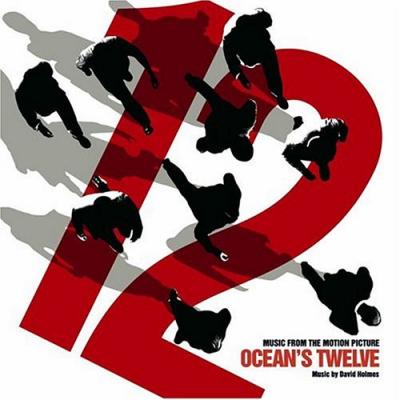
"Ocean's Twelve" Soundtrack Lyrics
Movie • 2004
Track Listing
Ornella Vanoni
Roland Vincent
Piero Umiliani
Dave Grusin
“Ocean’s Twelve (Music from and Inspired by the Motion Picture)” – Album Guide to Tracks and Key Scenes
Overview
How do you top a heist that already felt like jazz? Ocean’s Twelve doesn’t try to get louder; it gets cooler — and stranger. David Holmes’ second go-round with Steven Soderbergh swaps Vegas neon for Rome, Amsterdam, and the Riviera, and the soundtrack follows suit: Italian torch songs, French library pop, dusty funk, and modular electronica glide together like a pickpocket’s hands.
The album functions like a parallel caper. Holmes’ cues slink from sly to swaggering while crate-dug gems — Ornella Vanoni’s “L’Appuntamento,” Piero Umiliani’s “Crepuscolo sul mare,” Dave Grusin’s “Ascension to Virginity” — turn character beats into winks. The record leaves room for the film’s most famous needle drop, La Caution’s “Thé à la Menthe,” whose instrumental powers the Night Fox’s “laser dance.”
As a listening arc, it’s arrival → adaptation → rebellion → collapse: lounge-pop arrivals set the table; prowling breakbeats adapt to the crew’s stumbles; a hip-hop-to-Euro-library rebellion scores the Night Fox’s taunt; and a late-’60s psych-suite closes the book with a smile you can hear.
Genres & themes in phases: Italian canzone & yé-yé — romance-as-cover; library funk & mod jazz — clockwork schemes; breakbeat/electronic — gamesmanship and misdirection; psychedelic/retro orchestral — epilogue levity and “we got away with it.”
How It Was Made
Composer/producer David Holmes returned with a crate-digger’s ear, building a score that converses with European library records and late-’60s soundtracks. The album presents full tracks (not just crossfaded snippets), a pivot from some earlier Soderbergh/Holmes releases; according to contemporary album notes and roundups, that was a deliberate “play-through” design to reward front-to-back listening.
Holmes led composition, programming, and production, with studio hands on drums, bass, and keys shaping the swaggering rhythm section. Licensing added deep-cut sparkle: selections like “L’Appuntamento” and “Crepuscolo sul mare” lace the movie’s European chapters, while Dave Grusin’s “Ascension to Virginity” (from Candy, 1968) lands the epilogue like a knowing bow.
Not every fan-favorite cue sits on the commercial album. Several in-film placements — including La Caution’s “Thé à la Menthe,” Gotan Project’s “El Capitalismo Foráneo,” and Giuseppe De Luca’s “Margaret” — live outside the official LP, an intentional split between score/album flow and cinematic needle drops.
Tracks & Scenes
“L’Appuntamento” — Ornella Vanoni
Where it plays: Early in the film, as the sequel opens its European chapter, this Italian classic washes over a suave montage: scooters, sunlit facades, a city stretching awake while old flames and older grudges stir. The sequence glides through arrivals and surveillance setups; non-diegetic, ~opening reels.
Why it matters: A tone-setter that says “we’re not in Vegas anymore” — romance as camouflage, nostalgia as misdirection.
“Crepuscolo sul mare (Twilight on the Sea)” — Piero Umiliani
Where it plays: A late-night interlude in Rome: tailing and counter-tailing settle into a sea-breeze lull. Rusty and Isabel’s cat-and-mouse cools to a melancholy drift as plans re-shuffle; non-diegetic, mid-film bridge.
Why it matters: The melody suspends time — perfect for a caper pausing to consider the cost of being clever.
“Thé à la Menthe (Instrumental)” — La Caution
Where it plays: The legendary laser-dance: François Toulour (the Night Fox) weaves, bends, and windmills through a museum’s moving laser grid at night, training for the Egg job. No dialogue, just body and beat; the camera becomes choreography. Non-diegetic/showcase set-piece, late mid-film.
Why it matters: Rhythm as plot: the track turns a brag into ballet and taunts Ocean’s crew (and us) with impossible grace.
“El Capitalismo Foráneo” — Gotan Project
Where it plays: Detective Isabel Lahiri interrogates Matsui, reading the subtext beneath his riddled monologue. Tango-electronics coil under cutaways, the room’s temperature rising as she cracks the code; non-diegetic, investigation sequence.
Why it matters: Puts Lahiri on equal stylistic footing with the thieves — elegance with a knife edge.
“Margaret” — Giuseppe De Luca
Where it plays: After a police sweep, the crew is escorted from the station; this lilting Italian library theme floats with ironic calm over cuffs, glances, and plans that already look two moves ahead; non-diegetic, mid-film transition.
Why it matters: Comic melancholy — Soderbergh’s “grin while you’re caught” move.
“Rito a Los Angeles” (inside “The Real Story” sequence)
Where it plays: The film finally flashes the actual Egg caper. A swaggering Italian riff (cheekily echoing “In-A-Gadda-Da-Vida”) locks to whip-pan reveals and a quicksilver timeline; non-diegetic, late-film reveal.
Why it matters: Confession as victory lap — the groove sells the audacity.
“Ascension to Virginity” — Dave Grusin
Where it plays: Epilogue and end credits — lakeside farewells, debts balanced, a grin tossed across the water. The track’s 1968 psych-suite glints like champagne bubbles; non-diegetic, closing minutes into credits.
Why it matters: Retro bliss as curtain call: style, sealed.
Album-cut highlights by Holmes
“$165 Million + Interest (into) The Round Up” — ticking percussion and rubbery bass score Benedict’s ultimatum and the crew’s scramble.
“10:35 I Turn Off Camera 3” — a sneaky miniature that practically smirks; perfect for surveillance gags.
“Faust 72” — Dynastie Crisis — fuzz-funk stride for team-in-motion shots.
“Explosive Corrosive Joseph” — John Schroeder — mod-soul brass punching through a montage; pure caper candy.
Notes & Trivia
- The commercial album omits several on-screen favorites (including “Thé à la Menthe,” “El Capitalismo Foráneo,” and “Margaret”).
- Holmes structures the LP as complete tracks — a “listen straight through” approach that suits vinyl-era digger vibes.
- “Ascension to Virginity” is borrowed from 1968’s Candy, repurposed as this film’s epilogue grace note.
- “The Real Story” cue in the film swaps to the Italian library cut “Rito a Los Angeles.”
- Two Holmes pieces (“Amsterdam,” “I Love Art…Really!”) surfaced as singles but not on the album proper.
Music–Story Links
When the crew first fans out across Europe, “L’Appuntamento” casts a smitten haze — the promise of easy scores and easier coincidences. That illusion fractures as Benedict closes in; the score tightens into metronomic grooves (“The Round Up”), making stress feel stylish.
Mid-film, the Night Fox’s laser rehearsal flips the franchise’s musical center of gravity: hip-hop minimalism plus North African spice equals a brag the Ocean team can’t ignore. Later, the tango-coil of Gotan Project under Lahiri’s interrogation underscores that the cop can play this aesthetic game, too.
Finally, the reveal rolls out with that Italian library riff — audacity narrated by swagger — and Grusin’s vintage closer turns victory into a toast. Music and story end on the same word: panache.
Reception & Quotes
Critical response to the album skewed warm: the mix of Holmes’ originals and curated deep cuts landed as a caper in its own right. Fans embraced the “laser-dance” needle drop as instant canon.
“Effortlessly hip and seductively suave.” — NME (album roundup)
“The soundtrack might well be Holmes’ best.” — The Guardian (album note)
“Road-music of the year.” — Soundtrack.net (contemporary review)
“A rewarding listen… fits the mood of the film perfectly.” — Sputnikmusic (capsule)
Interesting Facts
- The “laser-dance” track originated via the French duo La Caution; actor Vincent Cassel helped connect it to the film.
- “Rito a Los Angeles” cheekily quotes the riff from “In-A-Gadda-Da-Vida,” perfect for a “we actually stole it earlier” reveal.
- Holmes’ album sequencing purposely plays like a DJ set — fewer dialogue snippets, more full-length cues.
- The official LP was issued by Warner Sunset/Warner Bros.; multiple pressings exist with near-identical track orders.
- Several non-album cues (e.g., “Margaret”) became fan grails, circulating via soundtrack forums and discography sites.
- The film credits list both music supervision/consult roles alongside Holmes’ composer/producer role — a tight, in-house music team.
- “Crepuscolo sul mare” became a mini-viral rediscovery years later thanks to scene edits and playlists.
Technical Info
- Title: Ocean’s Twelve (Music from and Inspired by the Motion Picture)
- Year/Type: 2004; Film soundtrack (score + curated selections)
- Composer/Producer: David Holmes
- Key library/needle drops featured in film: “Thé à la Menthe” (La Caution); “El Capitalismo Foráneo” (Gotan Project); “Margaret” (Giuseppe De Luca); “Rito a Los Angeles” (Peppino De Luca)
- Label: Warner Sunset / Warner Bros. Records
- Album availability: Streaming/download widely available; CD pressings documented by Discogs; some in-film cues are not on the album.
- Notable placements: Night Fox laser rehearsal (La Caution); Lahiri interrogates Matsui (Gotan Project); police-station escort (Giuseppe De Luca); epilogue/end credits (Dave Grusin)
Questions & Answers
- What’s the “laser-dance” song?
- “Thé à la Menthe” — the instrumental by French duo La Caution accompanying the Night Fox’s laser-grid rehearsal.
- Why isn’t that track on the official album?
- It’s an in-film placement that wasn’t licensed for the commercial LP; the album leans into Holmes’ score and select licensed cuts.
- What’s the dreamy Italian song near the start?
- Ornella Vanoni’s “L’Appuntamento,” which sets the film’s European mood with swooning inevitability.
- What plays over the epilogue and credits?
- Dave Grusin’s “Ascension to Virginity,” a 1968 psychedelic-orchestral piece repurposed as a stylish curtain call.
- Does the film use different music in “The Real Story” reveal?
- Yes — the on-screen version taps Peppino De Luca’s “Rito a Los Angeles,” giving the flashback extra swagger.
Canonical Entities & Relations
| Subject | Relation | Object |
|---|---|---|
| Ocean’s Twelve (Music from and Inspired by the Motion Picture) | recordLabel | Warner Sunset / Warner Bros. Records |
| David Holmes | composed & produced | Ocean’s Twelve (soundtrack album) |
| La Caution | performed | “Thé à la Menthe” (Night Fox laser rehearsal) |
| Ornella Vanoni | performed | “L’Appuntamento” (opening European montage) |
| Piero Umiliani | composed/performed | “Crepuscolo sul mare” (Rome interlude) |
| Gotan Project | performed | “El Capitalismo Foráneo” (Lahiri interrogates Matsui) |
| Dave Grusin | composed | “Ascension to Virginity” (epilogue/credits) |
| Peppino De Luca | composed | “Rito a Los Angeles” (the “Real Story” sequence) |
Sources: Wikipedia (film & soundtrack pages); Discogs (release data); IMDb Soundtracks & credits; Soundtrack.net; Treble; Guardian/NME roundups.
As noted by Wikipedia’s soundtrack section, several on-screen cues are not on the album; Discogs documents label/pressing info; and Metacritic’s credits roll lists key music department roles.
November, 18th 2025
A-Z Lyrics Universe
Cynthia Erivo Popular
Ariana Grande Horsepower
Post Malone Ain't No Love in Oklahoma
Luke Combs Good Riddance (Time of Your Life)
Green Day Bye Bye Bye
*NSYNC You're the One That I Wan
John Travolta & Olivia Newton-John I Always Wanted a Brother
Braelyn Rankins, Theo Somolu, Kelvin Harrison Jr. and Aaron Pierre The Power of Love
Frankie Goes to Hollywood Beyond
Auli’i Cravalho feat. Rachel House MORE ›