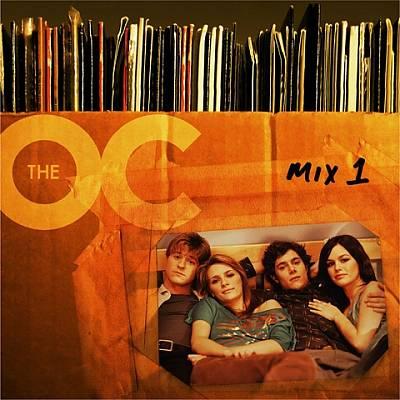
"O.C. Mix 1, The" Soundtrack Lyrics
TV • 2004
Track Listing
South
Jem
Joseph Arthur
Spoon
Jet
The 88
Doves
Turin Brakes
The Dandy Warhols
Finley Quaye & William Orbit
Alexi Murdoch
Phantom Planet
"Music from The O.C.: Mix 1" – Album Guide to Tracks and Key Scenes
Overview
What happens when a teen drama’s mixtape outlives the show’s plot twists in people’s memories? Music from The O.C.: Mix 1 is very close to that scenario. Released in 2004 as a compilation of songs from the first season of The O.C., it plays like a neatly curated snapshot of early-2000s indie and alt rock, but it also doubles as an emotional skeleton key to Ryan, Marissa, Seth and Summer’s first year in Newport.
The series runs through a clear emotional trajectory — arrival, adaptation, rebellion, collapse — and Mix 1 mirrors that arc. The arrival phase rides in on “California” by Phantom Planet and Joseph Arthur’s “Honey and the Moon”, scoring Ryan’s move from Chino to Newport as something both hopeful and doomed. Adaptation lives in the hazy comfort of Doves, Turin Brakes and The 88. Rebellion cracks through with the swagger of Jet and The Dandy Warhols. Collapse hits hardest in the New Year’s countdown of “Dice” and the fragile spiritual glow of Alexi Murdoch’s “Orange Sky”.
As an album on its own, Mix 1 is short, tightly sequenced and surprisingly lean — twelve tracks, no real filler, no obvious radio smashes beyond “California”. It behaves like a proper mixtape: a couple of slightly obscure UK bands, some American college-radio staples, a folk outlier or two, then the theme song as a closer. Vulture later called it essentially the kind of tape Seth Cohen would have made for you; listening today, that still feels right.
Stylistically, the record moves in phases that map neatly onto the show’s themes. Brit-leaning atmospheric rock (Doves, Turin Brakes) underlines dislocation and melancholy; warm singer-songwriter folk (Joseph Arthur, Alexi Murdoch) stands in for intimacy, guilt and second chances; crunchy American indie (Spoon, Jet, The Dandy Warhols, The 88) tends to appear around moments of social performance — parties, hallways, school scenes where image matters more than truth. That genre choreography is a big part of why this soundtrack still feels unusually cohesive for a TV tie-in.
How It Was Made
The O.C. was built by creator Josh Schwartz with the explicit idea that music should function like a character. He hired music supervisor Alexandra Patsavas, via her company Chop Shop, to give the show a consistent sonic identity rather than just plug gaps with anonymous library cues. She and Schwartz would often script songs directly into scenes or clear tracks before an episode was even cut, then build sequences around them.
Music from The O.C.: Mix 1 collects twelve of those placements from season one, mostly from early and mid-season episodes. Warner Records handled the release, which meant a mix of major-label and indie-label licensing: UK acts like Doves and Turin Brakes share space with American bands on independent imprints and majors. The album credits Schwartz as an executive producer and Patsavas as the key compiler, reflecting the way the show’s narrative and musical identity were intertwined behind the scenes.
From the music-department side, the selection had constraints: tracks had to clear worldwide rights, work outside the scenes that made them famous, and still feel like a coherent listen start to finish. Patsavas has described these O.C. mixes as needing to function both as souvenirs for the episodes and as stand-alone compilations you could play in a car without ever having seen the series. Mix 1, being first, set the template — roughly half brooding and half hooky, with “California” held back as a payoff at the end rather than tossed in at the top.
Licensing had knock-on effects for the artists. Several bands on Mix 1 reported noticeable spikes in U.S. awareness after their songs aired on the show; in a few cases, the O.C. placement became a standard part of their press bio. The album itself then fed back into that loop: fans who discovered songs via episodes hunted down the CD, and later, digital versions on iTunes and streaming platforms, which in turn sent listeners back to the original albums those tracks came from.
Tracks & Scenes
Below are core Mix 1 songs, tied to the scenes that made them iconic in the show. I’ll stick to the episodes as aired; timing marks are approximate for standard 42-minute broadcast cuts.
“California” — Phantom Planet
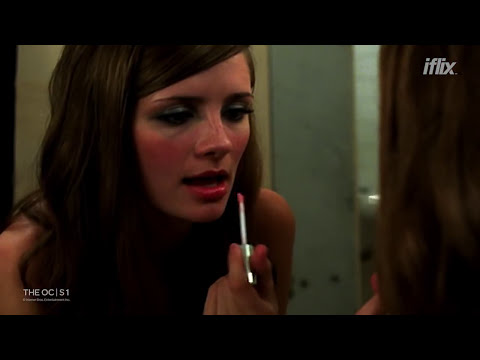
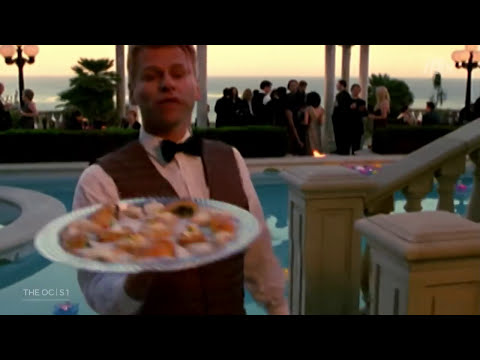
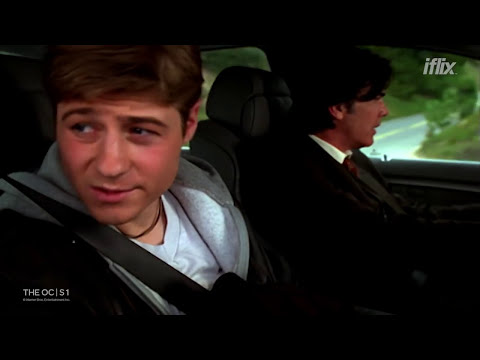
Where it plays: Season 1, throughout — most recognisably over the main title sequence that opens each episode, beginning with the pilot. A swooping aerial shot of the Pacific Coast Highway and Newport Beach cuts into close-ups of the Cohen pool house, the pier, and the core cast as the chorus (“California, here we come…”) hits. In some network and streaming promos, the track also scores montage trailers, including the widely circulated Season 1 trailer whose stills you see above.
Why it matters: This is both theme and thesis. It frames California as promise and trap at once, and every time those opening chords hit you know another cycle of arrival, adaptation, rebellion and collapse is about to roll.
“Paint the Silence” — South
Where it plays: Season 1, Episode 9 — “The Heights”, roughly the last five minutes. Ryan and Marissa ride the ferris wheel at the school carnival after a day of misunderstandings and avoidance. The song starts as a quiet background cue and swells into full volume as the wheel stalls high above the fairground, the camera circling them while they finally talk honestly and lean in for their first real kiss.
Why it matters: This is the show’s first big “mixtape moment”. The shimmery, slightly distant quality of South’s track matches the feeling that this perfect high-school night is beautiful precisely because it cannot last. It became one of the defining Ryan/Marissa musical cues.
“How Good It Can Be” — The 88
Where it plays: Season 1, Episode 9 — also “The Heights”, earlier in the episode. On the first day back at Harbor School, Seth, Ryan, Marissa and Summer walk the hallways and courtyard. Conversations overlap — crushes, rumours, class schedules — while this bright, bouncy guitar pop track runs non-diegetically over quick cuts of lockers slamming and glances being exchanged.
Why it matters: It’s one of the clearest “adaptation” cues: the lyrics and tempo underline the moment where Ryan starts to look like he might really belong in Newport. The 88’s sound also became shorthand for upbeat, slightly awkward social optimism across the series.
“Honey and the Moon” — Joseph Arthur
Where it plays: Season 1, Episode 1 — “Pilot”, in the final act. After the explosive fashion-show night, Ryan stands outside the Cohen house at dawn, smoking and realising he has to go back to Chino. As he and Sandy drive away, slow shots of Marissa watching from her driveway play over Arthur’s hushed vocal and fingerpicked guitar.
Why it matters: This is the emotional hangover of the pilot. The song puts a soft, bruised frame around Ryan’s outsider status and Marissa’s ambivalence, selling the sense that something fragile and important just started and might already be slipping away.
“The Way We Get By” — Spoon
Where it plays: Season 1, Episode 5 — “The Outsider”, mid-episode and again near the end. As Ryan juggles a construction-site job, school, and the growing social web around him, we get a montage of the Newport Pier, the diner, and Seth drifting through his own routines, cut rhythmically to Spoon’s piano stabs and drums.
Why it matters: This is pure “indie-kid ethic” in song form, underscoring the idea that Ryan and Seth survive Newport not by fitting in, but by finding workarounds. The track also helped introduce Spoon to a broader teen audience.
“Caught by the River” — Doves
Where it plays: Season 1, Episode 2 — “The Model Home”, just past the halfway point. Ryan, Seth and Marissa escape to the half-built house, sit on the jutting wooden beams over a makeshift picnic, and talk about families, expectations and running away while the sun drops behind the ocean. The song plays non-diegetically over slow pans of the trio laughing and leaning into the brief illusion that they’ve found a safe place.
Why it matters: It’s a soft, blurry snapshot of the “we three against the world” dynamic that anchors the show. The title nods to water as both refuge and threat, which fits a series obsessed with pools, piers and the ocean’s edge.
“Rain City” — Turin Brakes
Where it plays: Season 1, Episode 3 — “The Gamble”. In the early morning, Ryan’s mother Dawn, who has relapsed into drinking, quietly packs her things to leave the Cohens’ house rather than face her failures. As she tries to slip out, low-light shots of the kitchen and hallway play under the song’s gentle acoustic lines.
Why it matters: This cue pulls the show briefly back to Ryan’s original world — unstable, precarious, soaked in regret. “Rain City” gives the scene an almost documentary sadness without tipping into melodrama.
“We Used to Be Friends” — The Dandy Warhols
Where it plays: Season 1, Episode 12 — “The Secret”, in the cold open. The song kicks in diegetically as Seth dances around his room getting dressed, air-guitaring and pulling faces. Cuts jump between him and a more restrained household routine elsewhere in the Cohen home, but the track keeps things in a kind of oblivious, bouncy bubble until the episode’s darker plotlines intrude.
Why it matters: It’s a perfect Seth character cue: playful, self-aware, slightly too cool. It also undercuts coming revelations about broken friendships and buried secrets; the title works almost as a taunt.
“Move On” — Jet
Where it plays: Season 1, Episode 12 — “The Secret”, towards the end. After Luke’s father’s outing and the fallout around his family, the episode closes on a montage of characters absorbing the news: hallways at school, glances on the pier, conversations that don’t quite start. “Move On” plays non-diegetically over these shots, from a soft intro into its bigger chorus as everyone walks away in different directions.
Why it matters: The title is almost too on-the-nose, but it works. The track reframes a scandal plot as a story about people trying to outgrow their own prejudices — unusually generous for a mid-2000s teen soap.
“Just a Ride” — Jem
Where it plays: Season 1, Episode 14 — “The Countdown”, in the first half, and again in Season 1, Episode 23 — “The Nana”. In “The Countdown”, the song runs under daytime preparations for New Year’s Eve: hair appointments, wardrobe changes, people pretending they’re fine with their plans. In “The Nana”, it turns up over Jimmy visiting Hailey, giving a languid, hungover feel to post-party aftermath.
Why it matters: Lyrically, it’s on-theme for a show obsessed with second chances and do-overs — life as “just a ride”. Sonically, it bridges the more chilled Mix 1 tracks and the high-drama of “Dice” later in the same New Year’s episode.
“Dice” — Finley Quaye & William Orbit
Where it plays: Season 1, Episode 14 — “The Countdown”, in the climactic New Year’s montage. As midnight approaches, Ryan realises he wants to be with Marissa and races from a party in Chino back to Newport. The song starts with its echoing guitar and vocal as he runs through streets and airports, then lands in the Cohen’s Range Rover, cutting between him sprinting through the building and Marissa counting down at the party. The track peaks as they finally kiss just after midnight on the penthouse balcony.
Why it matters: This is one of the most replayed O.C. music moments, and it pushed “Dice” to a wider audience than it might otherwise have reached. The track’s dreamy, slightly off-kilter feel sells the idea that this perfect timing is basically a miracle.
“Orange Sky” — Alexi Murdoch
Where it plays: Season 1, Episode 11 — “The Homecoming”, and again in the Season 1 finale. In “The Homecoming”, the song underscores Ryan’s return to Chino and his complicated loyalty to his brother; in the finale, it reappears over a farewell montage, with slow shots of the Cohen house and the people Ryan is leaving behind as circumstances pull him back to his old life.
Why it matters: “Orange Sky” feels almost like a prayer: hushed, repetitive, built around family and responsibility. It anchors the “collapse” phase of the season, reminding you that Ryan’s escape to Newport was always provisional.
Bonus — iconic tracks not on Mix 1 but tied to it
Where they play: Jeff Buckley’s cover of “Hallelujah” scores Ryan and Marissa’s vulnerable talk at the model home in Season 1, Episode 2, while Imogen Heap’s “Hide and Seek” famously explodes over Marissa shooting Trey in the Season 2 finale. These songs don’t appear on Mix 1, but they define the show’s musical reputation and sit in the same emotional universe as the album’s folk-leaning cuts.
Why it matters: Mentioning them here matters, because Mix 1 was marketed as a sampler; fans quickly realised there was a broader, often even darker, playlist living beyond the official CD.
Notes & Trivia
- Mix 1 pulls exclusively from Season 1 episodes, but not all of the season’s marquee songs made the cut — “Hallelujah”, for instance, is missing despite its importance.
- The Italian edition was promoted under the slightly different title formatting Music from the OC: Mix 1, but the track list and sequencing remained the same.
- Finley Quaye’s “Dice” saw renewed attention in the U.S. partly because of its placement in “The Countdown”; some later articles explicitly tie the single’s minor chart run to the show.
- Spoon, The 88 and The Dandy Warhols each saw their Mix 1 songs folded into other TV and film trailers in the mid-2000s, piggy-backing on the O.C. association.
- On some European channels, syndicated reruns used slightly edited episode cuts for time; in a few cases that meant Mix 1 songs were shortened or cross-faded earlier than on the original Fox broadcast.
Music–Story Links
The easiest way to see Mix 1’s design is to map songs to specific character arcs. The album isn’t just a random indie compilation; it’s a narrative spine.
Ryan’s journey from Chino to Newport runs through “California”, “Honey and the Moon”, “Rain City” and “Orange Sky”. The theme song covers his literal arrival; Joseph Arthur scores his first real emotional setback as he leaves; Turin Brakes pull us back into the instability he comes from; Alexi Murdoch underlines the cost of trying to live in two worlds at once. Each time one of these tracks appears, the camera tends to linger on Ryan in transit — in cars, on freeways, on the edge of someone else’s house.
Marissa’s story is more about fragile belonging and self-destruction, and her big Mix 1 songs sit at turning points: “Paint the Silence” on the ferris wheel kiss, “Dice” at New Year’s when she chooses Ryan over her comfort zone, “Orange Sky” as she watches him leave again. Those tracks all lean into echo, reverb and distance; even when she gets what she wants, it sounds like it might dissolve.
Seth and Summer’s arc leans heavily on “We Used to Be Friends”, “How Good It Can Be” and “The Way We Get By”. Seth’s bedroom dance to The Dandy Warhols turns a simple getting-ready scene into a character thesis — this is a kid who lives in his own head, soundtracked by cool bands that no one at school cares about. The 88 and Spoon show up whenever Seth and Ryan are trying, and failing, to play the part of “normal” Newport boys.
Family dynamics get their own cues. “Caught by the River” is essentially a found-family moment for Ryan, Seth and Marissa, while “Rain City” underscores Ryan’s mother’s exit and the way the Cohens’ house can’t quite fix her. Even “Move On” functions less as a teen romance track and more as a music-bed for how Newport handles scandal: people look away, talk about real estate, and pretend they’re over it.
Reception & Quotes
Commercially, Music from The O.C.: Mix 1 did very solidly for a TV soundtrack. It entered the Billboard 200 and reached the upper half of the chart, and it climbed even higher on the dedicated soundtrack chart, where it rubbed shoulders with big studio film albums. For a short, mostly indie compilation tied to a first-season show, that was a strong signal that viewers were willing to pay for this particular musical curation.
Critically, the album was framed as unusually tasteful for a network series tie-in. One Amazon editorial review singled out the last run of tracks — from “Dice” through “California” — as the place where the compilation moves from merely pleasant to quietly exceptional. A Vulture ranking of all six O.C. mixes later placed Mix 1 near the top, pointing out that it works even if you don’t remember exactly where each song fits into the episodes.
Fan reception has stayed affectionate. On forums and Reddit threads, people still talk about buying the CD just to have “Paint the Silence” or “Orange Sky” in a pre-streaming era, or ripping the disc so they could loop “Dice” during late-night rewatch sessions. The album is also a frequent gateway recommendation for younger viewers discovering the show on streaming platforms who want “the core O.C. sound without listening to all 280-odd songs used across four seasons”.
“Mix 1 feels like a mixtape your coolest friend made — twelve songs, no skips, no throwaway soundtrack filler.” Magazine retrospective
“There was probably no show on TV then where music mattered as much as on The O.C. — these albums proved it.” Newspaper feature on TV music
“Even without the show, this is a snapshot of early-2000s indie that still plays front-to-back.” Online fan review
Interesting Facts
- The album’s official digital title on Apple Music is Music from the O.C., Mix 1 (Music from the TV Series), while physical CDs often shorten that to simply Music from The O.C.: Mix 1.
- Regionally, the release date shifted — the U.S. got it in March 2004, while some European territories saw it promoted later that year alongside the show’s local premieres.
- “Dice” was already on Finley Quaye’s own album, but its O.C. placement was prominent enough that later write-ups mention the series by name when discussing the single.
- “Orange Sky” later reappeared on Alexi Murdoch’s debut album, giving O.C. fans a neat way to follow his work beyond the soundtrack appearance.
- Streaming services now host Mix 1 as a standard compilation; playlists titled “Music From The O.C. Mix 1” often mirror the album and then add non-album cuts like “Hallelujah” and “Hide and Seek”.
- Some fan-made “Season 1 trailer” edits online swap in different songs (“Dare You to Move” by Switchfoot, for instance), but official promos lean hard on “California” and tracks from the Mix 1 era.
- In 2024, a tequila ad campaign that brought Rachel Bilson back as Summer Roberts again opened with “California”, underlining how closely the song — and by extension Mix 1 — is tied to the show’s brand.
- Mix 1 is often grouped with other mid-2000s TV soundtracks (like One Tree Hill and Smallville compilations) as part of a brief boom where teen dramas doubled as discovery engines for alt-rock and indie bands.
Technical Info
- Title: Music from The O.C.: Mix 1 (Music from the TV Series)
- Year of release: 2004 (first issued in the U.S.; some international editions followed later in 2004)
- Type: TV soundtrack / compilation album (songs from Season 1 of The O.C.)
- Series context: Companion to Season 1 of the Fox teen drama The O.C., created by Josh Schwartz
- Music supervision: Alexandra Patsavas (series music supervisor and key compiler of the soundtrack series)
- Executive production: Josh Schwartz and partners from the show’s production side (album credits vary slightly by edition)
- Label: Warner Records (often credited jointly with Warner Bros./WEA on physical issues)
- Tracks: 12 songs, about 31 minutes total runtime (no score cues; all are licensed songs by external artists)
- Notable placements covered: the main title theme “California”; Ryan/Marissa moments (“Paint the Silence”, “Dice”, “Orange Sky”, “Honey and the Moon”); friendship and party cues (“The Way We Get By”, “We Used to Be Friends”, “Move On”, “How Good It Can Be”, “Caught by the River”, “Rain City”, “Just a Ride”).
- Formats: Audio CD, digital download (iTunes), and streaming (Apple Music, Spotify and others).
- Chart notes: Reached the U.S. Billboard 200 and top tier of the Billboard Top Soundtracks chart.
- Availability today: Widely available on major streaming services; physical CDs exist mostly in catalogue/second-hand channels.
Questions & Answers
- Is “Music from The O.C.: Mix 1” a score album or a song compilation?
- It’s a songs compilation. All twelve tracks are licensed recordings by bands and singer-songwriters; Christopher Tyng’s instrumental score is not included.
- Which parts of the show does Mix 1 actually cover?
- Every track on Mix 1 comes from Season 1, mainly from episodes 1–3, 5, 9, 11, 12, 14 and the finale. Later seasons use different soundtrack albums.
- Why are famous O.C. songs like “Hallelujah” or “Hide and Seek” missing?
- Those cues belong to different episodes and, in some cases, different seasons. They either appear on later O.C. compilations or were never collected on an official album.
- Where can I legally listen to Mix 1 now?
- It’s available on major streaming platforms (Apple Music, Spotify and others) under titles like
Music from the O.C., Mix 1 (Music from the TV Series)
, and on some digital stores as a download. - Did this soundtrack really help the featured bands?
- Yes. Several acts — South, Alexi Murdoch, Jet, Spoon and others — saw noticeable exposure bumps. For a lot of viewers, Mix 1 was their first contact with these artists.
Canonical Entities & Relations
| Subject | Relation | Object |
|---|---|---|
| Josh Schwartz | created | TV series The O.C. |
| Alexandra Patsavas | supervised music for | The O.C. (all seasons) |
| Alexandra Patsavas | compiled | Music from The O.C.: Mix 1 |
| Warner Records | released | Music from The O.C.: Mix 1 in 2004 |
| Various Artists | perform on | Music from The O.C.: Mix 1 (compilation) |
| Phantom Planet | performed | “California”, the main theme of The O.C. |
| South | contributed track | “Paint the Silence” to Mix 1 and Season 1, Episode 9 |
| Finley Quaye & William Orbit | contributed track | “Dice” to Mix 1 and New Year’s episode “The Countdown” |
| Alexi Murdoch | contributed track | “Orange Sky” to Mix 1 and multiple Season 1 episodes |
| The O.C. | is set in | Newport Beach, Orange County, California |
Sources: official The O.C. soundtrack and music pages, Apple Music and Spotify album listings, The O.C. Wiki and fan music guides, interviews with Alexandra Patsavas, chart summaries and retrospective articles on the show’s music.
November, 17th 2025
A-Z Lyrics Universe
Cynthia Erivo Popular
Ariana Grande Horsepower
Post Malone Ain't No Love in Oklahoma
Luke Combs Good Riddance (Time of Your Life)
Green Day Bye Bye Bye
*NSYNC You're the One That I Wan
John Travolta & Olivia Newton-John I Always Wanted a Brother
Braelyn Rankins, Theo Somolu, Kelvin Harrison Jr. and Aaron Pierre The Power of Love
Frankie Goes to Hollywood Beyond
Auli’i Cravalho feat. Rachel House MORE ›