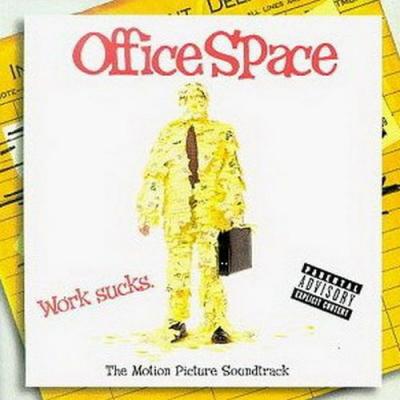
"Office Space" Soundtrack Lyrics
Movie • 1999
Track Listing
Canibus
Slum Village
Kool Keith
Reid, Junior
Lisa Stone
Ice Cube
Geto Boys
Blackman
Scarface
Geto Boys
Prado, Perez
Prado, Perez
“Office Space (The Motion Picture Soundtrack)” – Album Guide to Tracks and Key Scenes
Overview
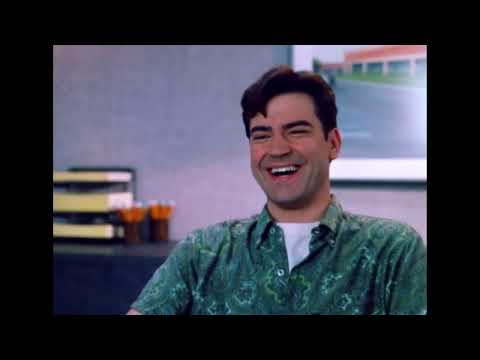
How do you make fluorescent lighting feel dangerous? You cut it with bass. Office Space turns a beige workplace into a battleground by blasting gangsta rap over depressed cubicles. The soundtrack’s core — Geto Boys, Scarface, Ice Cube — reframes every stapler gripe as rebellion. The joke lands because it’s serious.
As a listen, it’s compact and purposeful: crate-dug Latin mambos sit by snarling Houston classics; a Kool Keith oddity rides the elevator; Scarface and the Geto Boys supply the film’s conscience and punchlines. The album is less mixtape-of-the-movie and more a distilled thesis: bored men, bad bosses, and beats that move like a plan taking shape.
Arc-wise, the soundtrack maps the film’s momentum — arrival → adaptation → rebellion → collapse. Easy-listening interludes (Perez Prado) bookend cube-life tedium; mid-film swagger (“Damn It Feels Good to Be a Gangsta”) scores Peter’s awakening; hard-edged cuts (“Still,” “Down For Whatever”) turn catharsis into action.
Genres & themes by phase: Latin lounge & library cues — corporate calm; Southern gangsta rap — pressure release; indie/alt-rap oddities — mischief; classic funk/boom-bap energy — consequence and grin.
How It Was Made
Composer: John Frizzell provides the sly, small-footprint score; the songs carry the cultural bite. Mike Judge wanted rap in a cubicle film — a clash Fox initially resisted before audiences validated the choice (as reported in retrospectives). The soundtrack album was issued by Interscope (INTD-90308) in February 1999.
Supervision & clearances: The film drew on Interscope’s soundtrack operation alongside studio music execs; the resulting LP leans into licensed cuts rather than score cues, a late-’90s “album as attitude” move that helped the music outlive the box office.
Album design: Twelve tracks, ~45 minutes; two Perez Prado mambos add breezy whiplash between heavier placements. It’s sequenced to mirror plot escalations without replicating exact scene order — clean, repeatable, and quotable.

Tracks & Scenes
“No Tears” — Scarface
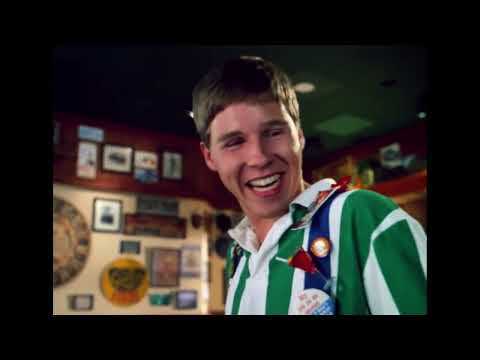
Where it plays: Opening traffic crawl. Michael Bolton (the character) raps along, then panic-shrinks the volume and locks the doors when a street vendor approaches — a perfect setup for the film’s identity farce. ~first minutes; diegetic inside the car.
Why it matters: Establishes the movie’s core contradiction: buttoned-down workers dreaming in gangsta-rap rhythms.
“Mambo No. 8” — Pérez Prado
Where it plays: Breezy office interstitials and title-card vibes — the musical equivalent of fluorescent hum. Non-diegetic transitional cue.
Why it matters: The “corporate veneer” palette the rap cues will gleefully bulldoze.
“Damn It Feels Good to Be a Gangsta” — Geto Boys
Where it plays: Peter’s liberation montage: knocking down his cubicle wall, defying dress code, gliding through Initech with Zen calm. Non-diegetic, mid-film.
Why it matters: The anthem of office anarchy — swagger without raising a voice.
“Still” — Geto Boys
Where it plays: The infamous field execution of the office printer. Bats, mud, and a decades-long grudge expressed as percussion. Late mid-film set piece; non-diegetic (song dominates, dialogue drops).
Why it matters: Catharsis captured — and pop culture canonized — in three glorious minutes.
“Down for Whatever” — Ice Cube
Where it plays: Virus-transfer sequence: floppy disks, furtive glances, and the moment a bad idea becomes policy. Non-diegetic under montage.
Why it matters: Turns a nerd-crime into a heist beat.
“Get Dis Money” — Slum Village
Where it plays: Low in the background during office chatter — a sly nod for heads, a vibe for everyone else. Non-diegetic texture.
Why it matters: J Dilla swing meets timecard tedium — chef’s kiss.
“Get Off My Elevator” — Kool Keith
Where it plays: As the night-owl caper prep ramps up, this oddball cut punctuates hallway traffic and side-eyes. Non-diegetic.
Why it matters: Surreal swagger for a plan that barely holds together.
“Big Boss Man” — Junior Reid
Where it plays: Boss-shadowed moments and “we’re doing this anyway” walk-ups. Non-diegetic fill between plot beats.
Why it matters: The title says it — every rebellion needs an antagonist.
“The Peanut Vendor” — Pérez Prado
Where it plays: Light-ironic bed for office montages and bumpers — a palette cleanser after heavy drops. Non-diegetic.
Why it matters: The soundtrack’s wink — chaos framed as cocktail hour.
Notes & Trivia
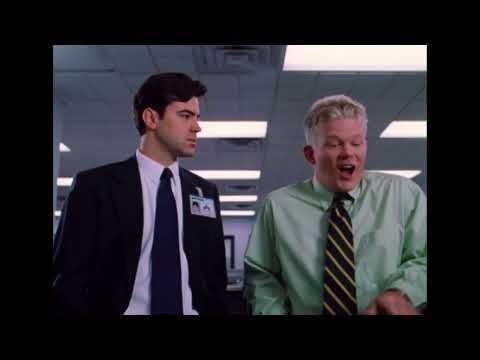
- Fox initially disliked the gangsta-rap needle drops; test audiences loved the clash, and the cues stayed.
- The soundtrack album arrived February 16, 1999 — three days before the U.S. release — on Interscope (INTD-90308).
- “Still” became so tied to the printer scene that later political spoofs mis-attributed it to other moments — the film nerds noticed.
- “No Tears” opens the film via an in-car singalong — later even the real Michael Bolton spoofed the gag.
- Two Pérez Prado mambos on the LP provide the film’s “corporate lounge” counterweight to rap’s bite.
Music–Story Links
When Bolton raps Scarface in traffic, the movie announces its lens: office workers dreaming in outsider anthems. Later, Peter’s Zen rebellion accepts gangsta swagger as a mood — “Damn It Feels Good…” glides while he quietly rearranges his world. The virus montage needs momentum, not menace, so Ice Cube provides the engine without tipping the tone into thriller.
And then “Still.” The cue removes irony — it’s pure, rhythmic payback, three friends stomping a symbol of corporate indifference. The soundtrack keeps their arc honest: rap to imagine revolt, rap to enact it, lounge to laugh about what they’ve done.
Reception & Quotes
The film found its cult life on disc and cable; the soundtrack aged into a shorthand for office rebellion. Critics and retrospectives routinely cite the Geto Boys cuts and Ice Cube’s placement as essential to the movie’s bite.
“Three songs — ‘Still,’ ‘Damn It Feels Good…,’ and ‘Down For Whatever’ — are the movie’s spiritual guides.” — anniversary essay
“The montage isn’t just funny; it’s aspirational… swagger as self-care.” — culture column
“One of the great rap-forward studio soundtracks of the ’90s.” — album guide blurb
Interesting Facts
- Willie D (Geto Boys) later clarified what “Still” stands for — rebellion for the underdog — when the track was repurposed in viral protest clips.
- “Damn It Feels Good…” wasn’t on a 1990s Geto Boys studio LP; the cut broke wide via a compilation and the movie.
- The album’s barcode/ID (606949030827 / INTD-90308) ties to Interscope’s late-’90s soundtrack line.
- A 2010s wave of vinyl pressings finally put the soundtrack on wax after years of CD/streaming dominance.
- That field beatdown? Shot to evoke a mob hit — the music sells the bit while the camera plays it straight.
Technical Info
- Title: Office Space (The Motion Picture Soundtrack)
- Year/Type: 1999; Film soundtrack (compilation)
- Composer: John Frizzell (original score; not a primary focus of the commercial album)
- Label / Catalog: Interscope Records — INTD-90308 (UPC 606949030827)
- Key placements: “No Tears” (opening traffic, diegetic); “Damn It Feels Good to Be a Gangsta” (Peter’s liberation montage); “Still” (printer destruction); “Down for Whatever” (virus-transfer montage); Pérez Prado cues for interludes.
- Release timing: Album streeted February 16, 1999; U.S. theatrical opened February 19, 1999.
- Availability: Streaming widely; original CD documented across catalog/collector databases; multiple later vinyl issues exist.
Questions & Answers
- What song plays during the printer smash?
- “Still” by Geto Boys — the film’s most famous needle drop.
- Which track scores Peter’s chill, rule-breaking montage?
- Geto Boys’ “Damn It Feels Good to Be a Gangsta.”
- What’s the opening car-rap song?
- Scarface’s “No Tears,” rapped along to by Michael Bolton (the character) in traffic.
- Who composed the original score?
- John Frizzell; the album focuses more on licensed songs than on his cues.
- What label released the soundtrack?
- Interscope Records (catalog INTD-90308), released February 16, 1999.
Canonical Entities & Relations
| Subject | Relation | Object |
|---|---|---|
| Office Space (The Motion Picture Soundtrack) | recordLabel | Interscope Records (INTD-90308) |
| Mike Judge | directed | Office Space (1999) |
| John Frizzell | composed score for | Office Space (1999) |
| Geto Boys | performed | “Still” & “Damn It Feels Good to Be a Gangsta” |
| Scarface | performed | “No Tears” |
| Ice Cube | performed | “Down for Whatever” |
| Pérez Prado | performed | “Mambo No. 8”; “The Peanut Vendor” |
Sources: AllMusic (release data); SoundtrackINFO (label, track list & scene Q&A); MusicBrainz (catalog details); Spotify album page; Wikipedia (production/music note); The Outline (anniversary essay); Glamour (scene/needle-drop correction); trailer via Rotten Tomatoes Classic Trailers.
November, 18th 2025
A-Z Lyrics Universe
Cynthia Erivo Popular
Ariana Grande Horsepower
Post Malone Ain't No Love in Oklahoma
Luke Combs Good Riddance (Time of Your Life)
Green Day Bye Bye Bye
*NSYNC You're the One That I Wan
John Travolta & Olivia Newton-John I Always Wanted a Brother
Braelyn Rankins, Theo Somolu, Kelvin Harrison Jr. and Aaron Pierre The Power of Love
Frankie Goes to Hollywood Beyond
Auli’i Cravalho feat. Rachel House MORE ›