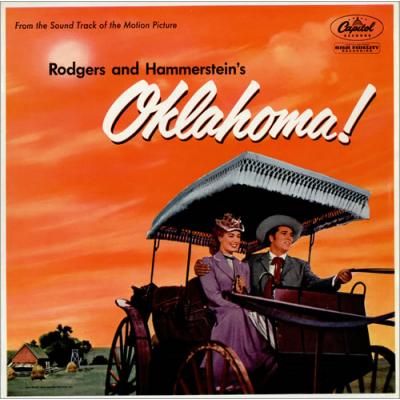
"Oklahoma" Soundtrack Lyrics
Musical • 1955
Track Listing
Rodgers and Hammerstein
“Oklahoma! — Original Motion Picture Soundtrack (1955)” – Album Guide to Tracks and Key Scenes
Overview
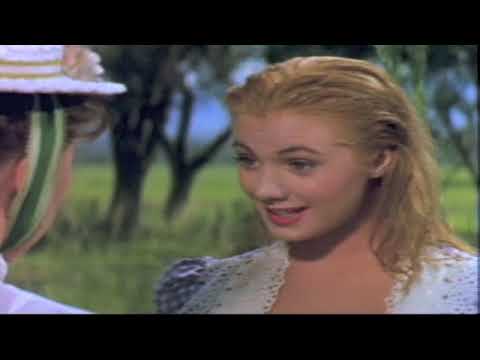
How can a score feel like sunrise and stampede at once? Rodgers & Hammerstein’s Oklahoma! answers by letting a cowboy sing the morning into being, then pushing that brightness into jealous smokehouse shadows and a fever-dream ballet. Arrival → adaptation → rebellion → collapse: the soundtrack traces the territory’s statehood hopes and the characters’ bumpy courtship with melodies you can practically smell the sweet wheat through.
The 1955 film keeps the stage show’s backbone and, crucially, its orchestrational polish. Gordon MacRae’s clarion tenor launches “Oh, What a Beautiful Mornin’,” Shirley Jones’ fresh lyricism answers in “Many a New Day,” while the chorus and dance music turn community squabbles into barn-raising spectacle. You hear a frontier that’s optimistic but not naïve — violins bloom, brass grins, and then lower strings darken whenever Jud intrudes.
Because the movie was photographed twice (Todd-AO and CinemaScope), the album history is unusually rich: mono and stereo LPs derive from different film elements, and later expanded issues restore overtures and ballet music. That’s why listeners sometimes notice subtle dialogue inflection differences inside numbers like “Pore Jud Is Daid.” According to the Academy’s records, the film won for Scoring of a Musical Picture and for Sound Recording, which tells you how central the music craft is to what you’re hearing.
Genres & themes in phases: prairie symphonic Americana (hope, openness); jaunty two-step & western swing accents (courtship games, comic relief); choral anthems (civic unity); noir-tinged underscoring and modal turns (Jud’s menace); dream-ballet orchestral modernism (repressed desire and fear). Folk dance energy = community glue; lyrical ballads = private vows; percussion pops = rivalry and release.
How It Was Made
Music by Richard Rodgers, lyrics by Oscar Hammerstein II; film direction by Fred Zinnemann. The screen version was uniquely shot in two formats: 70mm Todd-AO (roadshow) and 35mm CinemaScope (general release). Orchestrator Robert Russell Bennett turned Rodgers’ piano scores into the film’s burnished orchestral tapestry; Jay Blackton conducted and served as musical director; Adolph Deutsch oversaw music scoring for the screen. The choral textures many fans love come via the film’s studio chorus under Ken Darby’s vocal direction.
The film preserves most of the stage show’s numbers (a rarity then), trimming only a couple of songs while expanding the dream ballet. Later soundtrack releases acknowledge the dual-format production: the early mono LP drew from the CinemaScope source while the stereo issue derived from Todd-AO elements; a 2001 expanded CD restores the roadshow overture and more of the ballet cues.
Tracks & Scenes
“Oh, What a Beautiful Mornin’” — Gordon MacRae
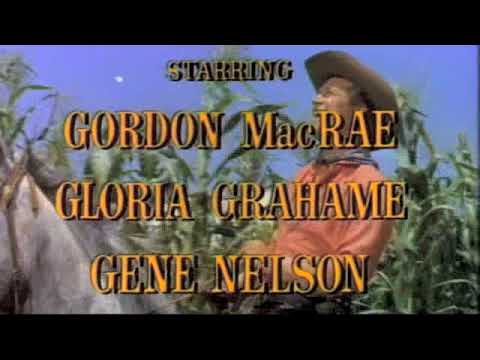
Where it plays: Opening sequence: Curly rides past corn and prairie as day breaks, singing into the landscape; the camera floats with him toward Aunt Eller’s farm. Early in Part I (roadshow cut). Non-diegetic lead vocal, but the staging makes it feel lived-in.
Why it matters: Establishes the film’s sunlit optimism and Curly’s easy authority; it’s the tonal north star the score keeps returning to.
“The Surrey with the Fringe on Top” — Gordon MacRae, Shirley Jones, Charlotte Greenwood
Where it plays: On the porch and yard, Curly teases Laurey with a fanciful date in a fancy surrey; Aunt Eller punctures his swagger. Flirtation becomes duel. Early first act, just after the opener.
Why it matters: Comic braggadocio doubles as courtship; pizzicato strings and clip-clop rhythms sell the playful pretense.
“Kansas City” — Gene Nelson (with ensemble)
Where it plays: Town gathering: Will Parker returns from the big city, showing off two-step steps and wild urban marvels. Mid-first act set-piece with dance breaks.
Why it matters: A country-meets-modernity brag song; brass riffs and tapping transitions pivot the film from porch banter to full community spectacle.
“I Cain’t Say No” — Gloria Grahame
Where it plays: Ado Annie confesses her romantic open-door policy, framed with comic asides and reaction shots from the town. First act comic solo.
Why it matters: Hands the women’s perspective a sly, catchy hook; the lyric’s plain-spoken candor keeps the film’s sexual politics honest.
“Many a New Day” — Shirley Jones & women’s ensemble
Where it plays: Laurey’s bedroom/yard routine after Curly needles her; she rallies her pride with a tight dance interlude. Mid-first act.
Why it matters: A melodic fence she builds around her feelings; woodwinds sparkle while high strings keep the poise.
“People Will Say We’re in Love” — Gordon MacRae & Shirley Jones
Where it plays: Twilight scene on the farm: a not-quite-love-duet where both pretend they’re not confessing. Late first act; reprise near the end.
Why it matters: The show’s suspended-breath center — a lesson in subtext and orchestral restraint.
“Pore Jud Is Daid” — Gordon MacRae & Rod Steiger
Where it plays: In Jud’s shadowy smokehouse, Curly’s mock-elegy becomes psychological warfare. Late first act.
Why it matters: Shifts the score into minor-key menace; bassoons, low brass, and a slow funeral tread pull daylight into dread.
“Out of My Dreams” → Dream Ballet — Orchestra & dance company
Where it plays: Laurey’s reverie blossoms into an extended ballet with Dream Laurey and Dream Curly; Jud stalks the dreamspace. End of act one into entr’acte (roadshow timing).
Why it matters: The music speaks when words can’t; motivic fragments from earlier songs re-shape as subconscious conflict.
“The Farmer and the Cowman” — Company
Where it plays: Box social erupts into a good-natured brawl and barn-dance unity; Aunt Eller referees. Early second half.
Why it matters: A civic anthem with elbows — percussion stomps and fiddle figures create community therapy.
“All Er Nuthin’” — Gene Nelson & Gloria Grahame
Where it plays: Ado Annie and Will negotiate monogamy via dance-flirt sparring. Mid-second half.
Why it matters: Comic counterpoint to the main romance; rhythmic back-and-forth = relationship terms in 2:59.
“Oklahoma!” — Company
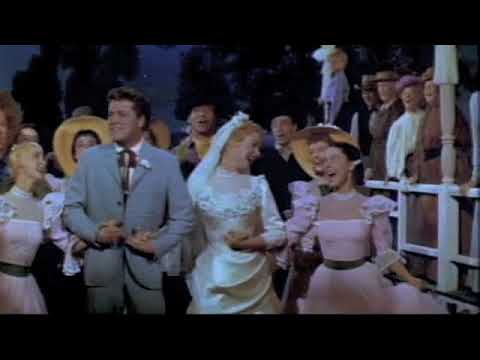
Where it plays: Wedding/celebration sequence builds to the title anthem; statehood spirit and personal vows align. Late second half, then exit music reprises themes.
Why it matters: The civic and the intimate become one; the chorus lifts the theme from love song to anthem.
Trailer note: the official trailer showcases the title number and the sunrise opener; cues are edited for pace (non-album edits typical for mid-’50s trailers).
Notes & Trivia
- Two complete filmings exist: Todd-AO (70mm, 30fps) and CinemaScope (35mm, 24fps) — often with different takes spliced around the same performances.
- The soundtrack was the first album ever certified “Gold” by the RIAA (1958) and later went multi-platinum.
- The mono LP and stereo LP were sourced from different film elements; listen closely and you’ll spot tiny dialogue-inflection changes within songs.
- The 2001 expanded CD restores roadshow overture and much of the dream-ballet music.
- The film won Oscars for Scoring of a Musical Picture and for Sound Recording.
Music–Story Links
When Curly rides in singing “Beautiful Mornin’,” the score brands him with light; later, the same pastoral optimism melts into anxious harmonies in the smokehouse, as if his charm can’t reach that room. Laurey’s “Many a New Day” is posture — bright orchestration masking embarrassment — and you hear the armor drop in the twilight hush of “People Will Say We’re in Love.” Will Parker’s bragging “Kansas City” primes the community for later reconciliation: those oom-pah kicks become a shared language that turns the “Farmer and Cowman” fracas into a dance truce. And in the dream ballet, themes you already love arrive twisted, telling you Laurey knows the danger long before she can say it.
Reception & Quotes
Audiences embraced the film as a widescreen event and as a faithful, jubilant rendering of the stage score. The Academy’s music and sound prizes signal how immaculately crafted the recording is; reissues kept the album continuously in print. Critics have continued to treat it as a template for screen-musical sound.
“The screen’sOklahoma!is okay — lusty, tuneful and handsomely mounted.” — The New York Times
“Scoring and sound are showpieces: every chorus lands like daylight after a storm.” — Academy notes
“Two versions filmed; the Todd-AO roadshow remains a demo reel for classic widescreen sound.” — in70mm feature
“A time-capsule of American musical optimism.” — Rodgers & Hammerstein organization
Interesting Facts
- Dual-format quirks: some stereo LP phrases come from Todd-AO elements; the mono LP leans on CinemaScope sources.
- Chart run: hit No. 1 on the U.S. pop album chart in 1956; UK charted too.
- First Gold: on July 8, 1958 the album became RIAA’s first Gold LP.
- Expanded edition: 2001 CD nearly doubles program length and restores ballet cues.
- Edits you can hear: an extra verse of “Beautiful Mornin’” appears on album but is trimmed in the final film print.
- Home video cross-overs: a Blu-ray set includes both Todd-AO and CinemaScope versions, mirroring the album’s dual-source history.
Technical Info
- Title: Oklahoma! — Original Motion Picture Soundtrack
- Year: 1955 (principal recording May 11, 1955)
- Type: Film soundtrack (Rodgers & Hammerstein musical)
- Composers/Lyricist: Richard Rodgers (music); Oscar Hammerstein II (lyrics)
- Orchestrations: Robert Russell Bennett
- Music direction/conducting: Jay Blackton
- Scoring for screen: Adolph Deutsch (with Blackton & Bennett credited at the Oscars)
- Label/editions: Capitol mono LP (1955); stereo LP (1958); Angel/Broadway Angel CD issues; 2001 expanded Angel edition
- Awards: Oscars — Scoring of a Musical Picture (win); Sound Recording (win); Cinematography (nom); Film Editing (nom)
- Availability: Widely available on streaming (various reissues); multiple CD editions; Blu-ray includes both film versions
Questions & Answers
- Why do some soundtrack releases sound a bit different?
- Because the movie was shot in Todd-AO and CinemaScope, mono and stereo LPs drew from different film elements; later editions add roadshow overture and ballet music.
- Is every stage song in the film and on the album?
- Almost — the film trims a couple of stage numbers; expanded releases restore more incidental/ballet cues but not the entirely omitted songs.
- Who actually sings on the film album?
- The principal cast (Gordon MacRae, Shirley Jones, Gloria Grahame, Gene Nelson, etc.) with studio chorus; Bennett’s orchestrations and Blackton’s conducting bind it together.
- What did the film win at the Oscars?
- Best Scoring of a Musical Picture and Best Sound Recording; it was also nominated for Color Cinematography and Film Editing.
- Is the trailer music the same as on the album?
- It uses excerpts from the film’s songs (edited for pace); exact edits may not match any single album track timing.
Canonical Entities & Relations
| Subject | Relation | Object |
|---|---|---|
| Richard Rodgers | composed music for | Oklahoma! (1955 film) |
| Oscar Hammerstein II | wrote lyrics for | Oklahoma! (1955 film) |
| Robert Russell Bennett | orchestrated | Oklahoma! (1955 film score) |
| Jay Blackton | conducted / music directed | Oklahoma! soundtrack sessions |
| Adolph Deutsch | supervised screen scoring for | Oklahoma! (1955 film) |
| Gordon MacRae | sang role of | Curly McLain |
| Shirley Jones | sang role of | Laurey Williams |
| Rodgers & Hammerstein Organization | controls rights to | Oklahoma! songs and licensing |
| Capitol Records | issued | 1955 mono LP; 1958 stereo LP |
| Angel / Broadway Angel | reissued | expanded CD editions |
| Academy of Motion Picture Arts and Sciences | awarded | Oscars for Scoring & Sound Recording |
| Magna Theatre Corporation | distributed (roadshow) | Todd-AO version |
Sources: Wikipedia film & soundtrack pages; Rodgers & Hammerstein official site; Academy/Oscars site; IMDb soundtrack & awards; in70mm.com feature; Discogs & CastAlbums DB.
November, 18th 2025
A-Z Lyrics Universe
Cynthia Erivo Popular
Ariana Grande Horsepower
Post Malone Ain't No Love in Oklahoma
Luke Combs Good Riddance (Time of Your Life)
Green Day Bye Bye Bye
*NSYNC You're the One That I Wan
John Travolta & Olivia Newton-John I Always Wanted a Brother
Braelyn Rankins, Theo Somolu, Kelvin Harrison Jr. and Aaron Pierre The Power of Love
Frankie Goes to Hollywood Beyond
Auli’i Cravalho feat. Rachel House MORE ›