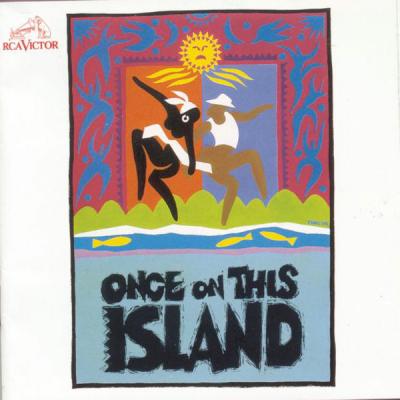
"Once on This Island" Soundtrack Lyrics
Musical • 1990
Track Listing
Once on This Island Cast
Once on This Island Cast
Once on This Island Cast
Once on This Island Cast
Once on This Island Cast
Once on This Island Cast
Once on This Island Cast
Once on This Island Cast
Once on This Island Cast
Once on This Island Cast
Once on This Island Cast
Once on This Island Cast
Once on This Island Cast
Once on This Island Cast
Once on This Island Cast
Once on This Island Cast
Once on This Island Cast
Once on This Island Cast
“Once on This Island — Original Broadway Cast Recording (1990)” – Album Guide to Tracks and Key Scenes
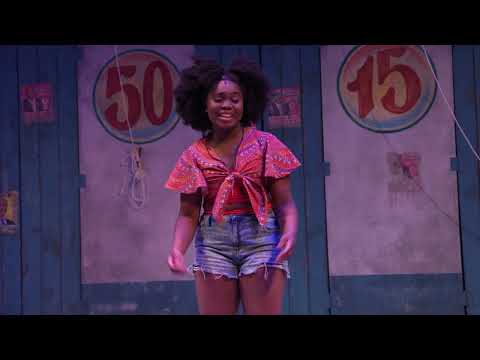
Overview
Can a one-act musical feel as big as a myth and as close as a campfire? Once on This Island says yes. Arrival → adaptation → rebellion → collapse: a storm delivers orphan Ti Moune; she adapts to village life but aches for more; love makes her defy gods and class; the story collapses into sacrifice, then blooms into legend. The cast album moves like the tide — drums first, then flutes, then a chorus that sounds like family.
Lynn Ahrens (book/lyrics) and Stephen Flaherty (music) remix The Little Mermaid through Rosa Guy’s novel and the French Antilles. The gods sing as characters, the villagers narrate in rhythm, and the score slips between call-and-response, lullaby, and Broadway brass without losing its island pulse. The 1990 recording preserves the original Broadway company’s blend: LaChanze’s searching Ti Moune, Milton Craig Nealy’s ocean-rich Agwe, Lillias White and Kecia Lewis trading Asaka’s earth-mother thunder across the run, and Andrea Frierson’s tender Erzulie.
It’s a true story-theatre album — you can follow the plot with your eyes closed. The tone bends from joy to judgment to grace, never dropping the drum. As one label history puts it, the show is “a charming Caribbean fantasy” that opened on Broadway after a spring Playwrights Horizons run.
Genres & themes in phases: village polyrhythms (community → fate), lyrical pop ballad (longing → vow), folkloric chant (myth-making → warning), patter-gossip (class collision → fallout), hymn-like finale (remembrance → rebirth).
How It Was Made
Creators: Music by Stephen Flaherty; book & lyrics by Lynn Ahrens. Broadway: Opened October 18, 1990 (Booth Theatre), directed/choreographed by Graciela Daniele. OBCR sessions: mid-July 1990 in NYC; the album was issued on RCA in late September and remains available via Masterworks Broadway (per cast-album discographies and label pages).
It’s a single-act show built for momentum. The producers recorded it like a story circle: tight orchestra, clear narration, minimal dialogue leakage, maximum groove. According to production histories, the Broadway run topped 450 performances and seeded tours, a West End bow, and later a Tony-winning revival.

Tracks & Scenes
“We Dance” — Storytellers
Where it plays: Prologue. The villagers stamp the island into being: gods named, storms invoked, class lines drawn. The groove is communal; the melody passes hand to hand.
Why it matters: Rules of the world in three minutes — nature, love, and death all get a verse.
“One Small Girl” — Mama Euralie, Tonton Julian, Little Ti Moune & Storytellers
Where it plays: Adoption scene after the storm. Two farmers claim a child the sea delivered, trading gentle phrases over lilting strings.
Why it matters: Establishes the family center the rest of the show will test.
“Waiting for Life” — Ti Moune & Storytellers
Where it plays: Night alone, looking past the horizon. She sings to the stars until a car’s headlights answer — fate literally arriving on cue.
Why it matters: The “want” song — unguarded hunger turning into plot.
“And the Gods Heard Her Prayer / Rain” — Asaka, Agwe, Erzulie, Papa Ge
Where it plays: The gods argue over Ti Moune’s prayer as Agwe summons a life-changing storm. Drums pelt like rain; harmonies collide like tides.
Why it matters: Myth machinery in motion — the album’s first thunderclap.
“Discovering Daniel / Pray” — Company
Where it plays: The wrecked Beauxhomme car, a stranger in the mud, a village circling to protect and plead. Chanted prayers tighten into choral urgency.
Why it matters: Human ritual meets divine caprice; Ti Moune chooses care as a creed.
“Forever Yours” — Ti Moune, Daniel & Papa Ge
Where it plays: A bedside vow interrupted by Death himself. Ti Moune bargains: her life for Daniel’s. Papa Ge marks the debt.
Why it matters: The contract song — love vs. the receipt Death will someday collect.
“The Sad Tale of the Beauxhommes” — Armand & Storytellers
Where it plays: A class origin myth told as a brisk street pageant — conquest, colorism, and a family name like a wall.
Why it matters: Backstory that stings; the melody smiles while the lyrics indict.
“Mama Will Provide” — Asaka & Storytellers
Where it plays: Ti Moune leaves home. Asaka conjures food, courage, and a map with a belt of beats and a barn-raising chorus.
Why it matters: Comic thunder turned maternal blessing — the island itself singing “go.”
“Some Say / The Human Heart” — Erzulie & Company
Where it plays: At the Beauxhommes hotel, love’s case is argued: cynics murmur “Some Say,” Erzulie counters with a hymn to tenderness.
Why it matters: The show’s thesis — a soft melody as radical act.
“Gossip” — Storytellers
Where it plays: Whisper networks sharpen. City folk narrate Ti Moune and Daniel’s romance like sport until it curdles.
Why it matters: Class as chorus — catchy and cruel.
“Some Girls” — Daniel
Where it plays: Daniel sings the quiet truth: he loves Ti Moune, but he is “promised” elsewhere. The tune is tender; the words are a wall.
Why it matters: A heartbreak in plain language — the album’s coldest verse.
“The Ball / Ti Moune’s Dance” — Company
Where it plays: Ti Moune crosses the room, then the line. Drums break. Silence falls. She dances the whole journey we’ve heard so far; the room chooses tradition anyway.
Why it matters: Wordless autobiography — the album’s most cinematic passage on headphones.
“When We Are Wed” — Andrea, Daniel & Ti Moune
Where it plays: A trio sliced by etiquette — a wedding announced, a dream denied, a promise kept to Death.
Why it matters: Fatalistic decorum; the gods don’t need to sing to win.
“Forever Yours (Reprise) / Wedding Sequence” — Gods & Company
Where it plays: The bargain comes due. Death arrives; Love intercedes; the community watches. Ti Moune steps across the line she drew herself.
Why it matters: Tragedy framed as choice — the album doesn’t blink.
“A Part of Us / Why We Tell the Story” — Company
Where it plays: Epilogue years later — the village now tells the tale to a small girl. The final chorus circles back to the drum and the dawn.
Why it matters: Purpose as coda — stories keep people alive.
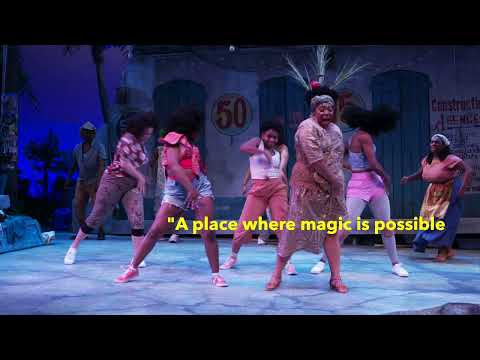
Notes & Trivia
- Broadway opened October 18, 1990 at the Booth Theatre and ran 469 performances.
- The OBCR was recorded in mid-July 1990 and issued on RCA that September; Masterworks Broadway now manages the catalog.
- LaChanze’s breakout as Ti Moune anchors the album; Lillias White and Kecia Lewis both played Asaka during the run.
- The show is a one-act — the cast album essentially plays straight through without an act break.
- The 2017 Broadway revival’s cast recording offers illuminating contrasts (earthier percussion, in-the-round ambience).
Music–Story Links
“We Dance” frames the storytellers as a living orchestra; every later chorus is an echo. Ti Moune’s “Waiting for Life” summons the plot — the headlights that end the song start the story. “Forever Yours” pins everything to a bargain the reprise will cash. “The Human Heart” argues against cynicism, but “Gossip” proves how fast a community can wound. And “Why We Tell the Story” turns grief into inheritance — the album’s last modulation is a benediction.
Reception & Quotes
New York critics praised the show’s “folk-tale clarity” and the album’s vivid, drum-forward mix. The Broadway run spawned a national tour and a 1994 West End production that won the Olivier for Best New Musical; decades later the 2017 revival earned the Tony for Best Revival — a long echo for a one-act fable.
“A charming Caribbean fantasy… Broadway pulse with folkloric grace.” — as per the label’s album history
“Ravishing.” — a revival-era critical shorthand that fits the original score’s heart, too
Interesting Facts
- Source material: Based on Rosa Guy’s novel My Love, My Love; or, The Peasant Girl, itself a Caribbean take on The Little Mermaid.
- Four gods, four elements: Agwe (water), Asaka (earth), Erzulie (love), Papa Ge (death) — the album balances them like seasons.
- One-act architecture: No intermission; the track flow mirrors the stage momentum.
- Recording window: Sessions captured the Broadway company days before opening, preserving raw run-in energy.
- Class on record: “Sad Tale of the Beauxhommes” breezily explains the island’s color line — a catchy history lesson with teeth.
Technical Info
- Title: Once on This Island — Original Broadway Cast Recording
- Year: 1990
- Type: Stage musical cast recording (one act)
- Music: Stephen Flaherty
- Book & Lyrics: Lynn Ahrens
- Broadway Opening: October 18, 1990 — Booth Theatre (NYC)
- Principal original cast (selection): LaChanze (Ti Moune); Jerry Dixon (Daniel); Andrea Frierson (Erzulie); Kecia Lewis / Lillias White (Asaka); Milton Craig Nealy (Agwe); Eric Riley (Papa Ge); Sheila Gibbs (Mama Euralie); Ellis E. Williams (Tonton Julian)
- Label / Editions: RCA (1990); currently on Masterworks Broadway
- Notable numbers: “We Dance,” “Waiting for Life,” “Forever Yours,” “Mama Will Provide,” “The Human Heart,” “Some Girls,” “Ti Moune’s Dance,” “Why We Tell the Story”
- Trailer Video ID (figures):
zm1coH0yP6c - Availability: Streaming/download on major platforms; physical CD long in print via Masterworks
Questions & Answers
- Is this a two-act musical?
- No — it’s a single act. The album plays straight through, matching the show’s momentum.
- Who are the four gods on the album?
- Agwe (water), Asaka (earth), Erzulie (love), Papa Ge (death) — they drive the plot like elements.
- Where did the show open on Broadway?
- At the Booth Theatre, October 18, 1990.
- Which songs define the sound?
- “We Dance” for community rhythm, “Waiting for Life” for longing, “Mama Will Provide” for comic thunder, “The Human Heart” for the show’s soul.
- Is this the same as the revival album?
- No. The 1990 OBCR preserves the original company; the 2017 revival cast album has different orchestrational colors and in-the-round ambience.
Canonical Entities & Relations
| Subject | Relation | Object |
|---|---|---|
| Stephen Flaherty | composed | Once on This Island (score) |
| Lynn Ahrens | wrote book & lyrics for | Once on This Island |
| Graciela Daniele | directed & choreographed | Original Broadway production (1990) |
| LaChanze | originated role of | Ti Moune (1990 Broadway) |
| Jerry Dixon | originated role of | Daniel Beauxhomme |
| Andrea Frierson | originated role of | Erzulie (Goddess of Love) |
| Kecia Lewis / Lillias White | played | Asaka (Mother of the Earth) during the run |
| Milton Craig Nealy | originated role of | Agwe (God of Water) |
| Eric Riley | originated role of | Papa Ge (Demon of Death) |
| RCA / Masterworks Broadway | released / manage | Original Broadway Cast Recording (1990 → catalog) |
| Booth Theatre | hosted | Broadway run (1990–1991) |
Sources: Masterworks Broadway album page; Discogs OBCR session notes; RCA/Masterworks release listings; Playbill/IBDB production records; Wikipedia (production history & song list); MTI show page; 1990–91 TV/Tony clips.

November, 18th 2025
A-Z Lyrics Universe
Cynthia Erivo Popular
Ariana Grande Horsepower
Post Malone Ain't No Love in Oklahoma
Luke Combs Good Riddance (Time of Your Life)
Green Day Bye Bye Bye
*NSYNC You're the One That I Wan
John Travolta & Olivia Newton-John I Always Wanted a Brother
Braelyn Rankins, Theo Somolu, Kelvin Harrison Jr. and Aaron Pierre The Power of Love
Frankie Goes to Hollywood Beyond
Auli’i Cravalho feat. Rachel House MORE ›