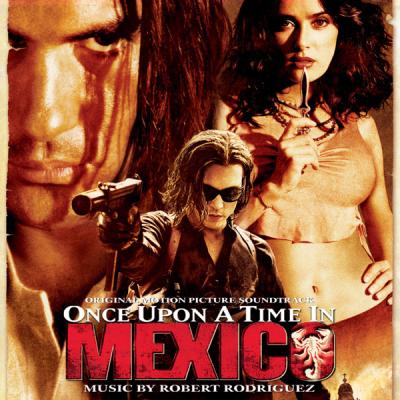
"Once Upon a Time in Mexico" Soundtrack Lyrics
Movie • 2003
Track Listing
Brian Setzer
Patricia Vanne
Robert Rodriguez
Marcos Loya
Robert Rodriguez
Robert Rodriguez
Juno Reactor
Manu Chao
Tonto's Giant Nuts
Del Castillo
Robert Rodriguez
Robert Rodriguez
Tito Larriva
Robert Rodriguez
Robert Rodriguez
Robert Rodriguez
Salma Hayek
Chingon
“Once Upon a Time in Mexico (Original Motion Picture Soundtrack, 2003)” – Album Guide to Tracks and Key Scenes
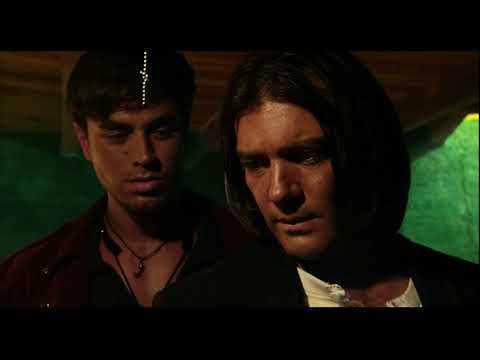
Overview
What does a modern mariachi myth sound like at full blast? In Once Upon a Time in Mexico, it’s nylon strings and tremolo picking slammed against surf guitars, club beats, and swaggering trumpet lines. Arrival → adaptation → rebellion → collapse: the characters converge on a coup day in Mexico, adapt to double-crosses, rebel against the new order, and let the whole machine collapse in gunfire and guitar flourishes — with the soundtrack steering every turn.
Robert Rodriguez leads the music side himself, surrounding his cues with a crate-digger’s spread: Brian Setzer tearing into “Malagueña,” Patricia Vonne’s desert torch (“Tráeme Paz”), Del Castillo’s flamenco-rock, Juno Reactor’s techno-Western “Pistolero,” and a Johnny Depp co-written character theme that unexpectedly swings. The album plays like a border-town station where bolero, rockabilly, and electronica all share the same dusty frequency.
The commercial OST (Milan Records) pairs Rodriguez’s score cuts with select songs; other on-screen pieces (Chingón’s “Cuka Rocka,” Manu Chao’s “Me Gustas Tú”) are documented in credits lists though not always present on every album edition (as per compiled track sources and release notes). The result is a proudly hybrid sound: gunsmoke and nylon strings, sweat and swagger.
Genres & themes in phases: nuevo-mariachi (honor, fate), rockabilly/Latin surf (pursuit, bravado), techno-Western (siege, spectacle), cante/flamenco-pop (longing, memory), character-blues (schemes within schemes).
How It Was Made
Composer/producer: Robert Rodriguez. Label: Milan Records (CD release September 2003). Key collaborators: Tito Larriva & Steve Hufsteter (song features), Del Castillo (band performances), Marcos Loya (guitar), and, for a notable cue, Johnny Depp with Bill Carter & Bruce Witkin on “Sands Theme.” Several score tracks were mixed at Skywalker Sound with Alan Meyerson; the release clocks in around 51 minutes across 17 cuts.
Rodriguez’s approach, familiar from the earlier Mariachi films, is hands-on: write, perform, and produce fast, then stitch in handpicked songs that feel like the characters picked the radio. It’s a sonic extension of his DIY filmmaking ethos.

Tracks & Scenes
“Malagueña” — Brian Setzer
Where it plays: Early in the film’s momentum-building stretch, a virtuosic, amped-up take frames montage imagery of heat, streets, and menace taking shape.
Why it matters: Classic Spanish showpiece reimagined as macho fanfare — it tells you this saga is operatic, not shy.
“Tráeme Paz” — Patricia Vonne
Where it plays: Lyrical interlude tied to memories and myth — the camera slows over faces and roadside altars as a hush cuts through the grind.
Why it matters: The album’s tender heartbeat; a border lullaby that humanizes the vengeance plot.
“Pistolero” — Juno Reactor
Where it plays: Over a charging, cross-town pursuit; tremolo guitars ride a techno pulse while quick cuts stack toward confrontation.
Why it matters: The movie’s electric horse — spaghetti Western by way of club backrooms.
“Church Shootout” — Robert Rodriguez
Where it plays: El Mariachi storms a sanctuary; pews splinter, stained glass flashes, and the cue’s percussive ostinato keeps the geometry legible.
Why it matters: A signature set-piece scored like a dance — chaos you can count.
“Sands Theme” — Johnny Depp, Bill Carter, Bruce Witkin & Ruth Ellsworth
Where it plays: Introductions and walk-and-talks for CIA man Sands; later it returns as his sunglasses-and-secrets motif, darkly playful even when things turn brutal.
Why it matters: Character songwriting: a crooked grin in 12 bars.
“Eye Patch” — Robert Rodriguez
Where it plays: Post-betrayal aftermath; the strings bite short phrases as a new resolve hardens.
Why it matters: A miniature that feels like a turning key — setup for the last act.
“El Mariachi / Mariachi vs. Márquez” — Robert Rodriguez
Where it plays: The hero’s motif collides with the general’s march; guitars and horns trade punches as streets erupt around the coup-day parade.
Why it matters: Theme-versus-theme storytelling — melody as duel.
“Flor de Mal” — Tito Larriva
Where it plays: A dusk-lit breather before the storm; the vocal floats like cigarette smoke over a street that’s about to explode.
Why it matters: Noir perfume in a sunburnt movie.
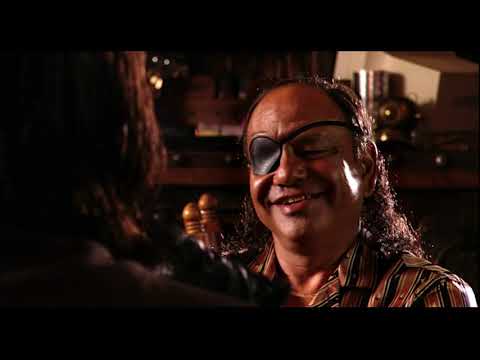
“The Man With No Eyes” — Robert Rodriguez
Where it plays: Nighttime, post-mutilation stalking; footsteps, a child’s hand for guidance, and a cue that trades bravado for nerve.
Why it matters: Texture shift: suspense over swagger.
“Cuka Rocka” — Chingón
Where it plays: Barroom/credits energy in some versions; the band snarls through a border-rock riff as the dust settles.
Why it matters: Rodriguez’s house sound — a calling card that bridges his filmography.
“Siente Mi Amor” — Salma Hayek
Where it plays: End-credits coda on certain releases; a hushed Spanish ballad that folds the franchise’s romance thread back into the myth.
Why it matters: A final soft light after all the noise.
Notes & Trivia
- Milan’s commercial CD (Sept 2003) runs ~51 minutes across 17 tracks; later digital listings sometimes reshuffle or subset tracks.
- Johnny Depp is officially credited as a writer/producer on “Sands Theme,” a rare star-as-songwriter credit on a major action film.
- Selected cues were mixed at Skywalker Sound (Alan Meyerson), giving the nylon guitars real cinema weight.
- Manu Chao’s “Me Gustas Tú” appears in film cue sheets and fan lists but not on all OST editions.
- Patricia Vonne (“Tráeme Paz”) is Rodriguez’s sister, a neat family thread in the compilation.
Music–Story Links
Setzer’s “Malagueña” broadcasts the film’s scale — folk melody blown up to comic-book size. “Pistolero” fuses boots and breakbeats so the chase cuts feel choreographed. “Sands Theme” smiles while Sands does not; the cue’s sly swing keeps his cruelty off-balance. And when “The Man With No Eyes” creeps in, bravado gives way to survival — the music narrows to the path underfoot.
Reception & Quotes
The movie drew mixed-to-positive notices; the album earned consistent praise for its high-low blend — a border jukebox curated by a director who plays guitar between setups. Reviews also loved the audacity of giving an A-list actor his own theme.
“Sands Theme” is credited to Johnny Depp & friends — a stunt that actually works musically. — as per widely cited soundtrack credits
Rodriguez “mixes bullet-symphonies with nylon-string romance,” the OST doing as much world-building as the production design. — according to compilation-track notes
Interesting Facts
- Character cue: Depp co-wrote “Sands Theme” — not common in franchise filmmaking.
- Techno-Western: Juno Reactor’s “Pistolero” had a pre-film life; here it becomes chase grammar.
- House band: Chingón (“Cuka Rocka”) is Rodriguez’s border-rock outfit; the DNA shows up across his films.
- Studio muscle: Mix work at Skywalker Sound gives small ensembles action-movie punch.
- Multiple editions: Some digital releases offer shorter, score-forward selections; the CD is the most balanced listen.
Technical Info
- Title: Once Upon a Time in Mexico — Original Motion Picture Soundtrack
- Year: 2003 (album & film)
- Type: Film soundtrack — score + various artists
- Composer/producer: Robert Rodriguez
- Key songs/cues (selection): Brian Setzer “Malagueña”; Patricia Vonne “Tráeme Paz”; Juno Reactor “Pistolero”; Rodriguez “Church Shootout,” “El Mariachi,” “The Man With No Eyes,” “Eye Patch”; Johnny Depp & friends “Sands Theme”; Tito Larriva “Flor de Mal”; Chingón “Cuka Rocka”; Salma Hayek “Siente Mi Amor.”
- Label: Milan Records (5050466-922922)
- Runtime/format: ~51:35 (CD); streaming editions vary
- Trailer Video ID:
7JrCqCz6CBA - Availability: Physical CD widely circulated; digital/streaming versions and regional variants exist
Questions & Answers
- Who composed the score?
- Robert Rodriguez — he writes, records, and produces much of his own film music.
- Did Johnny Depp really write a theme?
- Yes. “Sands Theme” is credited to Depp with Bill Carter, Bruce Witkin, and Ruth Ellsworth; it’s on the official soundtrack.
- What’s the high-energy chase track?
- “Pistolero” by Juno Reactor — a techno-Western blend that powers pursuit sequences.
- Is “Me Gustas Tú” on the album?
- It’s listed in film song rundowns but doesn’t appear on many OST editions; licensing and curation choices vary by release.
- What closes the credits?
- Some releases include Salma Hayek’s “Siente Mi Amor” as a credits coda; not every edition features it.
Canonical Entities & Relations
| Subject | Relation | Object |
|---|---|---|
| Robert Rodriguez | composed/produced | Once Upon a Time in Mexico soundtrack |
| Milan Records | released | Once Upon a Time in Mexico — OST (Sept 2003) |
| Johnny Depp | co-wrote/performed | “Sands Theme” |
| Juno Reactor | performed | “Pistolero” |
| Brian Setzer | performed | “Malagueña” |
| Patricia Vonne | performed | “Tráeme Paz” |
| Tito Larriva | performed | “Flor de Mal” |
| Chingón | performed | “Cuka Rocka” |
| Salma Hayek | performed | “Siente Mi Amor” |
| Skywalker Sound | mixed | selected score tracks (Alan Meyerson) |
Sources: Discogs/Milan release pages; SoundtrackCollector album listing; IMDb Soundtracks credits; MusicBrainz recording notes; library catalog (runtime/label); film Wikipedia entry; fan-compiled cue lists for non-album tracks.
November, 18th 2025
A-Z Lyrics Universe
Cynthia Erivo Popular
Ariana Grande Horsepower
Post Malone Ain't No Love in Oklahoma
Luke Combs Good Riddance (Time of Your Life)
Green Day Bye Bye Bye
*NSYNC You're the One That I Wan
John Travolta & Olivia Newton-John I Always Wanted a Brother
Braelyn Rankins, Theo Somolu, Kelvin Harrison Jr. and Aaron Pierre The Power of Love
Frankie Goes to Hollywood Beyond
Auli’i Cravalho feat. Rachel House MORE ›