Soundtracks:  A B C D E F G H I J K L M N O P Q R S T U V W X Y Z #


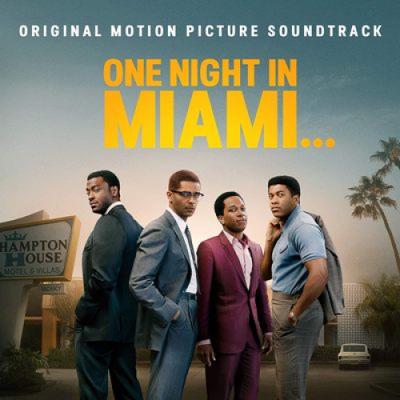
One Night in Miami Album Cover

"One Night in Miami" Soundtrack Lyrics

Movie • 2021

Track Listing


“One Night in Miami… (Original Motion Picture Soundtrack)” – Album Guide to Tracks and Key Scenes

One Night in Miami official trailer still with the four leads backstage, soundtrack mood teaser
One Night in Miami — movie soundtrack vibes, 2021

Overview

What happens when four icons walk into a motel room—and the songs echo louder than the arguments? Regina King’s One Night in Miami… stages a febrile afterglow to Cassius Clay’s title win in 1964, and its soundtrack turns the room into a resonant chamber for legacy, faith, and showmanship.

Built from classic Sam Cooke repertoire re-voiced by Leslie Odom Jr., a handful of period R&B/Latin sides, and a lithe, jazz-inflected score by Terence Blanchard, the album doesn’t just decorate scenes; it interrogates them. The Copacabana cold-open asks how a superstar survives a hostile room. A motel-room needle drop converts debate into a dare. And the climactic TV performance reframes celebrity as obligation.

As a listening arc, the record moves from convivial sheen to moral urgency. Odom’s performances (“You Send Me,” “Chain Gang,” “A Change Is Gonna Come”) trace Cooke’s on-screen pivot; Jeremy Pope’s “Lonely Teardrops” reenacts the heat of a merciless opener; Blanchard’s cues provide oxygen between arguments. The effect: a chamber piece with swing.

Genres & themes in phases: lounge pop and supper-club orchestration — surface polish; R&B/doo-wop and Latin club cuts — swagger versus insecurity; protest folk referenced in-room — conscience knocking; jazz score — interior thought. By the finale, orchestral-pop soul stands as a manifesto, not a mood.

How It Was Made

The compilation is anchored by ABKCO’s stewardship of the Sam Cooke catalog and by new cast recordings. Terence Blanchard’s original score favors piano-led textures and small-ensemble jazz, an intentional choice to keep the film intimate and conversational. Benny Green’s piano touch and selectively used timbres (including a plaintive duduk for Malcolm’s prayer) let cues breathe between volleys of dialogue. Music supervision concentrated on period authenticity and narrative thrust—why this record, in this room, for this argument.

Original song “Speak Now,” co-written and performed by Leslie Odom Jr., functions as the film’s thesis coda: use the mic while you’ve got it. The movie’s TV-show recreation of “A Change Is Gonna Come” was performed live on set to capture shock-of-realization immediacy.

One Night in Miami behind-the-scenes flavor from trailer, four men silhouetted in a motel room
Behind the music — intimate rooms, big stakes.

Tracks & Scenes

“Tammy” — Leslie Odom Jr.
Where it plays: Copacabana, early film (circa first 5–10 minutes). Cooke gamely croons a nostalgic chestnut to a frosty crowd. The camera lingers on tight smiles, clinking glassware, and a band hustling to keep it together; it’s diegetic, from the stage mics outward. The moment sets an artist-versus-room conflict that haunts the night.
Why it matters: Establishes Cooke’s crossover calculus—and the risk of playing safe songs to inhospitable spaces.

“Lonely Teardrops” — Jeremy Pope (as Jackie Wilson)
Where it plays: In-show performance flashback (first act). As the opener, Wilson works the crowd with sweat and precision; the sound is diegetic—band, horn hits, call-and-response. We catch Malcolm at the back, half-judging, half-grinning, as the room tilts toward frenzy.
Why it matters: It frames showmanship as power. Cooke must follow that—fuel for their later argument about responsibility versus entertainment.

“Blowin’ in the Wind” — Bob Dylan (needle-drop reference)
Where it plays: Motel-room record player, mid-film (roughly middle third). Malcolm drops the needle; the mix stays diegetic—tinny speaker, room tone. He paces, snapping in time, then turns the song into a challenge: if Dylan can voice the moment, why not Cooke?
Why it matters: It’s the pivot from commerce to conscience—the moment the soundtrack becomes a debate partner.

“Chain Gang” — Leslie Odom Jr.
Where it plays: Diegetic rehearsal/emulation vibe (middle section). Fragments and hums appear around the motel debate; it recalls Cooke’s craft without defusing tension.
Why it matters: Mirrors the film’s talk of ownership and publishing—hooks as capital.

“Put Me Down Easy (Hampton House)” — Leslie Odom Jr.; “Put Me Down Easy” — L.C. Cooke
Where it plays: In and around Hampton House setting (second act), a musical in-joke that folds Cooke family lore into the room. Mostly diegetic feel; a turntable and band cues thread in and out.
Why it matters: Roots the conversation in a specific Black venue culture—history in the wallpaper.

“I Believe to My Soul” — One Night in Miami Band
Where it plays: Band-stand texture bridging scenes; diegetic club energy bleeds into score.
Why it matters: A Ray Charles signature reimagined—artists learning from artists inside the film’s conversation.

“A Change Is Gonna Come” — Leslie Odom Jr. (as Sam Cooke)
Where it plays: Finale (last 5 minutes). Re-created Tonight Show performance. Starts near a cappella, grows to a lush arrangement. Intercut with post-night outcomes for the four men. Performed live-to-camera for rawness; non-diegetic swell meets diegetic TV-studio space.
Why it matters: The answer song to Malcolm’s provocation—art as public vow.

“Speak Now” — Leslie Odom Jr.
Where it plays: Credits/album closer energy. A new original that translates the film’s thesis into a contemporary call-to-action.
Why it matters: Bridges period piece and present tense.

Key tracks montage from trailer frames — mic, stage lights, motel turntable
Key moments — stage glare, a motel needle drop, and a promise on live TV.

Notes & Trivia

  • The score’s small-band palette was chosen to keep arguments feeling like solos and trades rather than orchestral declarations.
  • “A Change Is Gonna Come” was captured live on set for the finale take—hence the breathy fragility in the first bars.
  • The album arrived digitally late 2020; physical editions followed in early 2021, mirroring the film’s rollout.
  • Jackie Wilson’s “Lonely Teardrops” performance becomes a friendly “top this” dare aimed at Cooke.
  • A Cooke family deep cut (“Put Me Down Easy”) appears both as L.C. Cooke’s 1960s recording and an in-film Hampton House wink.

Music–Story Links

When Malcolm drops Dylan’s record, he reframes Cooke’s career as a question mark: can velvet voice carry iron. Later, Cooke’s on-stage Change answers by reassigning velvet to iron. Meanwhile, Wilson’s showboating opener recalibrates the bar Cooke must clear, so the Tonight Show coda lands as more than a triumph—it’s a rebuttal. Even the Latin and lounge cues (Copa polish, parquet-floor swing) set up the film’s core duel between pleasing and leading.

Reception & Quotes

The music elements drew praise for intimacy and intent: the score’s restraint; Odom’s inhabitation of Cooke; the compilation’s sense of place. The soundtrack later earned high-profile nominations, with the original song becoming the campaign’s signature.

“Cool, nimble jazz lines; a quartet’s confidence for a room-sized play.” — a major trade review
“Odom channels Cooke, then hands the song to us.” — a national magazine
“The needle drop that turns an argument into a calling.” — a newspaper feature on the finale

According to the label’s notes, cast performances, catalog gems, and Blanchard’s cues were sequenced to feel like one long night with open doors between stage, hallway, and TV studio.

Audience close-up from trailer, applause rising during on-stage climax
Reception — the room stands up when the song stands up.

Interesting Facts

  • The music supervisor slot connected cutting-room decisions to catalog clearances—the film needed both pristine masters and space for live vocals.
  • Score eligibility rules sidelined the film in awards tallies because needle-drops outnumbered original cues, even as critics singled out Blanchard’s restraint.
  • “Speak Now” began as multiple drafts with different co-writers before King chose the final version.
  • The finale re-creates a TV moment whose real-life footage is lost—music becomes memory architecture.
  • Album sequencing interleaves score and performances so the argument never fully stops, even between tracks.
  • Jackie Wilson’s showmanship scene is a masterclass in crowd control—timing, mic craft, and band dynamics.
  • Some tracks exist in two forms on the album (cast performance vs. archival recording), underscoring authorship and lineage.

Technical Info

  • Title: One Night in Miami… (Original Motion Picture Soundtrack)
  • Year (film / album rollout): 2020 film; digital soundtrack Dec 25, 2020; CD & score album Jan 15, 2021; vinyl Mar 5, 2021
  • Type: Movie soundtrack + selections from original score
  • Composer (score): Terence Blanchard
  • Original Song: “Speak Now” — Leslie Odom Jr., Sam Ashworth
  • Key Performers: Leslie Odom Jr. (as Sam Cooke), Jeremy Pope (as Jackie Wilson), One Night in Miami Band
  • Music Supervision: Randall Poster (with team/compilation production support)
  • Label: ABKCO Music & Records
  • Notable Placements: “Tammy” at the Copacabana; “Lonely Teardrops” as the opener; “Blowin’ in the Wind” as motel-room needle drop; “A Change Is Gonna Come” as Tonight Show finale
  • Availability: Digital streaming/download; CD; vinyl; separate Original Score album
  • Awards/Notes: “Speak Now” — Oscar & Golden Globe nominations; Critics’ Choice win; the compilation later received a Grammy nomination

Questions & Answers

Why open with “Tammy” at the Copacabana?
To dramatize Cooke’s crossover dilemma: a polished standard in a cold room, setting up the film’s central argument about art and audience.
Is Dylan’s “Blowin’ in the Wind” actually heard in the film?
Yes, as a diegetic motel-room needle drop, used by Malcolm to challenge Cooke’s priorities.
Who wrote the movie’s new original song?
Leslie Odom Jr. co-wrote and performs “Speak Now,” designed as a contemporary echo of the night’s charge to action.
What defines the score’s sound?
Small-ensemble piano-led jazz with selective color (like duduk), keeping the debate intimate and the transitions musical.
Is the finale performance live?
It was captured live-to-camera to preserve vulnerability as the arrangement builds.

Canonical Entities & Relations

SubjectRelationObject
Regina KingdirectsOne Night in Miami… (film)
Kemp Powerswrites (adaptation of)One Night in Miami… (play)
Terence Blanchardcomposes score forOne Night in Miami… (film)
Leslie Odom Jr.performs asSam Cooke (in film)
Leslie Odom Jr.writes & performs“Speak Now” (original song)
Randall Postermusic supervisesOne Night in Miami… (film)
ABKCO Music & RecordsreleasesOriginal Motion Picture Soundtrack
Hampton House (Miami)hoststhe film’s fictionalized gathering
Bob Dylan’s “Blowin’ in the Wind”used byMalcolm X as challenge to Cooke
“A Change Is Gonna Come”closesfilm via Tonight Show recreation

Sources: ABKCO label materials; IMDb soundtrack data; WhatSong title page; Los Angeles Times feature; Wikipedia album notes; Variety feature; Spotify/Apple Music listings.

November, 18th 2025


A-Z Lyrics Universe

Lyrics / song texts are property and copyright of their owners and provided for educational purposes only.