Soundtracks:  A B C D E F G H I J K L M N O P Q R S T U V W X Y Z #


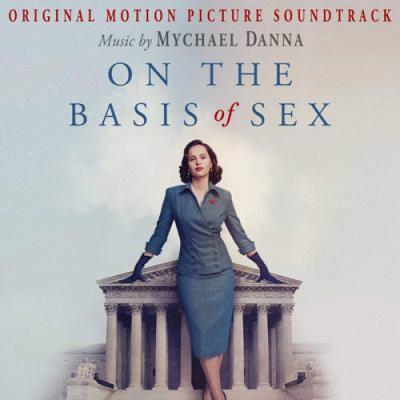
On the Basis of Sex Album Cover

"On the Basis of Sex" Soundtrack Lyrics

Movie • 2019

Track Listing


“On the Basis of Sex (Original Motion Picture Soundtrack)” – Album Guide to Tracks and Key Scenes

On the Basis of Sex official trailer still — Felicity Jones as Ruth Bader Ginsburg walking past the Supreme Court
On the Basis of Sex — music, songs, and where they play.

Overview

What should a courtroom drama sound like — gavels, or grit? On the Basis of Sex answers with restraint. Arrival → adaptation → rebellion → collapse: Ruth enters Harvard, adapts to chilly rooms, rebels in court, and helps collapse an old legal fiction. The soundtrack keeps the pulse steady: Mychael Danna’s lucid score, a handful of era-cues, and a new end-credits anthem that points beyond the film.

Danna’s writing favors purpose over pomp: strings in close harmony, dignified woodwinds, and a quiet rhythmic engine. The cues carry names like “The Times Have Already Changed” and “And May It Please the Court,” telegraphing a theme — argument as music. Around them, source pieces (from Little Richard to the Chambers Brothers, Mozart to Schumann) frame the world Ruth is arguing with.

The album itself is a compact, 20-track score release; most licensed songs live outside that album on artist catalogs and playlists (as per Apple’s listing and studio notes). Kesha’s “Here Comes the Change” closes the film, a contemporary curtain-call that nods at the work still ahead.

Genres & themes in phases: classical staples (tradition; gatekeeping); ’50s/’60s/’70s pop & soul (cultural weather); contemporary protest-pop (continuum of action); modern orchestral minimalism (methodical persuasion).

How It Was Made

Composer: Mychael Danna. Director: Mimi Leder. Music Supervision: Linda Cohen. Danna approached the score “to turn the music-scoring cliché on its head” — avoiding heroic blare for measured resolve; the album arrived mid-December 2018, just before the film’s December 25 rollout.

Supervision threads recognizable catalog (Harvard fight song; period R&B; touchstone classical) into an otherwise lean score tapestry. Editorially, cues often enter like a supporting brief — late, precise, and persuasive.

Trailer frame — Ruth and Marty Ginsburg cross a New York street as muted strings rise
Score as argument: strings and woodwinds that hold the floor instead of shouting it down.

Tracks & Scenes

“A Harvard Man” — Mychael Danna
Where it plays: Orientation and early campus sequences (~00:05). Brief, poised statement under ivy and skepticism.
Why it matters: Establishes the tone: measured, not mawkish — Ruth’s patience in music.

“Ten Thousand Men of Harvard” — Harvard University Band / Glee Club
Where it plays: Harvard Law scenes early on (~00:10). Marching strains drift through ceremony and exclusion.
Why it matters: Diegetic tradition underscoring tradition’s blind spots.

“Slippin’ and Slidin’” — Little Richard
Where it plays: Social backdrop during a student gathering (~00:18). The room loosens; the era peeks in.
Why it matters: A flash of outside culture against cloistered halls.

“Song to the Moon” (Dvořák) — Krassimira Stoyanova & Munich Radio Orchestra
Where it plays: Quiet domestic interlude (~00:28). Ruth studies as the world narrows to a desk lamp and a wish.
Why it matters: Lyric yearning that mirrors Ruth’s private gamble.

“The Marriage of Figaro — Overture” — Mozart
Where it plays: Teaching montage later in the film (~00:55). Quicksilver energy over case prep and class debate.
Why it matters: Order, wit, and speed — exactly the mix her arguments need.

“Time Has Come Today (Single Version)” — The Chambers Brothers
Where it plays: Street-level transitional montage as the Moritz case heats up (~01:05).
Why it matters: Clock-with-cowbell urgency — a blunt, era-rich countdown.

“Question” — Justin Hayward
Where it plays: Reflective bridge while Ruth and Marty recalibrate strategy (~01:20).
Why it matters: A melodic restlessness that fits legal doubt and domestic partnership.

“Concerto in A minor — Intermezzo” — Schumann
Where it plays: Late-night brief-writing (~01:28). Piano as pulse and balm.
Why it matters: Romantic rhetoric turned inward; the melody argues for hope.

“And May It Please the Court” — Mychael Danna
Where it plays: Denver courtroom oral arguments (~01:34). Strings step forward, then thin to let the words land.
Why it matters: The score’s thesis statement: the law, not the music, must win.

“Here Comes the Change” — Kesha
Where it plays: End credits (~01:56). Lyric-video iconography echoes a voter-registration push.
Why it matters: A newly written protest-pop closer that connects 1970 to now.

Trailer montage — classroom debates, rain-slicked sidewalks, and appellate courtroom doors with music cues cutting between them
From campus chants to courtroom cadence — source songs set the weather, score sets the will.

Notes & Trivia

  • The official album is score-only (20 tracks, ~30 minutes); licensed songs are not part of that release.
  • Music supervision by Linda Cohen pairs legacy cuts with classical anchors to keep the film period-credible.
  • “Here Comes the Change” was commissioned for the film’s release window and rolls over the credits.
  • The first trailer debuted July 2018; Focus Features emphasized the new original song in marketing beats.
  • “Time Has Come Today” has a long cinema life; it’s used here as a kinetic, era-loud bridge.

Music–Story Links

Harvard’s fight song weaponizes tradition — then Danna’s strings patiently unpick it across two decades. Little Richard and the Chambers Brothers inject the cultural roar that Ruth is arguing with, not against. Mozart’s fizz underscores the brief-building, while Schumann’s intermezzo keeps the personal cost in frame. The credits anthem doesn’t congratulate; it recruits.

Reception & Quotes

Critics highlighted Danna’s choice to underplay the courtroom heroics and let language lead. The score album saw a focused digital release alongside the film’s holiday opening.

“A musical concept that would turn the music-scoring cliché on its head.” — according to Variety
“20 concise cues… lucid, clear-eyed writing.” — as per the album’s digital listings
“Featuring the new original song by Kesha.” — per Focus Features’ trailer push
Trailer end card — credits over a blue gradient while the end-credits song begins
End credits pass the baton — from a precedent to a practice.

Interesting Facts

  • Album label: Sony Music handled the digital distribution via a Focus/Storyteller license.
  • Trailer IDs: Focus uploaded multiple cuts; the widely shared first trailer is used in the figures here.
  • Classical spine: Mozart (speed), Schumann (poise), Dvořák (yearning) — the selections mirror the film’s shifting gears.
  • Pop continuum: From Little Richard’s early rock to Kesha’s protest-pop, the set draws a line through American argument-music.
  • Courtroom cueing: Danna often lets music exit as rhetoric peaks — a smart dramatic mute.

Technical Info

  • Title: On the Basis of Sex (Original Motion Picture Soundtrack)
  • Year: 2018 film (U.S. release Dec 25, 2018); score album released Dec 14, 2018
  • Type: Film soundtrack (score album + licensed songs in film)
  • Composer: Mychael Danna
  • Music Supervisor: Linda Cohen
  • Selected licensed placements (in-film): “Ten Thousand Men of Harvard” (Harvard University Band/Glee Club); Little Richard “Slippin’ and Slidin’”; The Chambers Brothers “Time Has Come Today”; Justin Hayward “Question”; Mozart “Overture to Le Nozze di Figaro”; Schumann “Piano Concerto in A minor — Intermezzo”; Dvořák “Song to the Moon.”
  • Label (score album): Storyteller / Sony Music (digital)
  • Availability: Score on major DSPs; licensed tracks via artist releases and playlists; Kesha single released separately.

Questions & Answers

Who composed the score?
Mychael Danna composed the original score; his approach favors patience over fanfare.
Is there a “songs” album?
No — the commercial release is Danna’s score. The film’s licensed songs live on artist catalogs and playlists.
What plays over the end credits?
“Here Comes the Change” by Kesha — a new song released alongside the film’s campaign.
Who supervised the music clearances?
Linda Cohen oversaw music supervision for the film.
What’s the trailer video ID?
The widely shared Focus Features trailer uses YouTube ID 28dHbIR_NB4.

Canonical Entities & Relations

SubjectRelationObject
Mychael Dannacomposed score forOn the Basis of Sex (2018)
Linda Cohenmusic supervisedOn the Basis of Sex (2018)
Keshaperformed end-credits song“Here Comes the Change”
Focus Featuresreleased trailerYouTube ID 28dHbIR_NB4
Storyteller / Sony MusicreleasedOn the Basis of Sex (Original Motion Picture Soundtrack) (2018, digital)
Mimi LederdirectedOn the Basis of Sex

Sources: Apple Music album page; Focus Features trailer; Variety scoring feature; Metacritic credits (music department); InSoundtrack & Soundtrakd song lists; Wikipedia film entry; Spotify/artist single pages.

November, 18th 2025


A-Z Lyrics Universe

Lyrics / song texts are property and copyright of their owners and provided for educational purposes only.