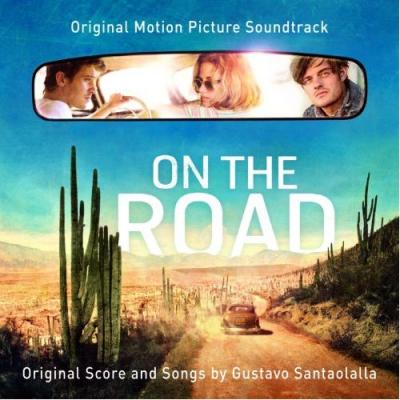
"On the Road" Soundtrack Lyrics
Movie • 2012
Track Listing
Greg Kramer
Gustavo Santaolalla
Slim Gaillard
Gustavo Santaolalla
Dinah Washington & Lionel Hampton
Gustavo Santaolalla
Gustavo Santaolalla
Billie Holiday & Her Orchestra, Lester Young
Charlie Parker
Gustavo Santaolalla
Ella Fitzgerald
Gustavo Santaolalla
Gustavo Santaolalla
Charlie Parker, Dizzy Gillespie
Slim Gaillard
Gustavo Santaolalla
Son House
Gustavo Santaolalla
Jack Kerouac
“On the Road (Original Motion Picture Soundtrack, 2012)” – Album Guide to Tracks and Key Scenes
Overview
What does freedom sound like when the map is still being drawn? In Walter Salles’s On the Road, it’s bop horns and 12-bar ghosts, with a quiet guitar binding the seams. Arrival → adaptation → rebellion → collapse: Sal meets Dean, adapts to reckless orbit, rebels against safety, and watches illusions collapse — while the soundtrack moves from club to car radio to headspace.
Gustavo Santaolalla’s score keeps a low flame — dry guitars, brushed drums, and bass figures that wander like mile markers. Around it, the film leans hard into period sides: Slim Gaillard’s hipster swing, Ella Fitzgerald’s satin lift, Charlie Parker’s flash, Son House’s bone-deep lament. The commercial album mirrors that blend: concise score cues alongside vintage recordings (Verve release).
The music supervision treats jazz not as wallpaper but as a living character. Slim Gaillard shows up in-story; Bird and Diz spark montage energy; blues sides haunt the southern detours. As per JazzTimes’ track survey and credits, the film licenses three dozen cuts overall, far more than the 19 on the album.
Genres & themes in phases: bebop/swing (speed, wit, youthful bravado); classic vocal jazz (interludes of warmth, romantic pause); Delta blues (guilt, dust, consequence); sparse Americana score (the in-between miles).
How It Was Made
Composer: Gustavo Santaolalla. Music Supervisor: Lynn Fainchtein. Label: Verve (UMG). Santaolalla’s team cut lean originals (“Roman Candles,” “Keep It Rollin’,” “The Open Road”) and, on several cues, recorded with Brian Blade (drums) and Charlie Haden (bass) — a tasteful rhythm section in dialogue with the era’s records.
Licensing threaded canonical names (Ella, Billie, Parker, Gaillard, Son House), plus scene-specific club and radio cues. According to Film Music Reporter and label notes, the U.S. album followed festival play and European rollout, landing domestically in November 2012.
Tracks & Scenes
“Hit That Jive Jack” — Slim Gaillard
Where it plays: San Francisco nightclub sequence, diegetic. Dean drags Sal into a set that feels half-comedy, half-speed, as Gaillard riffs in his own hip argot. The camera catches hands, cymbals, sweat; time loosens.
Why it matters: The film’s clearest bridge between Kerouac’s page and screen — spontaneity as doctrine.
“Scrapple from the Apple” — Charlie Parker
Where it plays: Bebop montage over late-night streets and apartment-party chaos. Dialogue jostles the horn lines; edits sync to Parker’s quick pivots.
Why it matters: Pure velocity — Sal’s prose rhythm in music.
“I’ve Got the World on a String” — Ella Fitzgerald (with Quincy Jones & His Orchestra)
Where it plays: Slow-dance respite after a frenetic run of driving and drinking. A living room becomes a small stage; the lyric turns swagger into tenderness.
Why it matters: Brief balance — the dream of control the characters can’t hold.
“A Sailboat in the Moonlight” — Billie Holiday
Where it plays: Motel-room candor; a gramophone/radio source softens a jagged conversation as the night lengthens.
Why it matters: Holiday’s hush reframes the restless plot as a love story no one can steer.
“Death Letter Blues” — Son House
Where it plays: Southern leg, non-diegetic under weary travel shots and a fraught personal reckoning near dawn.
Why it matters: The movie’s conscience — grief and consequence creeping up on the joyride.
“Salt Peanuts” — Dizzy Gillespie & Charlie Parker
Where it plays: Cross-cut party energy; horn call-and-response turns scene cuts into musical edits.
Why it matters: Communal swing, chaotic choices — the road’s buzz in one riff.
“Yip/Yep Roc Heresy” — Slim Gaillard (arr. Coati Mundi)
Where it plays: Early club sequence with rapid-fire wordplay; a wink at hipster code-talk that Sal idolizes.
Why it matters: Language as rhythm — a direct echo of Kerouac’s cadence.
“I Used to Love You (But It’s All Over Now)” — Bing Crosby
Where it plays: Radio needle-drop mid-journey; a too-cheery chorus floating over a car argument.
Why it matters: Period pop as irony — the dream curdles on cue.
Score picks — Gustavo Santaolalla (with Brian Blade & Charlie Haden on select cues)
Where they play: “Roman Candles” (first long haul, windshield-view miles), “The Open Road” (state-line transitions), “Keep It Rollin’” (post-fight drift), “I Think of Dean” (afterglow and absence). Minimal motifs, lots of air.
Why they matter: They’re the film’s inner voice — patiently stitching moments the records can’t narrate.
Also heard in-film (selection): Coleman Hawkins “Disorder at the Border”; Dinah Washington “Mean and Evil Blues”; Bukka White “Aberdeen Mississippi Blues”; Jack Teagarden “Beale Street Blues”; Daniel Santos “Dos Gardenias.”
Notes & Trivia
- The U.S. soundtrack album (Verve) arrived November 2012 after a spring Cannes bow and European releases.
- Music supervisor Lynn Fainchtein notes ~34 licensed songs appear in the film — the album compiles 19.
- “Jack Kerouac Reads ‘On the Road’” is an album cut: the author’s voice appears as a track on the OST.
- Several cues credit Santaolalla alongside Brian Blade (drums) and Charlie Haden (bass), a subtle all-star pocket band.
- Slim Gaillard’s presence is central to Kerouac’s mythos; the movie foregrounds that with multiple Gaillard cuts.
Music–Story Links
When Dean and Sal crash the San Francisco club, Gaillard’s bebop patter gives the camera permission to riff; later, Parker’s speed edits turn montage into music. Blues sides mark the hangover: “Death Letter Blues” pulls the road myth toward mortality, while Ella and Billie offer the soft lie of control the characters can’t keep. Santaolalla’s guitar shows up between stations — the thought you have after the song ends and the highway’s still there.
Reception & Quotes
Jazz and film outlets praised the curation — a crate-dig that feels lived-in rather than showy — and the decision to keep the score minimal so the era could breathe. The OST plays like a mixtape of American mid-century mood.
“Heavy on jazz… the soundtrack treats Slim Gaillard as a keystone.” — according to a JazzTimes survey
“Nine original compositions… subtly provocative yet emotionally powerful.” — as per Verve’s album brief
Interesting Facts
- Album makeup: The commercial OST mixes vintage Verve/UMG catalog with new score cues; a few high-profile in-film tracks don’t appear on the album.
- Kerouac cut: The OST includes an archival “Jack Kerouac Reads ‘On the Road’” track.
- Bop bench: Bird appears multiple times (“Scrapple…,” “Ko-Ko,” “Salt Peanuts”), underscoring montage speed.
- Latin swing: Pérez Prado mambo cues briefly light up party scenes, a nod to border-crossing nightlife.
- Score method: Santaolalla favors mic’d room tone; you hear fingers, wood, breath — not just notes.
Technical Info
- Title: On the Road — Original Motion Picture Soundtrack
- Year: 2012 (album); U.S. release November 2012
- Type: Film soundtrack (score + licensed recordings)
- Composer: Gustavo Santaolalla
- Music Supervisor: Lynn Fainchtein
- Key licensed artists (selection): Slim Gaillard; Charlie Parker; Dizzy Gillespie; Ella Fitzgerald; Billie Holiday; Son House; Coleman Hawkins; Bukka White; Jack Teagarden; Daniel Santos.
- Label: Verve (UMG)
- Notable score collaborators: Brian Blade (drums); Charlie Haden (bass) on select cues
- Availability: 19-track OST on major DSPs; film features ~34 songs in total
- Trailer Video ID:
su75_mcryO4(IFC Films)
Questions & Answers
- Is the album mostly jazz standards or original score?
- Both. The OST balances Santaolalla’s spare cues with period jazz/blues sides; the film itself uses even more licensed songs than the album includes.
- Who handled the music clearances?
- Lynn Fainchtein supervised the music and clearances, working closely with Salles and Santaolalla.
- Does Slim Gaillard appear because Kerouac namedrops him?
- Yes — Gaillard is pivotal in the book, and the film leans into that with multiple Slim cuts and a club sequence that mirrors Kerouac’s reverence.
- Where does the blues show up?
- On the southern legs and aftermath beats; Son House and Bukka White tracks underscore the costs of the ride.
- Why is the score so minimal?
- So the era can speak for itself — the guitar/bass/drums palette leaves room for the records and the road noise.
Canonical Entities & Relations
| Subject | Relation | Object |
|---|---|---|
| Gustavo Santaolalla | composed score for | On the Road (2012 film) |
| Lynn Fainchtein | music supervised | On the Road (2012) |
| Verve (UMG) | released | On the Road — Original Motion Picture Soundtrack (2012) |
| Slim Gaillard | performed | “Hit That Jive Jack”; “Yip/Yep Roc Heresy” (in film/OST) |
| Charlie Parker | performed | “Scrapple from the Apple”; “Ko-Ko”; “Salt Peanuts” (in film) |
| Ella Fitzgerald | performed | “I’ve Got the World on a String” (in film/OST) |
| Billie Holiday | performed | “A Sailboat in the Moonlight” (in film/OST) |
| Son House | performed | “Death Letter Blues” (in film/OST) |
| Brian Blade; Charlie Haden | performed on | select score cues (e.g., “Roman Candles,” “The Open Road,” “Keep It Rollin’”) |
| IFC Films | released trailer | YouTube ID su75_mcryO4 |
Sources: JazzTimes track survey & interview notes; Film Music Reporter (album details & track list); Verve/Apple/Spotify album listings; IMDb soundtrack page; ShowbizJunkies album brief; IFC trailer.
November, 18th 2025
'On the Road' is an adventure drama film directed by Walter Salles. It is an adaptation of Jack Kerouac's 1957 novel of the same name. Get more info: Wikipedia, Internet Movie DatabaseA-Z Lyrics Universe
Cynthia Erivo Popular
Ariana Grande Horsepower
Post Malone Ain't No Love in Oklahoma
Luke Combs Good Riddance (Time of Your Life)
Green Day Bye Bye Bye
*NSYNC You're the One That I Wan
John Travolta & Olivia Newton-John I Always Wanted a Brother
Braelyn Rankins, Theo Somolu, Kelvin Harrison Jr. and Aaron Pierre The Power of Love
Frankie Goes to Hollywood Beyond
Auli’i Cravalho feat. Rachel House MORE ›