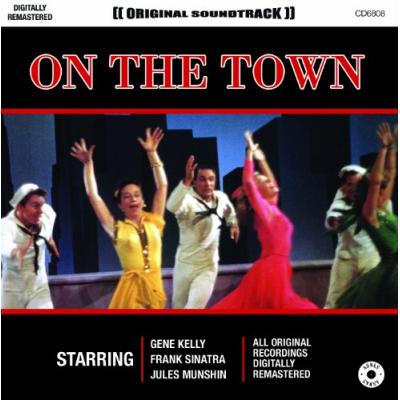
"On the Town" Soundtrack Lyrics
Movie • 1998
Track Listing
“On the Town (Original 1949 Motion Picture Soundtrack)” – Album Guide to Tracks and Key Scenes
Overview
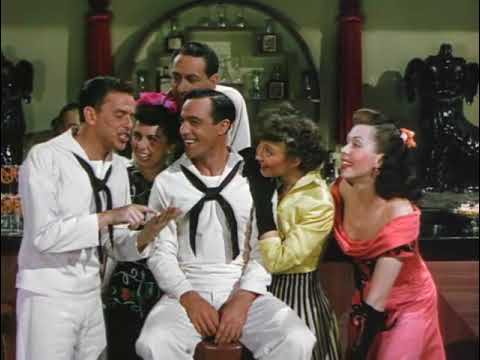
Three sailors, one day — how do you score urgency without losing joy? On the Town answers by turning New York into an orchestra. Arrival → adaptation → rebellion → collapse: Gabey, Chip, and Ozzie land with 24 hours of liberty, adapt to the city’s rhythm, rebel against the clock, then watch plans collapse into a dance-through-night finale. The soundtrack shifts from brassy bravado to romantic hush to modernist ballet — a map in music.
Though the film springs from the 1944 Bernstein/Comden/Green stage musical, MGM reshaped the sound for cinema. Several Bernstein numbers remain (“New York, New York,” “Come Up to My Place,” the dream ballets), while Roger Edens supplies new film songs and Lennie Hayton conducts a slick, Technicolor orchestral palette. Result: a street-smart musical that moves like a movie, not a filmed stage show.
One note on dates: the movie is from 1949. If you’re thinking “1998,” that was a high-profile Broadway revival year; this guide covers the classic film and its soundtrack.
Genres & themes in phases: big-band/MGM swing (swagger → motion), Broadway patter (city comedy), lyrical ballad (brief romance), ballet-inflected symphonic writing (dreams vs. reality), reprise-driven community (home stretch).
How It Was Made
Directors: Gene Kelly & Stanley Donen (debuts). Music: Leonard Bernstein (adapted stage material), Roger Edens (new film songs/score), Lennie Hayton (musical direction/conducting). Book/lyrics: Betty Comden & Adolph Green. Kelly insisted on location shots (Columbus Circle, Brooklyn Bridge, Rockefeller Center), giving the music a concrete city to dance with. The film’s musical score won an Academy Award — proof that Edens/Hayton’s film-first approach worked (as per studio and reference summaries).
Tracks & Scenes
“I Feel Like I’m Not Out of Bed Yet” — Shipyard Worker
Where it plays: Dawn over the Navy Yard; a workman’s call opens the film like a foghorn-warmup for the sailors’ day.
Why it matters: A Bernstein holdover that grounds the story in labor and morning light before the city bursts open.
“New York, New York” — Gabey, Chip & Ozzie
Where it plays: Pier to subway to skyline — a location-shot anthem as the trio sprints through landmarks, grabbing at a day too small for their plans.
Why it matters: The film’s signature; energy as civic pride. AFI later canonized it among the great movie songs.
“Come Up to My Place” — Hildy & Chip
Where it plays: A cab ride turns into flirtation; Hildy steamrolls Chip with offers of sightseeing that all end at her apartment.
Why it matters: Classic Comden/Green wordplay — city chaos becomes rom-com choreography.
“Main Street” — Gabey & Ivy
Where it plays: A gentler, film-original ballad as Gabey imagines quiet with the “Miss Turnstiles” girl he’s chasing through a noisy town.
Why it matters: Edens’ gift: simple melody, cinematic close-up emotion.
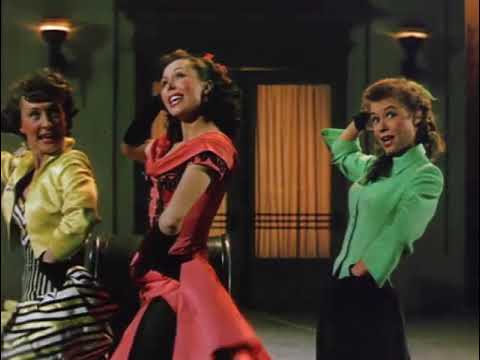
“Prehistoric Man” — Claire, Ozzie, Gabey, Chip & Hildy
Where it plays: Museum romp; Ozzie’s enthusiasm collides with a dinosaur skeleton and a song that lets Ann Miller tap the room into submission.
Why it matters: Miller’s star showcase — percussion, patter, and PG innuendo.
“You’re Awful” — Chip & Hildy
Where it plays: A musical slow dance inside a taxicab that’s somehow still moving; two misfit rhythms fall into soft-shoe time.
Why it matters: Sweetness with a wink — Sinatra’s light tenor, Garrett’s comic glow.
“On the Town” — Ensemble
Where it plays: A celebratory group number that folds the day’s threads into a single civic chorus.
Why it matters: Title tune as thesis: New York gives — and demands — momentum.
“Miss Turnstiles Ballet” (instrumental) — Ivy & Ensemble
Where it plays: A stylized sequence sketching Ivy’s imagined life; it’s Broadway DNA on film — high-line ballet in a pop musical.
Why it matters: Bridges character fantasy with the city’s dream-making machinery.
“A Day in New York” (instrumental) — Dream Trio
Where it plays: Late in the story, a full-on Gene Kelly dream ballet compresses the city into movement — joy, frustration, goodbye.
Why it matters: The myth of the 24-hour pass distilled into dance — cinema-sized.
Notes & Trivia
- The film drops or reshapes much of Bernstein’s stage score; Edens’ new songs and Hayton’s supervision recenter it for cinema.
- Shot partly on location — unusual for MGM at the time — which gives “New York, New York” its charge.
- Oscar winner: Best Musical Score (Edens/Hayton).
- AFI later ranked “New York, New York” among the top movie songs.
- Comden & Green adapted their own stage book/lyrics, keeping the wit intact while loosening the structure.
Music–Story Links
“I’m Not Out of Bed Yet” wakes the city; “New York, New York” ignites the three quests; “Come Up to My Place” collapses sightseeing into intimacy; “Prehistoric Man” turns bad museum manners into a tap manifesto. The dream ballets give the truth under the plot — the city these characters want versus the one the clock allows. Reprises pull the threads together as the sun sets on the pier.
Reception & Quotes
Critics loved the verve and the genuine New York footage; the music won awards and outlived the era. According to reference roundups, it remains one of MGM’s briskest Technicolor musicals — less operetta, more oxygen.
“Overflowing with infectious enthusiasm… an exhilarating musical ride.” — summary of later critical consensus
“Edens/Hayton’s Oscar-winning score proves how to translate Broadway to screen.” — studio-yearbook recap

Interesting Facts
- Location pioneer: The opening anthem was filmed on actual Manhattan streets — rare for MGM then.
- Stage-to-screen surgery: Bernstein’s more complex numbers were trimmed or replaced to suit film pacing.
- Dream logic: Two extended ballet sequences carry character psychology without dialogue.
- Album reality: Commercial “film soundtrack” issues mix original cues and later reconstructions; not all in-film performances survive complete on disc.
- Revival echo: A 1998 Broadway revival helped re-focus attention on the property’s stage roots.
Technical Info
- Title: On the Town — Original Motion Picture Soundtrack (guide)
- Year: 1949 film (various album editions released later)
- Type: Film musical soundtrack (songs + ballet instrumentals + score)
- Music: Leonard Bernstein (selected stage numbers); Roger Edens (new songs/score)
- Music Direction/Conductor: Lennie Hayton
- Book/Lyrics: Betty Comden & Adolph Green
- Key numbers (film versions): “I Feel Like I’m Not Out of Bed Yet”; “New York, New York”; “Come Up to My Place”; “Main Street”; “Prehistoric Man”; “You’re Awful”; “On the Town”; “Miss Turnstiles Ballet”; “A Day in New York.”
- Awards: Academy Award — Best Musical Score (1949/1950 season)
- Label/availability: Multiple later releases (Verve/UMG, archival sets); selections on major DSPs.
- Trailer video ID:
ri4OegFn3Jk
Questions & Answers
- Is there a 1998 movie of On the Town?
- No — the famous film is 1949. 1998 marks a Broadway revival; this guide covers the film soundtrack.
- Why are some stage songs missing in the film?
- MGM streamlined Bernstein’s score for cinema pace; Roger Edens contributed new film songs and Lennie Hayton supervised the winning screen score.
- What’s the big opening number on the streets?
- “New York, New York,” shot on location — a rarity for MGM then and the film’s calling card.
- Are the dream ballets on the album?
- Often, yes — “Miss Turnstiles Ballet” and “A Day in New York” appear on many soundtrack issues, sometimes in reconstruction.
- Who wrote the witty cab duet?
- “Come Up to My Place” is by Bernstein (music) with Comden & Green — kept from the stage show.
Canonical Entities & Relations
| Subject | Relation | Object |
|---|---|---|
| Gene Kelly & Stanley Donen | directed | On the Town (1949) |
| Leonard Bernstein | composed (selected stage numbers retained for) | On the Town (film) |
| Roger Edens | wrote new songs/score for | On the Town (film) |
| Lennie Hayton | conducted/scored | On the Town (film) — Oscar-winning musical score |
| Betty Comden & Adolph Green | wrote screenplay & lyrics for | On the Town (film) |
| Gene Kelly, Frank Sinatra, Jules Munshin | starred as | Gabey, Chip, Ozzie |
| Ann Miller, Vera-Ellen, Betty Garrett | co-starred as | Claire, Ivy, Hildy |
| Loew’s Inc. / MGM | distributed/produced | On the Town (1949) |
| 1998 Broadway revival | revived | On the Town (stage musical) |
Sources: Wikipedia film entry & musical-number list; IMDb soundtrack page; Apple Music/Spotify soundtrack listings; EBSCO/AFI-style overviews; Variety & Broadway histories (1998 revival context).
November, 18th 2025
A-Z Lyrics Universe
Cynthia Erivo Popular
Ariana Grande Horsepower
Post Malone Ain't No Love in Oklahoma
Luke Combs Good Riddance (Time of Your Life)
Green Day Bye Bye Bye
*NSYNC You're the One That I Wan
John Travolta & Olivia Newton-John I Always Wanted a Brother
Braelyn Rankins, Theo Somolu, Kelvin Harrison Jr. and Aaron Pierre The Power of Love
Frankie Goes to Hollywood Beyond
Auli’i Cravalho feat. Rachel House MORE ›