Soundtracks:  A B C D E F G H I J K L M N O P Q R S T U V W X Y Z #


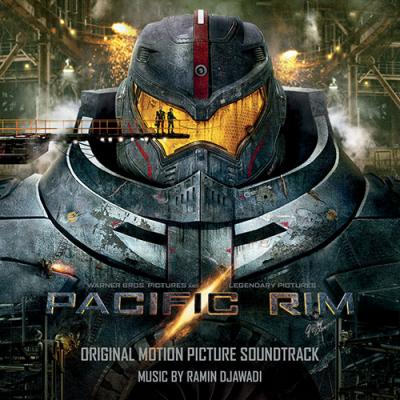
Pacific Rim Album Cover

"Pacific Rim" Soundtrack Lyrics

Movie • 2013

Track Listing


“Pacific Rim: Original Motion Picture Soundtrack (Ramin Djawadi)” – Album Guide to Tracks and Key Scenes

Pacific Rim 2013 official trailer still with Jaeger vs Kaiju standoff
“Pacific Rim” — Official Main Trailer, 2013

Overview

What if a march could make 2500 tons feel light? Pacific Rim answers with a steel-welded theme — heroic, neon-lit — that turns city-levelling into choreography. Ramin Djawadi’s score doesn’t just back the fights; it drives the Jaegers, all piston and pulse.

The album blends orchestral muscle, industrial percussion, and arena-rock guitar into a single colossus. You hear brass lines that stride, taikos that bite, and a lead guitar that scratches and screams like torn rebar. Character arcs thread through it: Raleigh’s steadiness sits in the main motif’s square shoulders; Mako’s memory pieces bloom in lyrical strings before the engines kick back in.

Distinctive, too, is how little needle-drop pop the movie needs. A Hong Kong street ballad flickers by; the end credits deliver a clubby anthem; otherwise it’s pure score. Set-piece cues (“Gipsy Danger,” “The Shatterdome,” “Striker Eureka”) behave like landmarks on a night drive — you know exactly where you are when they hit.

Genres by phase: brass-forward film score + taiko (arrival); hybrid orchestral/rock with distorted guitar (adaptation); rhythmic ostinatos and synth grit (rebellion); elegiac strings swelling back to the title riff (collapse and resolve). Rock heft here equals technological will; choir and strings keep the human stakes in view.

How It Was Made

Composer Ramin Djawadi built a “hero riff” that could be hammered by guitars without losing symphonic weight. A 100+ piece orchestra and choir were layered with drum kits, taiko, and processed metallic hits. Guitarist Tom Morello adds signature textures — whammy-siren bends and percussive scrapes — that brand the title cue and tech passages (as per a 2013 WIRED interview with Djawadi). Director Guillermo del Toro pushed for a bold, instantly legible theme that audiences could hum on the way out.

Licensing is minimal by design, though the production cleared a Mandarin classic for the crowded-street ambience in Hong Kong and commissioned an end-credits track (“Drift”) that ties lyrically to the film’s neural-link conceit.

Close-up trailer frame of Jaeger cockpit rigs, score-driven engineering vibe
Inside the drift — circuitry, hydraulics, and a guitar-spined theme

Tracks & Scenes

“To Fight Monsters, We Created Monsters” — Ramin Djawadi
Where it plays: Prologue montage. Newsreel cadence, steel being forged, Jaegers rising. The theme enters in measured steps, announcing the film’s myth-size stakes. Non-diegetic.
Why it matters: States the thesis with brass, then tags it with the guitar’s bite — science as swagger.

“Pacific Rim (feat. Tom Morello)” — Ramin Djawadi
Where it plays: Over early training and major hero beats, and reprised as the film’s identity stamp across multiple sequences. Non-diegetic.
Why it matters: That four-note lift and guitar scream become the Jaeger brand. It’s the walk-on music for giants.

“The Shatterdome” — Ramin Djawadi
Where it plays: Arrival in Hong Kong base. Wide interior shots, crews at work, rust and rivets. The cue grooves with mechanized confidence as Raleigh meets the program’s last hope. Non-diegetic.
Why it matters: World-building through rhythm: the beat sounds like factory floors and bootfalls.

“Mako” — Ramin Djawadi
Where it plays: Mako Mori’s Tokyo flashback. Sirens, snow of ash, the Onibaba Kaiju towering in memory. The piece starts tender — solo lines and strings — then hardens as trauma surges. Non-diegetic.
Why it matters: The score’s heart. It reframes the movie as a survivor’s story, not just metal vs. monster.

“Gipsy Danger” — Ramin Djawadi
Where it plays: Jaeger deployment and frontline pivots — notably during the Hong Kong double-event battle as the retrofitted Gipsy tags in. Non-diegetic.
Why it matters: A faster engine on the main idea; propulsion for a machine built to take a punch and keep moving.

“Striker Eureka” — Ramin Djawadi
Where it plays: Australian ace moments and the later-briefing runs; snappier snare and brass swagger for the Hansens. Non-diegetic.
Why it matters: Character paint in timbre — cockier, tighter, a foil to Gipsy’s heavyweight stride.

“Hannibal Chau” — Ramin Djawadi
Where it plays: Black-market labyrinth. Ron Perlman’s dealer struts through a bass-plucked, sly motif as neon-stained entrails swing overhead. Non-diegetic shading.
Why it matters: A wink amid dread — pulp noir inside kaiju biology.

“Call Me Newt” — Ramin Djawadi
Where it plays: Lab mania and drift-obsessed research beats for Dr. Newton Geiszler. Non-diegetic.
Why it matters: Comic velocity; the cue jitters the film toward a crucial discovery.

“Just Like Your Tenderness (恰似你的溫柔)” — performed by Luo Xiaoxuan
Where it plays: Hong Kong street scene, diegetic on radios/PA as crowds churn around the impending kaiju strike; a soft Mandarin ballad against industrial chaos.
Why it matters: A delicate, human-scale texture that makes the incoming destruction feel crueler.

“Drift” — Blake Perlman feat. RZA
Where it plays: End credits. Electronic swagger with lyrical nods to neural sync and partnership.
Why it matters: Sends you out with the film’s core metaphor — two minds, one motion — reworded as a hook.

Trailer image of Hong Kong neon fight where the theme returns in full guitar-and-brass force
Highlights — neon, rain, and that indestructible theme

Notes & Trivia

  • Guitar on multiple cues is by Tom Morello — the title track’s snarl is his fingerprint.
  • The orchestra reportedly topped 100 players with a Russian choir adding weight in climaxes.
  • Only a handful of non-score pieces are heard in-film; most emotion is carried by the leitmotifs.
  • The “Jaeger tech” sound design and the score often blur — hammer hits were performed like drum kit fills.
  • “Drift” lyrically mirrors the pilot link; it’s a world-building end-credits song, not a pop add-on.

Music–Story Links

When Raleigh and Mako first sync, the Pacific Rim riff tightens — fewer notes, heavier hits — telegraphing a fit that isn’t quite there yet. In Mako’s flashback, the cue “Mako” lets memory breathe before brass slams the door; the music essentially chooses her path for her. As the Hong Kong fight becomes a double event, “Gipsy Danger” drops like an uppercut, recasting the battle from survival to counterpunch. Later, as Striker heads for a one-way run, snare patterns square their shoulders — a military farewell wrapped in adrenaline.

Reception & Quotes

Reviews praised the theme’s instant recognizability and the orchestral/rock fusion. The album charted on Billboard’s Top Soundtracks shortly after release. According to Empire’s review, Djawadi keeps muscle and heart in balance.

“A pulse-pounding adrenaline rush of music with a clear, rousing theme.” — The Action Elite
“Muscular stylings without losing the human core.” — Empire
“Film and album both thrive when that four-note riff returns.” — Filmtracks
Trailer frame of Jaeger hauling a cargo ship used as club, emblematic of theme’s swagger
Reception — theme-first scoring that sticks the landing

Interesting Facts

  • Label & rollout: WaterTower Music issued the soundtrack in June–July 2013 (digital first, then CD/physical).
  • Cameo credit: Priscilla Ahn’s vocals are featured on a tender mid-album cue.
  • Chart note: Peaked on the U.S. Top Soundtracks in late July 2013.
  • Non-OST in film: Luo Xiaoxuan’s “Just Like Your Tenderness” is heard on-screen but not on the album.
  • Bonus tie-in: The credits song “Drift” name-checks the Jaeger neural link.
  • Guitar heroics: Morello’s parts are spotlighted on the title and tech cues.
  • Orchestration mass: Low brass and choir bulk up the theme’s “colossus” feel.

Technical Info

  • Title: Pacific Rim: Original Motion Picture Soundtrack
  • Year: 2013 (film release: July 12, 2013)
  • Type: Film score with limited source songs
  • Composer/Producer: Ramin Djawadi
  • Featured musician: Tom Morello (guitars on select tracks)
  • Label: WaterTower Music
  • Key cues & placements: Prologue (“To Fight Monsters…”); Base arrival (“The Shatterdome”); Tokyo memory (“Mako”); Hong Kong double event (“Gipsy Danger”); Striker’s runs (“Striker Eureka”); End credits (“Drift”)
  • Album availability: Digital and physical (26 tracks); streaming widely available

Questions & Answers

Who performs the prominent guitar on the main theme?
Tom Morello contributes the signature guitar textures on key tracks, including the title cue.
Is there a pop song in the end credits?
Yes — “Drift” by Blake Perlman featuring RZA rolls over the credits.
What’s the diegetic song we hear in Hong Kong?
“Just Like Your Tenderness” (恰似你的溫柔), performed in-film by Luo Xiaoxuan, plays from street speakers/radios.
Which cue scores Mako’s childhood flashback?
“Mako” — a lyrical, then surging piece that frames her defining trauma and resolve.
Why does the score mix rock with orchestra?
To sonically fuse human grit with heavy engineering — guitars for Jaegers, brass/choir for mythic scale.

Canonical Entities & Relations

EntityRelationEntity
Guillermo del TorodirectedPacific Rim (2013 film)
Ramin Djawadicomposed score forPacific Rim (2013 film)
Tom Morelloperformed guitar on“Pacific Rim” and related cues
WaterTower MusicreleasedPacific Rim: Original Motion Picture Soundtrack
Luo Xiaoxuanperformed in-film song“Just Like Your Tenderness”
Blake Perlmanperformed“Drift” (feat. RZA)
Legendary Pictures / Warner Bros.produced/distributedPacific Rim

Sources: WIRED interview with Ramin Djawadi; WaterTower/Apple Music album page; IMDb Soundtracks; Wikipedia (film & soundtrack); Discogs release notes; Billboard/coverage of chart peak.

November, 18th 2025

'Pacific Rim' is a 2013 American science fiction monster film: Learn more on Wikipedia and Internet Movie Database
A-Z Lyrics Universe

Lyrics / song texts are property and copyright of their owners and provided for educational purposes only.