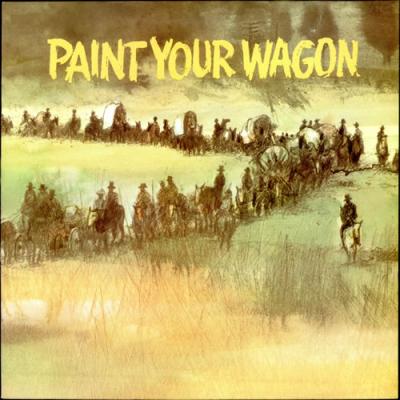
"Paint Your Wagon" Soundtrack Lyrics
Musical • 1969
Track Listing
Lee Marvin
“Paint Your Wagon (Music from the Soundtrack of the Paramount Picture)” – Album Guide to Tracks and Key Scenes
Overview
What happens when a gold-rush boomtown breaks into song — and means it? Paint Your Wagon bends the classic Lerner & Loewe stage score into a widescreen frontier pageant: baritone laments, camp-chorus stomps, and dust-kicked waltzes that turn No Name City into a living, singing organism.
The film keeps the beloved spine (“They Call the Wind Maria,” “I Talk to the Trees”) and adds new movie-born numbers that lean brawnier and more cinematic. Lee Marvin’s gravelly “Wand’rin’ Star” ambles like a mule through fog; Clint Eastwood croons with clean, shy lines; Harve Presnell detonates the ridge with “Maria.” The result is a score that moves between private yearning and communal roar — love songs at campfire volume.
Across the arc: choral marches and banjo-bright work songs (arrival), intimate serenades and porch-swing ballads (adaptation), revival-style mock-hymns and rowdy saloon tunes (rebellion), then a rueful reprise that sends the drifters back to the road (collapse → acceptance). And, yes, the soundtrack had a pop afterlife: “Wand’rin’ Star” became a hit single — according to the Official Charts Company, it topped the UK chart in March 1970.
How It Was Made
Songwriting & additions: The stage musical (1951) was by Frederick Loewe (music) and Alan Jay Lerner (lyrics). For the film, Lerner collaborated with André Previn on several new songs (“The First Thing You Know,” “A Million Miles Away Behind the Door,” “The Gospel of No Name City,” “Best Things,” “Gold Fever”), expanding character beats for Ben, Elizabeth, and the parson.
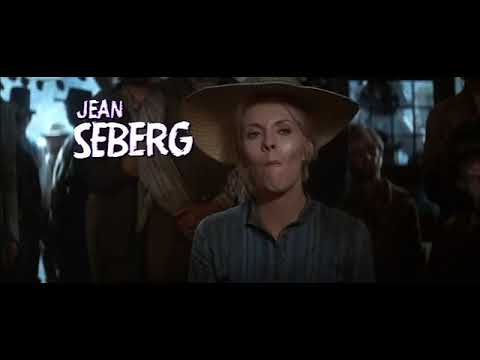
Recording team: Orchestral score conducted by Nelson Riddle, choral music led by Roger Wagner, with vocal/choral arrangements by Joseph J. Lilley — as per the Paramount soundtrack credits. Jean Seberg’s vocal on “A Million Miles Away Behind the Door” was dubbed by Anita Gordon, while Marvin and Eastwood performed their own songs.
Tracks & Scenes
“I’m on My Way” — Chorus
Where it plays: As the wagon train and prospectors pulse into No Name City, the men beat time on wagons and boot-heels, the town springing up in front of our eyes. Non-diegetic moving into diegetic chant as extras take it up.
Why it matters: Stakes the movie’s communal voice — the crowd as character.
“I Still See Elisa” — Clint Eastwood
Where it plays: Pardner’s first quiet confession by firelight; the camera hangs on the flame and his face as he sings to a memory rather than a person. Diegetic solo.
Why it matters: Gives Eastwood a plain-spoken tenor moment; loneliness without self-pity.
“They Call the Wind Maria” — Harve Presnell & Chorus
Where it plays: A ridge-top call that gathers men from tents and sluices; the wind answers in the strings. Non-diegetic main take with choral reinforcement.
Why it matters: The film’s thunderclap — Presnell’s baritone pins the horizon.
“A Million Miles Away Behind the Door” — (voice of) Anita Gordon for Jean Seberg
Where it plays: Elizabeth’s confession in the cabin, a hush after the town’s chaos; the melody rises like breath held too long. Diegetic performance to Ben/Pardner.
Why it matters: A movie-only ballad that centers Elizabeth’s inner life.
“I Talk to the Trees” — Clint Eastwood
Where it plays: Pardner’s courtship hymn outdoors, sung to pines and sky as Elizabeth listens unseen. Diegetic; the camera drifts with the melody line.
Why it matters: Naive on paper, disarming on screen — Eastwood keeps it spare.
“Hand Me Down That Can o’ Beans” — Camp Chorus (with the Nitty Gritty Dirt Band)
Where it plays: Mess-tent shenanigans; spoons, kettles, and boots become the drum section. Diegetic work-song with cameos from pickers and harmonies.
Why it matters: Turns a meal line into a percussion ensemble — frontier Stomp.
“The Gospel of No Name City” — Parson & Congregation
Where it plays: Tent-revival sermon slams into dance-hall reality as the parson rails against sin while miners sneak out the sides. Diegetic, choreographed sermon-song.
Why it matters: Satiric bite — religion as rhythm and rhetoric.
“Wand’rin’ Star” — Lee Marvin
Where it plays: Ben Rumson alone with his mule and a hangover, the town at his back; hills cut him out of the frame as the verse deepens. Diegetic close-up, then reprise over vistas.
Why it matters: The film’s melancholy brand — a road song with rust in it. (It later became a UK No.1 single.)
“Best Things” — Marvin, Eastwood & Ray Walston
Where it plays: Three scoundrels enumerate life’s free (and not-so-free) pleasures while plotting fresh mischief. Diegetic trio, comic patter and elbow-nudges.
Why it matters: A new movie number that lets the leads harmonize in character.
“Gold Fever” — Eastwood & Chorus
Where it plays: As the mine tunnels honeycomb beneath Main Street, the chorus grows manic; the town literally collapses to the beat. Non-diegetic to catastrophe.
Why it matters: A musical number that becomes action montage — greed with a chorus.
Notes & Trivia
- “Wand’rin’ Star” (Lee Marvin) spent three weeks at UK No.1 in March 1970; its B-side was Clint Eastwood singing “I Talk to the Trees.”
- Several film-only songs were co-written by Lerner with André Previn, including Elizabeth’s showcase “A Million Miles Away Behind the Door.”
- Nelson Riddle conducted the orchestral score; Roger Wagner handled the choral forces; Joseph J. Lilley shaped the vocal/choral arrangements.
- The camp-chorus “Beans” number features the early Nitty Gritty Dirt Band among the pickers.
- The soundtrack LP was issued by Paramount Records with a gatefold and souvenir booklet in many territories.
Music–Story Links
When Ben slurs through “Wand’rin’ Star”, the lyric isn’t decoration — it licenses him to leave; the reprise later seals his choice. “I Still See Elisa” and “I Talk to the Trees” braid into a triangle told through melody, not argument. The parson’s “Gospel of No Name City” pushes satire into doctrine — soon the tunnels fall, as if hypocrisy shook the beams loose. And Elizabeth’s “A Million Miles…” gives the polyandry plot its one deeply private room; without that song, she’s a premise. With it, she’s a person.
Reception & Quotes
Critics were mixed on the sprawling film but often singled out the musical set-pieces: Presnell’s roof-lifting “Maria,” Marvin’s unlikely hit single, and the joyous clatter of the camp numbers. The album has aged like a period postcard — faded around the edges, still charming in the middle.
“Harve Presnell steals thunder with a knockout ‘They Call the Wind Maria.’” — contemporary summaries
“Amiable, sometimes lumbering, but the songs keep the town breathing.” — review digests
“Marvin’s ‘Wand’rin’ Star’ wandered to No.1 — and stayed.” — chart retrospectives
Interesting Facts
- Chart quirk: Marvin’s UK No.1 infamously kept The Beatles’ “Let It Be” at No.2 that month.
- Dub note: Jean Seberg’s solo was dubbed by Anita Gordon; Eastwood and Marvin sang their own parts.
- Cameos: The Nitty Gritty Dirt Band appear (and play) in the “Beans” sequence.
- Conductor pedigree: The sessions paired Nelson Riddle’s orchestra savvy with Roger Wagner’s famed chorus.
- Packaging: Early LP pressings came as Paramount gatefolds; later reissues migrated to MCA in some markets.
Technical Info
- Title: Paint Your Wagon (Music from the Soundtrack of the Paramount Picture)
- Year: 1969 (film release: October 15, 1969)
- Type: Musical film soundtrack — stage songs plus new film numbers
- Music & Lyrics: Frederick Loewe (music), Alan Jay Lerner (lyrics); additional film songs with André Previn (music)
- Orchestral/Choral: Conducted by Nelson Riddle (orchestra); Roger Wagner (chorus); vocal/choral arrangements by Joseph J. Lilley
- Notable placements: “They Call the Wind Maria” (ridge-top lament) • “A Million Miles Away Behind the Door” (Elizabeth’s cabin solo) • “Wand’rin’ Star” (Ben’s farewell) • “Hand Me Down That Can o’ Beans” (camp stomp) • “The Gospel of No Name City” (tent-revival satire)
- Label/editions: Paramount Records (original LP); assorted reissues thereafter
- Availability: The OST appears on major streaming platforms via later catalog owners; multiple vinyl/cassette editions exist for collectors.
Questions & Answers
- Did the film change the stage score?
- Yes. It kept core Lerner & Loewe numbers and added several new Lerner/Previn songs written specifically for the movie.
- Who actually sings on screen?
- Lee Marvin and Clint Eastwood sing their own numbers; Jean Seberg’s solo is dubbed by Anita Gordon.
- Why is “Wand’rin’ Star” so famous?
- Marvin’s recording became a UK No.1 single in 1970 and a pop-culture curio — a chart-topper by a gravel-voiced actor.
- What’s the rafter-shaker song?
- “They Call the Wind Maria,” belted by Harve Presnell, is the film’s showstopper.
- Any notable musicians in the film?
- Yes — the Nitty Gritty Dirt Band appear in the camp chorus for “Hand Me Down That Can o’ Beans.”
Canonical Entities & Relations
| Entity | Relation | Entity |
|---|---|---|
| Joshua Logan | directed | Paint Your Wagon (1969) |
| Alan Jay Lerner | wrote lyrics & screenplay for | Paint Your Wagon (film) |
| Frederick Loewe | composed stage score for | Paint Your Wagon (1951; songs retained in film) |
| André Previn | composed new film songs with | Alan Jay Lerner |
| Nelson Riddle | conducted orchestral score for | Paint Your Wagon (soundtrack) |
| Roger Wagner | conducted choral forces for | Paint Your Wagon (soundtrack) |
| Joseph J. Lilley | arranged choral/vocal for | Paint Your Wagon (soundtrack) |
| Lee Marvin | performed | “Wand’rin’ Star,” “Best Things” |
| Clint Eastwood | performed | “I Still See Elisa,” “I Talk to the Trees,” “Gold Fever” |
| Harve Presnell | performed | “They Call the Wind Maria” |
| Jean Seberg / Anita Gordon | on-screen / singing voice for | “A Million Miles Away Behind the Door” |
| Paramount Records | released | Paint Your Wagon soundtrack LP |
Sources: soundtrack credits (Paramount LP), Official Charts Company listings (UK No.1), film pages and recording databases, Library of Congress Lerner papers (film-song additions), and contemporary reviews/interviews.
November, 18th 2025
A-Z Lyrics Universe
Cynthia Erivo Popular
Ariana Grande Horsepower
Post Malone Ain't No Love in Oklahoma
Luke Combs Good Riddance (Time of Your Life)
Green Day Bye Bye Bye
*NSYNC You're the One That I Wan
John Travolta & Olivia Newton-John I Always Wanted a Brother
Braelyn Rankins, Theo Somolu, Kelvin Harrison Jr. and Aaron Pierre The Power of Love
Frankie Goes to Hollywood Beyond
Auli’i Cravalho feat. Rachel House MORE ›