Soundtracks:  A B C D E F G H I J K L M N O P Q R S T U V W X Y Z #


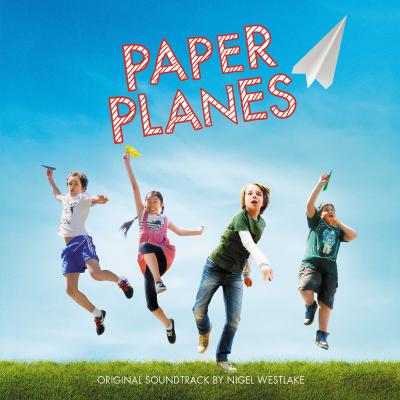
Paper Planes Album Cover

"Paper Planes" Soundtrack Lyrics

Movie • 2015

Track Listing


"Paper Planes (Original Motion Picture Soundtrack)" – Album Guide to Tracks and Key Scenes

Paper Planes 2015 official trailer first-look thumbnail with Dylan launching a paper plane
Paper Planes — film trailer imagery, 2015

Overview

What happens when a children’s sports movie decides its stadium is the sky? Paper Planes answers with a buoyant orchestral score and a handful of smart song placements that make folded A4 feel like a jet engine. The film follows Dylan, a country kid with a knack for flight, and the soundtrack becomes his wind: supportive, playful, then suddenly surging at key turns.

Nigel Westlake’s orchestral writing gives the drama lift without smothering it. Themes arc and bank like gliders — lean brass for determination, bright strings for discovery, woodwinds for the fizz of problem-solving. When licensed songs arrive, they’re used as mood pivots: a burst of pop sunlight early on; a classic Aussie rocker to kick the story into travel-mode; a reflective singer-songwriter closer that lands the emotions without syrup.

The album itself is a tight listen. It flows like a short suite: setup, experimentation, setbacks, the big throw. As pop culture nods drift through (a classroom needle-drop here, a road-trip banger there), the score keeps the center of gravity — a gentle, resilient melody that always finds a thermal.

Genres across the film move in phases: orchestral adventure (curiosity, courage), glossy pop (optimism, social bonding), classic Oz rock (movement, momentum), and indie-folk balladry (grief, acceptance). Each style carries story weight — indie grit for vulnerability, radio-pop for blue-sky joy, and symphonic color for the ambition to fly further than you can see.

How It Was Made

Composer Nigel Westlake wrote and conducted the score, recorded with the Melbourne Symphony Orchestra. The release arrived on ABC Classics/ABC Music, with sessions dating to mid-2014 and album rollout around early 2015 (various regions re-issued in 2016). Orchestrations and section features (piano, shakuhachi, solo voice) broaden the palette while keeping cues compact for a family audience.

Music supervision was led by Jemma Burns, navigating a neat triangle: a high-character original score; Australian catalog needles (hello, Cold Chisel); and a tender end-title track from Lior. Those choices help the film straddle national texture and universal coming-of-age tone.

Editorially, the soundtrack favors short, scene-specific cues (“Ready to Launch,” “Dog Fight,” “The Final Challenge”) so that musical ideas line up to plot beats. That keeps younger viewers oriented and gives the album replay value for anyone who loves concise, thematic film scoring.

Behind-the-scenes mood from Paper Planes trailer with competition glimpses and travel shots
Paper Planes — production montage moments, 2015

Tracks & Scenes

“Beauty in the World” — Macy Gray / Dami Im
Where it plays: Early in the story, Dylan looks outward and up — a bright, open-air moment with a kite hawk gliding overhead. The scene bathes the screen in ease and possibility; the song rides in like sun through cloud, diegetic-feel pop sheen but mixed as score-adjacent. (Press accounts name Macy Gray’s version; education/rights sheets indicate a Dami Im recording used in the film.)
Why it matters: Plants the film’s glass-half-full vibe and signals that joy can puncture grief without denying it.

“Bow River” — Cold Chisel
Where it plays: A turning-point drive pushes Dylan and his dad back into the world. Engine on, road unspooling, montage shots of Sydney rising; the track’s swagger flips the film from quiet struggle to forward motion. Non-diegetic, mid-film, roughly a minute of feature use bridging travel and arrival beats.
Why it matters: It’s the story’s kickstart — dad re-engages, the trip becomes real, and the film stakes a proudly Aussie tone.

“Learn to Live” — Lior
Where it plays: In a reflective passage near the climax/end, the song eases Dylan toward acceptance — of loss, friendship, and the simple thrill of throwing your best plane. Non-diegetic; plays like an end-titles handoff or late-act montage, voice and acoustic texture soft-landing the narrative.
Why it matters: A gentle catharsis piece — it names the film’s heart without overselling it.

Score cue: “Ready to Launch” — Nigel Westlake
Where it plays: Competition prep: folding, testing, trying again. Percussive pulses and nimble strings sync to close-up hands and nervous looks. Short cue, tightly cut to onscreen action.
Why it matters: It’s the “coach’s whistle” of the album — a cue that focuses breath and builds tiny triumphs.

Score cue: “The Final Challenge” — Nigel Westlake
Where it plays: The deciding throw. A slow swell, then an airborne melody that crests as the paper plane arcs across the hall. Non-diegetic but mixed like a crowd’s wave.
Why it matters: Delivers the goosebump moment cleanly, no irony, just flight.

“Milkshake” — Kelis
Where it plays: A brief comic pop drop in a lighter beat — a cheeky needle-drop used for character texture (classroom/food gag vibe). Short, mixed for a laugh-cut, non-diegetic.
Why it matters: A sugar-rush wink that loosens the film between training beats.

Additional score notables: “Pavane,” “Do Emus Dream of Flying?,” “Is There a Movie on This Flight?,” “Tokyo by Night,” and the lyrical closer “For as Long as it Takes.” Each maps directly to a stage of Dylan’s journey — research, rivalry, travel, night-before jitters, and resolve.

Competition hall still from trailer, crowd watching paper plane flights
Paper Planes — competition beats underscored by Westlake’s themes

Notes & Trivia

  • The score was recorded with the Melbourne Symphony Orchestra; the album runs ~50 minutes across 15 tracks.
  • “Bow River” brings in Oz-rock grit to contrast the orchestral warmth.
  • Lior re-recorded “Learn to Live” specifically for the film/album version.
  • Several cue titles (“Ready to Launch,” “Dog Fight”) mirror plot verbs, making the album read like a beat sheet.
  • Educational packs name a Dami Im performance of “Beauty in the World,” while some press cite Macy Gray — a rare on-paper mismatch.

Music–Story Links

When Dylan first looks up and really sees the sky, the pop sheen of “Beauty in the World” frames curiosity as possibility — it’s not just pretty, it’s permission. Later, when dad turns the ignition for Sydney, “Bow River” reframes him from a sad passenger to an engaged parent; the backbeat makes the plot move.

Westlake threads a motif that tightens during competition cues: short phrases for fold-and-test, a more lyrical second subject for the throw’s glide. In the late-act calm, “Learn to Live” functions like a character’s inner voice — less a victory lap than a reminder: the point was never the medal, it was the lift.

Reception & Quotes

Critics warmed to the film’s heart and the score’s throwback confidence. The album’s availability has persisted — streaming and CD — and the cue names make it a favorite for young musicians who want to “hear the story” in the music.

“Cold Chisel make an appearance with the perfectly chosen ‘Bow River’ as Dylan’s dad… emerges from his deep introspection.” — Loudmouth
“Full of soaring melodies… If you loved the music of Williams, Goldsmith, Horner… you’ll love this.” — Movie Wave
“A glossy outdoors scene… set to ‘Beauty in the World’.” — The Guardian
“Learn to Live… a fine song [closing] the album.” — Movie Wave
End-title style trailer still, quiet night exterior evoking reflective closing song
Paper Planes — reflective end-title mood

Interesting Facts

  • The album was issued by ABC Classics/ABC Music, with later listings showing a 2016 date in some territories.
  • Presto’s listing highlights featured solo spots (e.g., shakuhachi and piano) inside the orchestral fabric.
  • “Pavane” on the album is a Westlake cue title — not Fauré’s piece.
  • Streaming editions commonly show 15 tracks (~49–50 minutes); early CD notes sometimes counted 14 originals plus the Lior song.
  • Jemma Burns’ supervision helped secure both modern pop and classic Australian catalog in a family-film context.
  • The soundtrack art and rollout aligned with the film’s Australian theatrical window in January 2015.
  • The film’s teacher resources explicitly list several licensed songs for classroom discussion of mood and scene function.

Technical Info

  • Title: Paper Planes (Original Motion Picture Soundtrack)
  • Year: 2015 (some releases listed 2016 in certain regions)
  • Type: Film score with select licensed tracks
  • Composer: Nigel Westlake
  • Performer: Melbourne Symphony Orchestra
  • Music Supervisor: Jemma Burns
  • Label/Release: ABC Classics / ABC Music; ~50:00; ~15 tracks
  • Notable placements: “Beauty in the World” (early sky/kite-hawk beat), “Bow River” (travel/turning point), “Learn to Live” (late-act/closing), “Milkshake” (comic beat)
  • Availability: Streaming (major platforms) and CD

Questions & Answers

Who composed the score for Paper Planes?
Nigel Westlake, recorded with the Melbourne Symphony Orchestra.
What’s the standout licensed song moment?
Cold Chisel’s “Bow River” powers the road-to-Sydney turn — it feels like the story’s ignition key.
Is the end song original to the artist?
Lior’s “Learn to Live” appears in a film-specific recording on the official album.
Which pop track sets the early optimistic mood?
“Beauty in the World” — reported as Macy Gray in reviews, but some guides credit a Dami Im performance in the film.
Does the album play well without the movie?
Yes — short, thematic cues and a clean arc make it an easy front-to-back listen.

Canonical Entities & Relations

SubjectVerbObject
Robert ConnollydirectedPaper Planes (2015 film)
Nigel Westlakecomposed score forPaper Planes
Melbourne Symphony OrchestraperformedPaper Planes score
Jemma Burnssupervised music forPaper Planes
ABC Classics / ABC MusicreleasedPaper Planes (Original Motion Picture Soundtrack)
Cold Chiselperformed“Bow River” (in film)
Liorperformed“Learn to Live” (film/album version)
Macy Gray / Dami Imperformed“Beauty in the World” (press vs. education-guide credits)
Roadshow FilmsdistributedPaper Planes (Australia)

Sources: ABC Classics/ABC Music; Melbourne Symphony Orchestra; The Guardian; Loudmouth (Music Trust); Movie Wave; Movie Music UK; Presto Music; AllMusic; Discogs; Screenwest; Penguin/education resources.

"Paper Planes" is the incredibly bright film. It is the first association that comes to mind. Is this the true fact that the main characters are children, or that it is filled so much with scenes of the long-awaited victory – is unknown. But the feeling of lightness when viewing does not disappear until the very end. The main role is played by Ed Oxenbould, a charming red-haired boy, who managed, despite his young age, convey the atmosphere and mood of the hero very clearly. Not surprisingly, that the music for the film came out the same: light, full of sun and excitement. Many songs were recorded with participation of troupe named The Melbourne Symphony Orchestra. The orchestra plays also the main theme of the same name, Paper Planes. Also, several songs were recorded by singer Hannah Coleman. Musical product named A Bird That Cannot Fly became especially popular in the rankings. Inspiring and warm collection completes the composition Learn To Live. This is stunningly good music. Yes, “stunning” is the very word that we want to use when describing all songs at once. Suppose that there are notes of anxiety and doubts, there are even some inevitable failures, but it's not even about the happy ending. Few people know how much children don’t like the traditional "Friendship has won!" Oh, such a result discourages the desire to fight for something at all! Here we not only see, but hear the spirit of competition, pride for own achievements, and the ability to stand up, when you already want to give up on everything. Incredibly nice soundtrack – it is wanted not just to listen to, but really to praise him.

November, 18th 2025

Visit "Paper Planes" profile on IMDb, Rotten Tomatoes
A-Z Lyrics Universe

Lyrics / song texts are property and copyright of their owners and provided for educational purposes only.