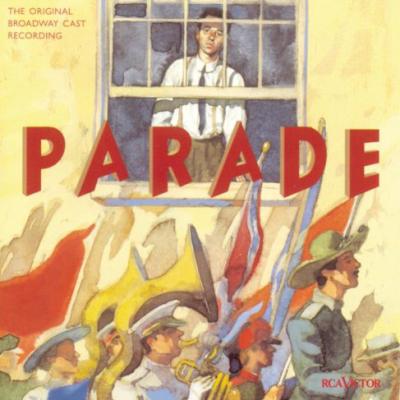
"Parade" Soundtrack Lyrics
Musical • 1998
Track Listing
"Parade (Original Broadway Cast Recording)" – Album Guide to Tracks and Key Scenes
Overview
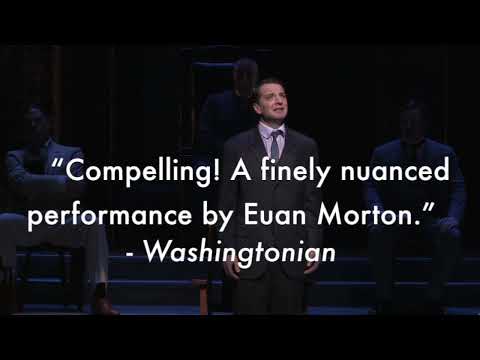
How do you make a love story out of a lynching and a courtroom? Parade answers with a score that refuses easy comfort, turning civic ritual into moral reckoning. The 1998 Broadway musical tracks the arrest, trial, commutation, and murder of Leo Frank in Georgia — and lets the music carry both the outrage and the intimacy.
Jason Robert Brown writes like a reporter and a poet in the same breath: hymns sour into propaganda choruses, cakewalk grooves pivot into chain-gang blues, and private arias crack open two people who learn how to love while the world misjudges them. The album preserves that arc with unflinching clarity.
The dramatic engine moves: arrival → accusation → media frenzy → appeals → fragile victory → extra-judicial horror. Genres map to phases — hymn and march (myth-making), ragtime/cakewalk and newspaperman patter (spin), R&B-tinged testimony and waltz (perspective), and finally prayer and lament (the cost). As one trade review put it, Brown’s melodies draw from pop-rock, folk, R&B, and gospel — but they always serve the story.
How It Was Made
Composer-lyricist Jason Robert Brown and book writer Alfred Uhry developed the show with director Harold Prince for Lincoln Center Theater. The Original Broadway Cast Recording was produced for RCA Victor and tracked at Clinton Recording Studio A (NYC) after the show’s run, with Eric Stern conducting; the release followed in spring 1999. Orchestrations (notably by Don Sebesky) give the score muscular brass, keening strings, and tart reeds that sit between period color and modern pulse.
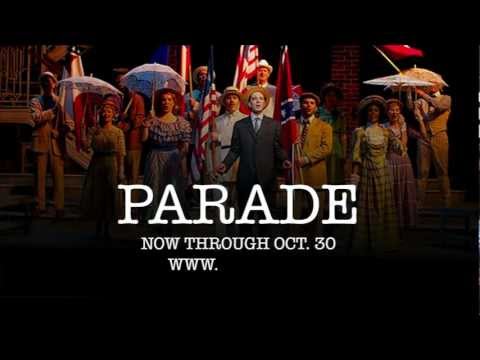
Prince’s staging frames the “parade” of Confederate Memorial Day as civic ritual and timekeeper — the prologue theme resurfaces at midpoint and in the finale. Brown has spoken about writing and revising under fire (“Pretty Music” arriving late in the process), and Masterworks’ notes preserve that workshop-to-studio journey.
Tracks & Scenes
“Prologue: The Old Red Hills of Home” — Young Soldier/Company
Where it plays: Civil War memory becomes civic myth: a young Confederate soldier sings pride into the air as a future parade marches by. The melody will haunt the show, returning when pride curdles into rage.
Why it matters: Establishes the town’s self-image — and the musical’s habit of turning anthems inside out.
“How Can I Call This Home?” — Leo
Where it plays: Leo’s alienation aria: a Brooklyn Jew in Atlanta, listing tiny frictions — language, food, weather — as the orchestra needles him with off-kilter accents.
Why it matters: Makes his “outsider” status audible, so later prejudice lands with context.
“The Picture Show” — Mary & Frankie
Where it plays: Two teens flirt on parade day; the tune sparkles like a nickelodeon reel before fate slams the door. The sweetness turns forensic in hindsight.
Why it matters: Human stakes, set early — you feel the loss when the case explodes.
“Big News!” / “Real Big News” — Britt Craig (& Townspeople)
Where it plays: A boozy reporter finds his angle; later, he rides the mob’s appetite. Brass blares, drums strut — journalism as showboat.
Why it matters: Satirizes media incentives; the groove is catchy because the spin is, too.
“You Don’t Know This Man” — Lucille
Where it plays: Lucille corners a reporter and draws a line — not just a wife in support, a strategist with steel. The harmony stays simple so the words can cut.
Why it matters: Lucille’s agency arrives; from here, she becomes the engine.
“Factory Girls / Come Up to My Office” — Girls & Leo
Where it plays: Trial theatrics: accusations morph into a fantasy where Leo is the villain they’re selling. The music flips from perky to predatory on a dime.
Why it matters: Shows how testimony can be staged — and how sound shapes belief.
“Leo’s Statement: It’s Hard to Speak My Heart” — Leo
Where it plays: On the stand, Leo finally tells the truth as he sees it — precise, awkward, un-dramatic. The orchestra barely breathes.
Why it matters: A character study in restraint; the opposite of crowd-pleasing.
“Rumblin’ and a Rollin’” — Riley, Angela, Jim Conley, Newt Lee
Where it plays: Black Atlantans comment on the two-tier justice they’re watching. The groove slides; the irony stings.
Why it matters: Moves the show beyond a single victim to a wider system.
“Pretty Music” — Governor Slaton
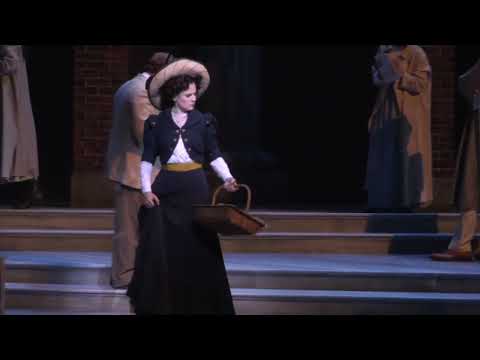
Where it plays: A politician weighs justice against career. It’s charming — deliberately so — until he chooses the harder road.
Why it matters: A rare wry solo that sets up the commutation.
“This Is Not Over Yet” — Leo & Lucille
Where it plays: After Slaton re-opens the case, the Franks taste hope; the melody climbs exactly as their posture does — shoulders back, eyes up.
Why it matters: The album’s adrenaline rush; love reframed as teamwork.
“All the Wasted Time” — Leo & Lucille
Where it plays: Prison picnic, revelation, apology — and a vow to start again right now. Strings and clarinet wrap around a waltz that refuses to end.
Why it matters: The musical’s heart. When the end comes, this is what breaks.
“Sh’ma” — Leo
Where it plays: Final prayer before the lynching. No accompaniment, just breath and faith in the dark.
Why it matters: A quiet that feels like thunder — and the show’s moral center.
Notes & Trivia
- The 1998 Broadway run played the Vivian Beaumont at Lincoln Center; the show won Tonys for Best Book and Best Original Score.
- The OBC album was released by RCA Victor in 1999; recording took place March 1, 1999.
- Orchestrations (Don Sebesky) and Eric Stern’s music direction give the album its crisp “documentary” punch.
- Later productions swapped several numbers (“People of Atlanta” → “Hammer of Justice,” etc.), while the core arc remained.
- The 2023 Broadway revival (new cast album on Interscope) renewed interest, but this guide centers on the 1998/1999 OBC.
Music–Story Links
When Britt Craig belts “Real Big News,” brass and snare mimic a marching band — the town’s appetite for spectacle masquerading as civic pride. In the courtroom suite, the cut-and-paste of testimonies (“Factory Girls / Come Up to My Office,” “Frankie’s Testimony”) sounds like cross-examination as collage, so you feel how performance beats evidence.
Lucille’s solos (“You Don’t Know This Man,” later “Do It Alone”) don’t just advocate; they move plot — first to the press, then to the Governor’s mansion. And the score’s refrain of “Old Red Hills” reappears in the finale parade, turning nostalgia into indictment; the same tune that opened the door now won’t let anyone out.
Reception & Quotes
Contemporary critics split on tone but praised the score’s ambition; the show closed early yet won major awards. The album has since become a gateway into Brown’s work for many listeners — a cast album that plays like a civic document.
“Rich in subtle, appealing melodies… from pop-rock to folk to R&B and gospel.” — Variety
“A defining moment in Broadway musical theater.” — Masterworks Broadway, quoting early reviews
“Not an easy listen — but searingly truthful.” — musical press on later issues
Interesting Facts
- The cast album clocks ~78 minutes; the CD carried RCA Victor catalog no. 09026-63378-2.
- Recording site: Clinton Recording Studio A, New York — a favorite of late-90s cast albums.
- “Pretty Music” was a late addition written during final rehearsals.
- The title Parade marks time: Confederate Memorial Day appears at start, midpoint, and end.
- Revival editions altered testimony songs (e.g., Minnie McKnight material) while preserving the OBC’s backbone.
Technical Info
- Title: Parade (Original Broadway Cast Recording)
- Year: 1998 musical; album released April 27, 1999
- Type: Cast album (stage musical)
- Music & Lyrics: Jason Robert Brown
- Book: Alfred Uhry
- Director (production): Harold Prince
- Orchestrations: Don Sebesky
- Conductor/Music Director: Eric Stern
- Label: RCA Victor (catalog 09026-63378-2)
- Recording: March 1, 1999 — Clinton Recording Studio A (NYC)
- Duration: ~1:18:44
- Notable numbers: “Old Red Hills of Home,” “You Don’t Know This Man,” “Real Big News,” “This Is Not Over Yet,” “All the Wasted Time,” “Sh’ma.”
- Awards (show): Tony Awards — Best Book, Best Original Score (1999)
Questions & Answers
- Is the OBC album different from the 2023 revival recording?
- Yes. Later productions revised several numbers and lyrics; the 1999 OBC preserves the original Broadway sequence.
- What musical styles does the score use?
- Hymn and march, newspaperman patter, ragtime/cakewalk, blues, gospel-inflected choral writing, and intimate chamber ballads.
- Why does “Old Red Hills” return in the finale?
- It reframes civic pride as complicity, closing the loop between myth and consequence.
- Where should a new listener start?
- Try “This Is Not Over Yet” for lift, “You Don’t Know This Man” for character, and “Sh’ma” for the show’s conscience.
- Is there an “official” compilation of every later change?
- No single album spans all versions; the OBC and the 2023 revival album complement each other.
Canonical Entities & Relations
| Subject | Verb | Object |
|---|---|---|
| Jason Robert Brown | composed & wrote lyrics for | Parade |
| Alfred Uhry | wrote book for | Parade |
| Harold Prince | directed | 1998 Broadway production |
| Eric Stern | conducted | Original Broadway Cast recording |
| Don Sebesky | orchestrated | Original Broadway Cast recording |
| RCA Victor | released | Parade (Original Broadway Cast Recording) |
| Brent Carver | starred as | Leo Frank (1998 Broadway) |
| Carolee Carmello | starred as | Lucille Frank (1998 Broadway) |
Sources: Masterworks Broadway; AllMusic; Discogs; Variety; Wikipedia (musical entry and numbers); MTI Shows; official Parade site.
November, 18th 2025
A-Z Lyrics Universe
Cynthia Erivo Popular
Ariana Grande Horsepower
Post Malone Ain't No Love in Oklahoma
Luke Combs Good Riddance (Time of Your Life)
Green Day Bye Bye Bye
*NSYNC You're the One That I Wan
John Travolta & Olivia Newton-John I Always Wanted a Brother
Braelyn Rankins, Theo Somolu, Kelvin Harrison Jr. and Aaron Pierre The Power of Love
Frankie Goes to Hollywood Beyond
Auli’i Cravalho feat. Rachel House MORE ›