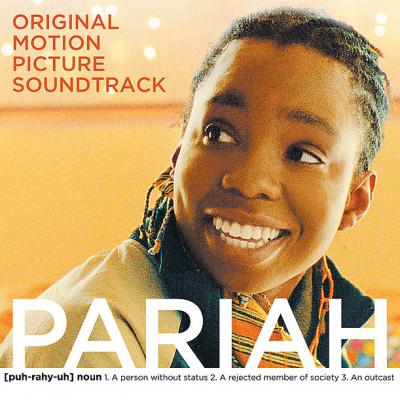
"Pariah" Soundtrack Lyrics
Movie • 2011
Track Listing
Khia
emoniFela
Sparlha Swa
Tamar-Kali
Honeychild Coleman
Sparlha Swa
Kandi Cole
Daisha
Kandi Cole
Audio Dyslexia
Tamar-Kali
"Pariah (Original Motion Picture Soundtrack)" – Album Guide to Tracks and Key Scenes
Overview
What happens when a coming-of-age drama lets songs carry identity as loudly as dialogue? Pariah answers with a needle-drop map of Brooklyn — bass-heavy club anthems, Black punk, acoustic soul — that tracks Alike’s search for a voice she can live in. The music doesn’t just decorate scenes; it defines rooms, friendships, and selves.
The official album gathers 11 cuts released by Lakeshore Records at the end of 2011 — Khia, Tamar-kali, Honeychild Coleman, Sparlha Swa, Kandi Cole, Daisha and more — while the film itself uses additional tracks (including multiple Reema Major cues) to color specific spaces. You can hear the story move from nocturnal bravado to hard daylight to a gentler, resolute quiet.
Arc in sound: arrival (club heat) → friction (home vs. friends) → rupture (bad choices, worse honesty) → reckoning → openness. Genres map to people — hip-hop for Laura’s swagger, punk/indie edge for Bina, acoustic soul for Alike — as the director has said; by the end, those styles start to braid. According to an interview with the filmmakers, the mixtape logic was intentional: character POV first, playlist second.
How It Was Made
Album & label: Pariah (Original Motion Picture Soundtrack) arrived December 20, 2011 on Lakeshore Records, a compact 11-track compilation running about 42 minutes. It’s a songs album (no separate score release), sequenced to mirror the film’s club-to-home tonal swing.
Soundtrack concept: Dee Rees built the film’s music identity around the characters themselves — “Alike is acoustic soul, Bina is punk, Laura is hip-hop.” As Alike’s interior consolidates, the film lets those sounds clash, then converge; that blend is the story’s emotional endpoint.
On-set/live moments: Not just drops: Tamar-kali and band appear in-story at a house party number, and Tamar-kali’s cover of “Fire with Fire” rides the end credits — a badge of authorship from New York’s Black rock scene back into the film’s community.
Tracks & Scenes
“My Neck, My Back (Lick It)” — Khia
Where it plays: The opening club sequence. Strobe light, violet wash, a dancer on the pole; Alike and Laura scan the room, teasing each other about who’s brave enough to make the first move. The track is diegetic — the room moves with the beat — and the camera’s disorientation matches the music’s brazen confidence.
Why it matters: Plants the film in a specific queer nightlife — pleasure and performance as social grammar.
“Pearl” — Tamar-kali
Where it plays: A house-party performance number by Tamar-kali and band — guitar bite, controlled fury, faces in the crowd. The cut lands between flirtation and defiance; it’s loud enough to drown out second-guessing.
Why it matters: Black punk as permission — a door for Alike to imagine herself louder.
“Echelon” — Honeychild Coleman
Where it plays: Transitional city drift — bus windows and sidewalks, headphones on, small gestures reading as vows. The groove is lo-fi and propulsive, more stride than strut.
Why it matters: Gives motion without victory; it’s the sound of leaving a room but not yet arriving.
“Doin’ My Thing” — Sparlha Swa
Where it plays: A pocket of tenderness after conflict — late-night texts, a look that lingers too long, the morning that doesn’t fix things. Acoustic textures keep the scene small; breath and strings do half the talking.
Why it matters: The film’s hush. It lets Alike’s gentler register take the lead.
“Do You” — Kandi Cole
Where it plays: Friend-group momentum; small wins and almost-plans. The cadence matches Laura’s swagger and the comfort of being known well enough to be teased.
Why it matters: Laura’s hip-hop palette as emotional baseline — confident, practical, protective.
“Top Blow” — Daisha
Where it plays: Quick-cut montage of neighborhood energy — phone stores, stoops, the subway stairs pop. It feels source-adjacent, like the city is DJ’ing.
Why it matters: Locates the story in a specific, present-tense New York — kinetic, bright, young.
“Fire with Fire” — Tamar-kali (cover of The Gossip)
Where it plays: End credits. After the final hard choice, this lands as a stubborn, hopeful stomp — guitars forward, a voice that refuses to shrink.
Why it matters: A signature from an artist the film literally welcomed into the room; credits as coda, not comfort.
Also heard: multiple Reema Major tracks (“Cocky,” “My Swag,” “Gucci Bag”) punctuate school-hallway and hangout beats; additional songs turn up in scene logs beyond the 11-track album.
Notes & Trivia
- Lakeshore’s album runs 11 tracks, ~42 minutes, streeted December 20, 2011.
- The film uses more music than the retail album; several placements (e.g., Reema Major cues) are credit-listed but not on the CD/digital set.
- Tamar-kali appears on screen with her band and also provides the end-credits cover of “Fire with Fire.”
- The opening club needle-drop is Khia’s 2002 hit — a deliberate, instantly legible choice for the space.
- Criterion’s 2021 edition helped re-surface the soundtrack conversation, including how songs mark community as much as character.
Music–Story Links
When the film drops Khia in the very first scene, it’s not just a banger; it’s a declaration that we’re in a queer club where swagger is the price of entry. Later, Tamar-kali’s live “Pearl” doesn’t simply score flirtation — it shows a subculture to itself, a community playing for its own people. And when Alike moves through the city with Honeychild Coleman and Sparlha Swa in her ears, the camera stops insisting and lets the music do the insisting for it — a private tempo replacing everybody else’s.
As the director has explained, Alike’s acoustic-soul compass rubs against Bina’s punk and Laura’s hip-hop until those edges become a braid; the soundtrack makes that braid audible scene by scene.
Reception & Quotes
The film was widely praised (and later canonized with a Criterion release); listeners and critics homed in on how the soundtrack makes social spaces — the club, the house party, the long bus ride — legible without explanation.
“The opening club is full-on — with Khia pounding — and the camera’s flip makes the room feel as disorienting as desire.” — Autostraddle
“Music is inextricably linked to the social context it is heard in; the club opener makes that plain.” — Princeton ‘Music as community’ note
“Alike is acoustic soul, Bina is punk, Laura is hip-hop… styles clash and intertwine.” — Focus Features, director interview
Interesting Facts
- The soundtrack album was issued by Lakeshore, a label that also handled several other 2011 indie staples.
- A “soundtrack preview” reel was published online with 30-second bites of the album cuts for promo.
- Community press highlighted Honeychild Coleman’s “Echelon” drop ahead of release, tying it to the film’s DIY rock current.
- At Sundance Music Café 2011, artists connected to Pariah — including Tamar-kali — were featured among the festival’s performers.
- Criterion’s essay cycle on the film revived discussion of how the opening scene’s music choices frame gaze, gender, and space.
Technical Info
- Title: Pariah (Original Motion Picture Soundtrack)
- Year: 2011 album; film U.S. release Dec 28, 2011
- Type: Songs compilation (no separate score release)
- Label: Lakeshore Records
- Length: ~42:00 (11 tracks)
- Representative tracks: Khia — “My Neck, My Back”; Tamar-kali — “Pearl,” “Fire with Fire”; Honeychild Coleman — “Echelon”; Sparlha Swa — “Doin’ My Thing,” “Song of the Morning”; Kandi Cole — “Do You,” “Gimmie Room”; Daisha — “Top Blow”; Audio Dyslexia — “Parallel”
- Film credits (select): Written & directed by Dee Rees; produced by Nekisa Cooper; cinematography by Bradford Young; cast includes Adepero Oduye, Pernell Walker, Aasha Davis, Kim Wayans, Charles Parnell.
- Availability: Digital (retail album); additional placements listed in end credits and soundtrack indexes.
Questions & Answers
- Is there a released score album?
- No — the commercial release is a songs compilation on Lakeshore; original underscore cues were minimal and not issued as a separate album.
- What song plays over the end credits?
- Tamar-kali’s cover of “Fire with Fire” (The Gossip) — it’s on the official album.
- What’s the opener in the club?
- Khia’s “My Neck, My Back,” used diegetically to set place and tone.
- Do all film cues appear on the album?
- No. Several tracks heard in the film (e.g., multiple Reema Major songs) are credit-listed but not included on the 11-track release.
Canonical Entities & Relations
| Subject | Verb | Object |
|---|---|---|
| Dee Rees | wrote & directed | Pariah (2011) |
| Lakeshore Records | released | Pariah (Original Motion Picture Soundtrack) (2011) |
| Tamar-kali | performed | “Pearl”; “Fire with Fire” (end credits) |
| Honeychild Coleman | performed | “Echelon” |
| Khia | performed | “My Neck, My Back (Lick It)” (opening club) |
| Sparlha Swa | performed | “Doin’ My Thing”; “Song of the Morning” |
| Kandi Cole | performed | “Do You”; “Gimmie Room” |
| Daisha | performed | “Top Blow” |
| Adepero Oduye | starred as | Alike |
Sources: Lakeshore/Apple Music album listing; Film Music Reporter (album announcement & track list); IMDb Soundtracks; Focus Features interview on character-linked music; Bold As Love (Tamar-kali performance & end-credits note); Princeton “Music as community” write-up; Autostraddle review; Criterion film page; Focus Features trailers.
November, 18th 2025
'Pariah' on the Web: Internet Movie Database, WikipediaA-Z Lyrics Universe
Cynthia Erivo Popular
Ariana Grande Horsepower
Post Malone Ain't No Love in Oklahoma
Luke Combs Good Riddance (Time of Your Life)
Green Day Bye Bye Bye
*NSYNC You're the One That I Wan
John Travolta & Olivia Newton-John I Always Wanted a Brother
Braelyn Rankins, Theo Somolu, Kelvin Harrison Jr. and Aaron Pierre The Power of Love
Frankie Goes to Hollywood Beyond
Auli’i Cravalho feat. Rachel House MORE ›